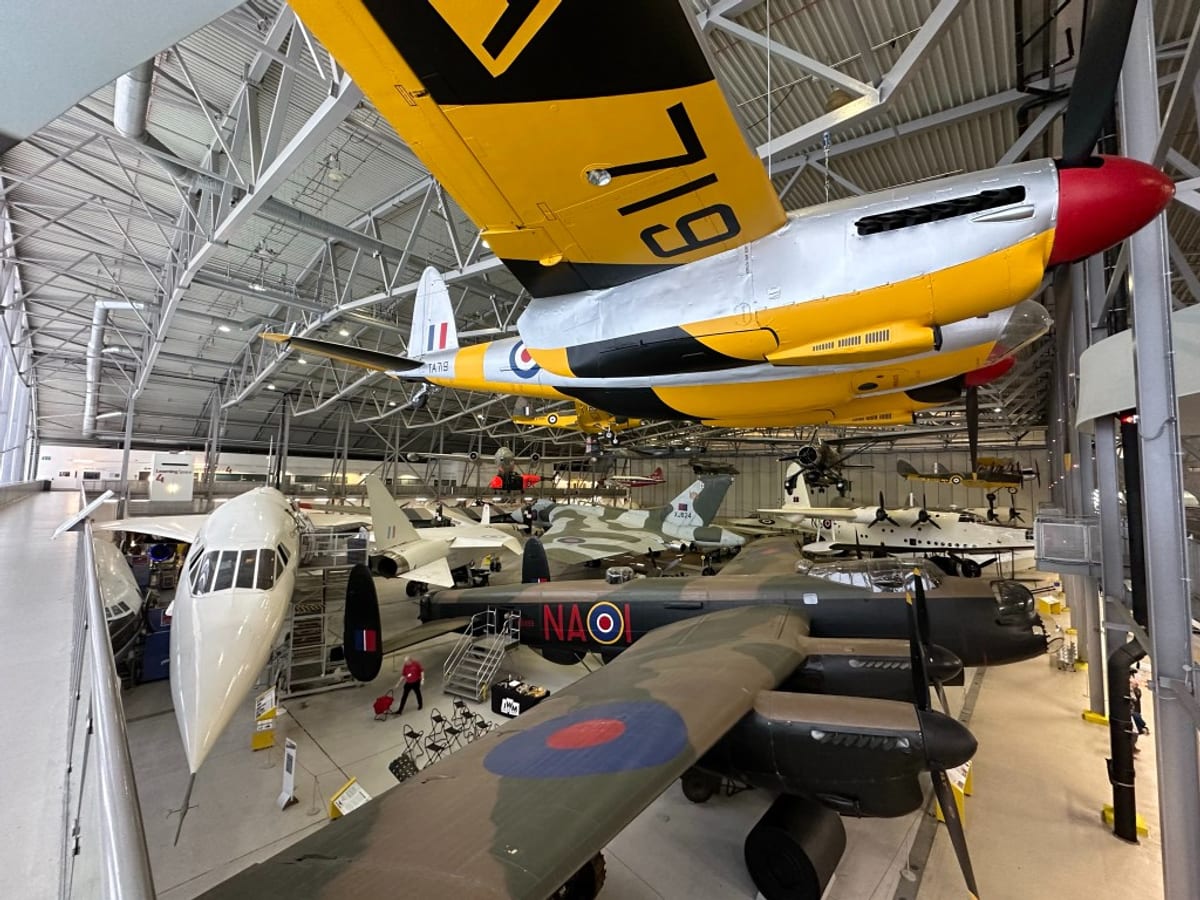
IWM Duxford, RAF Museum London and RAF Museum Midlands are the essential three; Fleet Air Arm Museum and Shuttleworth lead the specialists. Britain preserves aircraft the way Italy preserves churches: officially at the great sites, and then again in every second village.
Most "best aviation museums" lists are written from eight or ten famous names. This one is drawn from the gazetteer's survey of all 118 aviation museums, heritage centres and preserved airfield collections in the United Kingdom — which is what it takes to say "best" and mean it. It covers aircraft museums in England, RAF museums, the biggest air museum sites, and the free ones. Last verified August 2026.
Below: a ranked essential three, then the best museum for each kind of visitor. If you only want historic hangars and stored airframes, see aircraft hangars & boneyards in the UK. For Spitfires specifically, use Where to see a Spitfire; for Lancasters, Where to see a Lancaster.
If you are planning by region, start with the Lincolnshire aviation museums hub (East Kirkby / Bomber County), Scotland, South East England, Northern England, or the full nine regional commands.
The essential three
If you are new to all this, start here. No serious ranking of British aviation museums avoids these three; the difference between our list and the others is what comes after them.
Europe's largest air museum, on a genuine Battle of Britain fighter station, and the only one on this list that is alive: warbirds fly from the aerodrome all year. Budget a full day; it will not be enough.
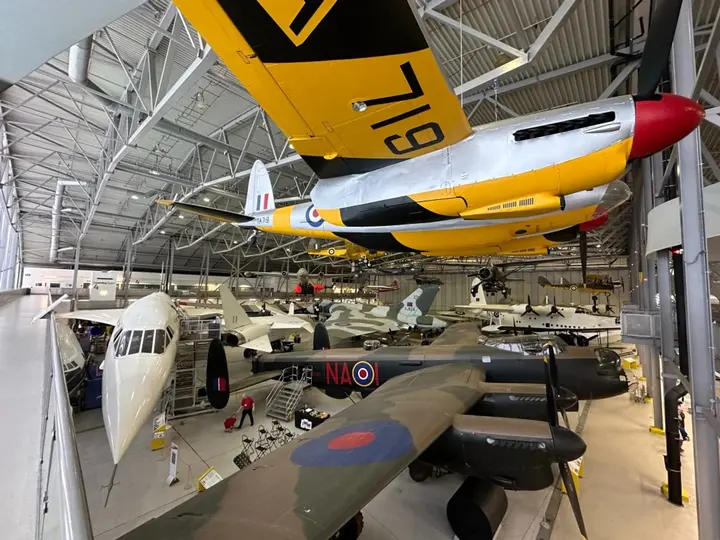


The heavyweight champion, and it isn't close. Europe's largest air museum occupies a real fighter station — the RAF's first with tarmac in mind, the USAAF's 78th Fighter Group home, and the airfield where the Spitfire entered squadron service in 1938. Seven hangars and exhibition halls run the gamut from dope-and-fabric to stainless steel, and because Duxford remains a working aerodrome with the Aircraft Restoration Company and Fighter Collection on site, the exhibits have an unnerving habit of starting up and flying away. Budget a full day; reviewers who allotted two hours file their regrets.
Concorde 101 (G-AXDN), the pre-production development aircraft and the fastest Concorde of them all at Mach 2.23 — plus an SR-71A Blackbird and B-52 in Foster's American Air Museum, and B-17 Sally B outside.
- Concorde 101 G-AXDN — the fastest of them all
- Lockheed SR-71A Blackbird
- B-52D Stratofortress
- TSR-2 XR222 (one of the two survivors)
- B-17G Flying Fortress "Sally B"
- Spitfire Mk.Ia N3200, Dunkirk veteran
Pre-book online; the walk between hangars is long and exposed, so dress for the airfield weather. French visitors keep leaving five-star reviews, which for a museum of British aviation is the highest possible compliment.
The national collection, free, on the London Aerodrome where British aviation grew up. The Bomber Command hall alone justifies the Tube fare.
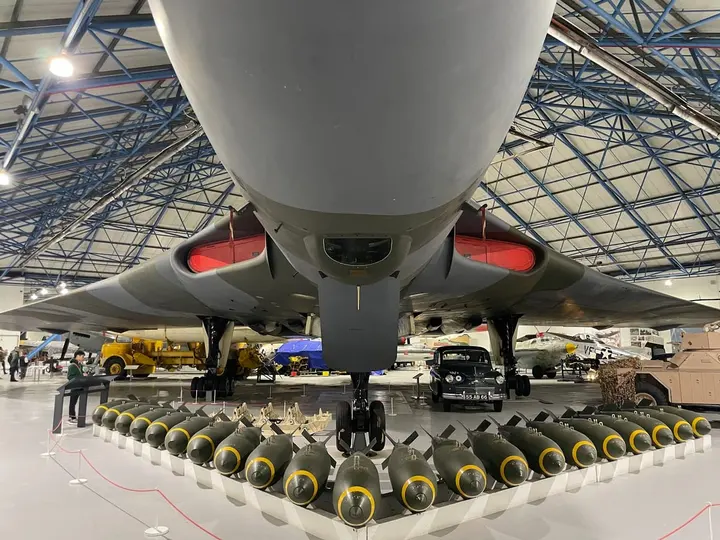
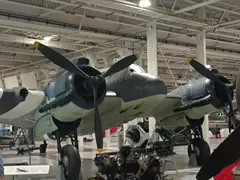
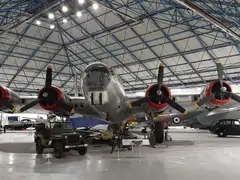
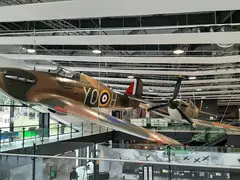
The RAF Museum London (often searched as RAF Museum Hendon, the Hendon air museum or Hendon war museum) is the national collection on the old London Aerodrome where Claude Grahame-White ran flying pageants before the RAF existed. Free to enter, six halls deep, and arranged so you walk from Blériot-era stick-and-string (much of it displayed in Grahame-White's actual relocated factory building) to the jet age without breaking stride. The Bomber Command hall stops most visitors cold: a Lancaster parked nose-to-nose with the Halifax and the maths of 55,573 dead written plainly beside them. Colindale Tube is about ten minutes’ walk; timed-entry booking is recommended even though admission is free.
Avro Lancaster R5868 'S-Sugar' — 137 operations, the RAF's highest-scoring surviving heavy — under the same roof as a Vulcan, a Sunderland you can peer into, and a genuinely unreasonable number of one-of-a-kind survivors.
- Lancaster I R5868 "S-Sugar" — 137 ops
- Hawker Typhoon IB, the only complete one
- Boulton Paul Defiant I, sole survivor
- Vickers Wellington (one of two left)
- Short Sunderland MR.5 flying boat
Entry is free but parking is not (and reviewers grumble about it); Colindale tube is a ten-minute walk. Timed-entry booking recommended. The playground and simulators keep non-believers occupied.
Free, vast, and the one place on earth with the whole V-bomber trio, Vulcan, Victor and Valiant, under one roof.
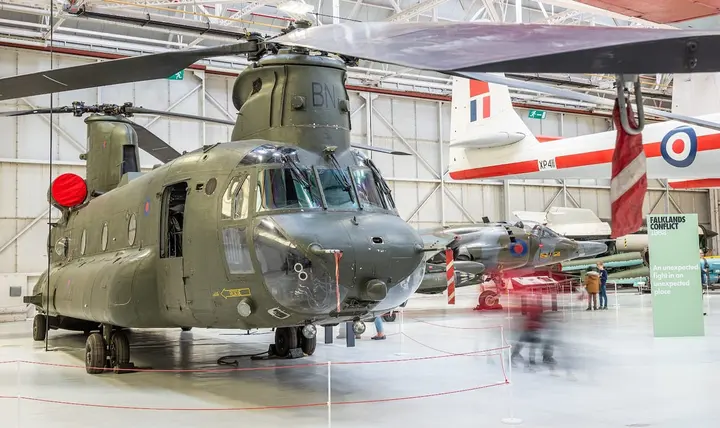
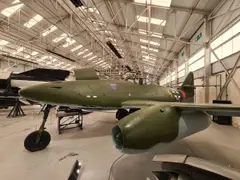
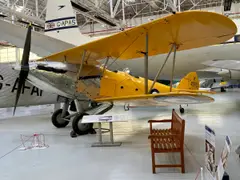
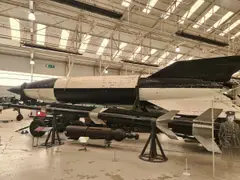
The RAF Museum's Midlands site at Cosford is where the collection keeps its research prototypes and its Cold War nerve. The National Cold War Exhibition hangs aircraft from the ceiling like a mobile over history's most dangerous cot, and is the only place on Earth you can stand beneath all three V-bombers — Vulcan, Victor and Valiant — at once. Elsewhere: captured German hardware including a V-1 and V-2 pairing that visitors repeatedly describe as 'étonnant', because roughly half the reviews are in French.
TSR-2 XR220, one of two survivors of the most gifted aircraft Britain ever cancelled, sharing floor space with the stainless-steel Bristol 188 and the record-breaking Fairey FD.2's stablemates.
- TSR-2 XR220
- Vulcan, Victor & Valiant under one roof
- Chinook "Bravo November", Falklands legend
- Bristol 188 stainless-steel research jet
- V-1 and V-2 side by side
- The world’s oldest Spitfire, K9942
Free entry, £7ish parking, on-site railway station (Cosford, on the Wolverhampton–Shrewsbury line) for the smug. Allow 4+ hours; the Cold War hall alone eats an afternoon.
Best by category
The best museum for each kind of visitor, from carrier aviation to a live Lancaster.
Carrier aviation done properly, with the walk-through carrier deck and Concorde 002 parked among the Sea Vixens.

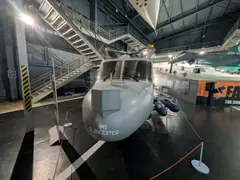

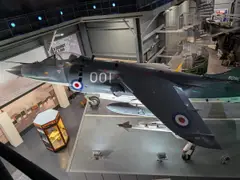
Europe's largest naval aviation collection, parked on the edge of RNAS Yeovilton so the Wildcats and Merlins of the actual Fleet Air Arm provide the soundtrack. The party piece is the Aircraft Carrier Experience: a helicopter 'flight' onto a recreated HMS Ark Royal flight deck, complete with holographic officer of the watch who springs to life as you approach — a trick reviewers consistently rate as the best set-piece in any UK museum.
Concorde 002 (G-BSST), the first British-assembled Concorde, which made her maiden flight from Filton in 1969 and now headlines a hall of supersonic research types. Also: a Corsair still wearing its unrestored 1944 paint, and a Falklands Sea Harrier.
- Concorde 002 G-BSST, first British-built
- Corsair KD431 in untouched 1944 paint
- Falklands-veteran Sea Harrier
- Fairey Swordfish
- Yokosuka Ohka kamikaze aircraft
Timed tickets bought online; the £22-ish entry draws grumbles that evaporate by the exit. Watch the live airfield from the car park — Yeovilton is one of the Navy's busiest stations.
Not the biggest, but the most magical: Edwardian and Great War aeroplanes kept airworthy and flown on calm summer evenings, including the oldest airworthy aeroplane in the world.
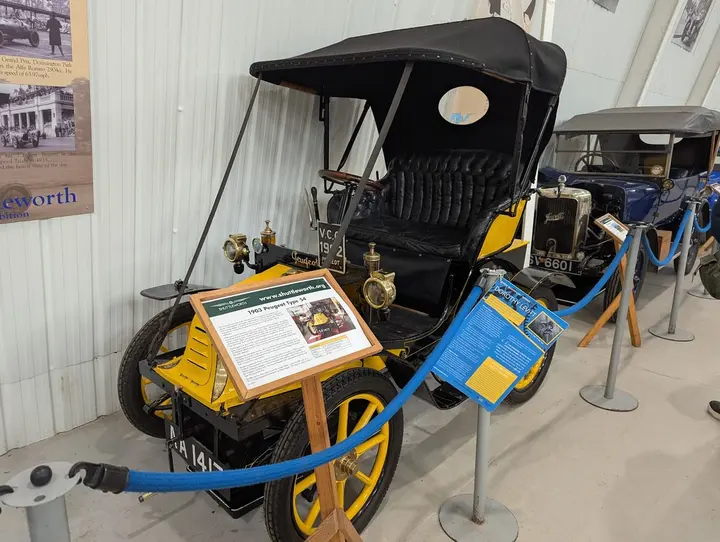
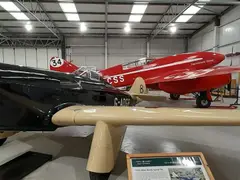
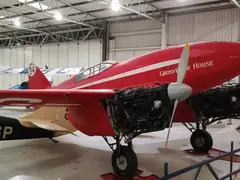
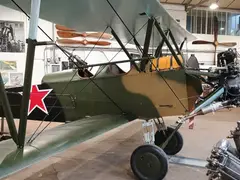
The Shuttleworth Collection at Old Warden is the only place on the planet where you can watch a 1909 Blériot XI — the world's oldest airworthy aeroplane — actually fly, on those still summer evenings when the windsock hangs dead. Richard Shuttleworth's collection is kept in flying condition as policy, from Edwardian originals through WWI fighters to the de Havilland Comet racer, and the grass aerodrome, Swiss Garden and hangar smell of castor oil complete the time machine.
The 1934 DH.88 Comet 'Grosvenor House', winner of the MacRobertson England–Australia air race, restored to fly; and the Edwardians — Blériot, Deperdussin, Blackburn — that only leave the ground here.
- 1909 Blériot XI — the world’s oldest airworthy aeroplane
- DH.88 Comet "Grosvenor House", 1934 race winner
- Spitfire Vc AR501, flying
- Sea Hurricane Ib Z7015
- 1910 Deperdussin & 1912 Blackburn, both flyers
Come on a flying-display evening if you possibly can (book early); on static days the hangars, vintage vehicles and garden still justify the trip. Reviews are effectively a 5.0 wall.
Not a museum with a WW1 shelf but an entire surviving 1916 fighter station, restored as a working aerodrome. The gazetteer knows nowhere else like it.
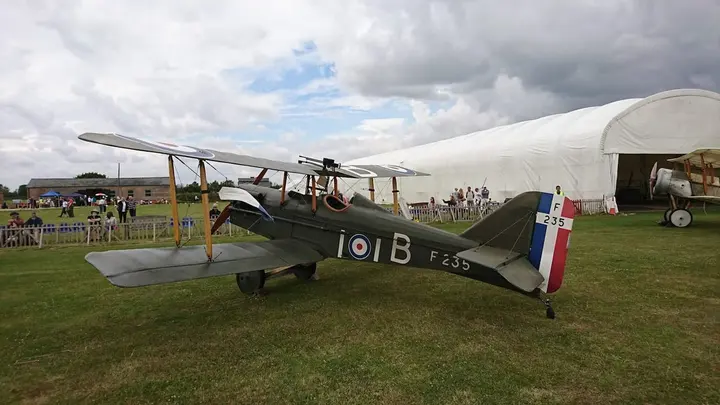
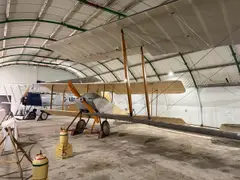
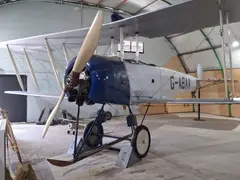

Stow Maries is the ghost that got a second chance: a 1916 Royal Flying Corps home-defence aerodrome — scrambled against Gotha raids on London — abandoned so completely it was never modernised, leaving Europe's largest surviving group of WWI aerodrome buildings. Restoration is ongoing, the grass field is live again, and WWI replicas fly from it. Standing on the empty airfield at dusk is the closest Britain gets to 1917.
The aerodrome itself: 24 listed RFC buildings, plus flying examples of Great War types on event days (a Fairey Swordfish cameo got special mention in reviews).
- Flying WWI replicas on event days
- The aerodrome itself — 24 listed 1916 RFC buildings
£12ish entry, free volunteer tours, exceptional mess-hall catering by museum standards. Exposed and windswept — dress like aircrew.
The world's largest rotorcraft collection, over eighty machines: rotary flight, aviation's neglected half, given its due.
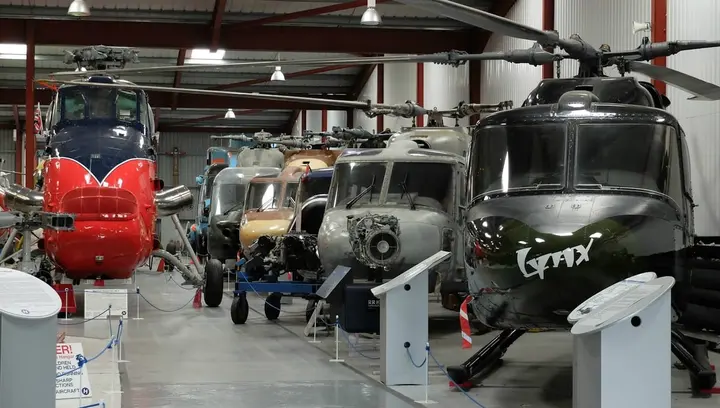



The world's largest dedicated rotorcraft collection: over a hundred helicopters and autogyros packed into a hangar on the edge of Weston-super-Mare, from tandem-rotor heavies to machines that look like garden furniture with ambition. It is gloriously specific — the aviation-museum equivalent of a single-malt bar — and the volunteer guides can explain why a helicopter is basically ten thousand parts flying in loose formation.
G-LYNX, the modified Westland Lynx that took the absolute helicopter world speed record (249.09 mph) in 1986 and holds it still; parked near the Queen's own red Wessex from the Royal Flight.
- G-LYNX — absolute world speed record, 249.09 mph
- The Queen’s Royal Flight Wessex
- Mil Mi-24 Hind gunship
- Bristol Belvedere twin-rotor heavy
Tickets give free return for a year. Cafe earns unusually specific praise (the bacon-content-of-bap metric is strong). Open-cockpit days let you into the airframes.
Scotland's national collection on a preserved wartime airfield, with Concorde G-BOAA and a Vulcan with a Falklands record. More on the Scotland museums hub.
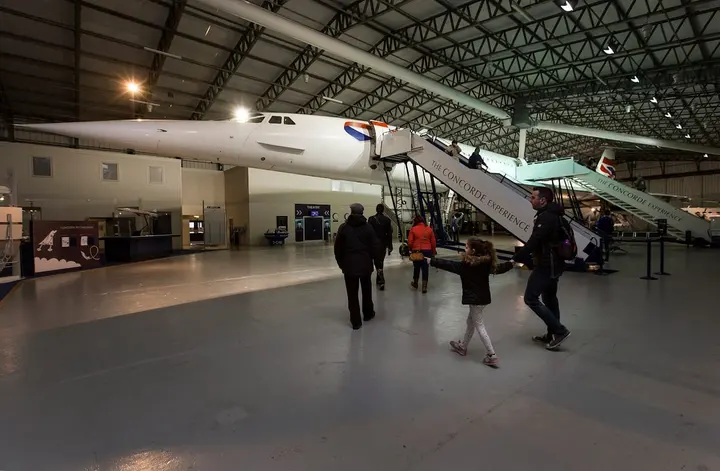

Scotland's national aviation collection at East Fortune, a preserved WWI and WWII airfield in East Lothian farmland — and the very field from which the airship R34 departed in July 1919 to make the first east-to-west Atlantic crossing. The hangars are period pieces themselves; the interpretation is world-class Museums-of-Scotland stuff; and the Concorde hangar is built like a shrine, because it is one.
Concorde G-BOAA, which flew British Airways' first commercial supersonic service in 1976 and arrived here by barge and giant road-crawl in 2004. The military hangar counters with a Vulcan and a Blue Streak missile.
- Concorde G-BOAA — flew BA’s first supersonic service
- Vulcan B.2A XM597, Black Buck raider
- Me 163 Komet rocket fighter
- Percy Pilcher’s 1896 Hawk glider
- Red Arrows Hawk XX308
Visitors planning two hours report staying four. Outside exhibits are weathering — reviewers notice — but the boarding-a-Concorde experience is described, accurately, as a childhood dream serviced.
Built around Alpha Foxtrot, the last Concorde ever to fly, a few hundred yards from where she was assembled.
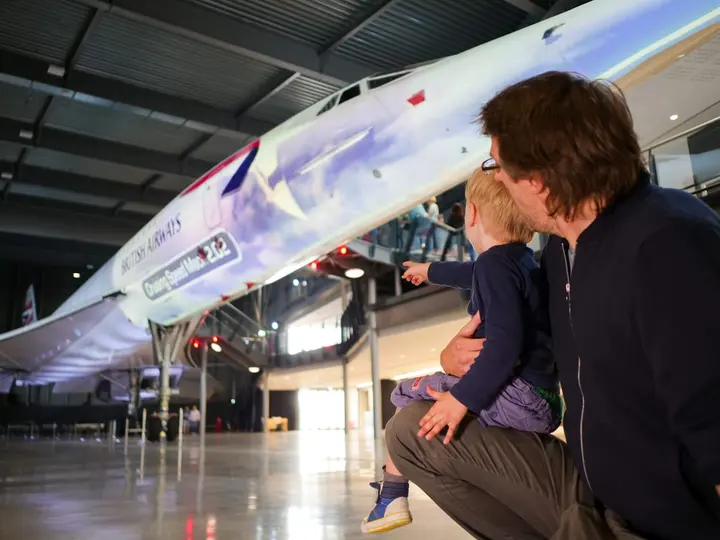

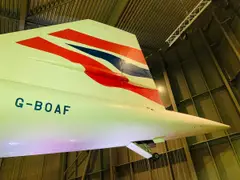
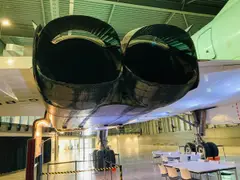
Aerospace Bristol tells the Filton story — Boxkites to Blenheims to Brabazon to BAC — in a Grade II listed WWI hangar, and then walks you into a purpose-built cathedral containing Concorde 216. Bristol built these wings; the workforce lined the runway when she came home. It is the rare museum where the industrial history is as compelling as the machines, Bristol having at various points manufactured aircraft, engines, missiles, cars and prefab bathrooms with equal conviction.
Concorde G-BOAF, the last Concorde ever built and the last ever to fly (26 November 2003, into Filton, forever). You can board her. People go quiet.
- Concorde 216 G-BOAF — the last ever to fly
- Bristol Bolingbroke (licence-built Blenheim)
- Sea Harrier FA.2
- Bristol Sycamore & Scout
The guided tours (sometimes one-on-one on quiet weekdays, per delighted reviewers) are excellent; allow 3–4 hours. Kids' interactives are genuinely good rather than tokenistic.
The barn where the Mosquito was designed in secret, with the prototype still in it. Pound for pound the most historically dense museum in Britain.
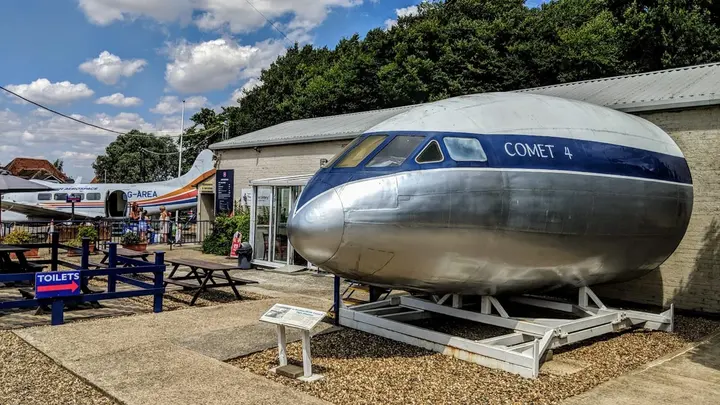
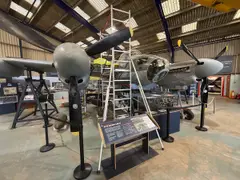
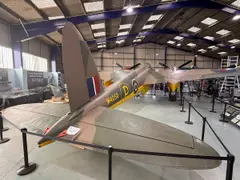
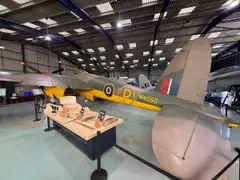
Britain's oldest aviation museum (founded 1959) exists because Salisbury Hall, a moated Tudor manor, is where de Havilland's design team secretly created the Mosquito in 1939–40 — and the actual prototype came home. Everything DH is here: Vampire, Sea Vixen, Comet airliner nose, and the evolution of the wooden wonder told next to the very airframe that started it.
Mosquito prototype W4050, the original 1940 aircraft, in the place it was designed and first assembled. No other British museum has anything quite so foundational sitting so casually in a shed.
- Mosquito prototype W4050 — the original 1940 aircraft
- Three Mosquitoes under one roof
- DH.106 Comet airliner
- Sea Vixen FAW.2
Three Mosquitoes under one roof; interior access to the Comet, Trident and 146 charts the whole arc of jet travel. Volunteer engine demonstrations get glowing mentions.
Less a museum than the world capital of Spitfire restoration, with airworthy Spitfires on view mid-rebuild.
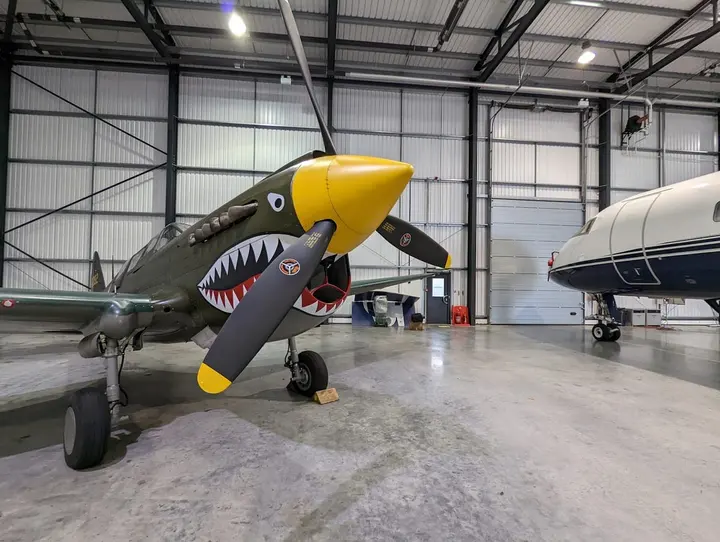

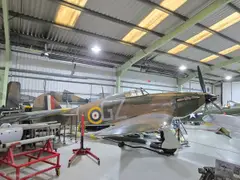

Not a museum and all the better for it: the Biggin Hill Heritage Hangar is a working Spitfire restoration shop holding one of the largest concentrations of airworthy Spitfires anywhere, on the most famous fighter station of them all. Tours walk you between live rebuilds — rivets out, history exposed — and for the price of a decent used car you can be flown in a two-seat Spitfire over the Weald.
A rotating dozen-ish airworthy and in-rebuild Spitfires plus a Hurricane and Buchón; the 'Sit in a Spitfire' add-on is the affordable gateway drug, per near-unanimous reviews.
- Up to 15 Spitfires on site at any time
- Battle of Britain-veteran Bf 109E
- 1940 Sea Hurricane Mk.X
Pre-booked tours only (~£49 for the technical evening tour, widely endorsed). This is a live workshop: expect engineers, noise and the best kind of untidiness.
Not an aircraft collection: a spire, 58,000 names, and the context every Lancaster in this gazetteer stands for.
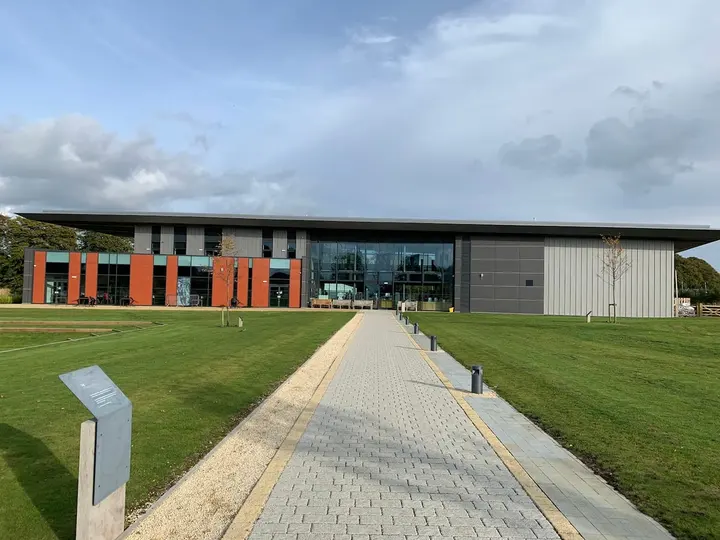

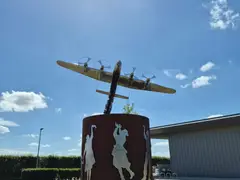
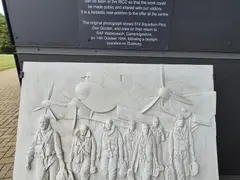
Less a collection of aircraft than a reckoning with what they did: the International Bomber Command Centre on the ridge above Lincoln pairs a superb, unflinching exhibition with a memorial spire exactly 102 feet high — a Lancaster's wingspan — surrounded by steel walls carrying almost 58,000 names. Lincoln Cathedral, the crews' last landmark outbound, sits precisely in the sightline. It is the most emotionally intelligent aviation site in Britain.
The Chadwick Centre's digital archive lets you look up individual crew members on the spot, which turns a memorial visit into a genealogy ambush for many families.
Memorial and gardens free; exhibition ticketed and worth it. Guided tours praised for handling the moral complexity of the bombing war head-on rather than around.
Best for a live Lancaster
MI-04Lincolnshire Aviation Heritage Centre
Spilsby · Midlands & Lincolnshire
Lancaster NX611 Just Jane still taxis down a Bomber County runway, twenty-five miles from the memorial. See the Lincolnshire aviation museums guide.

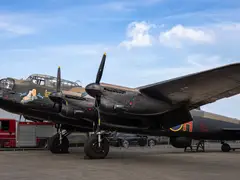
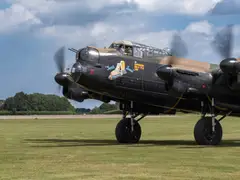
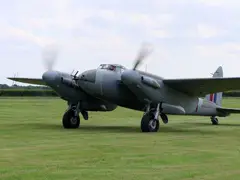
East Kirkby is the name most visitors search — officially the Lincolnshire Aviation Heritage Centre, also called East Kirkby Air Museum, East Kirkby Aviation and the Lincolnshire / Lincs air museum. It is not really a museum so much as a functioning slice of 1944 Bomber County with an entry fee. The Panton brothers built it around Lancaster NX611 'Just Jane' as a memorial to a brother lost over Nuremberg, and the original control tower, NAAFI and blast shelters do the rest. On taxi-run days Just Jane thunders down the strip on all four Merlins, close enough that reviewers report involuntary tears and singed eyebrows in roughly equal measure. Opening times, tickets and Just Jane taxi-ride bookings are on the official site — book early for event days.
Lancaster NX611 (taxiing now, returning to flight one day, they swear) and Mosquito NF.II HJ711 — the only running Mosquito in Europe. There is also a B-25 to make the Americans feel at home.
- Lancaster VII NX611 "Just Jane", taxiing
- Mosquito NF.II HJ711 — Europe’s only runner
- B-25 Mitchell "Hot Gen"
- Handley Page Hampden under restoration
Check the events calendar and book taxi-run days early; ~£15 event tickets are the best value in British aviation. The hangar's personal-effects displays are quietly devastating. Pair with the International Bomber Command Centre in Lincoln (about 25 miles west) for the full Bomber County day.
Mentioned in dispatches: the rest of the hero museums
The other museums the gazetteer singles out from the 118 surveyed: the great flying sites, the regional collections and the small places with something nobody else has.
LDLondon & AroundAll 7 in the region →
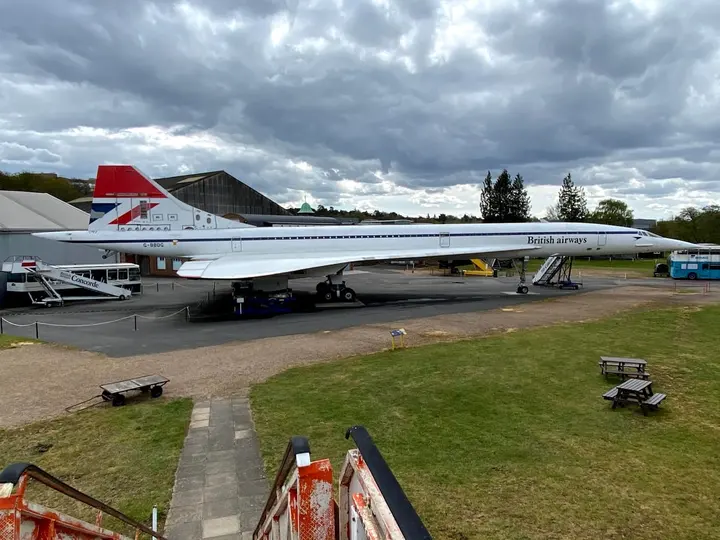
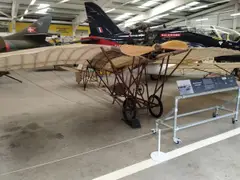
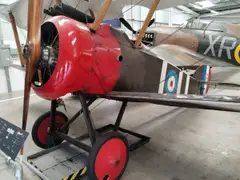
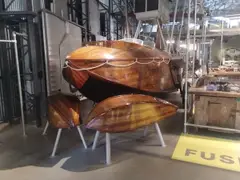
Brooklands is two shrines in one: the world's first purpose-built motor-racing circuit (1907) and the cradle of British aviation, where Vickers and Hawker built everything from Wellingtons to VC10s. The banked concrete track looms over the aircraft park like a frozen wave. Barnes Wallis worked here; his Stratosphere Chamber still squats on site like a landed submarine.
Concorde G-BBDG, the British production-test aircraft, bookended by a Wellington bomber dredged out of Loch Ness in 1985 and the only place you can trace the bouncing bomb, the geodetic fuselage and the R.100 airship to the same drawing offices.
- Concorde G-BBDG, production-test aircraft
- Wellington "R for Robert", raised from Loch Ness
- VC10 and Vanguard, built on this site
- Hawker Hurricane Mk.IIa
- Sopwith Camel replica
Reviewers recommend the Concorde experience add-on and warn that combining Brooklands with the co-located London Bus Museum turns a visit into a full day. Members of the vintage-car community may never leave.
EAEast of EnglandAll 37 in the region →
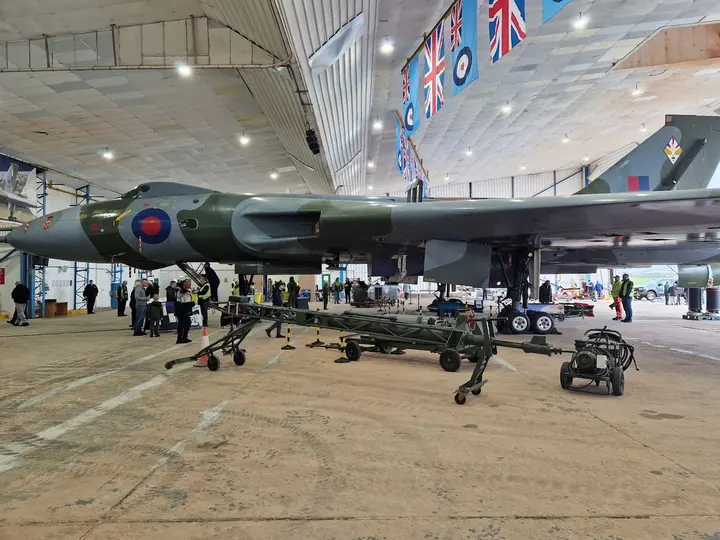

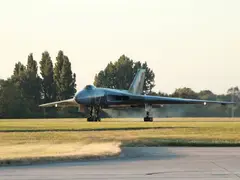

Southend's own Cold War deterrent: Avro Vulcan B.2 XL426, kept in live, taxiable condition at London Southend Airport by the Vulcan Restoration Trust. On Visit-the-Vulcan days you get under, over and — for a modest upgrade — inside her; on fast-taxi days she goes down Southend's runway with all four Olympus engines howling, an experience one reviewer correctly summarised as feeling the stick and rudder of the apocalypse, secondhand.
XL426 herself, ex-Scampton display aircraft, whose APU-powered control-surface demos let visitors in the cockpit actually waggle a Vulcan's elevons.
- XL426 — one of only three taxiable Vulcans on Earth
Everything is pre-booked open days — watch the Trust's calendar. Catering vans are cash-prone; bring notes. For Leigh-on-Sea locals this is the shortest pilgrimage in the guide.
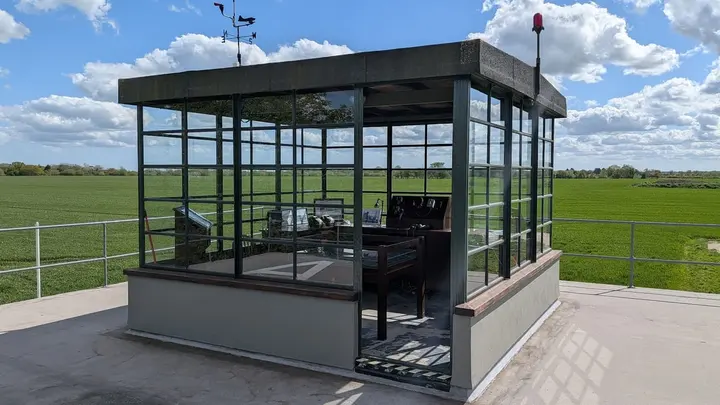
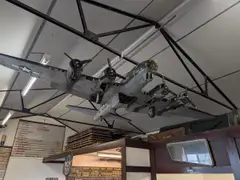

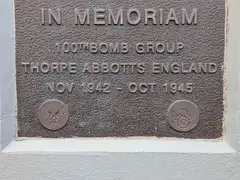
Thorpe Abbotts was Station 139, home of the 100th Bomb Group — the 'Bloody Hundredth' of Masters of the Air — and the museum lives in the original control tower from which the ground crews counted the B-17s home, or didn't. Volunteer-restored since 1977 and free to enter, it is the benchmark for East Anglia's bomb-group museums: intimate, immaculate and heavy with particular human stories rather than general history.
The tower itself. Climb to the glasshouse, look down the ghost of the main runway, and the entire Eighth Air Force story reorganises itself around one Norfolk field.
Weekends March–October plus Wednesdays in summer; free entry (donate). Masters of the Air pilgrims are arriving in numbers; veterans' families get looked after wonderfully, per multiple moving reviews.
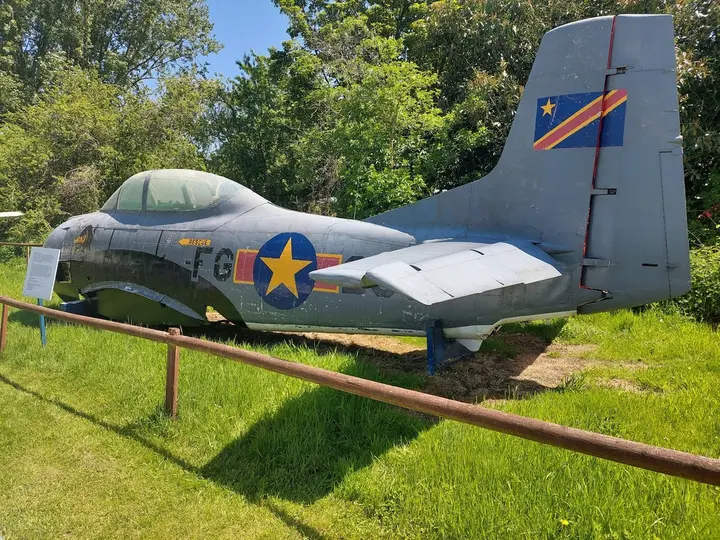
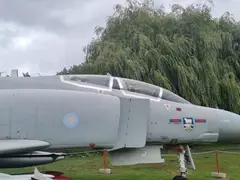
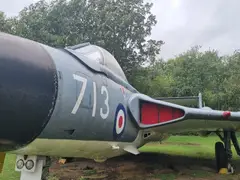
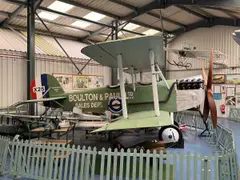
The Norfolk & Suffolk Aviation Museum at Flixton is the great free eccentric of British aviation: sixty-odd airframes accumulated with magpie logic, from mainstream jets to genuinely obscure one-offs, spread across huts, hangars and a windblown yard near Bungay. It has the highest ratio of 'what on earth is THAT' per acre in the country, and admission is a donation box.
Depends who you ask — the joy is the oddities. Come for the Bloodhound missiles and decoy rarities; stay for volunteer flight-simulator lessons materialising unprompted for twelve-year-olds.
- Gloster Javelin FAW.9
- de Havilland Sea Vixen
- Westland Whirlwind HAR.10
- A field of genuine Cold War oddities
Free (donate properly). Allow 3–4 hours, more if you talk to anyone. Some outdoor exhibits are weathering — adopt-an-aircraft donations gratefully taken.
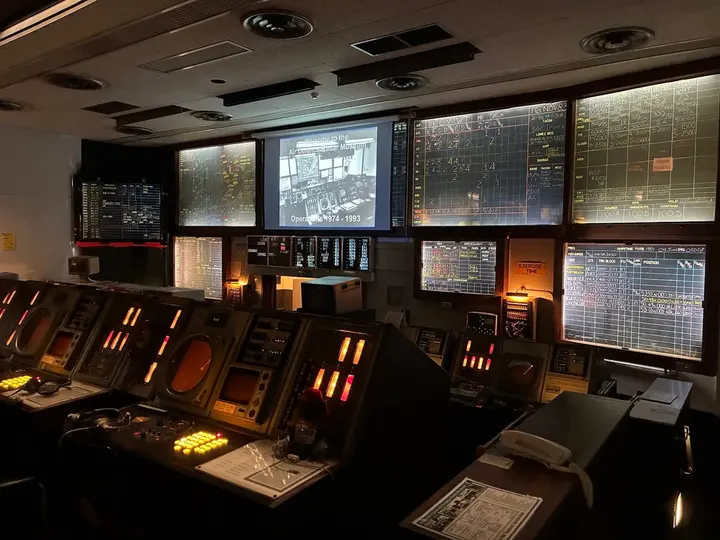


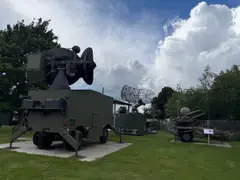
Neatishead is the museum of the invisible war: one of the world's longest-serving radar stations, now telling the story of Britain's air defence from Chain Home to the Cold War ROTOR bunker era. The preserved Cold War operations rooms — left as they were on the last day of use — are the standout, and the volunteer talks (many by ex-operators) convert even radar agnostics.
The original 1942 Ground Controlled Interception room and its Cold War successor: Britain's actual air-defence nervous system, in situ, switched off mid-thought.
Ticket includes a year of returns. Limited opening days — check first. Reviewers rate the talks as the best value lecture series in Norfolk.
SESouth East EnglandAll 19 in the region →
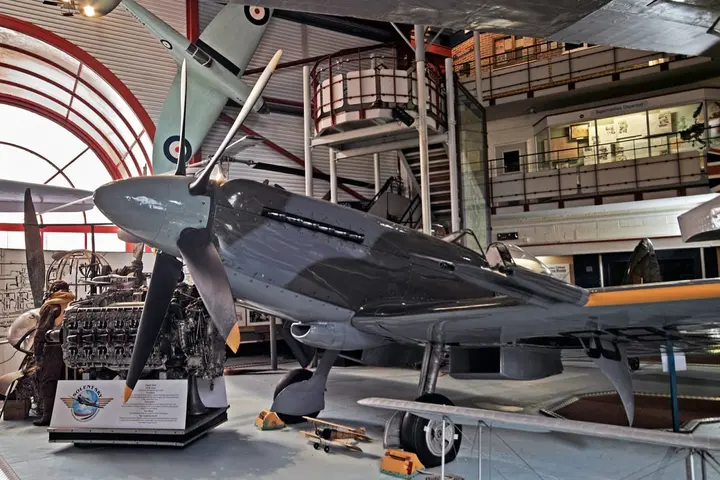



Southampton is the Spitfire's home town — R.J. Mitchell designed it here, Supermarine built it here, and the Luftwaffe flattened the factory for exactly that reason. Solent Sky packs the whole regional saga (26 manufacturers between 1910 and 1960) into one hall, with the flying-boat era given proper weight: you can board a Short Sandringham and inspect a bunk-equipped flying hotel from the age when Southampton Water was Britain's runway to the Empire.
Supermarine S.6A N248, the 1929 Schneider Trophy racer from the bloodline that begat the Spitfire — parked beneath its descendant for maximum genetic clarity.
- Supermarine S.6A N248, 1929 Schneider racer
- Short Sandringham "Beachcomber" flying boat
- Spitfire F.24, the final mark
- Saro SR.A/1 — the world’s only jet flying-boat fighter
Museum cat 'Scramble' has a fan club in the reviews. Compact but dense; combine with the city's Spitfire memorial trail.
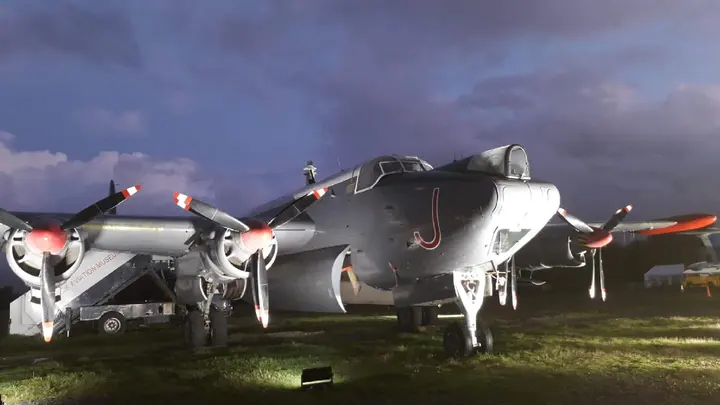
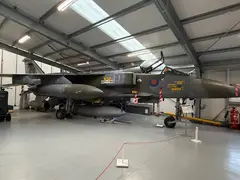
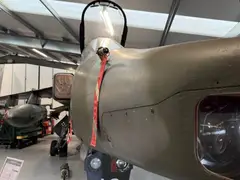
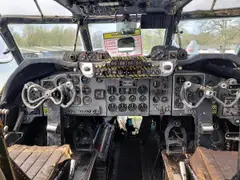
Hiding in Charlwood on Gatwick's perimeter, this charity keeps an all-British collection of piston and early-jet heavies in running order — the point is engine runs, not taxidermy. On run days the Lightning's twin Avons and the Shackleton's four Griffons perform a duet that reviewers describe in seismological terms.
Avro Shackleton WR982 (the £5 guided tour is unanimously endorsed) and a live-engined English Electric Lightning. There's also runway-viewing access for Gatwick traffic as a palate cleanser.
- Shackleton MR.3 WR982 — four Griffons, run regularly
- EE Lightning with live twin Avons
- Hawker Hunter & Gloster Meteor
Open Fridays–Sundays typically; engine-run event days are the ones to target. Small, personal, and staffed by people with logbooks.
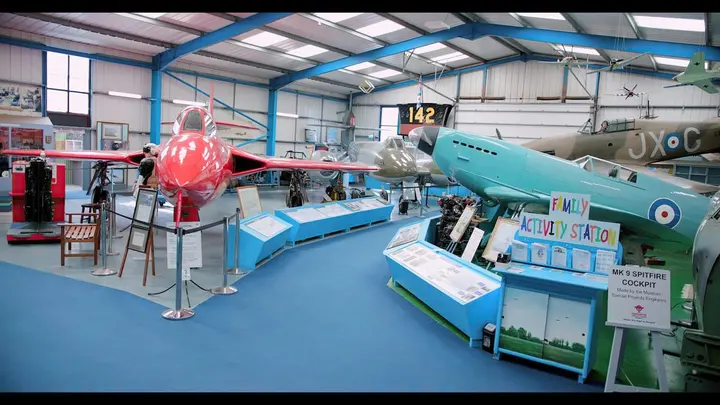
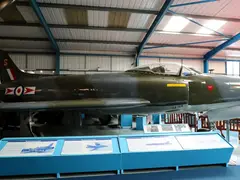
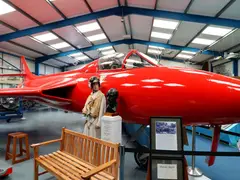
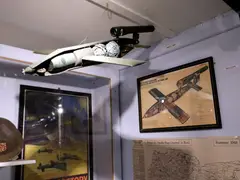
RAF Tangmere was a frontline Battle of Britain station and, later, the shadowy departure lounge for SOE Lysander flights into occupied France. The museum on the old base is enthusiast-built and proud of it — less white-cube, more squadron scrapbook with jet aircraft attached — and its speed-record gallery holds genuine crown jewels of British test flying.
Hawker Hunter WB188 in one-off scarlet, in which Neville Duke took the world air speed record to 727.63 mph off this coast in 1953; alongside the record-breaking Meteor and a Swift with similar form.
- Hunter WB188 — 727.63 mph world record, 1953
- Meteor EE549 — 1946 world record holder
- Swift WK198 world-record fuselage
Ex-RAF volunteers, simulators kids can actually fly, and frequent 'we met a veteran' moments in reviews. Bus 55 from Chichester if you're car-free.
SWSouth West EnglandAll 12 in the region →
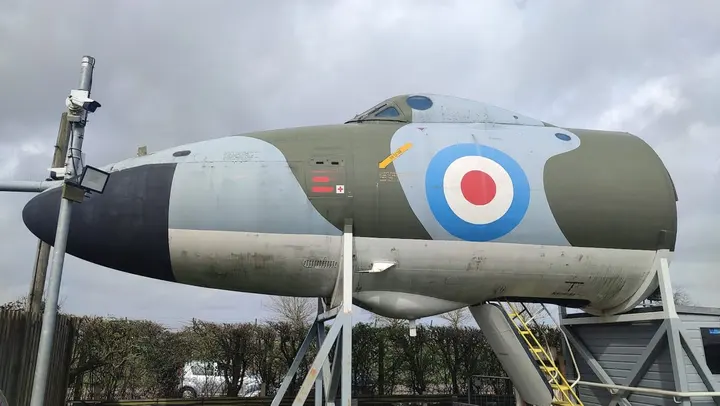
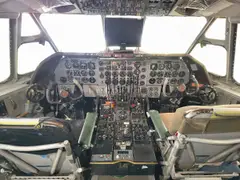


Bournemouth Aviation Museum's proposition is beautifully blunt: nearly everything opens, and you may climb in. Cockpits from airliners to a Vulcan (seven people used to fit in there; reviewers confirm this seems impossible from inside), a mobile control tower with a live feed of Bournemouth Airport ATC, and a viewing line for the adjacent runway.
The sit-anywhere policy itself — one entry fee, no per-cockpit charges, a full BAC 1-11 flight-deck sim in a shed, and thousands (reviewers insist: literally thousands) of model aircraft.
- The seven-seat Vulcan cockpit
- BAC 1-11 full flight-deck simulator
- Live Bournemouth ATC feed tower
Free parking, free simulator, volunteers described as surrogate grandfathers. Mostly outdoors, so pick your weather; the odd review notes the cafe keeps casual hours.
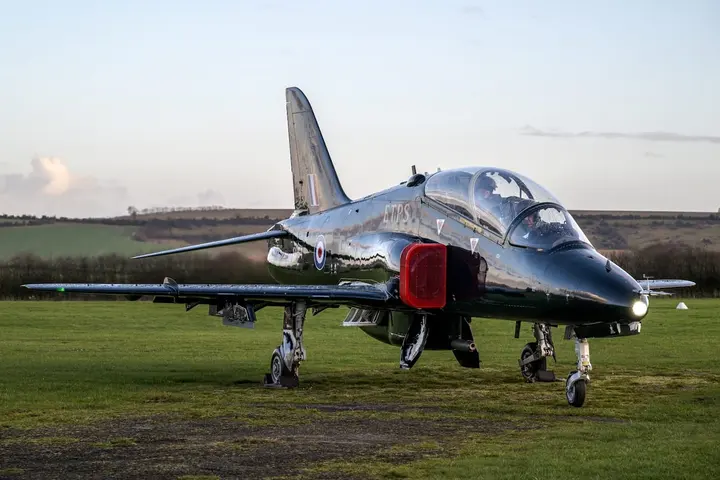



The Boscombe Down Aviation Collection at Old Sarum runs on a single glorious doctrine, quoted verbatim in its own literature: 'if it's got a ladder or steps — jump in.' Twenty-eight cockpits are open, from trainers to fast jets, staffed by volunteers largely drawn from the test-flying world of Boscombe Down itself, who will strap your eight-year-old into an ejection seat and fit the helmet properly.
The Lancaster cockpit reproduction tour, and a test-and-evaluation pedigree collection you can physically inhabit rather than admire through rope.
- The Lancaster cockpit reproduction, toured daily
- Hunter, Jaguar & Harvard cockpits to occupy
Old Sarum airfield next door supplies live circuits. Reviewers report planning 90 minutes and surfacing at closing time. Possibly Britain's best museum-per-square-metre.
MIMidlands & LincolnshireAll 21 in the region →

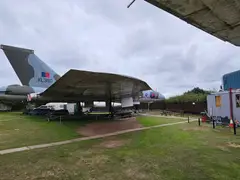
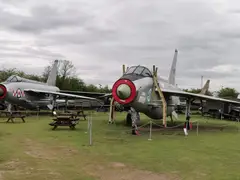
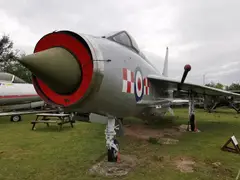
Coventry's Midland Air Museum leans into its local heroes: Sir Frank Whittle, whose jet-engine story gets a whole exhibition centre, and Armstrong Whitworth, whose Argosy freighter dominates the yard like a startled whale. It is compact, dense and endearingly hand-made — 'un peu fouillis mais du coup très riche', as one French reviewer put it, which is exactly right.
Vulcan XL360 with cockpit access and volunteer-led tours (ask for the instrumentation talk), plus the Whittle jet heritage collection a mile from where he did the thinking.
- Vulcan B.2 XL360, cockpit open
- Armstrong Whitworth Argosy freighter
- Boulton Paul P.111A delta research aircraft
- The Sir Frank Whittle Jet Heritage Centre
Next to Coventry Airport, so there is ambient traffic. £11ish entry, rocky car park, strong model shop. Ninety minutes minimum; enthusiasts report losing whole afternoons.
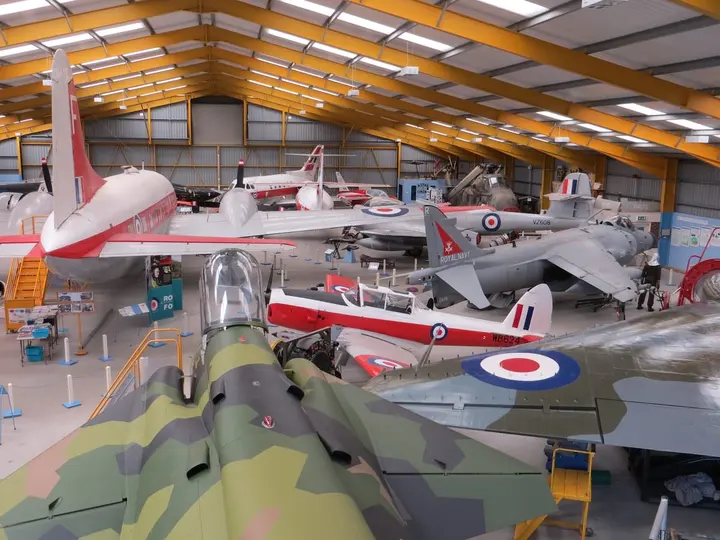
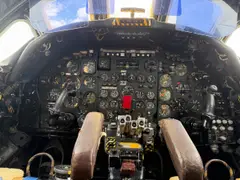

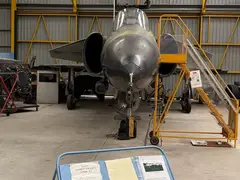
One of the largest volunteer-run collections in the country: 90-plus aircraft and cockpits on a former RAF Winthorpe bomber-training field, with a shop so well stocked with plastic kits it constitutes a hazard to household budgets. The collection's quiet superpower is breadth — Swedish Viggens and Drakens rub shoulders with V-bombers and a hangar full of engines.
Vulcan XM594, with cockpit tours occasionally given by former Vulcan aircrew, which reviewers describe with the reverence normally reserved for papal audiences.
- Vulcan B.2 XM594 (cockpit tours by ex-crew)
- Avro Shackleton MR.3
- Saab Viggen & Draken pair
- Handley Page Hastings
Two big hangars plus outdoor lines: fine in rain, better in sun. Cafe cheerful, cheap. Gliding club next door has been known to upsell visitors into the air.
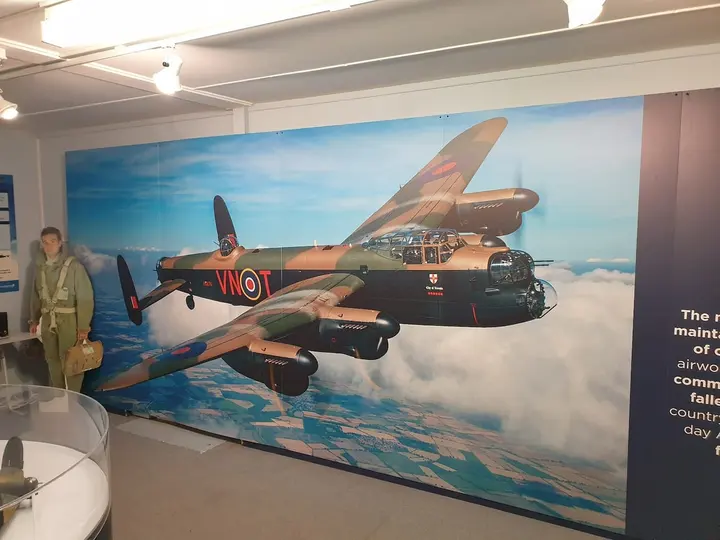
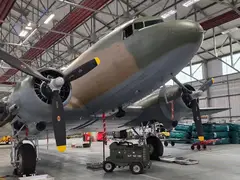
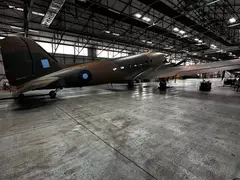
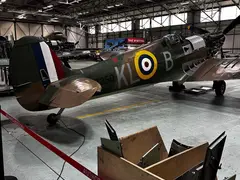
The Battle of Britain Memorial Flight's working hangar at RAF Coningsby is not a museum so much as an open engine bay: these Spitfires, Hurricanes, the Dakota and the Lancaster are operational RAF aircraft that happen to be eighty years old, and the guided tour walks you around them mid-maintenance. Guides are encyclopaedic; the smell is authentic Merlin.
Lancaster PA474 — one of only two airworthy Lancasters on Earth — when she's home (she periodically visits Duxford for deep maintenance, so check before travelling).
- Lancaster PA474
- Spitfire Mk.IIa P7350 — a flying Battle of Britain veteran
- Hurricane LF363
Access is by guided tour only (~90 min, ~£12): book ahead, and note the spotters' car park by the Coningsby runway for free Typhoon-and-warbird traffic afterwards.
NONorthern EnglandAll 11 in the region →
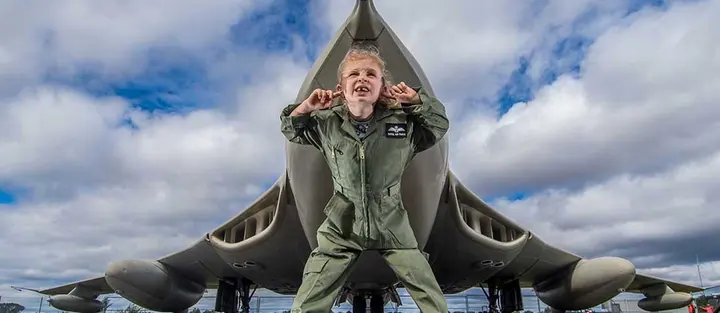
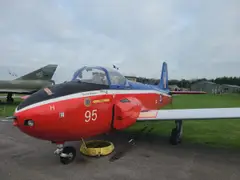

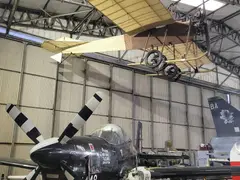
RAF Elvington, a Bomber Command station flown by the Free French squadrons 346 and 347, is now one of Britain's biggest independent air museums and the Allied Air Forces Memorial. The wartime fabric survives — control tower, NAAFI, hangars — which is why reenactment days here feel less like dress-up and more like a séance. The collection has a taste for the big and British: Victor, Nimrod, and a trio of Buccaneers.
Halifax 'Friday the 13th' — the world's only complete Halifax reconstruction, honouring the type that flew from this very field — alongside the only Mirage IV outside French ownership.
- Halifax III "Friday the 13th" — the only complete Halifax
- Mirage IV, the only one outside France
- Victor K.2 "Lusty Lindy" (live)
- Nimrod MR.2 (live)
- A trio of Buccaneers
Tickets convert to a 12-month pass. Thunder Days (engine runs) are the connoisseur's visit. French reviewers make pilgrimages here; bring tissues for the memorial rooms.
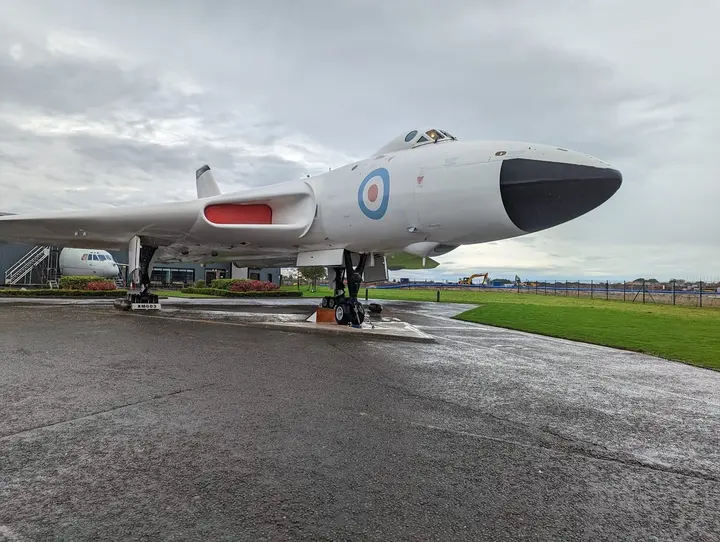

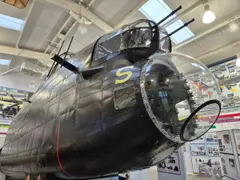
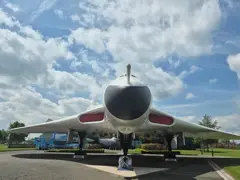
Woodford built the Lancaster, the Vulcan, the Nimrod and the 146, and when BAE closed the aerodrome the community kept the fire door open: the Avro Heritage Museum sits on the old flight-test site, staffed substantially by people who built the aeroplanes outside. Small museum; enormous story; the volunteer anecdotes are primary-source history.
Vulcan XM603 — the only all-white Vulcan on display anywhere, in original anti-flash nuclear livery — plus walk-in Lancaster and Nimrod cockpit sections and a Blue Steel missile.
- Vulcan B.2 XM603 in anti-flash white — the only one
- Lancaster & Nimrod cockpit sections
- Blue Steel stand-off missile
Vulcan and Lancaster cockpit tours are the ticket; book them. Cafe overlooks the Vulcan. Ex-Avro apprentices materialise beside you with stories; let them.




Manchester Airport's Runway Visitor Park is plane-spotting institutionalised: raised mounds a fence-width from the 23L threshold, a cafe, and a small but shameless collection of retired heavy metal you can board. It is the cheapest full-fat aviation day out in the country — free entry, pay only for parking — and the pilots wave.
Concorde G-BOAC, British Airways' flagship (the 'OAC' registration was no accident), enthroned in her own glass hangar with tours from technical to champagne-grade.
- Concorde G-BOAC — the British Airways flagship
- Trident 3B
- Nimrod MR.2
- Avro RJX — the last airliner built in Britain
Book Concorde tours ahead; weekends are busy. Bring a picnic and a long lens. Reviewers' only consistent gripe is wanting taller viewing platforms, which is the right kind of complaint.
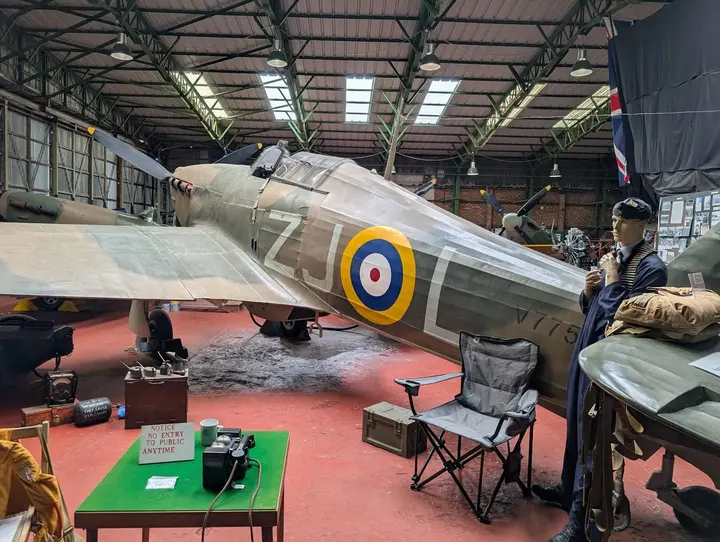
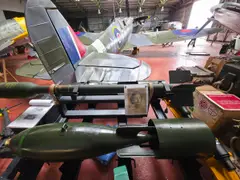
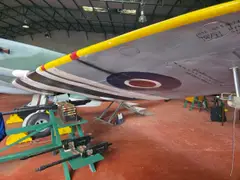

Hangar 42 at Blackpool Airport is a WWII time capsule assembled with film-set production values: Spitfires, a Hurricane and a Bf 109E (faithful replicas, plus genuine relics and vehicles) staged in a wartime hangar on a site where Wellingtons were once assembled by the thousand. The volunteers dress the part and know their stuff cold; the cockpit-photo and VR add-ons are cheerfully commercial and well reviewed.
The Ops Room recreation and the £5 sit-in-a-Spitfire photography session — the cheapest Spitfire seat time in the country.
- Sit-in Spitfire replicas
- Bf 109E & Hurricane replicas
- The recreated 1940 Ops Room
Opening days change monthly: check before travelling, seriously (it's in their own description). No dogs, no big bags, no video.
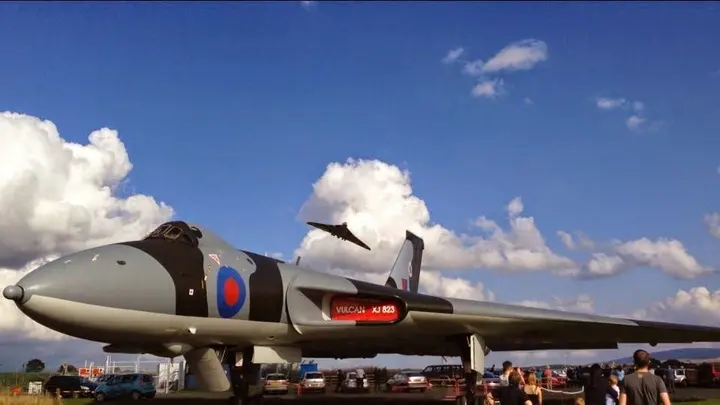
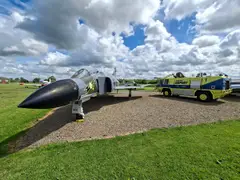
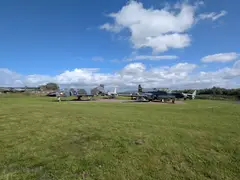
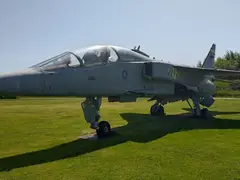
Carlisle Airport's Solway Aviation Museum is the Cumbrian outpost of the V-force: a tidy indoor collection, a ramp of Cold War jets, and the singular Spadeadam exhibition covering the Blue Streak missile programme tested up the road — Britain's forgotten space programme, told by the neighbours.
Vulcan XJ823 with pre-bookable crew-compartment visits; a Phantom, Lightning and Canberra (whose three-crew cockpit reviewers describe as 'unbelievably tight') complete the set.
- Vulcan B.2 XJ823, crew-compartment visits
- F-4 Phantom & EE Lightning
- The Blue Streak / Spadeadam story
Weekend-centric opening; check before travelling. The Blue Streak section is the sleeper hit for anyone who thought Britain never did rockets.
WAWalesAll 5 in the region →
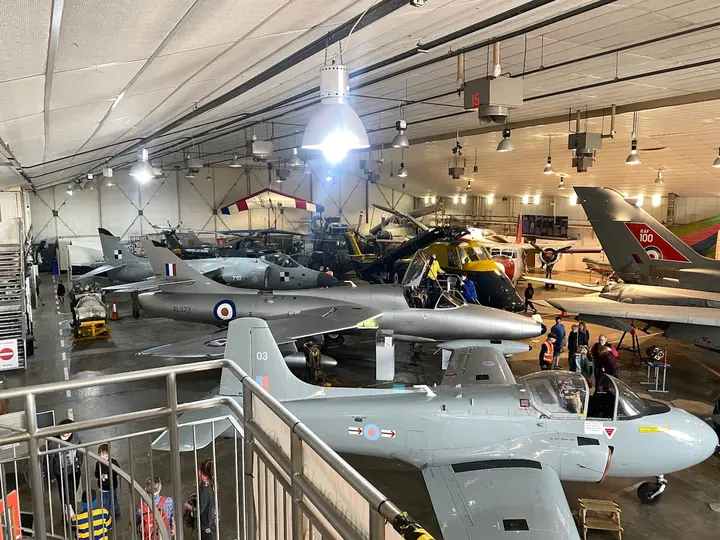


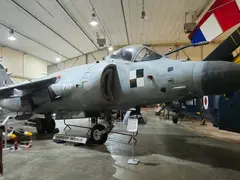
The South Wales Aviation Museum at St Athan is the new-school volunteer museum done right: a working restoration outfit (GJD Services) opened its hangar doors, filled the apron with fast jets, and adopted an everything-is-touchable policy. Gnats, Harriers, helicopters, a spiral staircase to a cafe with a flight-line view — and the sit-in-the-cockpit count is unmatched in Wales.
The resident Harrier and a growing VC10/Tornado-era collection, most with steps and open canopies. Kids exit wearing thousand-yard grins.
- Harrier GR.3
- Folland Gnat trainers
- Sea King & Wessex pair
Roughly a tenner, kids free with adults, dogs welcome. The cafe is up a spiral staircase — staff will ferry food down for anyone who can't climb, but reviewers suggest asking.
SCScotlandAll 5 in the region →
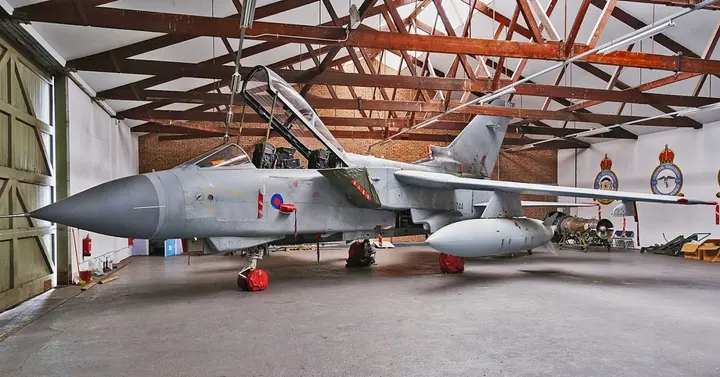
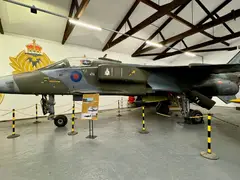
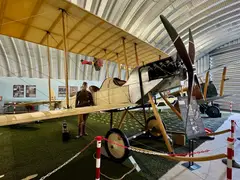
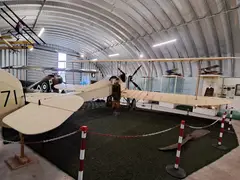
Montrose was Great Britain's first operational military airfield, established by the Royal Flying Corps in February 1913, and the museum is arranged around surviving 1913 buildings — which means the link to the very beginning of military flying is physical, not curatorial. Volunteers have scratch-built Scotland's only full-size B.E.2a and Sopwith Camel replicas, and the fast-jet hangar counters with a Tornado GR4.
The 1913 fabric itself, plus the resident ghost stories (Montrose is Britain's most famously haunted airfield, a claim the volunteers deploy with relish).
- Tornado GR4
- Scotland’s only B.E.2a and Sopwith Camel (full-size replicas)
- Hawker Hunter F.1
£8, dog friendly, immaculately kept — one review praises the toilets' fragrance, which is a first for this genre. Thursday–Sunday openings, weather permitting.
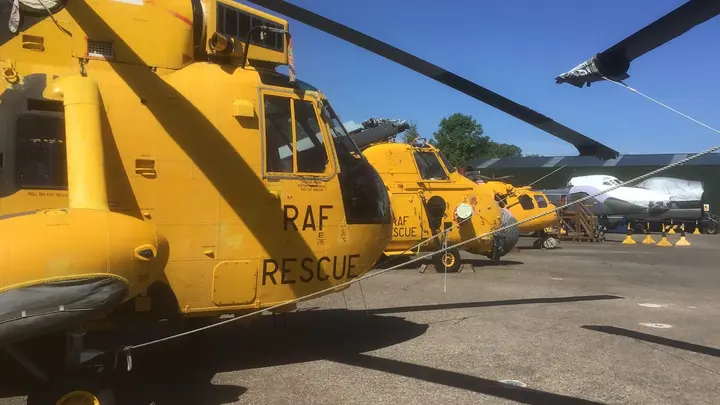
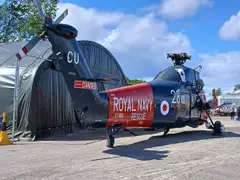
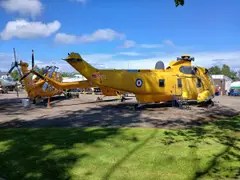
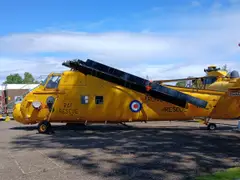
Morayvia at Kinloss is what happens when Nimrod people refuse to let the story end: a science-and-aerospace centre built around the maritime-patrol and search-and-rescue heritage of RAF Kinloss, with an access-all-areas approach — cockpits, cabins, a planetarium — and a volunteer corps thick with former aircrew who flew the exhibits in anger.
Nimrod XV244 (complete, and the crew who operated her sometimes give the tours) alongside a Sea King in RAF SAR yellow — the machine that defined Scottish mountain rescue for four decades.
- Nimrod MR.2 XV244, complete and crewed by its veterans
- Sea King HAR.3 in SAR yellow
- Whirlwind & Wessex
Weekends mainly; £8; families rave. Reviewers keep 'running out of time' because volunteers keep telling true stories. Budget accordingly.
NINorthern IrelandAll 1 in the region →
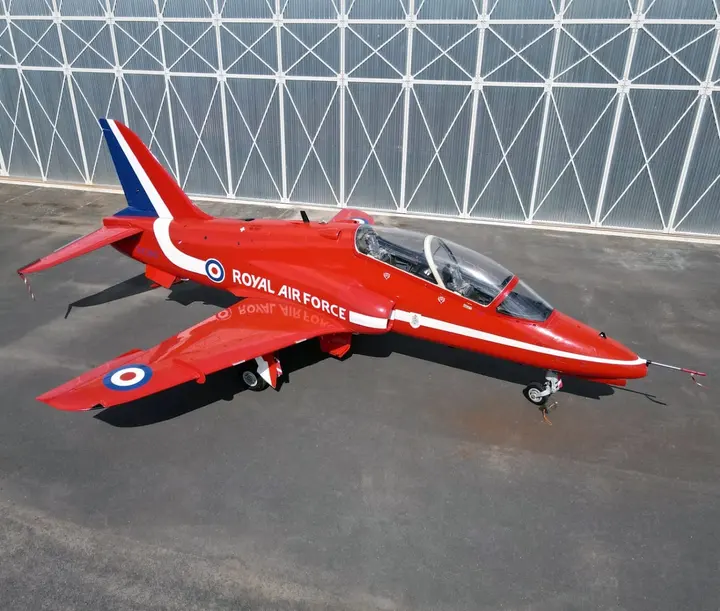
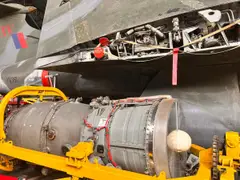

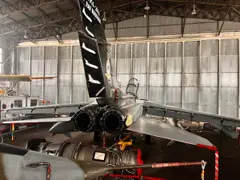
The Ulster Aviation Society's two WWII hangars at Maze Long Kesh hold 50-plus airframes and the definitive Shorts collection — fitting, since Belfast's Short Brothers were the world's first production aircraft company. Tours are member-guided, unhurried and repeatedly reviewed like great theatre, with individual volunteers name-checked. Northern Ireland's best-kept aviation secret, which the society itself cheerfully admits needs more promotion.
The Shorts family — SC.1 vertical take-off research aircraft included — plus a Buccaneer, Phantom, Wildcat, and a newly arrived AV-8 Harrier that has the reviews buzzing.
- Buccaneer S.2B XV361
- Grumman Wildcat, recovered from the lough
- AV-8B Harrier, the newest arrival
- Phantom FG.1 of 892 NAS
Visits are typically pre-arranged tours or open weekends: check the website first, don't just turn up. Enter via Gate 3, Halftown Road. Bring a flask outside event days.
Aircraft museums in England
England holds the great majority of the gazetteer's 118 stations. The essential three above are all in England; so are East Kirkby, Duxford's neighbours in East Anglia, the Fleet Air Arm at Yeovilton, Shuttleworth, Aerospace Bristol, and the Eighth Air Force control-tower museums of Norfolk and Suffolk. Use the regional hubs to browse by county cluster:
- London & around — Hendon and the capital orbit
- East of England — Duxford and the bomber fields
- Midlands & Lincolnshire — Cosford, East Kirkby, Newark
- South East · South West · Northern England
The free ones
Aviation museums are cheap days out generally, but these cost nothing at the door: RAF Museum London, RAF Museum Midlands (Cosford), and the Spitfire & Hurricane Memorial Museum at Manston among them — and many of the volunteer-run airfield museums ask only a donation. See the dedicated free aviation museums list for the full set.
RAF museums in England
England’s two national RAF Museum sites — London (Hendon) and Midlands (Cosford) — are both free and between them cover the fighter story, Bomber Command, and the complete V-force. Add the Fleet Air Arm Museum for naval aviation and you have covered the three services’ main public collections.
The detours worth taking
The gazetteer's strongest opinion: the small museums are the point. East of England alone holds thirty-seven collections, most of them preserved airfield sites of the Eighth Air Force — control towers at Thorpe Abbotts (the Masters of the Air group), Parham, Rougham and a dozen more, staffed by volunteers whose parents watched the B-17s form up overhead. None will fill a day; all will leave a mark. Pick any region of the gazetteer's nine commands and you will find:
- A Spitfire in a city gallery — the Potteries, Stoke-on-Trent, honouring local boy R.J. Mitchell.
- A Vulcan you can hear — taxi-run days at Southend, Wellesbourne and Doncaster (XH558).
- An entire museum for one aeroplane — the Vulcan Restoration Trust, the Welsh Spitfire Museum, the Vulcan Experience.
- Cornwall’s military / WW2 museum — Cornwall at War Museum, Davidstow.
- The world's problems solved over a kettle — every volunteer-run site in the survey, without exception.
Planning notes
- Time: the big three each want a full day; regional museums run two to four hours.
- Season: flying collections (Shuttleworth, Duxford, BBMF) are summer creatures; static museums are the winter itinerary. Volunteer-run sites often close weekdays and all winter — check the gazetteer's opening-hour notes before driving anywhere remote.
- With children: Duxford, Cosford and the Helicopter Museum are the reliable choices — scale impresses before history does. Cockpit-access days (many small museums run them) beat any interactive gallery yet built.
- Getting there: Hendon is on the Tube; almost everything else in this hobby assumes a car. Duxford runs event shuttles from Cambridge on show days.
- Airshows: pair museum days with the UK Airshows 2026 calendar.
Full listings — inventories, maps, visitor ratings and opening-hour notes for all 118 museums — are on the gazetteer's main survey, organised by regional command.
Selections reflect the gazetteer's survey as of August 2026. Museums close, move and surprise; verify opening hours before travelling, especially for volunteer-run sites.