The story of RAF Defford
In May 1942 the Telecommunications Research Establishment, Britain's radar research centre, moved to Malvern. Its Telecommunications Flying Unit moved its aircraft to Defford in such haste that many staff lived in tents at first. By 1945 the station had about 2,500 personnel and 100 aircraft. Civilian scientists flew with RAF and Royal Navy crews to test new radar. Airborne interception sets were proved by night fighter pilots such as John 'Cats Eyes' Cunningham. A converted Wellington was a forerunner of modern AWACS aircraft. In January 1945 Boeing 247 DZ203 made the world's first automatic 'hands off' approach and landing here.
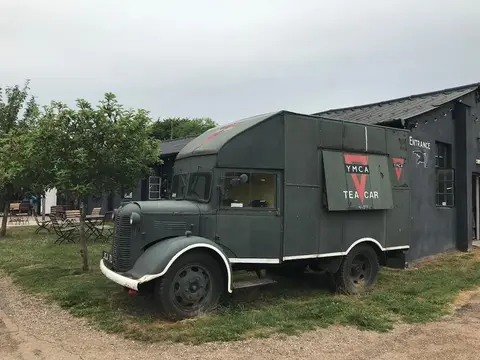
On 7 June 1942 Halifax V9977 crashed while testing H2S radar, killing all eleven aboard, including Alan Blumlein. The unit became the Radar Research Flying Unit in 1953. Defford's runway was too short for V-bombers, so the unit moved to Pershore in 1957. Satellite communications work continued on the site. The RAF Defford Museum is in the former medical buildings at the National Trust's Croome.
Flying units
| Unit | Years | Aircraft |
|---|---|---|
| No. 23 Operational Training Unit (satellite) | 1941–1942 | Vickers Wellington |
| Telecommunications Flying Unit (later Radar Research Flying Unit) | 1942–1957 |
What survives
- Former station medical buildings at Croome, now the RAF Defford Museum
- Satellite communications facility on the central airfield
- RAF Defford Memorial, unveiled by Sir Bernard Lovell in 2002
The museum on the airfield
| Museum | Adult entry | Airframes | Headline exhibit |
|---|---|---|---|
| RAF Defford MuseumWorcester, Worcestershire | £18 | 1 | RAF Defford's museum at National Trust Croome tells the secret radar-flight-trials story — TRE's airborne laboratory squadrons — from… |