Also known as Doncaster Aerodrome · Doncaster Aviation Centre
The story of RAF Doncaster
The town opened an Aviation Centre on 26 May 1934, with advice from Alan Cobham. An international service to Amsterdam began in July 1936. On 18 November 1938 No. 616 (South Yorkshire) Squadron of the Auxiliary Air Force was formed here. It later fought in the Battle of Britain and became the first squadron with the Meteor in 1944.
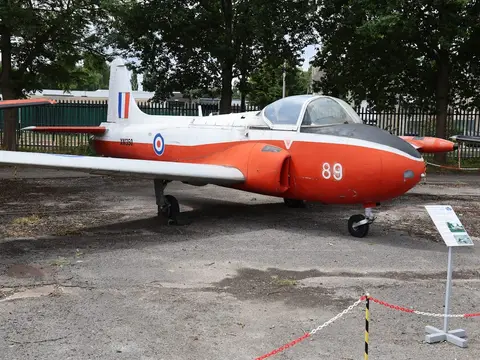
No. 271 Squadron then flew requisitioned civil aircraft and old bombers from Doncaster. It re-equipped with Dakotas and moved south for the invasion of Normandy. Its Flight Lieutenant David Lord won a posthumous Victoria Cross at Arnhem. A Dakota modification centre also worked here in 1944. After the war the airfield returned to civil flying and finally closed in 1992. The last original RAF buildings house the South Yorkshire Aircraft Museum.
Flying units
| Unit | Years | Aircraft |
|---|---|---|
| Royal Flying Corps home defence fighters | 1916–1919 | BE2c, SE5a, Avro 504K, Sopwith Cuckoo |
| No. 616 (South Yorkshire) Squadron, Auxiliary Air Force | 1938 | |
| No. 271 Squadron | Douglas Dakota | |
| No. 9 Reserve Flying School | 1947–1954 |
What survives
- The last original RAF buildings, now the South Yorkshire Aircraft Museum
The museum on the airfield
| Museum | Adult entry | Airframes | Headline exhibit |
|---|---|---|---|
| South Yorkshire Aircraft MuseumDoncaster, South Yorkshire | £7.50 | 109 | Doncaster's South Yorkshire Aircraft Museum sprawls across the old RAF Doncaster site: dozens of airframes and helicopters, strong… |