Also known as Dunkeswell Aerodrome
The story of RAF Dunkeswell
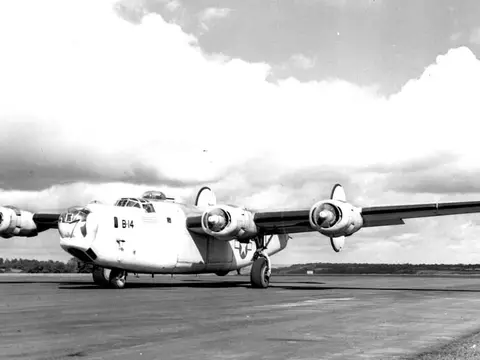
In November 1943 the anti-submarine task passed to the US Navy. The Liberators went to Patrol Bomber Squadron VB-103 of Fleet Air Wing 7 and became PB4Y-1s. It was the first US Navy unit to train with the RAF. VB-105 and VB-110 followed. A VB-110 pilot, Lieutenant Joseph P. Kennedy Jr., volunteered for an Aphrodite drone mission. He was killed on 12 August 1944 when his explosive-laden Liberator blew up over Suffolk. The Navy squadrons moved to Upottery in November 1944.
The RAF used Dunkeswell from August 1945 to April 1946 to ferry aircraft to the Middle East. Maintenance units followed, and the station was sold at the end of 1948. In the early 1950s it served as a relief landing ground for RAF flying schools. It is now a busy civil aerodrome. The heritage centre stands beside a large propeller memorial.
Flying units
| Unit | Years | Aircraft |
|---|---|---|
| 479th Antisubmarine Group, USAAF | 1943–1943 | Consolidated B-24 Liberator |
| VB-103, US Navy (Fleet Air Wing 7) | 1943–1944 | Consolidated PB4Y-1 Liberator |
| VB-105 and VB-110, US Navy | 1943–1944 | Consolidated PB4Y-1 Liberator |
| No. 16 Ferry Unit | 1945–1946 |
What survives
- The airfield, still in use as Dunkeswell Aerodrome
- A large propeller memorial beside the heritage centre
The museum on the airfield
| Museum | Adult entry | Airframes | Headline exhibit |
|---|---|---|---|
| Dunkeswell Airfield Heritage CentreHoniton, Devon | Donation | — | The only US Navy air base in wartime Britain: Dunkeswell's heritage centre tells the B-24 anti-submarine war over Biscay (Joseph Kennedy… |