Also known as No. 1 School of Technical Training
The story of RAF Halton
In 1919 Lord Trenchard set up No. 1 School of Technical Training at Halton for RAF aircraft apprentices. Generations of 'Halton Brats' trained here until the school moved to Cosford in 1993. Rothschild's Halton House became the officers' mess. Princess Mary's RAF Hospital opened in 1927 and was among the first to use penicillin on a large scale. In the Second World War Halton kept training. No. 529 Squadron formed here in June 1943 to calibrate radar with Cierva autogyros and a Hornet Moth.
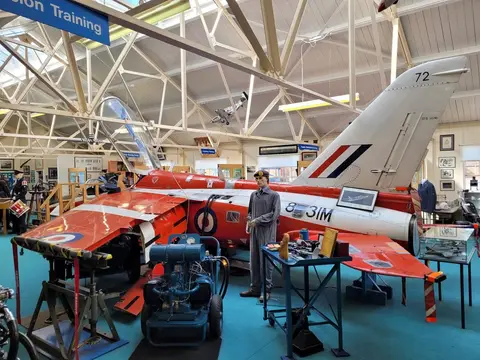
In July 1952 the Queen presented a colour to the apprentice school, the first to an apprentice unit. Recruit training moved to Halton in 1993. The grass airfield is used by gliding, light aircraft and microlight clubs. The station is being run down for disposal. The Trenchard Museum keeps the story of the apprentices.
Flying units
| Unit | Years | Aircraft |
|---|---|---|
| No. 1 School of Technical Training | 1919–1993 | |
| No. 529 Squadron | 1943–1945 | Cierva C.30, de Havilland Hornet Moth |
| RAF School of Recruit Training | 1993 |
What survives
- Grade II listed Halton House, the officers' mess until 2025
- First World War training trenches, re-excavated in 2010
- The grass airfield, used by gliding and flying clubs
The museum on the airfield
| Museum | Adult entry | Airframes | Headline exhibit |
|---|---|---|---|
| Trenchard MuseumAylesbury, Buckinghamshire | By appointment | 6 | The Trenchard Museum at RAF Halton tells the story of the RAF's apprentice scheme — 'Trenchard's Brats' — on the working base where… |