Also known as Hucknall Aerodrome · Rolls-Royce Flight Test Establishment
The story of RAF Hucknall
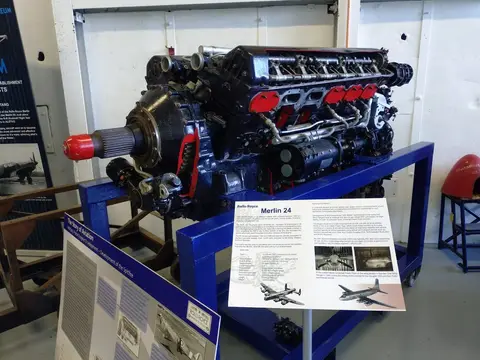
Rolls-Royce began testing engines here in 1934. In 1940 its repair organisation mended Hurricanes and converted 100 to Mark II standard with Merlin XX engines. About 300 Spitfire Vs were later converted to Mk IXs. On 10 September 1940 Douglas Bader flew in to put his Big Wing idea to Leigh-Mallory. In December 1940 the escaped German pilot Franz von Werra tried to borrow an aircraft here and was arrested. Polish airmen trained at Hucknall in 1941.
In 1942 the Whittle jet engine was flight-tested in a Wellington. In July 1953 the Rolls-Royce 'Flying Bedstead' made the world's first jet vertical take-off and landing here. Every Rolls-Royce engine from 1934 to the RB211 was flown on test beds from Hucknall. Rolls-Royce closed the aerodrome on 1 March 2015.
Flying units
| Unit | Years | Aircraft |
|---|---|---|
| No. 15 Training Depot Station | 1916–1919 | Curtiss JN-4 |
| No. 504 (County of Nottingham) Squadron | 1928 | Hawker Horsley, Hawker Hind |
| No. 98 Squadron | 1936 | Hawker Hind, Fairey Battle |
| No. 1 (Polish) Flying Training School | 1941–1941 | |
| Rolls-Royce Flight Test Establishment | 1934 |
What survives
- The 1950s hard runway and large flight test hangar, most of that era's buildings extant
The museum on the airfield
| Museum | Adult entry | Airframes | Headline exhibit |
|---|---|---|---|
| Hucknall Flight Test MuseumNottingham, Nottinghamshire | By appointment | 3 | Hucknall Flight Test Museum, on the aerodrome where Rolls-Royce flew testbeds from 1934 (and hoisted the Flying Bedstead into history),… |