Also known as Caernarfon Airport
The story of RAF Llandwrog
The field then became a satellite of No. 9 (Observers) Advanced Flying Unit, which later moved its headquarters here. On 10 October 1943 two Whitleys landed at the same time, one on top of the other, killing seventeen airmen. Early in 1942 the station medical officer, Flight Lieutenant George Graham, formed a volunteer mountain rescue team. It was the start of the RAF Mountain Rescue Service.
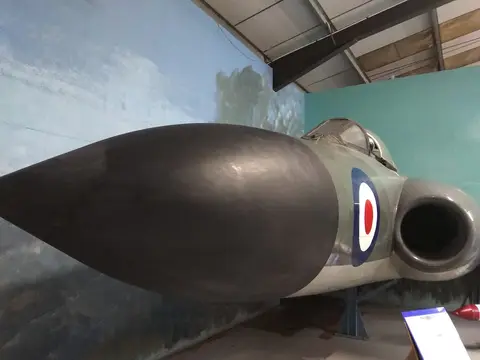
Flying ended in June 1945. Almost 71,000 German Tabun nerve-agent bombs were then stored in the open here until 1954. The airfield became inactive in November 1956. Light aircraft returned for the 1969 Investiture at Caernarfon Castle. It became Caernarfon Airport, fully licensed from 1976, and home to the Airworld Aviation Museum.
Flying units
| Unit | Years | Aircraft |
|---|---|---|
| No. 9 Air Gunners School | 1941–1942 | Armstrong Whitworth Whitley, Fairey Battle, Westland Lysander, Avro Anson |
| No. 9 (Observers) Advanced Flying Unit | 1942–1945 | Avro Anson |
| RAF Llandwrog Mountain Rescue Section | 1942 | |
| No. 277 Maintenance Unit | 1946–1956 |
What survives
- The wartime runways and taxiways, still intact
- The airfield, now Caernarfon Airport, with air ambulance and coastguard helicopters
The museum on the airfield
| Museum | Adult entry | Airframes | Headline exhibit |
|---|---|---|---|
| Airworld Aviation MuseumCaernarfon, Gwynedd | £7 | 10 | Airworld at Caernarfon Airport (RAF Llandwrog, birthplace of the RAF Mountain Rescue Service): Hunter, Vampire and the world's only… |