Also known as Old Sarum Airfield
The story of RAF Old Sarum
In February 1940 the school formed 'D' Flight for artillery spotting. It was the nucleus of all later air observation post units. In the Battle of Britain some army co-operation trainees went straight to Hurricane and Spitfire units. A hangar burned out in a raid on the night of 11–12 May 1941. In August 1941 No. 651 Squadron formed as the first full air observation post squadron, with Army pilots in Taylorcrafts. Before D-Day thousands of men and almost all RAF transport for Normandy passed through Old Sarum.
In 1947 the school became the School of Land/Air Warfare. Helicopter development began here in 1961. The Army took over in 1971, and military flying ended in 1978. The airfield was sold in 1982. Its First World War hangars survive, and the Boscombe Down Aviation Collection moved into Hangar 1 in 2012.
Flying units
| Unit | Years | Aircraft |
|---|---|---|
| School of Army Co-operation | 1921–1947 | |
| No. 16 Squadron | 1924 | Bristol F.2 Fighter |
| No. 59 Squadron | 1937 | |
| No. 651 Squadron (air observation post) | 1941 | Taylorcraft |
| School of Land/Air Warfare | 1947 |
What survives
- Three Grade II* listed 1918 hangars and a Grade II listed workshop
- The Grade II listed 1935 station headquarters
- The grass flying field, still used by light aircraft
The museum on the airfield
| Museum | Adult entry | Airframes | Headline exhibit |
|---|---|---|---|
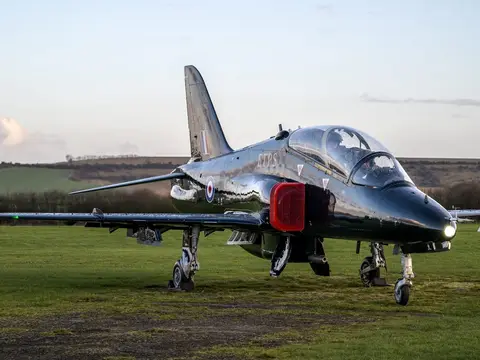
| Boscombe Down Aviation CollectionSalisbury, Wiltshire | £13.50 | 49 | The Lancaster cockpit reproduction tour, and a test-and-evaluation pedigree collection you can physically inhabit rather than admire… |