Also known as Smeatharpe · Station 462 · NAF Upottery
The story of RAF Upottery
On the night of D-Day the group dropped paratroopers of the US 101st Airborne Division into Normandy. Among them was Easy Company of the 506th Parachute Infantry Regiment, later the subject of Band of Brothers. The next day the group towed gliders with reinforcements. It won a Distinguished Unit Citation and the French Croix de Guerre with Palm. Three squadrons then flew from Italy to support the landings in southern France. The group left for France in September 1944.
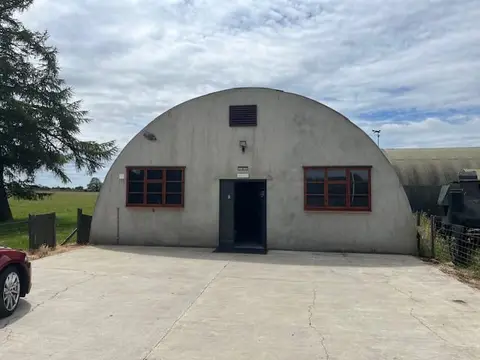
US Navy Seabees made the empty airfield habitable again. In January 1945 two Navy patrol bombing squadrons, VPB-107 and VPB-112, arrived with PB4Y-1 Liberators. They flew anti-submarine patrols with RAF Coastal Command's No. 19 Group until Germany surrendered. The airfield closed in 1948 and returned to farming. All three runways survive, mostly intact. A flying club, stock car racing and the Nissen hut heritage centre now share the site.
Flying units
| Unit | Years | Aircraft |
|---|---|---|
| 439th Troop Carrier Group, USAAF | 1944–1944 | Douglas C-47 Skytrain |
| VPB-107, US Navy | 1945–1945 | Consolidated PB4Y-1 Liberator |
| VPB-112, US Navy | 1945–1945 | Consolidated PB4Y-1 Liberator |
What survives
- All three runways, with most of the concrete intact
- A purpose-built stock car oval on part of the airfield
- Nissen hut heritage centre nearby
The museum on the airfield
| Museum | Adult entry | Airframes | Headline exhibit |
|---|---|---|---|
| The Upottery Airfield Nissen Hut Heritage CentreHoniton, Devon | Donation | — | Band of Brothers ground zero: the 101st Airborne lifted off from Upottery for Normandy, and this Nissen-hut museum in the old ablutions… |