History
The story of RAF Upper Heyford
In 1950 the US Air Force extended the runway for Strategic Air Command. B-50s, B-36s, B-47s and later B-52s rotated through on 90-day deployments. In 1966 the 66th Tactical Reconnaissance Wing arrived with RF-101 Voodoos after France left NATO's military structure. The 20th Tactical Fighter Wing moved in from Wethersfield in June 1970 and flew F-111Es for 23 years. EF-111A Ravens joined in 1984.
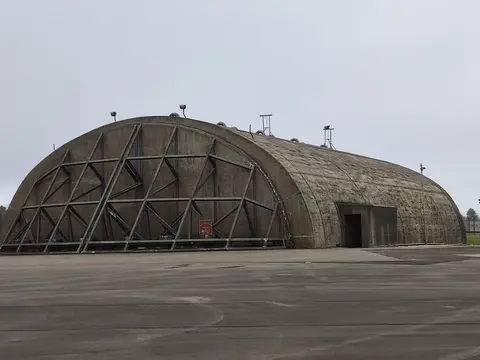
On 14 April 1986 Upper Heyford's F-111s and EF-111s flew in the raid on Libya. In the Gulf War the wing flew 1,798 combat sorties without loss. The flight line closed on 15 December 1993. The USAF handed the base back in September 1994. Several hardened aircraft shelters became scheduled monuments in 2010.
Order of battle
Flying units
| Unit | Years | Aircraft |
|---|---|---|
| No. 18 Squadron | 1931–1939 | Hawker Hart, Hawker Hind, Bristol Blenheim |
| No. 57 Squadron | 1932–1939 | Hawker Hart, Hawker Hind, Bristol Blenheim |
| 66th Tactical Reconnaissance Wing, USAF | 1966–1970 | McDonnell RF-101C Voodoo, RF-4C Phantom II |
| 20th Tactical Fighter Wing, USAF | 1970–1993 | General Dynamics F-111E |
| 42nd Electronic Combat Squadron, USAF | 1983–1993 | EF-111A Raven |
Today
What survives
- Hardened aircraft shelters, several scheduled as monuments since 2010
- Runways and much of the Cold War technical site, now a conservation area and new settlement
Visit
The museum on the airfield
| Museum | Adult entry | Airframes | Headline exhibit |
|---|---|---|---|
| Upper Heyford Heritage CentreBicester, Oxfordshire | £25 | — | Upper Heyford Heritage Centre — the Cold War preserved by accident: a vast ex-USAF F-111 base with hardened shelters, toured by… |