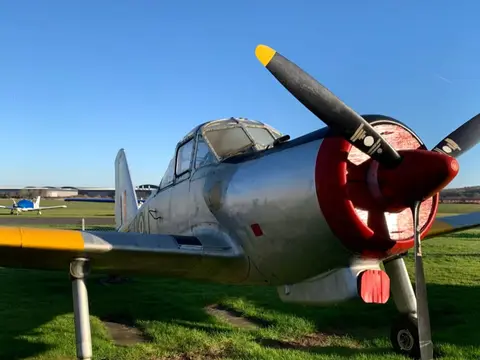
Also known as Wellesbourne Mountford Airfield
History
The story of RAF Wellesbourne Mountford
No. 3 Glider Training School arrived in July 1945 with Hotspur gliders, preparing for the war in the Far East. It disbanded in December 1947. The RAF School of Photography was based here from 1948 to 1963. No. 9 Advanced Flying Training School flew Oxfords, Harvards and Chipmunks from 1951 to 1954. The airfield closed in 1964. Its circuit was too close to the V-bomber base at Gaydon, four miles east.
The land returned to its owners, and one runway became a taxiway. It is now a general aviation airfield with flying schools and a Saturday market. Vulcan XM655 is kept in taxiable condition here. The Wellesbourne Wartime Museum is by the control tower.
Order of battle
Flying units
| Unit | Years | Aircraft |
|---|---|---|
| No. 22 Operational Training Unit | 1941–1945 | Vickers Wellington, Avro Anson |
| No. 3 Glider Training School | 1945–1947 | General Aircraft Hotspur |
| RAF School of Photography | 1948–1963 | Avro Anson |
| No. 9 Advanced Flying Training School | 1951–1954 | Airspeed Oxford, North American Harvard, DHC-1 Chipmunk |
Today
What survives
- The control tower, still in use, with the Wellesbourne Wartime Museum beside it
- Runways, partly shortened, used by a general aviation airfield
- Avro Vulcan XM655, kept in taxiable condition
Visit
The museum on the airfield
| Museum | Adult entry | Airframes | Headline exhibit |
|---|---|---|---|
| Wellesbourne Wartime MuseumWarwick, Warwickshire | £1.50 | 3 | Wellesbourne's underground WWII battle HQ bunker plus a compact museum — and, crucially, shared turf with Vulcan XM655, the most complete… |