History
The story of RAF Bircham Newton
In the Second World War Bircham Newton served No. 16 Group, Coastal Command. Squadrons flew maritime patrols and attacks over the North Sea with Hudsons, Blenheims and Wellingtons. No. 279 Squadron flew air-sea rescue Hudsons from 1941 to 1944. Dutch, Canadian and Fleet Air Arm units also served here. Two satellites, Docking and Langham, opened to take extra units.
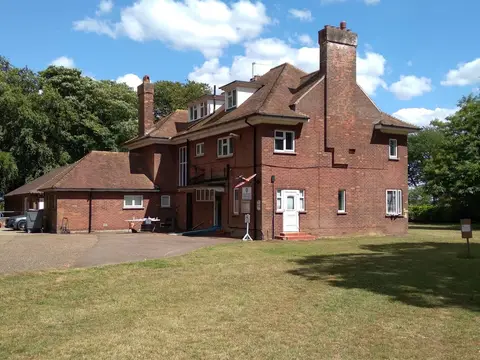
In 1965 the airfield hosted evaluation trials of the Hawker Siddeley Kestrel, forerunner of the Harrier. It closed as an operational airfield in 1966. The Construction Industry Training Board moved in and still uses most of the buildings. The control tower was demolished in 2010. The heritage centre is inside the college.
Order of battle
Flying units
| Unit | Years | Aircraft |
|---|---|---|
| No. 166 and No. 167 Squadrons | 1918–1919 | Handley Page V/1500 |
| No. 207 Squadron | 1929–1935 | Fairey IIIF, Fairey Gordon |
| No. 206 Squadron | 1926–1941 | Avro Anson, Lockheed Hudson |
| No. 279 Squadron | 1941–1944 | Lockheed Hudson |
| No. 415 Squadron RCAF | 1943–1944 | Vickers Wellington |
Today
What survives
- Most of the station buildings, used by the Construction Industry Training Board
- The control tower was demolished in 2010
Visit
The museum on the airfield
| Museum | Adult entry | Airframes | Headline exhibit |
|---|---|---|---|
| RAF Bircham Newton Heritage CentreKings Lynn, Norfolk | Donation | — | Bircham Newton's heritage centre inside the construction college keeps the Coastal Command station's WWI-to-postwar story; the chairman's… |