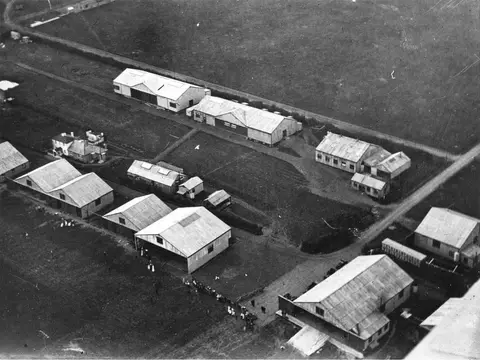
Also known as RNAS Eastchurch · Naval Flying School, Eastchurch
The story of RAF Eastchurch
In November 1910 Francis McClean offered the Royal Navy the airfield, two aircraft and club instructors to train naval officers. Four were chosen from 200 applicants, among them C. R. Samson and A. M. Longmore. The field became the Naval Flying School, Eastchurch, and later RNAS Eastchurch. In 1913 Winston Churchill, First Lord of the Admiralty, learned to fly here. By 1914 Samson commanded 24 trained officer pilots and 41 men.
The station passed to the new RAF on 1 April 1918. It stayed active between the wars, and No. 266 Squadron was based here during the Battle of Britain. Later in the war it was part of Coastal Command. RAF Eastchurch closed in 1946. A memorial to the Home of Aviation was unveiled near All Saints' Church in 1955. The site is now HM Prison Standford Hill.
Flying units
| Unit | Years | Aircraft |
|---|---|---|
| Naval Flying School | 1911–1914 | |
| No. 204 Training Depot Station | 1918–1918 | |
| No. 266 Squadron | 1940–1940 | Supermarine Spitfire |
What survives
- Several original buildings and pillboxes inside HM Prison Standford Hill
- The 1955 Memorial to the Home of Aviation near All Saints' Church
The museum on the airfield
| Museum | Adult entry | Airframes | Headline exhibit |
|---|---|---|---|
| Eastchurch Aviation MuseumSheerness, Kent | £2 | — | The Isle of Sheppey is where British aviation began — the Short brothers, the Royal Aero Club, the first British pilot's licences — and… |