Also known as Station 104
The story of RAF Hardwick
The Eighth Air Force designated it Station 104. The 93rd Bombardment Group arrived from Alconbury in December 1942 with B-24 Liberators and a 'Circle-B' tail code. Detachments went three times to the Mediterranean. One won a Distinguished Unit Citation for desert operations in 1942–43. Another flew the low-level attack on the Ploesti oil refineries on 1 August 1943. The group commander, Lt Col Addison Baker, and Major John Jerstad led the attack in a burning B-24. Both were awarded the Medal of Honor after their deaths. From October 1943 the group bombed German targets and supported Normandy. It stopped combat flying in April 1945.
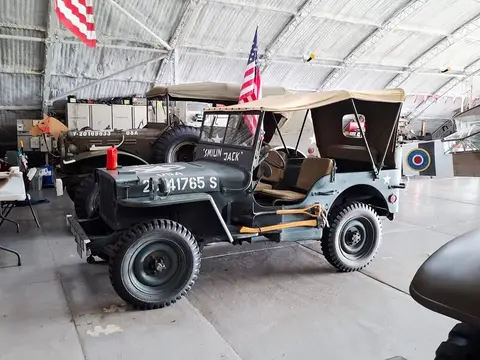
The RAF took the base back in June 1945 and closed it in 1962. The hangars and control tower were demolished, and most runways were broken up. A small private museum on Airfield Farm occupies surviving Nissen huts.
Flying units
| Unit | Years | Aircraft |
|---|---|---|
| 310th Bombardment Group (Medium), USAAF | 1942–1942 | North American B-25 Mitchell |
| 93rd Bombardment Group (Heavy), USAAF | 1942–1945 | Consolidated B-24 Liberator |
What survives
- One almost complete runway
- Nissen huts on the dispersed sites, some housing the museum
- A 1987 memorial plaque on an old barrack site
The museum on the airfield
| Museum | Adult entry | Airframes | Headline exhibit |
|---|---|---|---|
| Hardwick Airfield MuseumBungay, Norfolk | Free | 2 | Hardwick Airfield Museum — home of the 93rd BG 'Ted's Travelling Circus', the Eighth’s longest-serving Liberator group — a hangar of… |