Also known as RFC Folkestone
The story of RAF Hawkinge
In 1940 Hawkinge kept up air liaison between the RAF and the British Expeditionary Force in France and during Dunkirk. It was an advanced refuelling base for operations over France. In the Battle of Britain it was a fighter airfield for No. 11 Group squadrons. German bombing and strafing damaged it so badly that it had to be abandoned for a time. Most of the 95 wartime graves in nearby Hawkinge Cemetery are airmen, including 59 Germans.
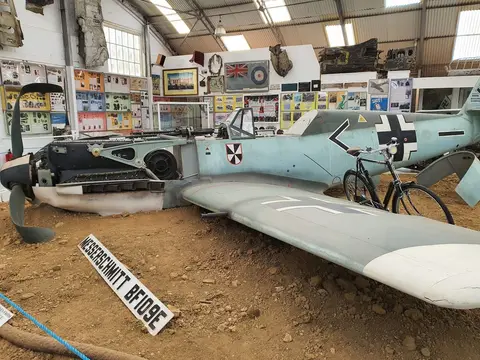
No. 91 Squadron re-formed here with Spitfires in January 1941 and came and went until 1943. Air-sea rescue squadrons flew Walruses and Sea Otters from the field. After the war the Home Command Gliding Centre taught Air Cadets to fly. It later trained women officers, and Jean Conan Doyle, daughter of Sir Arthur, was among its commanders. The station closed in January 1962. Housing and the Kent Battle of Britain Museum now cover much of the site.
Flying units
| Unit | Years | Aircraft |
|---|---|---|
| No. 12 Aircraft Acceptance Park | 1917–1919 | |
| No. 25 Squadron | 1920–1938 | Sopwith Snipe, Gloster Grebe, Siskin, Hawker Fury, Gloster Gladiator |
| No. 2 Squadron | 1935–1939 | Hawker Audax, Hawker Hector, Westland Lysander |
| No. 91 (Nigeria) Squadron | 1941–1943 | Supermarine Spitfire |
| No. 277 Squadron (air-sea rescue) | 1942–1945 | Lysander, Walrus, Sea Otter, Spitfire |
What survives
- The Kent Battle of Britain Museum, on part of the old station
- Hawkinge Cemetery war graves
- The remains of the grass strip, known locally as 'the rough grounds'
The museum on the airfield
| Museum | Adult entry | Airframes | Headline exhibit |
|---|---|---|---|
| Kent Battle of Britain Museum TrustFolkestone, Kent | £12 | 8 | Hawkinge is hallowed turf: the closest fighter station to France in 1940, now the Kent Battle of Britain Museum with the world's largest… |