Also known as Sutton's Farm · Landing Ground No. II
The story of RAF Hornchurch
The field was given up in 1920 and returned to farming. It was bought back and rebuilt, reopening in April 1928, and was renamed RAF Hornchurch two months later. Keith Park led the first unit, No. 111 Squadron, and was also the first station commander. In 1940 Hornchurch was an 11 Group sector station covering London and the Thames. It was raided at least twenty times. Richard Hillary, author of The Last Enemy, flew from here until he was shot down on 3 September 1940.
Later, Hornchurch squadrons flew cross-Channel sweeps and the 1942 Dieppe Raid. After the war it housed a reserve flying school and the Aircrew Selection Centre. The station closed in July 1962. Gravel was extracted, and the airfield became Hornchurch Country Park from 1980. Streets on the estate carry the names of its pilots.
Flying units
| Unit | Years | Aircraft |
|---|---|---|
| No. 39 (Home Defence) Squadron | 1916–1917 | BE12, Sopwith 1½ Strutter, Sopwith Pup |
| No. 111 Squadron | 1928 |
What survives
- Pillboxes, gun positions and the largest group of surviving Tett turrets in England, in Hornchurch Country Park
- Street names on the housing estate commemorating the station's pilots
The museum on the airfield
| Museum | Adult entry | Airframes | Headline exhibit |
|---|---|---|---|
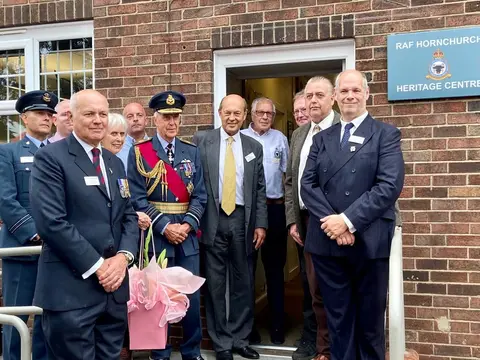
| RAF Hornchurch Heritage CentreHornchurch, Greater London | £6 | — | RAF Hornchurch heritage in Havering: the Spitfire station that covered the Thames approaches, remembered in a small, dense volunteer centre. |