Also known as Headcorn Aerodrome · Lashenden Aerodrome
The story of RAF Lashenden
In summer 1943 No. 127 Airfield Headquarters and No. 17 Wing used Lashenden. Spitfires of Nos. 403 and 421 Squadrons, Royal Canadian Air Force, flew from here. The US Ninth Air Force then needed landing grounds near the Channel coast to support the invasion. In April 1944 the 354th Fighter Group moved in from Boxted. Known as the Pioneer Mustang Group, it was the first to take the P-51B Mustang into combat. Its 356th Squadron commander, James Howard, had won the Medal of Honor in January. On D-Day the group escorted gliders. It moved to Cricqueville in Normandy in June 1944.
Farming resumed in 1945. In the late 1960s the owners began private flying from part of the old east-west runway. Today it is Headcorn Aerodrome, with a parachute club and Spitfire flights. The Lashenden Air Warfare Museum is on the site.
Flying units
| Unit | Years | Aircraft |
|---|---|---|
| No. 403 Squadron RCAF | 1943–1943 | Supermarine Spitfire |
| No. 421 Squadron RCAF | 1943–1943 | Supermarine Spitfire |
| 354th Fighter Group, USAAF | 1944–1944 | North American P-51B Mustang |
What survives
- Grass runway 10/28 on the line of the wartime east-west strip
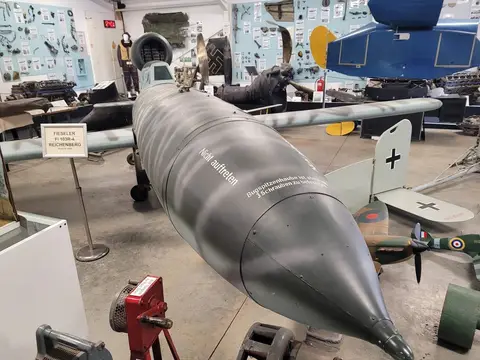
- The Lashenden Air Warfare Museum on the aerodrome
The museum on the airfield
| Museum | Adult entry | Airframes | Headline exhibit |
|---|---|---|---|
| Lashenden Air Warfare MuseumAshford, Kent | £3 | 2 | At Headcorn (Lashenden) aerodrome: a compact air-warfare museum whose crown piece is a Fieseler Fi 103R Reichenberg — the piloted V-1 —… |