The story of RAF Pembroke Dock
On 1 June 1940 Dutch naval seaplanes escaped the invasion of the Netherlands and flew here. They became No. 320 (Netherlands) Squadron. Canadians and the US Navy also flew from Pembroke Dock. It became the largest flying boat station in the world, at one point holding 99 aircraft. Its flying boats escorted Atlantic convoys, hunted U-boats and rescued downed aircrews. In 1944 No. 201 Squadron arrived to help seal the D-Day invasion area against U-boats.
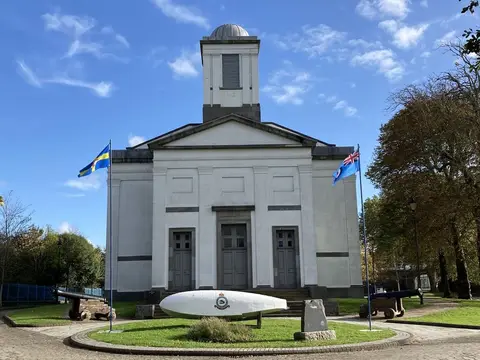
After the war Sunderlands of Nos. 201 and 230 Squadrons supported the North Greenland expeditions. The last flying boat squadrons disbanded on 28 February 1957, and the station closed in 1959. In 1979 a full-size Millennium Falcon was built in the eastern hangar for The Empire Strikes Back. The heritage centre is in the former dockyard chapel.
Flying units
| Unit | Years | Aircraft |
|---|---|---|
| No. 210 Squadron | 1931 | Supermarine Southampton, Short Rangoon, Short Singapore III |
| No. 230 Squadron | 1949–1957 | |
| No. 320 (Netherlands) Squadron | 1940 | |
| No. 201 Squadron | 1944 | Short Sunderland |
| 764 Naval Air Squadron | 1940–1941 | Supermarine Walrus, Fairey Seafox, Fairey Swordfish |
What survives
- The two B-type hangars, both listed buildings
- The former Royal Dockyard chapel, now the Pembroke Dock Heritage Centre
- Sunderland T9044, sunk in 1940, partly recovered from the haven
The museum on the airfield
| Museum | Adult entry | Airframes | Headline exhibit |
|---|---|---|---|
| Pembroke Dock Heritage CentrePembroke Dock, Pembrokeshire | £7 | 1 | Pembroke Dock Heritage Centre in the Georgian dockyard chapel: the world's largest flying-boat station in WWII (Sunderlands of the Battle… |