Also known as Station 146 · Seething Airfield
The story of RAF Seething
The 448th Bombardment Group arrived from Sioux City, Iowa, with B-24 Liberators and a 'Circle-I' tail code. It entered combat on 22 December 1943. Until April 1945 it bombed aircraft factories at Gotha, ball-bearing plants in Berlin and U-boat facilities at Kiel. It attacked V-weapon sites and transport before D-Day, and coastal defences on 6 June 1944. It supported the fighting at Caen and Saint-Lô and dropped supplies near Nijmegen. Its last mission, on 25 April 1945, hit a marshalling yard at Salzburg. The group went home in July 1945.
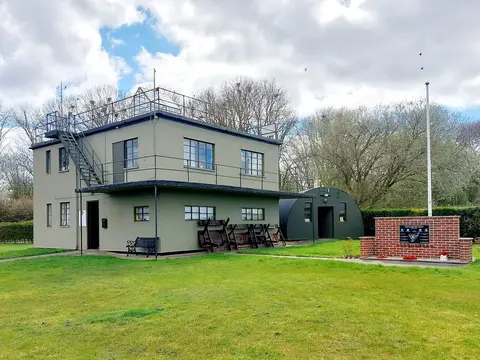
RAF maintenance units used the airfield briefly before it closed. Most of it went back to farming. The eastern part, with some of the main runway, is now Seething Airfield, home of the Waveney Flying Group. The control tower has been renovated as a memorial museum to the 448th. A memorial to the group's dead stands in front of it, dedicated in 1990.
Flying units
| Unit | Years | Aircraft |
|---|---|---|
| 448th Bombardment Group (Heavy), USAAF | 1943–1945 | Consolidated B-24 Liberator |
What survives
- The renovated control tower, now the 448th Bomb Group memorial museum
- Part of the main runway and perimeter track, used by Seething Airfield
- Derelict living-site buildings to the south
The museum on the airfield
| Museum | Adult entry | Airframes | Headline exhibit |
|---|---|---|---|
| Seething Control Tower MuseumNorwich, Norfolk | Free | — | Seething tower (448th BG) — beautifully kept, free, with folders of first-person accounts that eat hours. |