Also known as Twinwoods
The story of RAF Twinwood Farm
In March 1943 Mustangs of Nos. 164, 169, 208 and 239 Squadrons flew from here in Exercise Spartan. This large exercise tested British and Canadian tactics across southern and central England. In 1944 the airfield passed to the US Eighth Air Force and was run alongside nearby RAF Thurleigh.
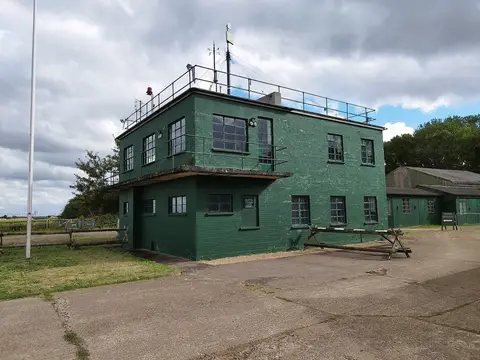
Twinwood's best-known flight left on 15 December 1944. Major Glenn Miller, leader of the Army Air Forces Band, accepted a lift to France with Lt Col Norman Baessell. Flight Officer Stuart Morgan landed their UC-64 Norseman at Twinwood at 13:45 and took off ten minutes later. The aircraft was never seen again. A board of inquiry blamed human error, mechanical failure and weather. The airfield closed in June 1945. Its restored control tower now houses the Glenn Miller Museum.
Flying units
| Unit | Years | Aircraft |
|---|---|---|
| No. 51 Operational Training Unit | 1942–1945 | Bristol Blenheim, Bristol Beaufighter, Douglas Boston, de Havilland Mosquito |
| No. 169 Squadron | 1943–1943 | North American Mustang |
| No. 239 Squadron | 1943–1943 | North American Mustang |
What survives
- The restored control tower, home of the Glenn Miller Museum
- Other wartime buildings used for the aviation and wartime displays
The museum on the airfield
| Museum | Adult entry | Airframes | Headline exhibit |
|---|---|---|---|
| Twinwood Airfield: Glenn Miller Museum & Aviation MuseumBedford, Bedfordshire | £5 | — | Twinwood Farm is where Glenn Miller took off into the fog on 15 December 1944 and vanished; the control tower and museums keep his story… |