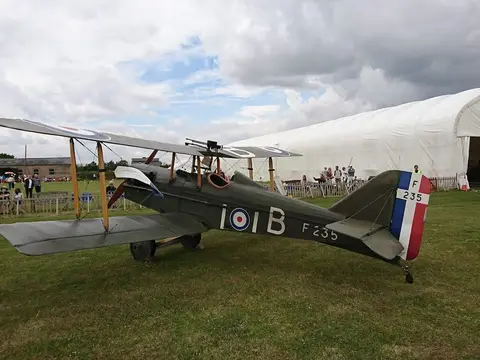
Also known as Stow Maries Great War Aerodrome
The story of Stow Maries Aerodrome
The Royal Air Force took it over in April 1918. An October survey found 219 personnel and 16 Sopwith Camels of No. 37 Squadron (Home Defence). By the time it was given up in 1919 the base had more than 500 people and 36 aircraft. Ten pilots died flying from here: eight in accidents and two shot down by the Royal Navy. A gap in the hedge is still called Milburn's Gap. Lieutenant Cyril Milburn's Camel went through it after stalling on take-off in April 1918.
The field was not reused in the Second World War, though it was surveyed twice and bombed. The land went back to farming, and the buildings were left alone. A 1997 survey found evidence of 47 buildings. At least 24 survive and carry Grade II* listing. Enthusiasts began bringing it back as a museum and light aerodrome in 2009. It is the best-preserved First World War aerodrome in England.
Flying units
| Unit | Years | Aircraft |
|---|---|---|
| No. 37 Squadron (Home Defence) | 1917–1919 | Sopwith Camel |
What survives
- At least 24 original 1917–18 buildings, all listed Grade II*
- The grass flying field, used again by light aircraft
- Milburn's Gap in the hedge
The museum on the airfield
| Museum | Adult entry | Airframes | Headline exhibit |
|---|---|---|---|
| Stow Maries Great War AerodromeChelmsford, Essex | £12 | 11 | The aerodrome itself: 24 listed RFC buildings, plus flying examples of Great War types on event days (a Fairey Swordfish cameo got… |