If the Mach Loop is the heavyweight, LFA 17 is the closest rival. Steep, narrow valleys and long reservoirs make the Lakes a weekly classroom for RAF and USAF crews practising low-level navigation. Typhoons, F-35s, Hawks and the occasional A400M or C-17 still squeeze through the ridges when the weather and the tasking allow.
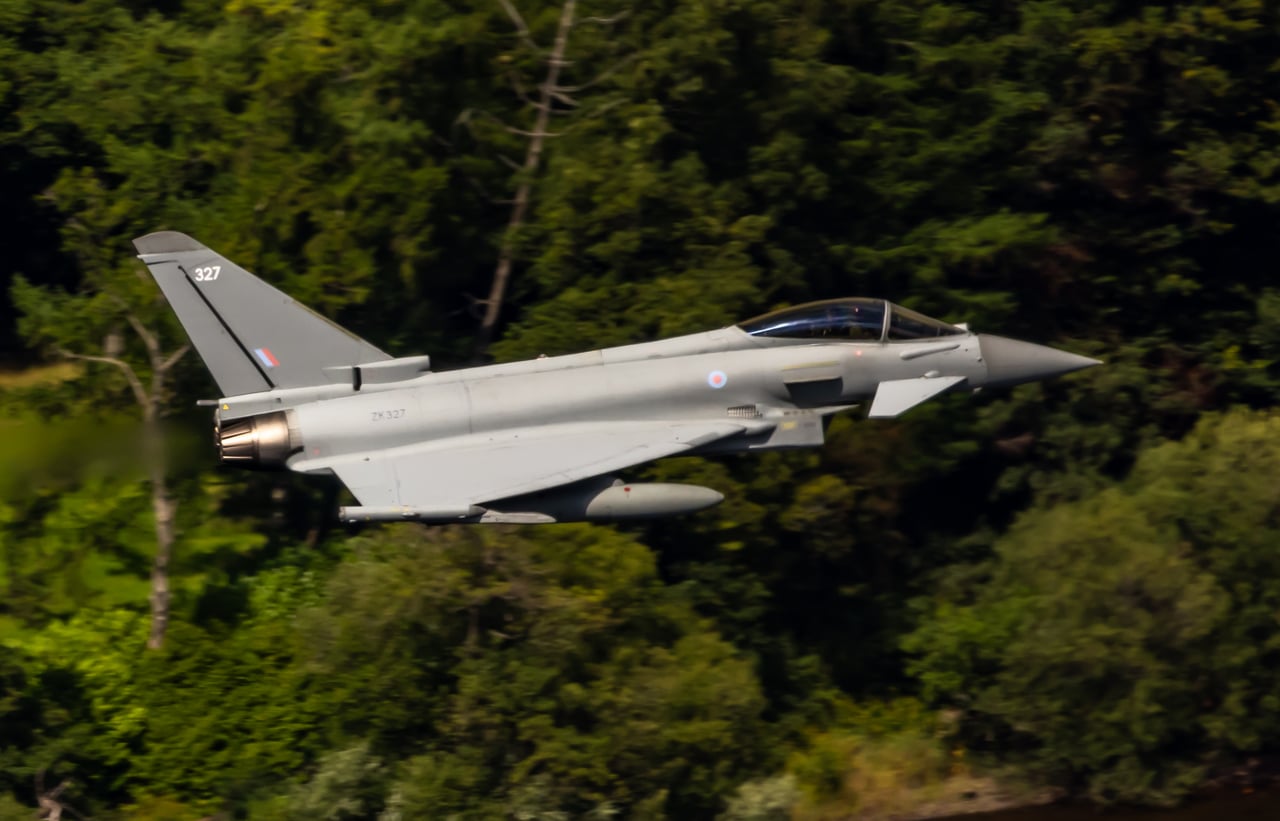
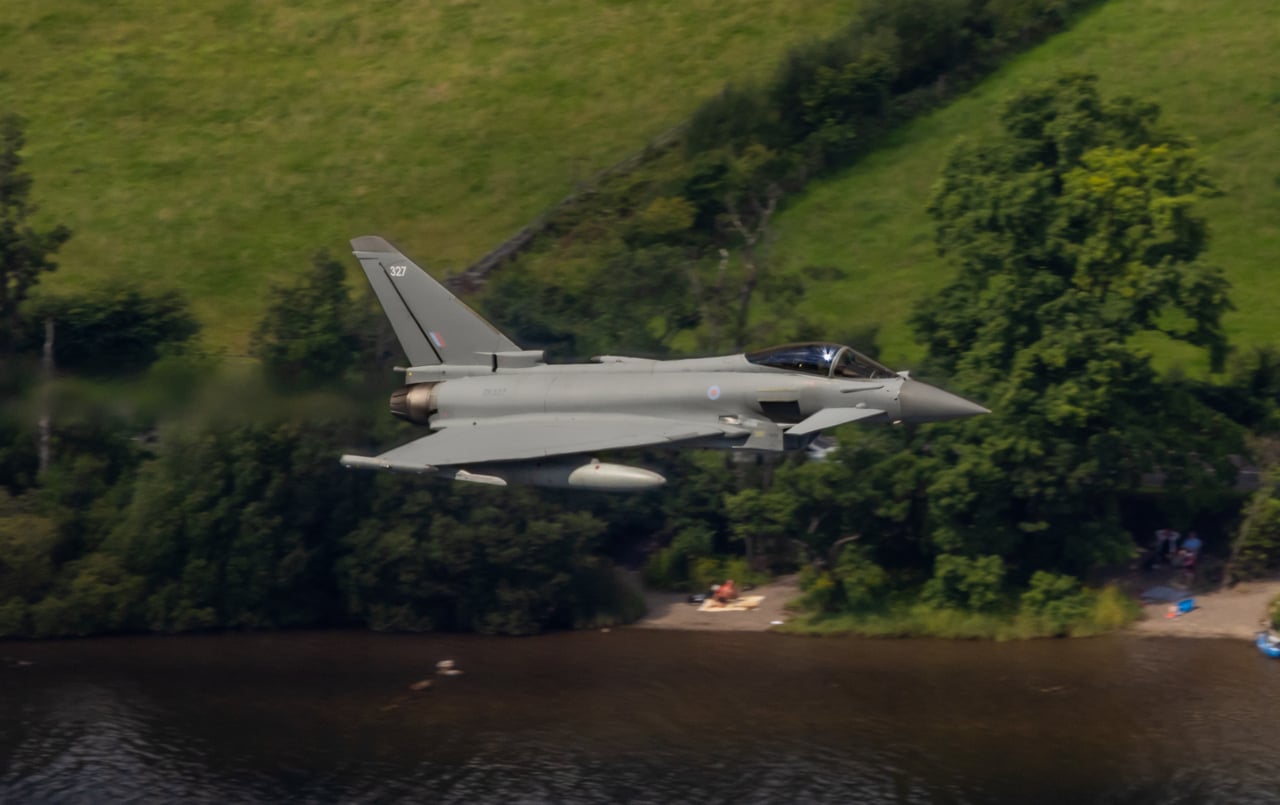
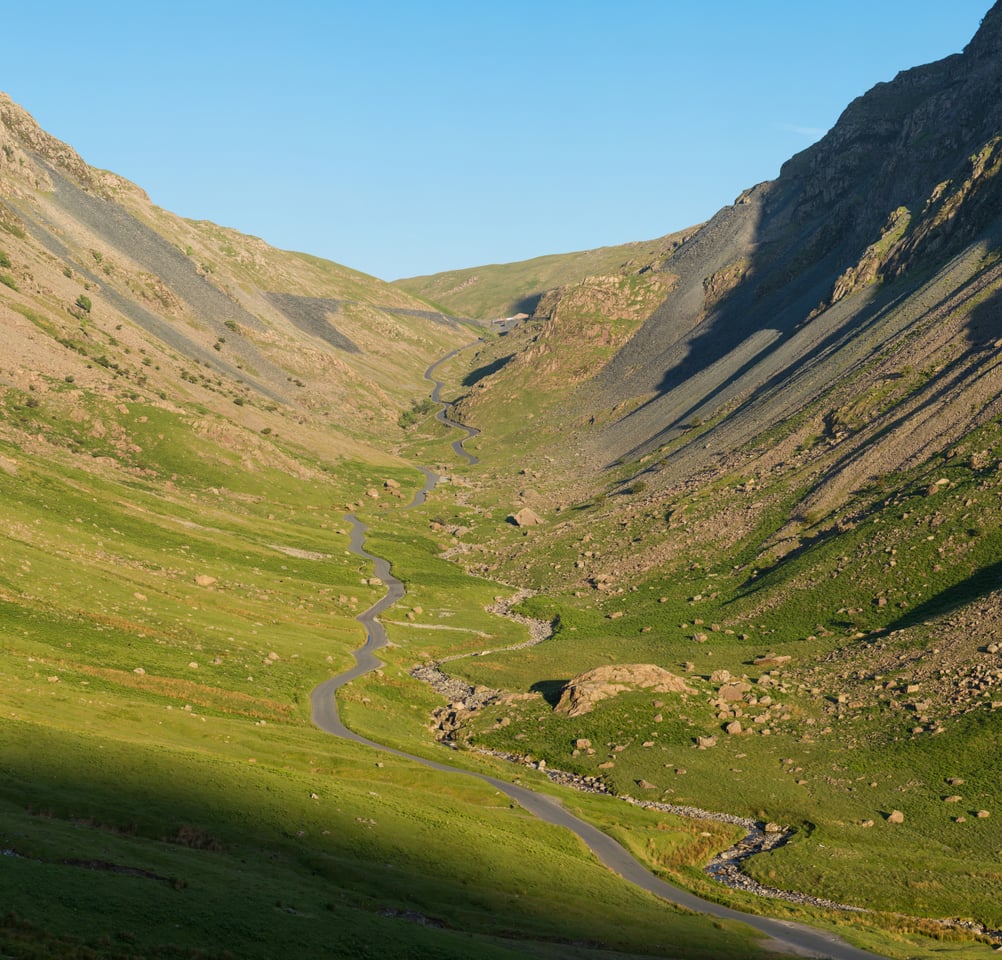
Thirlmere is the classic choke point: aircraft use the water as a guide and fly extraordinarily low over the reservoir. Raven Crag gives an elevated look-down. Honister Pass offers valley-floor passes with a slate-mine café where you can sit all day. Todd Crag above Ambleside is good for head-on banks over Windermere.
Weekdays, mid-morning to mid-afternoon, clear weather. Same rules as the Mach Loop: no public timetable, empty valleys happen, and live spotting feeds / ADSB-Exchange beat guesswork.
This is a National Park as well as a training area. Park legally, stick to rights of way, and never flash or laser aircraft. The valleys funnel noise — ear defenders help on busy days.
Get there
Pin marks the Thirlmere / Raven Crag side of the Helvellyn corridor — a natural choke point on the Windermere–Keswick route. A591 access; allow National Park traffic.
Approx. 54.539, -3.043 · Thirlmere, Cumbria
Google Maps directions →Film · Real sorties
Typhoon over Thirlmere — LFA 17
Typhoons low-level through the Lakes
Nearby museums
Common questions
Where is the best place to watch jets in the Lake District?
Thirlmere and Raven Crag are the classic combination — aircraft use the reservoir as a navigation guide. Honister Pass is the alternative for valley-floor passes.
Is Lake District low flying as good as the Mach Loop?
Different geography, similar tasking. LFA 17 sees Typhoons and NATO jets on the same training syllabus. Some spotters prefer the Lakes when Snowdonia is quiet.