Also known as London Biggin Hill Airport · USAAF Station 343
The story of RAF Biggin Hill
In the Second World War Biggin Hill was a leading No. 11 Group sector station. Spitfire and Hurricane squadrons from here guarded London and the south-east in the Battle of Britain. Its squadrons claimed 1,400 enemy aircraft for the loss of 453 aircrew. French, Dutch, Canadian and New Zealand squadrons also flew from the station.
After the war it hosted Transport Command, then regular and reserve fighter squadrons with Spitfires, Meteors and Hunters. Front-line flying ended in 1958. The Officer and Aircrew Selection Centre stayed until 1992. Bromley council took over the airfield, which is now a business aviation airport. A small RAF enclave remains, beside St George's Chapel of Remembrance.
Flying units
| Unit | Years | Aircraft |
|---|---|---|
| No. 32 Squadron | Hawker Hurricane | |
| No. 72 Squadron | Supermarine Spitfire | |
| No. 92 Squadron | Supermarine Spitfire | |
| No. 610 Squadron | Supermarine Spitfire | |
| No. 74 Squadron | ||
| No. 340 (Free French) Squadron |
What survives
- St George's RAF Chapel of Remembrance, built in 1951
- Grade II listed North Camp buildings, including the 1931 station headquarters and 1932 sergeants' mess
The museum on the airfield
| Museum | Adult entry | Airframes | Headline exhibit |
|---|---|---|---|
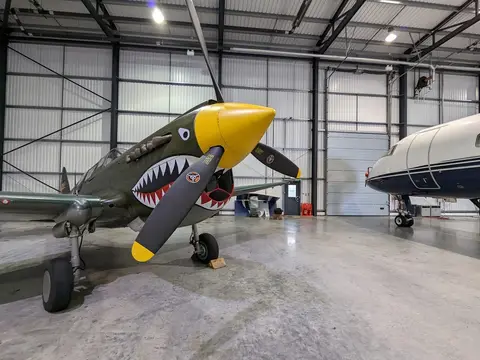
| Biggin Hill Heritage HangarWesterham, Greater London | £49 | 17 | A rotating dozen-ish airworthy and in-rebuild Spitfires plus a Hurricane and Buchón; the 'Sit in a Spitfire' add-on is the affordable… |