The story of RAF Coningsby
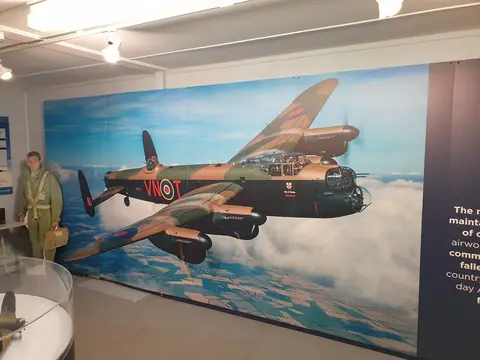
No. 617 'Dambusters' Squadron arrived with Lancasters in August 1943. Its main operation from here was Operation Garlic against the Dortmund–Ems Canal. Five of the eight Lancasters failed to return. In January 1944 the squadron moved to Woodhall Spa. Nos. 61, 83 and 97 Squadrons flew Lancasters from Coningsby in the last months of the war.
Mosquitos, Washingtons and, from 1953, Canberras followed. Vulcans were based here from 1962 to 1964. Coningsby was to receive the TSR-2, then the F-111, but both were cancelled. Instead it became the RAF's first Phantom station, then the first for the Tornado F3 from 1984. The Battle of Britain Memorial Flight arrived from Coltishall in March 1976. Typhoons arrived in May 2005, and Coningsby is now a main Typhoon base.
Flying units
| Unit | Years | Aircraft |
|---|---|---|
| No. 106 Squadron | 1940 | Handley Page Hampden |
| No. 617 Squadron | 1943–1944 | Avro Lancaster |
| No. 29 Squadron | 1975–1987 | McDonnell Douglas Phantom FGR.2 |
| No. 29 Squadron | 1987 | Panavia Tornado F3 |
| Battle of Britain Memorial Flight | 1976 | Lancaster, Spitfire, Hurricane, Dakota |
| No. 3 (F) Squadron | 2006 | Eurofighter Typhoon |
What survives
- An active RAF station and Typhoon main operating base
- The Battle of Britain Memorial Flight hangar and visitor centre
- Hardened aircraft shelters built for the Tornado F3
The museum on the airfield
| Museum | Adult entry | Airframes | Headline exhibit |
|---|---|---|---|
| Battle Of Britain Memorial Flight Visitors CentreLincoln, Lincolnshire | £12.50 | 11 | Lancaster PA474 — one of only two airworthy Lancasters on Earth — when she's home (she periodically visits Duxford for deep maintenance,… |