Also known as Station 378 · Fowlmere Airfield
The story of RAF Fowlmere
In the Second World War Fowlmere returned as a satellite of RAF Duxford. In June 1940 No. 19 Squadron moved its Spitfires here to make room at Duxford. About sixty Spitfires and Hurricanes were dispersed between Duxford and Fowlmere each day. On 15 September 1940 they went up twice against raids on London. Other RAF squadrons followed, including the American volunteers of No. 133 (Eagle) Squadron.
The field was then enlarged for a full American fighter group and became Station 378. The 339th Fighter Group arrived on 4 April 1944 with P-51 Mustangs marked in red and white chequers. It flew its first combat mission on 30 April 1944. It won a Distinguished Unit Citation for 10–11 September 1944, when it strafed an airfield near Erding and defended bombers over Munich. It was the only group to claim more than a hundred aircraft destroyed on the ground twice in April 1945. Fighter Command used Fowlmere until January 1946. It was sold back to farmers in 1957. A grass airfield is active there today, with the museum on site.
Flying units
| Unit | Years | Aircraft |
|---|---|---|
| Nos. 124, 125 and 126 Squadrons | 1918–1918 | |
| No. 19 Squadron | 1940 | Supermarine Spitfire |
| No. 133 (Eagle) Squadron | ||
| 339th Fighter Group, USAAF | 1944–1945 | North American P-51 Mustang |
What survives
- Active grass runway 07/25, used by a flying club and aerobatic school
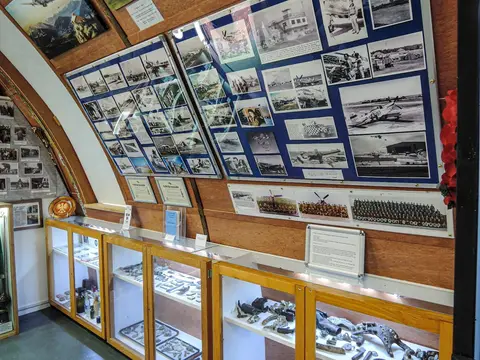
- The Fowlmere Airfield Museum on site
The museum on the airfield
| Museum | Adult entry | Airframes | Headline exhibit |
|---|---|---|---|
| Fowlmere Airfield MuseumRoyston, Cambridgeshire | Free | — | Fowlmere Airfield Museum — Duxford’s Battle of Britain satellite, then the 339th FG’s Mustang base — still on an active farm airfield;… |