The story of RAF Metheringham
No. 106 Squadron moved in while building was still going on. With only a week to settle, its crews went to war on 18 November 1943, at the start of the Battle of Berlin. On the night of 26–27 April 1944, on a raid to Schweinfurt, a 106 Squadron Lancaster caught fire after a fighter attack. Flight engineer Sergeant Norman Jackson climbed out along the wing in flight to put out the fire. He was badly burned and blown off, but survived by parachute and was captured. He was awarded the Victoria Cross. Metheringham was one of only 15 UK airfields fitted with FIDO, which burned petrol to clear fog from the runway.
After VE Day No. 467 Squadron RAAF trained here for Tiger Force. No. 106 Squadron disbanded in February 1946, and the station closed soon after. The land was sold for farming in 1961–62. The restored ration store now houses the visitor centre.
Flying units
| Unit | Years | Aircraft |
|---|---|---|
| No. 106 Squadron | 1943–1946 | Avro Lancaster |
| No. 467 Squadron RAAF | 1945–1945 | Avro Lancaster |
| No. 189 Squadron | 1945–1945 |
What survives
- One original runway and the eastern perimeter track
- The restored ration store, now the Metheringham Airfield Visitor Centre
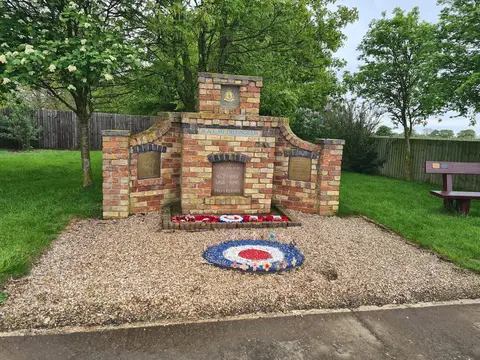
- A memorial garden and plinth to No. 106 Squadron
The museum on the airfield
| Museum | Adult entry | Airframes | Headline exhibit |
|---|---|---|---|
| Metheringham Airfield Visitor CentreLincoln, Lincolnshire | £8 | 2 | Metheringham Airfield Visitor Centre (106 Squadron Lancasters) has original ration-book atmosphere plus a fully restored Dakota you can… |