Brooklands Museum, Weybridge
Sopwith flew from Brooklands. The museum keeps a Camel replica in running condition and starts its engine at events.
Thomas Sopwith, a wealthy sportsman, began building aircraft in 1912. His first factory was a former roller-skating rink in Canbury Park Road, Kingston upon Thames. Flight testing took place at Brooklands, and a seaplane works opened at Woolston in 1914.
| Type | First flew | Built | UK museums |
|---|---|---|---|
| Sopwith TabloidTabloid, Schneider | 1913 | c.40 + 136 Schneiders | 2 |
| Sopwith Baby | 1915 | ~460 | 2 |
| Sopwith 1½ Strutter | 1915 | ~5,900 | 1 |
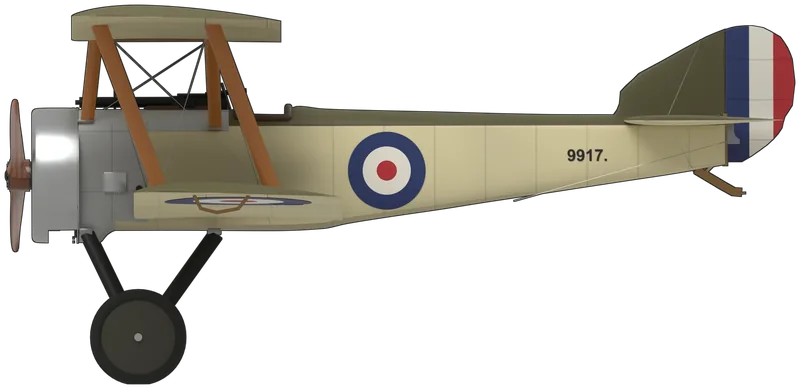
| Sopwith Pup | 1916 | 1,770 | 5 |
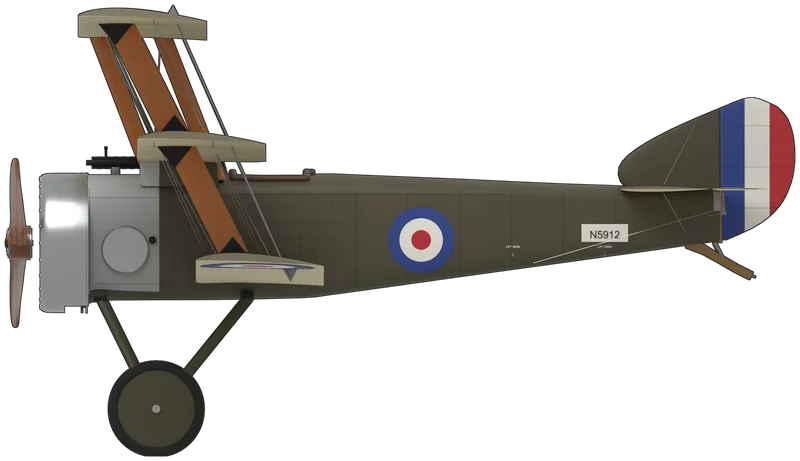
| Sopwith Triplane | 1916 | 147 | 3 |
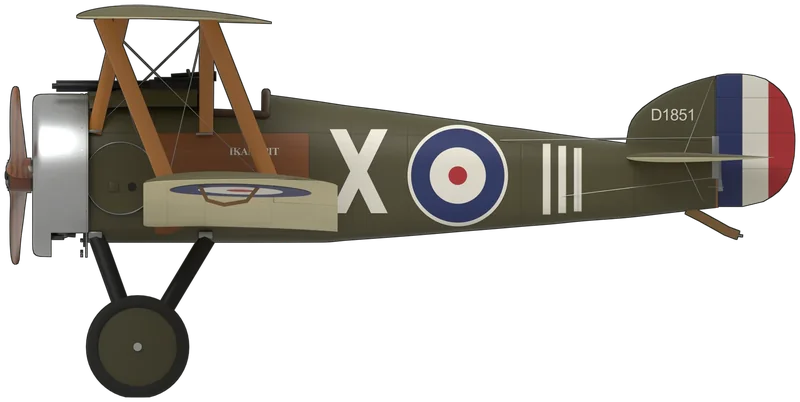
| Sopwith CamelF.1 | 1916 | 5,490 | 7 |
| Sopwith Dolphin | 1917 | 2,072 | 1 |
| Sopwith Snipe | 1917 | ~2,100 | 1 |
Harry Hawker, an Australian, was test pilot and shaped the early designs. Fred Sigrist, Sopwith’s former mechanic, ran the works. Herbert Smith became chief engineer in 1916. The Tabloid, 1½ Strutter, Pup, Triplane and Camel followed, then the Dolphin and Snipe. Over 5,000 Camels were built. The firm made more than 16,000 aircraft in the war, many through subcontractors, and grew from 200 to 6,000 staff.
Peace ended the orders. The company turned to ABC motorcycles, then went into voluntary liquidation in September 1920. Sopwith, Hawker, Sigrist and Bill Eyre formed H.G. Hawker Engineering from its assets.
Sopwith flew from Brooklands. The museum keeps a Camel replica in running condition and starts its engine at events.
| Museum | Sopwith types | Adult entry | Airframes | Headline exhibit |
|---|---|---|---|---|
| Fleet Air Arm MuseumYeovil, Somerset | 4 | £21 | 97 | Concorde 002 (G-BSST), the first British-assembled Concorde, which made her maiden flight from Filton in 1969 and now headlines a hall of… |
| Royal Air Force Museum LondonLondon, Greater London | 4 | Free | 88 | Avro Lancaster R5868 'S-Sugar' — 137 operations, the RAF's highest-scoring surviving heavy — under the same roof as a Vulcan, a… |
| Stow Maries Great War AerodromeChelmsford, Essex | 3 | £12 | 11 | The aerodrome itself: 24 listed RFC buildings, plus flying examples of Great War types on event days (a Fairey Swordfish cameo got… |
| The Shuttleworth CollectionBiggleswade, Bedfordshire | 3 | £19.50 | 55 | The 1934 DH.88 Comet 'Grosvenor House', winner of the MacRobertson England–Australia air race, restored to fly; and the Edwardians —… |
| Brooklands MuseumWeybridge, Surrey | 2 | £24–£27 | 32 | Concorde G-BBDG, the British production-test aircraft, bookended by a Wellington bomber dredged out of Loch Ness in 1985 and the only… |
| Hooton Park HangarsEllesmere Port, Cheshire | 2 | £9 | 45 | Hooton Park's 1917 Belfast-truss hangars — among the finest WWI aviation buildings surviving — hold aircraft, buses and a printing museum… |
| Royal Air Force Museum MidlandsShifnal, Shropshire | 2 | Free | 78 | TSR-2 XR220, one of two survivors of the most gifted aircraft Britain ever cancelled, sharing floor space with the stainless-steel… |
| Army Flying MuseumStockbridge, Hampshire | 1 | £18 | 43 | Middle Wallop's Army Flying Museum covers everything the Army has flown from observation balloons to Apaches, with superb dioramas and a… |
| Montrose Air Station MuseumMontrose, Angus | 1 | £10 | 14 | The 1913 fabric itself, plus the resident ghost stories (Montrose is Britain's most famously haunted airfield, a claim the volunteers… |
More than 5,000. Sopwith built some at Kingston, and subcontractors built many more.
At Kingston upon Thames, starting in a former roller-skating rink in Canbury Park Road. Aircraft were tested at Brooklands.
It went into voluntary liquidation in September 1920. Its founders formed H.G. Hawker Engineering, which became Hawker Aircraft.