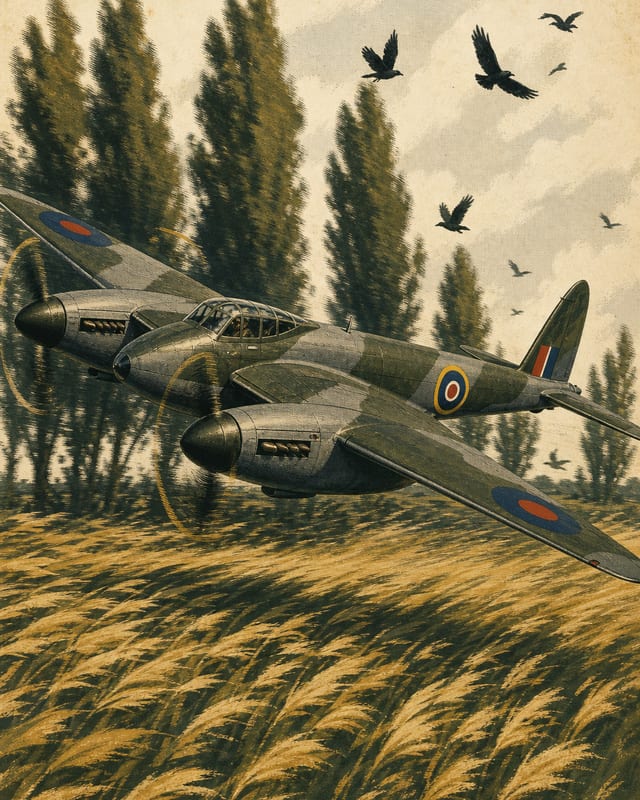
The Mosquito was the aeroplane Britain built out of furniture. Designed in secret at Salisbury Hall in Hertfordshire, first flown on 25 November 1940 and built mostly of wood, it was faster than most fighters of its day and did nearly every job the RAF had: bomber, night fighter, photo-reconnaissance, pathfinder and anti-shipping strike. De Havilland and its licensees built 7,781 of them. Around 30 survive worldwide, and five places in England will show you one.
The short version
- The best place: the de Havilland Aircraft Museum at London Colney, on the very spot where the Mosquito was designed, with three on display, including the prototype.
- Free to see: the RAF Museum London at Hendon and RAF Museum Midlands at Cosford.
- To hear one: East Kirkby, where night fighter HJ711 runs its engines and taxis on event days.
- To see one fly: not in Britain. There is no airworthy Mosquito in the UK in 2026.
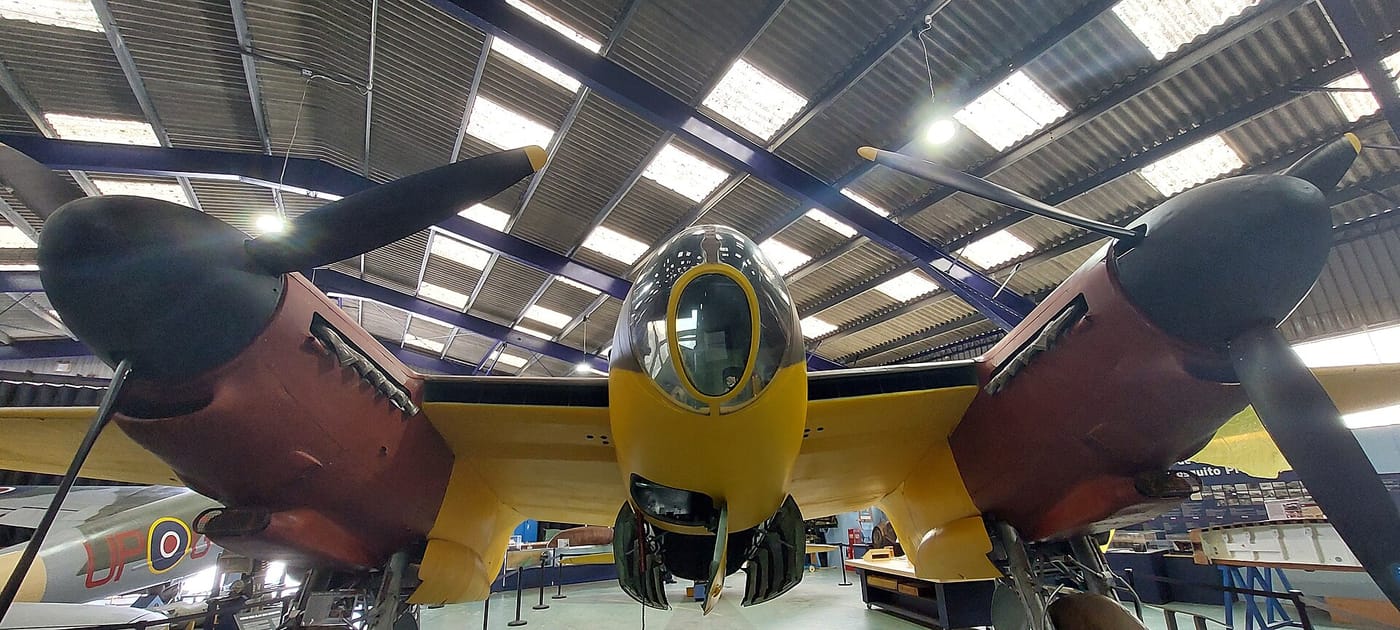
Every Mosquito on display in the UK
| Where | Mosquito | What you see |
|---|---|---|
| de Havilland Aircraft Museum, London Colney, Hertfordshire | W4050, the prototype | Built at Salisbury Hall and the museum's first aircraft in 1959; the museum believes it is the only surviving Second World War prototype of any type. |
| de Havilland Aircraft Museum | FB.VI TA122 | The fighter-bomber, rebuilt with wings from a Sea Mosquito found in Israel in 1980. |
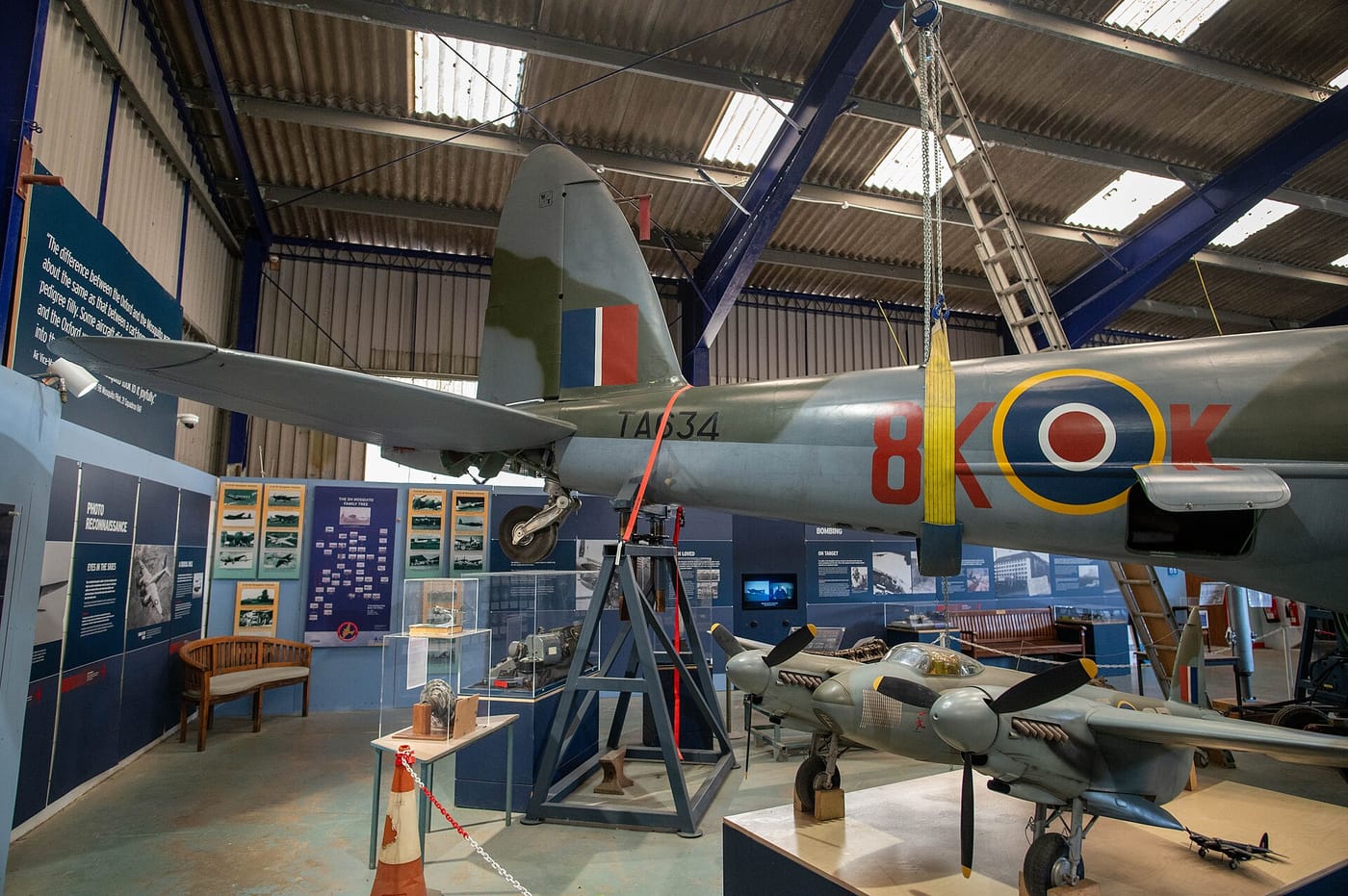
| de Havilland Aircraft Museum | B.35 TA634 | A late bomber, later a target tug, which flew in the 1968 film Mosquito Squadron. |
| RAF Museum London, Hendon | B.35 TJ138 | Complete, among the RAF's bombers. Free entry. |
| RAF Museum Midlands, Cosford | B.35 TA639 | Complete and on display at Cosford since 1970. Free entry. |
| IWM Duxford, Cambridgeshire | TT.35 TA719 | For years it hung from the roof of Hangar 1; it has since been lowered to ground level during Duxford's redevelopment. Ask on arrival where it is shown. |
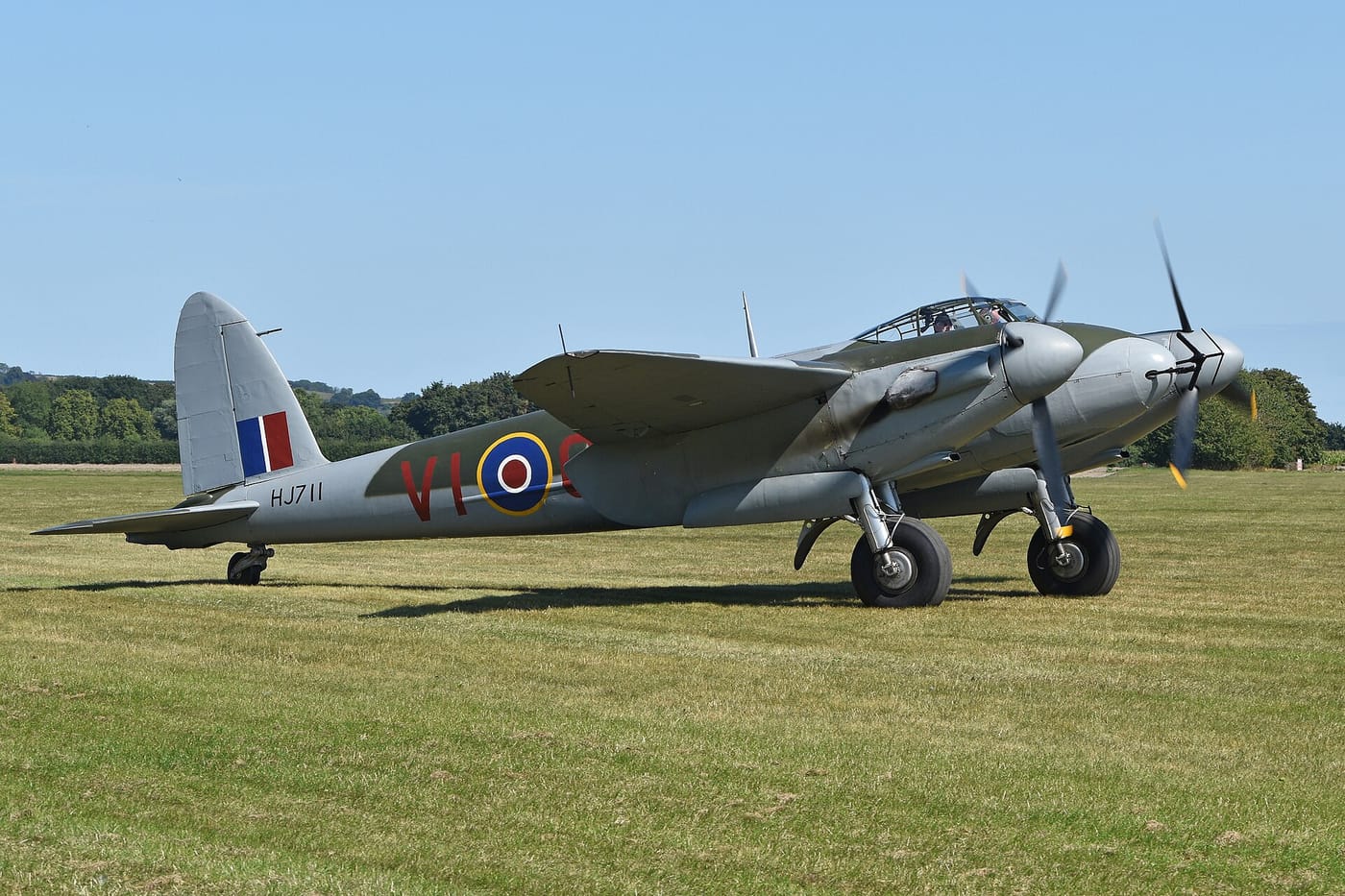
| Lincolnshire Aviation Heritage Centre, East Kirkby | NF.II HJ711 | A night fighter under restoration by its owner, Tony Agar, to ground-running condition. It runs its engines and taxis on some event days. |
The gazetteer's inventories also record Mosquito material at the Norfolk and Suffolk Aviation Museum at Flixton and the City of Norwich Aviation Museum, where a night-fighter cockpit replica is being built. These are parts rather than complete aircraft, so check with the museum before travelling to see them.
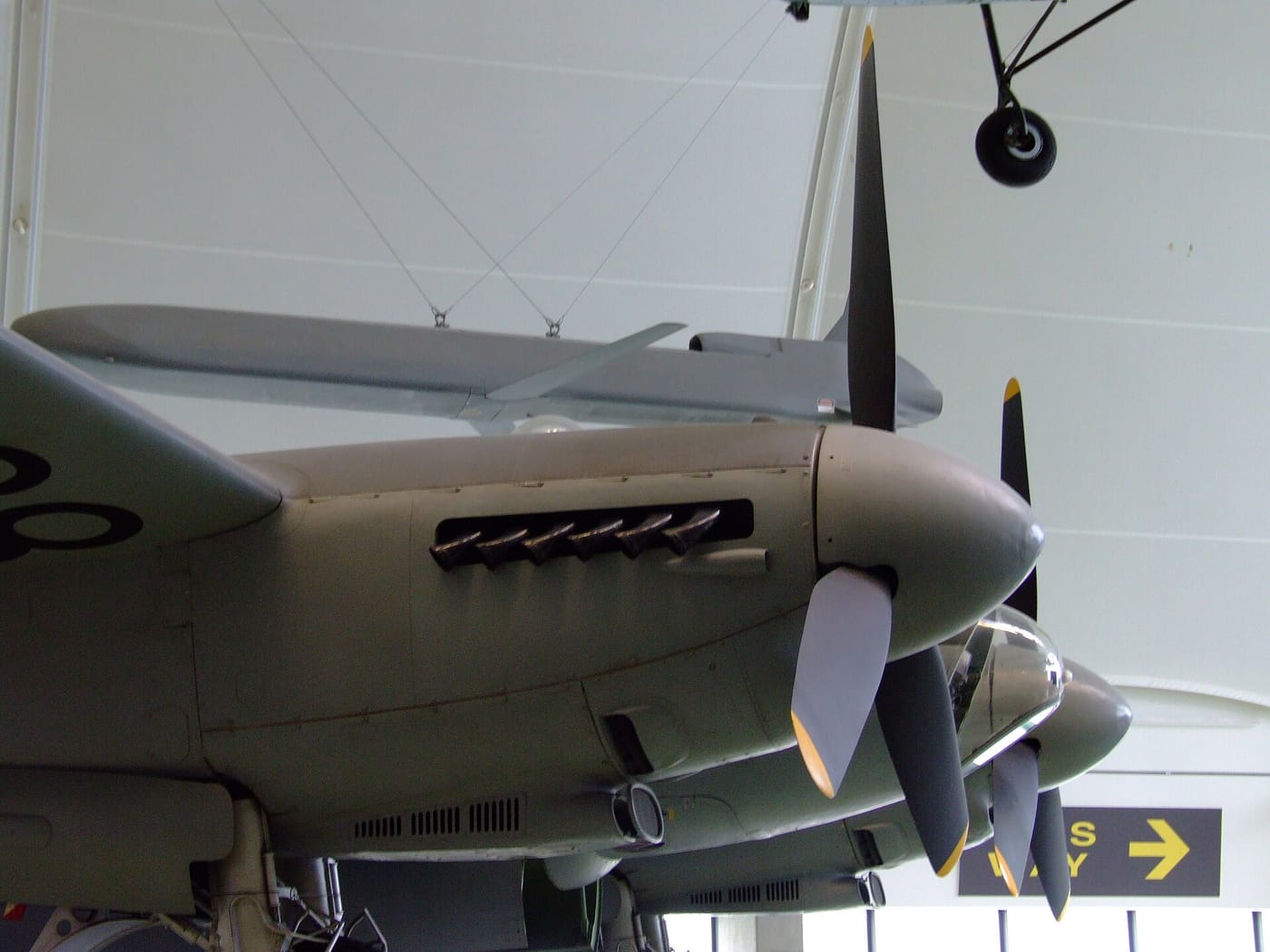
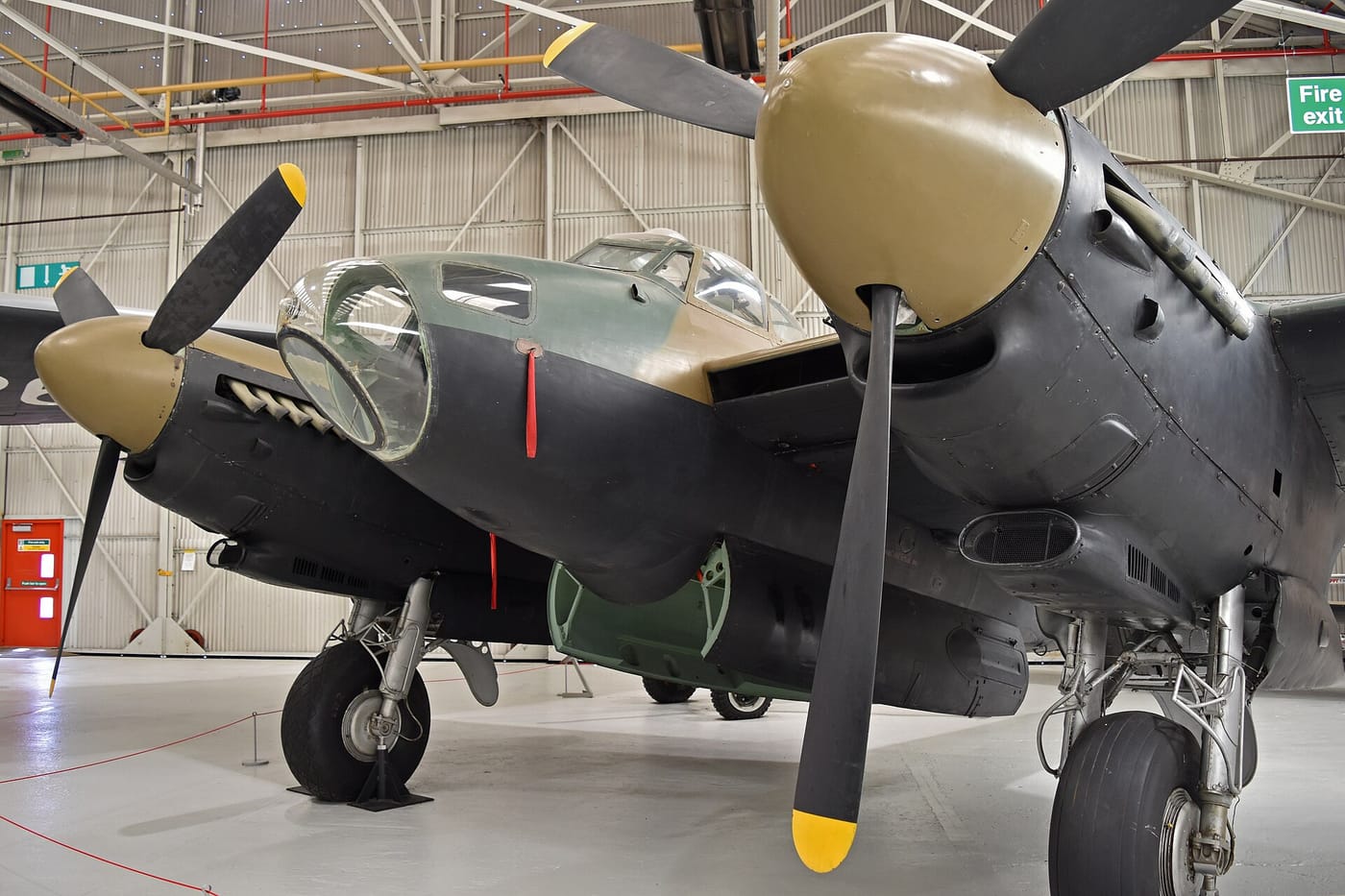
The de Havilland Aircraft Museum
If you see one Mosquito, see the prototype. W4050 was designed and built at Salisbury Hall, where the museum stands, and went by road to Hatfield for its first flight on 25 November 1940. It is the only museum in Britain with three Mosquitos, and the rest of the collection follows de Havilland from the Moth to the Comet airliner.
The museum is open all year, Tuesday to Sunday and on bank holiday Mondays: 10.30am to 5pm from late March to October (last entry 4pm) and 10.30am to 4pm in winter (last entry 3pm). It closes over Christmas. Adult tickets were £12 (£14 with Gift Aid) in October 2026, with children aged 5 to 16 £6.50 and a family ticket £31.50. The address is Salisbury Hall, London Colney, AL2 1BU, just off the M25 at junction 22. Check the museum's website before you go.
Watching a Mosquito taxi at East Kirkby
At East Kirkby, home of the Lancaster Just Jane, the Mosquito HJ711 runs its Merlins and taxis on selected days alongside the Lancaster. Runs depend on weather and serviceability, and the centre publishes its taxi-run days on its website. The centre also sells Mosquito experience days that include an engine run.
Can you see a Mosquito fly?
Not in the UK. The People's Mosquito, a charity, is rebuilding RL249 to fly as an FB.VI, but it has not published a first-flight date. Abroad, a handful fly: in the United States (including KA114 at the Military Aviation Museum in Virginia Beach and TV959 at Everett, Washington) and in New Zealand. None is based in Europe.
Questions
Where is the Mosquito museum?
The de Havilland Aircraft Museum at London Colney, Hertfordshire, used to be called the Mosquito Aircraft Museum. It stands on the site at Salisbury Hall where the Mosquito was designed and holds three, including the prototype W4050.
What are the Mosquito museum's opening times?
The de Havilland Aircraft Museum opens Tuesday to Sunday and bank holiday Mondays, 10.30am to 5pm from late March to October and 10.30am to 4pm in winter, with last entry an hour before closing. It closes over Christmas.
Where can I see a Mosquito near London?
Two places: the de Havilland Aircraft Museum at London Colney, just inside the M25, and the RAF Museum at Hendon, which is free.
Is there a flying Mosquito in the UK?
No. The People's Mosquito project is rebuilding RL249 to fly, but there is no airworthy Mosquito in Britain in 2026. The flying examples are in the United States and New Zealand.
How many Mosquitos survive?
About 30 of the 7,781 built survive worldwide, and seven complete or near-complete examples are on public view in England.
Why was the Mosquito called the Wooden Wonder?
Its fuselage was a moulded plywood shell and its wings were wooden, which saved scarce aluminium and let furniture makers build it. Light and powered by two Merlins, it was faster than most fighters when it entered service in 1941.