Search for a UK plane graveyard and you will be shown photographs of the Arizona desert: thousands of bombers and airliners parked in rows under a blue sky. Britain does not have one of those, and the reason is the weather. What it has instead is smaller, busier and mostly closed to the public: a handful of airfields where airliners arrive on their last flight and leave on lorries in pieces.
Is there an aircraft graveyard in the UK?
Not in the desert sense. The great boneyards are in dry places: Davis-Monthan in Arizona, where the US military stores its retired aircraft, and the airliner storage parks of the American south-west, inland Spain and the Australian outback. Dry air means an aircraft can be parked outside for years and still be worth flying again.
The British climate rusts things. An airliner parked outdoors in Gloucestershire is unlikely to fly again, so it is usually stored for months rather than decades and then taken apart. That makes British "graveyards" places of dismantling rather than storage, and dismantling is industrial work with no public access.
Where old aircraft go in the UK
Cotswold Airport (Kemble), Gloucestershire
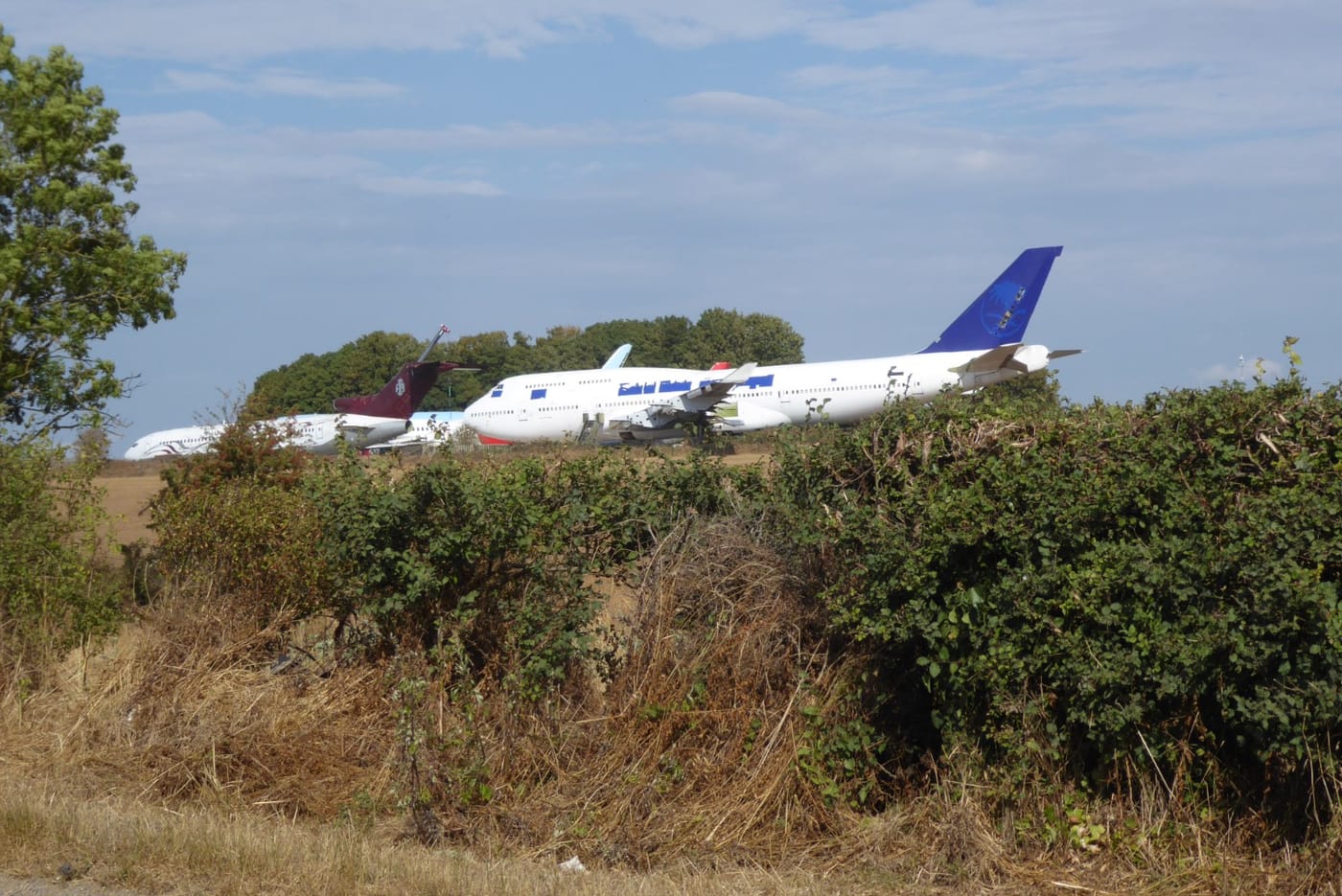
The closest thing Britain has to a plane graveyard, and where most press photographs of "Britain's aircraft boneyard" are taken. The airfield is a former RAF station with a runway long enough for a 747, and its biggest tenant is Air Salvage International, one of the largest independent aircraft dismantling companies. It has been there since 2000.
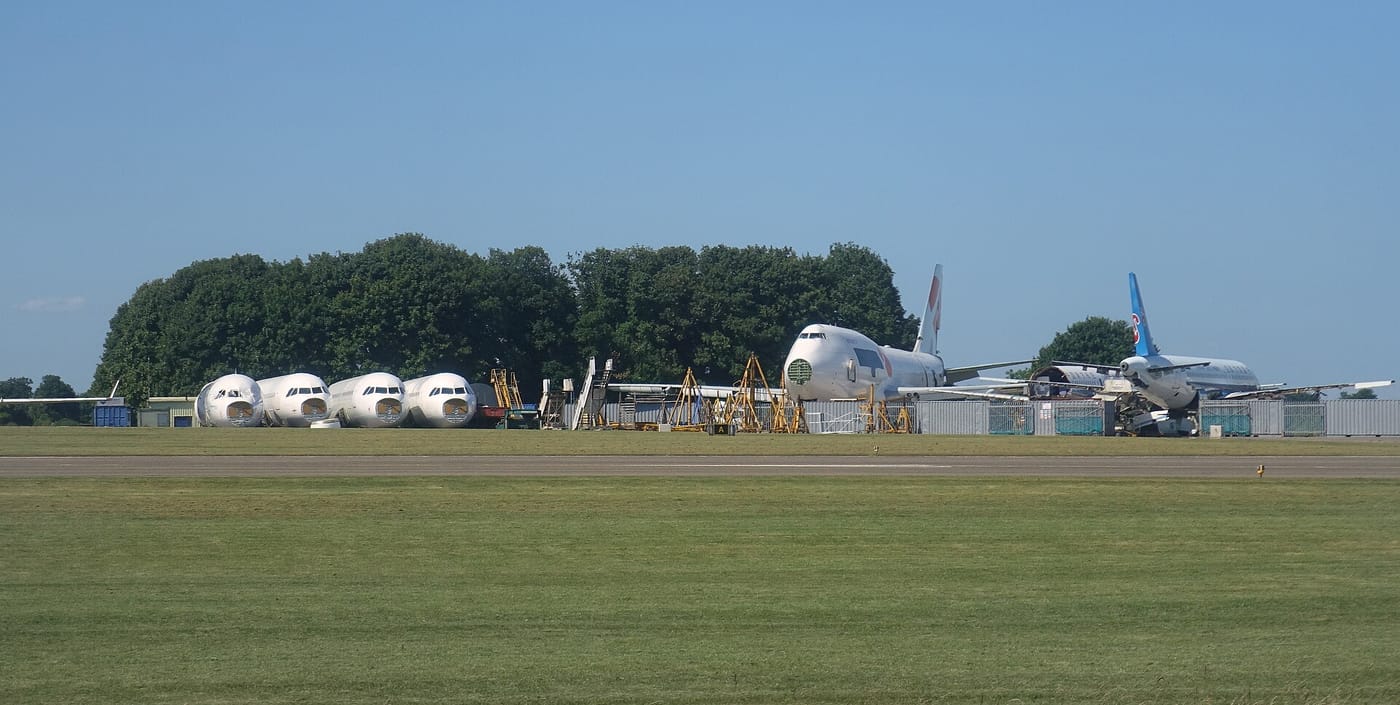
In a 2023 profile the company said it had taken apart more than 1,000 aircraft and aimed for 40 to 50 a year. The process is the same every time: the valuable parts come off first (engines, landing gear, the auxiliary power unit, avionics and instruments) to be sold or overhauled, and what is left is cut up for metal. Around 98% of a current-generation airliner can be recycled. When British Airways retired its 747s in 2020, 19 of its 34 jumbos flew into Kemble.
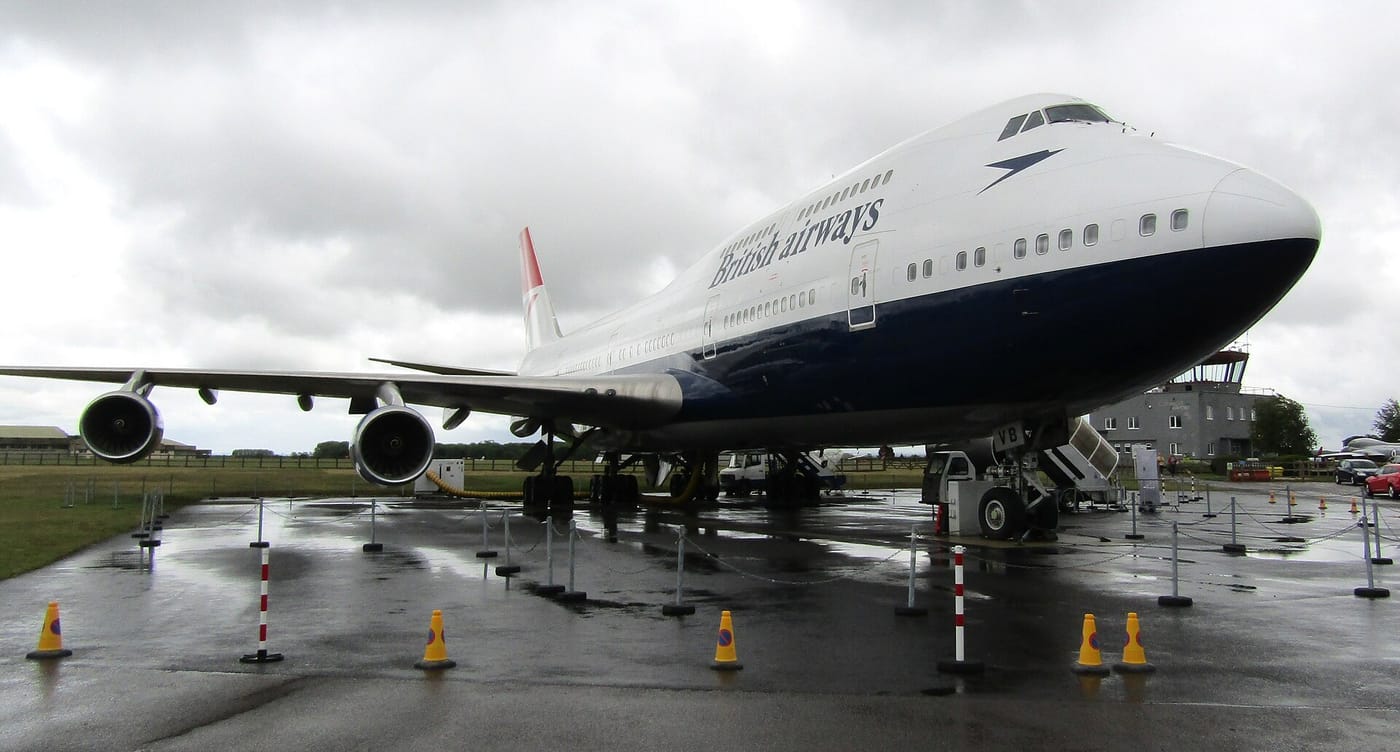
You can't visit the salvage yard. You can walk through one of those British Airways 747s: G-CIVB, named Negus, was preserved at Cotswold Airport as an events venue and has been opened for self-guided public tours on most Wednesdays and Saturdays since March 2022, booked in advance through the airport. The British Phantom Aviation Group's collection and Bristol Britannia XM496 are on the same airfield.
St Athan, Vale of Glamorgan
The former RAF St Athan, west of Cardiff, is home to ecube, which stores, dismantles and recycles airliners. It has been part of Unical Aviation since 2024 and also runs sites in Spain and Arizona. In 2025 it reported receiving 148 aircraft across its sites, and in a project with British Airways it reused, repurposed or recycled 83% of a retired A320.
St Athan is a working industrial site with no public access. Aircraft arriving there are often visible on flight-tracking websites on their last flight.
Bruntingthorpe, Leicestershire
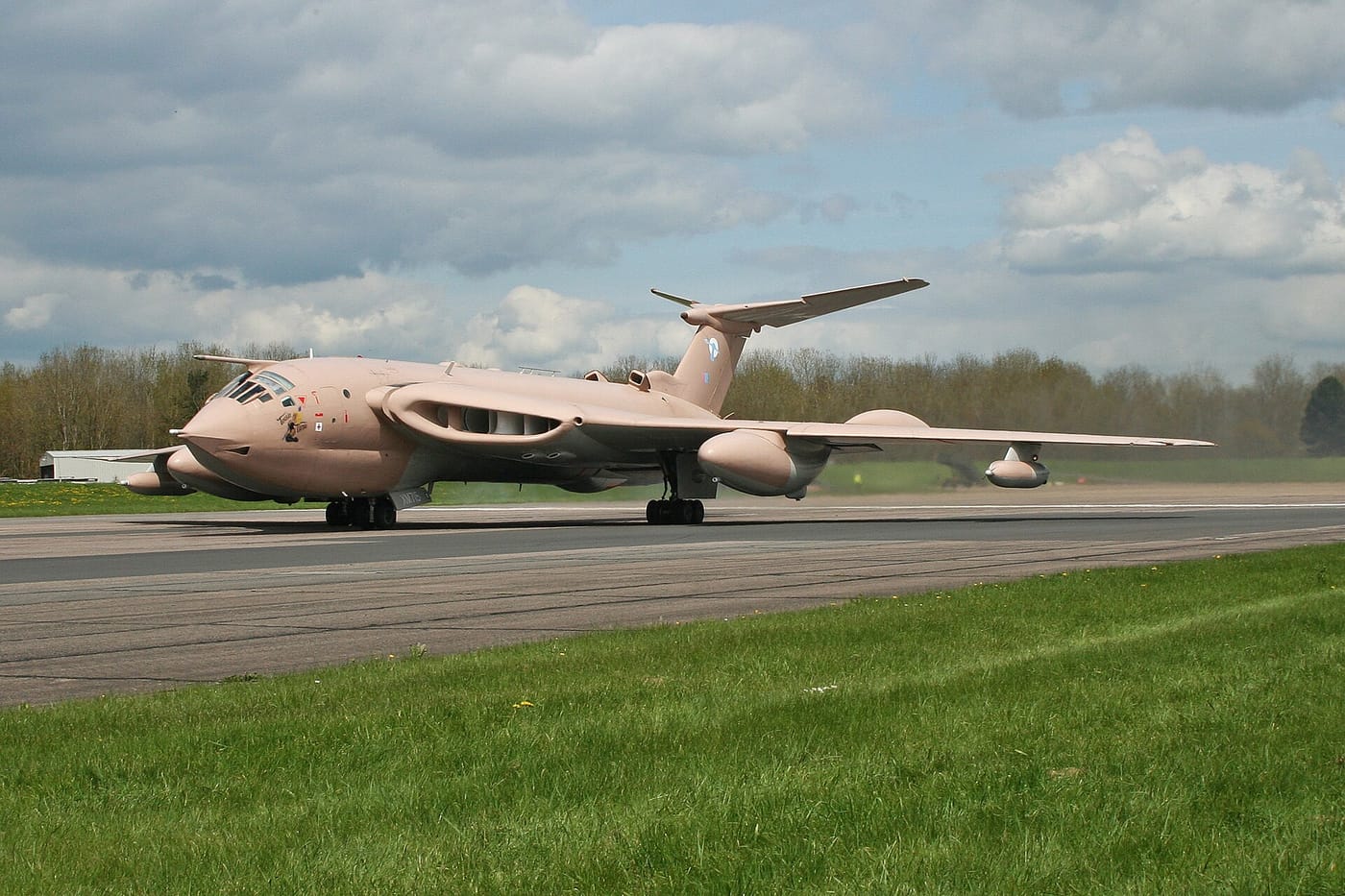
For years Bruntingthorpe was the nearest thing to a Cold War jet graveyard you could visit: a long former bomber runway lined with preserved jets, airliner storage and scrapping, and open days when the Victor and other jets made fast taxi runs. That ended in 2020, when the airfield was leased to Cox Automotive and the aircraft groups were told to move their aircraft off the runway area.
The Victor XM715 Teasin' Tina, a Nimrod and a Comet were moved to a separate hardstanding, and a group of smaller jets to a compound beside the Lightning Preservation Group. The Victor's owners said in 2021 that open days "as we used to know them" were unlikely to return. Treat Bruntingthorpe as closed unless a group there announces an event.
Military aircraft
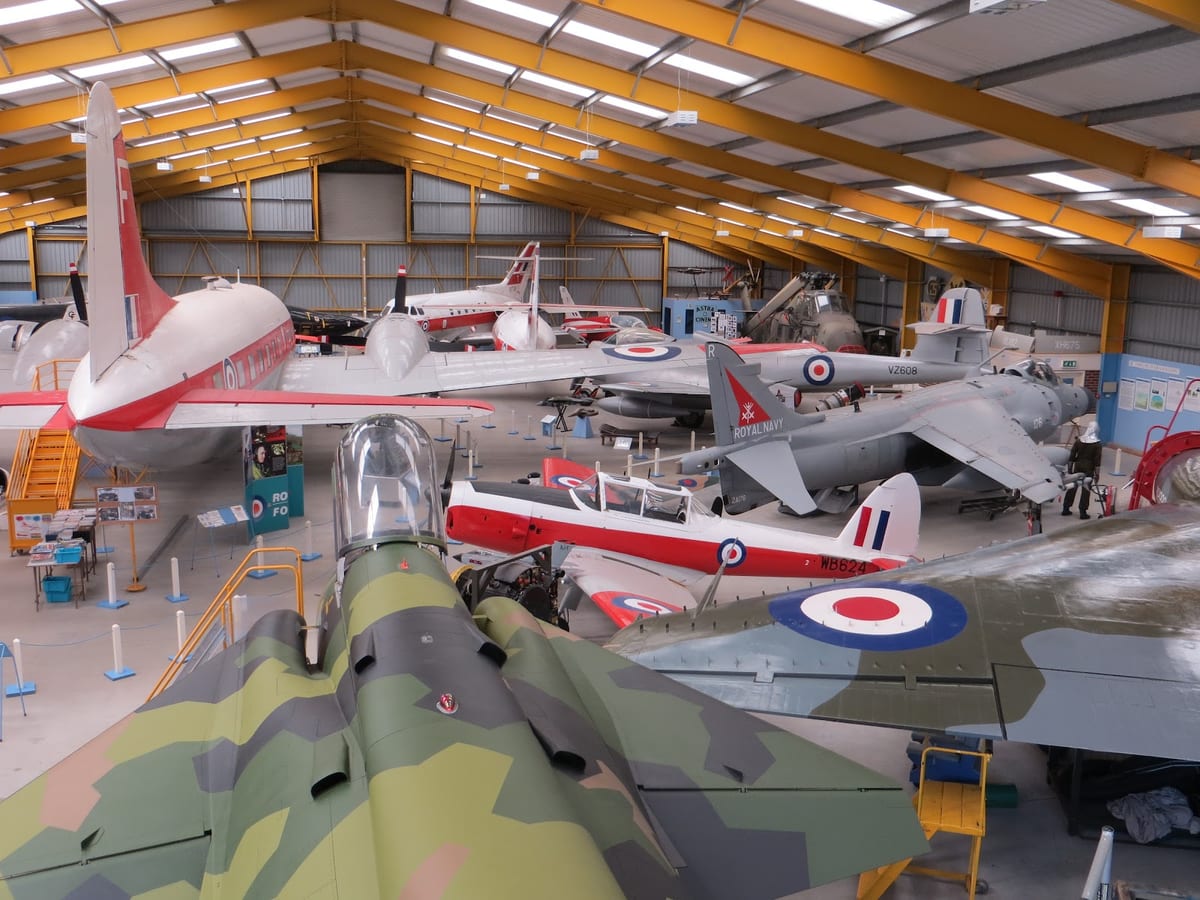
There is no British military boneyard either. Retired RAF aircraft are sold abroad, kept as instructional airframes, given to museums or scrapped. The ones that survive end up in the collections below, often after years in a museum's reserve hangar waiting for volunteers. That is not a graveyard. It is a queue.
Where to see rows of real aircraft instead
If what you want is the graveyard feeling (lots of complete aeroplanes, close enough to touch the rivets), Britain's big museums beat any scrapyard, and you are allowed in. These are the gazetteer's largest collections by number of aircraft types on site.
| Museum | Aircraft types | Why go |
|---|---|---|
| IWM Duxford, Cambridgeshire | 102 | The biggest collection in the country, in historic hangars on a working airfield. |
| RAF Museum London | 83 | The national collection, free to enter. |
| RAF Museum Midlands, Cosford | 70 | Cold War and test aircraft, also free. |
| Newark Air Museum, Nottinghamshire | 61 | One of the largest independent collections, built up by volunteers on a former wartime airfield. |
| South Yorkshire Aircraft Museum, Doncaster | 55 | Packed with cockpits and complete airframes; the nearest thing in spirit to a boneyard. |
| Midland Air Museum, Coventry | 49 | Big aircraft beside Coventry Airport, including a Vulcan. |
| Norfolk and Suffolk Aviation Museum, Flixton | 42 | A large outdoor line of jets in the Waveney valley. |
| East Midlands Aeropark | 31 | Retired airliners and jets beside a working airport runway. |
Every museum page in the gazetteer lists its aircraft with serials, and the Compendium shows every type and where to find it. For historic hangars and Cold War shelters, see the hangars guide; for military jets that are still flying, see the fly-by guides.
Questions
Is there a plane graveyard in the UK?
Not in the desert-storage sense. The nearest equivalents are Cotswold Airport at Kemble and St Athan near Cardiff, where retired airliners are taken apart. Both are working industrial sites without public access.
Can you visit an aircraft graveyard in the UK?
Not the dismantling yards. You can walk through the preserved British Airways 747 Negus at Cotswold Airport on public tour days, and the big aviation museums put you next to far more complete aircraft than any scrapyard.
Where do old planes go in the UK?
Airliners are mostly flown to Kemble or St Athan, stripped of reusable parts and recycled. Military aircraft are sold, kept for training, given to museums or scrapped.
What happened to British Airways' 747s?
When BA retired the type in 2020, 19 of its 34 747s were flown to Cotswold Airport for storage and dismantling. G-CIVB was kept whole at Kemble as the events venue Negus, and other BA 747s were preserved elsewhere.
Is Bruntingthorpe still open to visitors?
Not as it was. Since 2020 the airfield has been used by Cox Automotive and the historic jets have been moved to separate hardstandings, and the regular open days and fast taxi runs have stopped.
Where is the world's biggest aircraft boneyard?
Davis-Monthan Air Force Base in Tucson, Arizona, where the US military stores thousands of retired aircraft in the dry desert air.
Why doesn't Britain have an aircraft boneyard?
The damp climate corrodes aircraft parked outside and land is expensive, so retired aircraft are dismantled within months rather than stored for years.