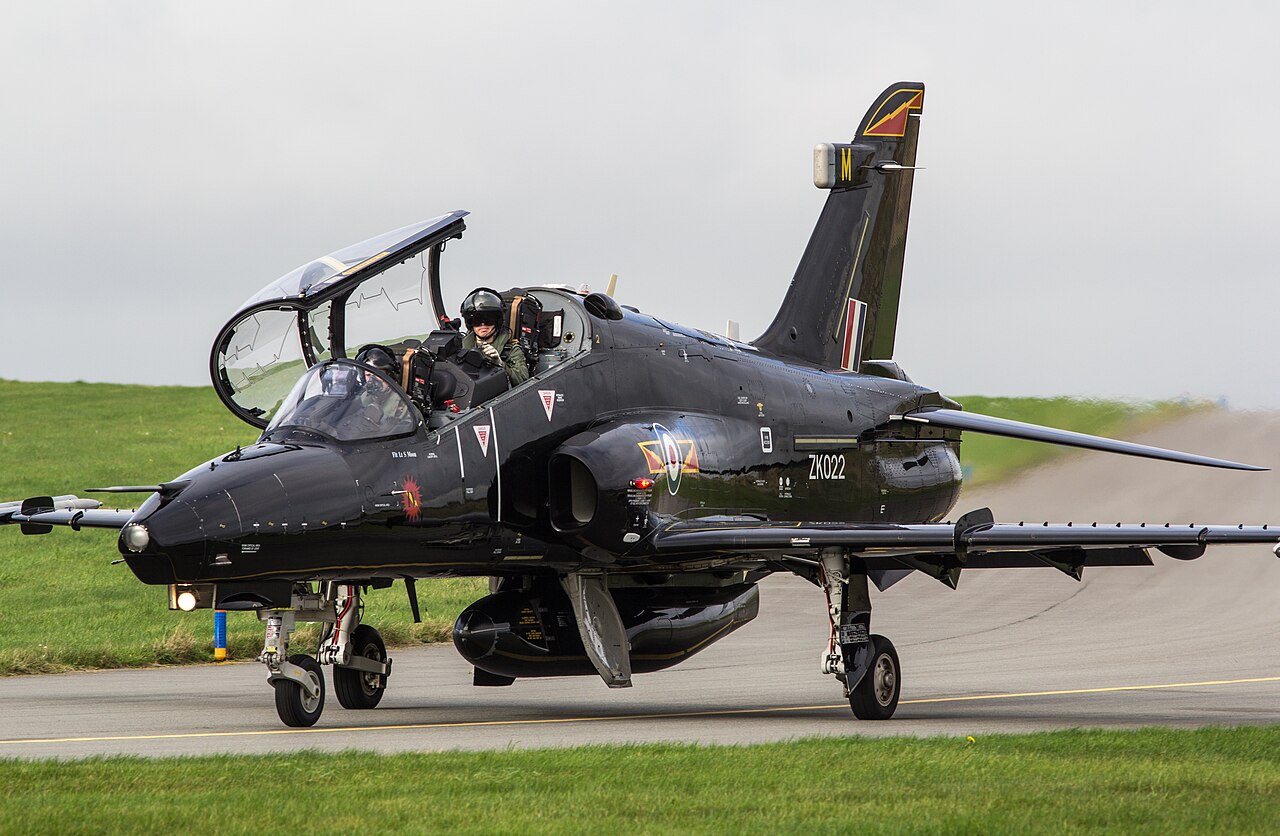
Britain is one of the best countries in the world for watching military aircraft, because so much of the flying happens over open country and so many bases have somewhere sensible to stand. There are two ways to do it. At a base, you get frequency: a steady stream of take-offs and landings on a weekday, often from an official viewing area with a car park and a burger van. In the low-flying valleys, you get drama: aircraft below you at a few hundred feet, but no timetable and some empty days.
For how to time a visit and track aircraft, see the spotting primer. This page is the where.
The short version
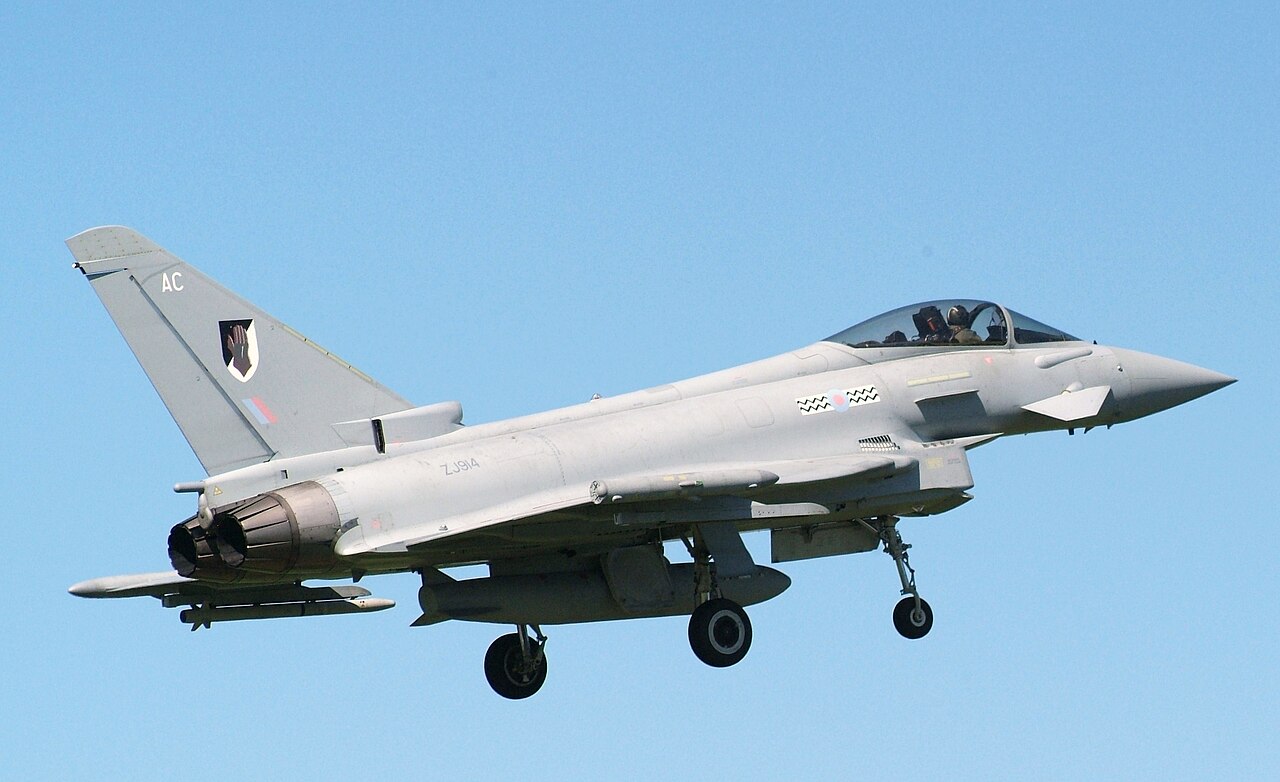
- Typhoons: RAF Coningsby, Lincolnshire, from the official Dogdyke Road viewing area, or RAF Lossiemouth in Moray.
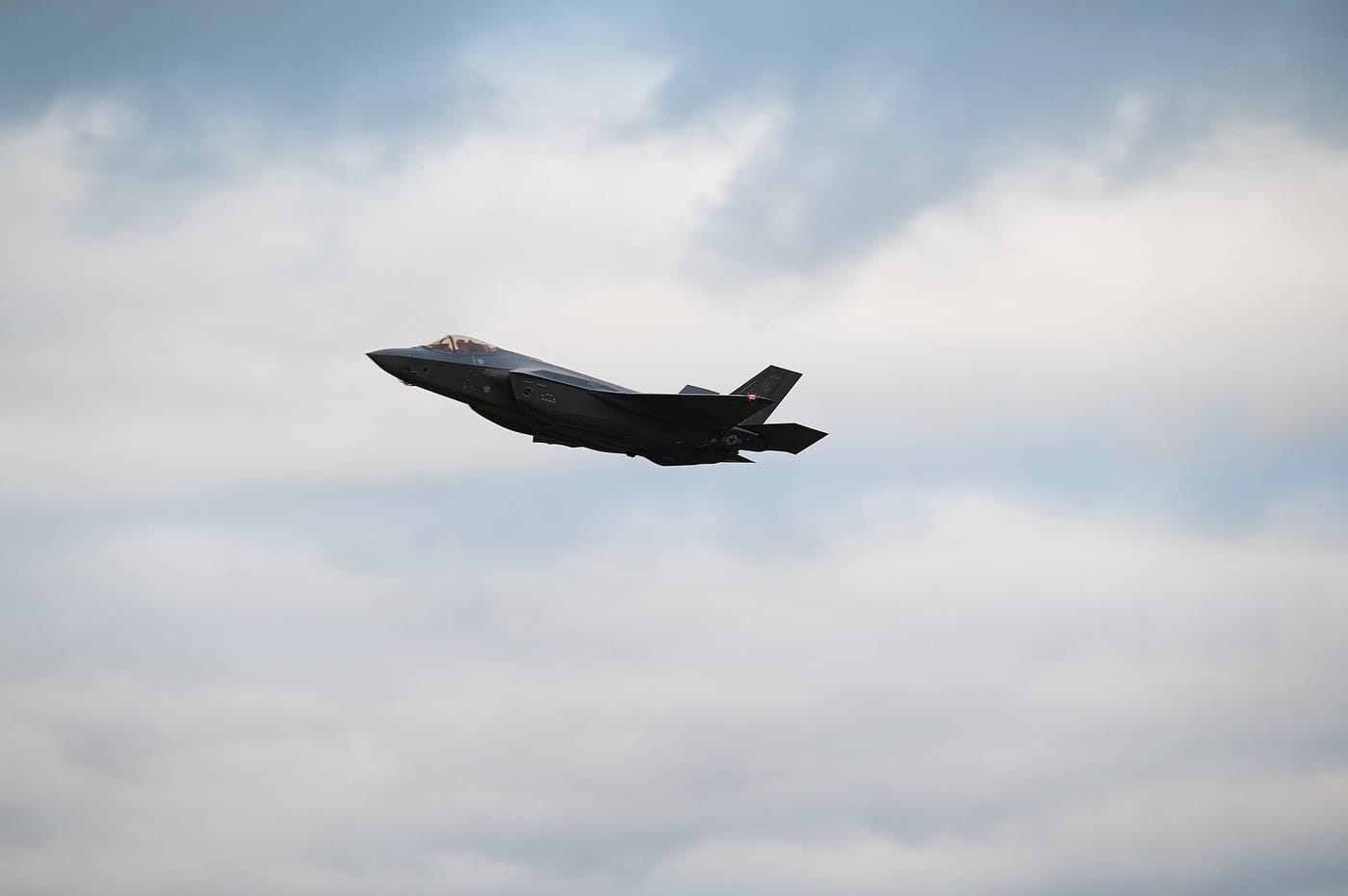
- F-35s: USAF F-35As at RAF Lakenheath, Suffolk; RAF and Royal Navy F-35Bs at RAF Marham, Norfolk.
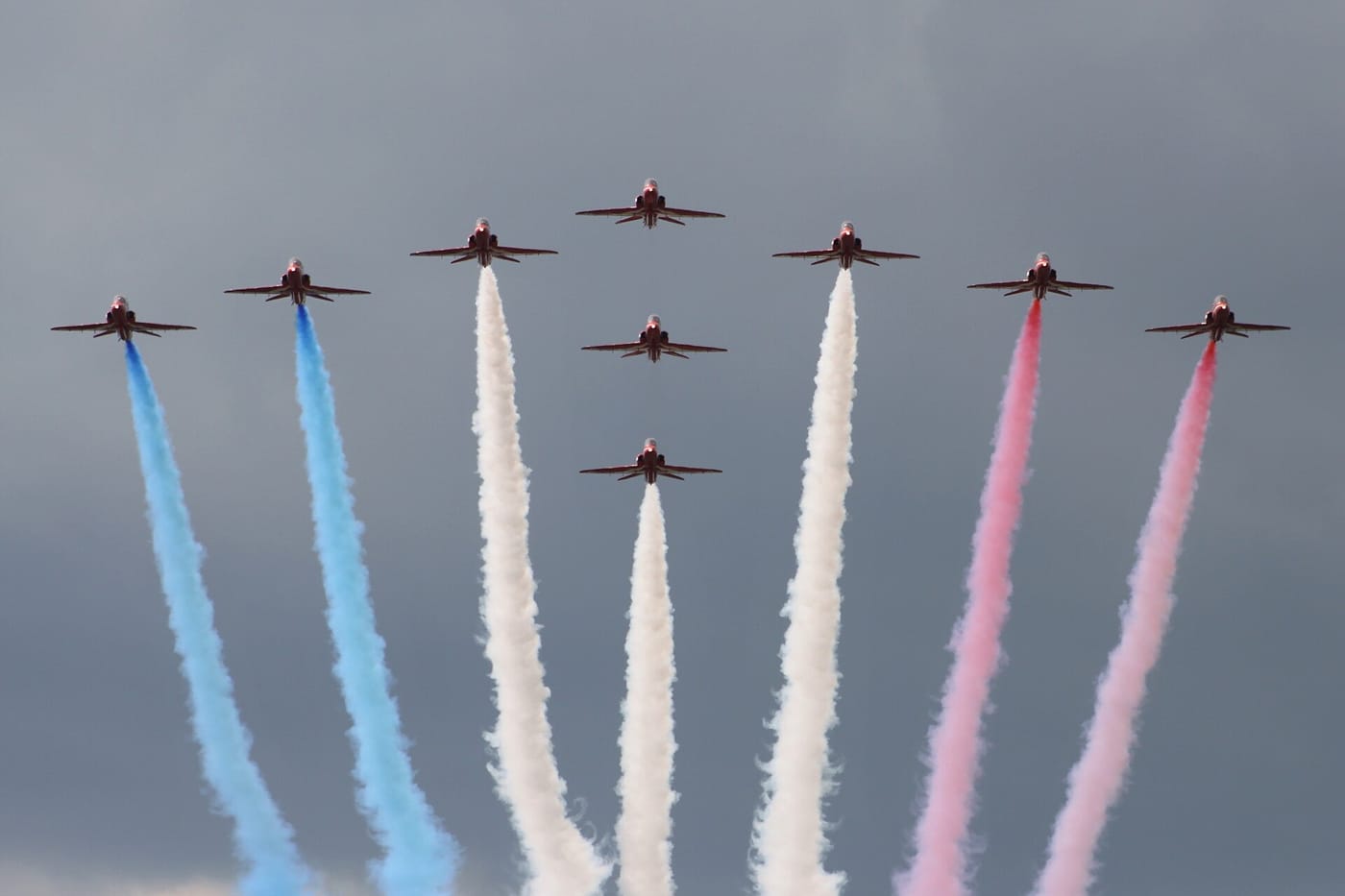
- The Red Arrows: RAF Waddington, Lincolnshire, from the signposted viewing area off the A15.
- The most take-offs in a day: RAF Valley on Anglesey, where every RAF fast-jet pilot trains.
- Jets below you: the Mach Loop in Wales, the Lake District and the Yorkshire Dales.
Every base worth visiting
| Base | What flies there in 2026 | Where to watch |
|---|---|---|
| RAF Coningsby, Lincolnshire | Typhoons, including the southern Quick Reaction Alert pair, and the Battle of Britain Memorial Flight | The official viewing area on Dogdyke Road (LN4 4SY), with a free car park. The station recommends it as the only place to watch from. |
| RAF Lakenheath, Suffolk | USAF 48th Fighter Wing: F-35As and F-15E Strike Eagles | The signposted aircraft viewing area off the A1065; also Maids Cross Hill. The viewing area can close at times of high security alert. |
| RAF Marham, Norfolk | F-35B Lightning: 207 Squadron (the training unit) and 617 Squadron | No official area. Spotters use Chalk Lane by the approach lights and a lay-by towards Barton Bendish. Keep out of crops and away from crash gates. |
| RAF Valley, Anglesey | No. 4 Flying Training School: Hawk T2s and Texan T1s; Red Arrows training in winter | The spotters' car park at Llanfair-yn-Neubwll (LL65 3NX), off the A55 at junction 4, and the dunes at Rhosneigr. |
| RAF Waddington, Lincolnshire | The Red Arrows' Hawk T1s, RC-135W Rivet Joint, Shadow R1 and Protector drones | The WAVE viewing area off the A15: signposted, with a portable toilet and a burger van. Hours vary, and the station is mostly quiet at weekends. |
| RAF Lossiemouth, Moray | Typhoons (Nos. 1, II, 6 and IX Squadrons), P-8 Poseidons, and the first E-7 Wedgetail in testing | Around Covesea Lighthouse and the small car park at the B9135/B9040 junction. The RAF asks spotters not to stand at the red-and-white fences. |
| RAF Mildenhall, Suffolk | USAF KC-135 tankers, MC-130J transports and CV-22 Ospreys | Street parking around the perimeter; busy on weekdays, quiet at weekends. Ten minutes from Lakenheath. |
| RAF Brize Norton, Oxfordshire | Voyager tankers, A400M Atlases and C-17s: the RAF's transport fleet | No official area. Station Road at one end of the runway (park in Brize Norton village) and Bampton Road at the other. Don't park across crash gates. |
| RNAS Yeovilton, Somerset | Royal Navy and Army Wildcat and Merlin helicopters | The airfield viewing area beside the Fleet Air Arm Museum. |
| RAF Cranwell, Lincolnshire | Phenom, Prefect and Tutor trainers | Easy to watch, with few good photo positions. Graduation days bring flypasts. |
Two bases often listed in older guides are no longer worth the trip for jets: RAF Leeming has had no resident flying squadron since its Hawks disbanded in 2022, and the Red Arrows left Scampton for Waddington in October 2022.
The low-flying valleys
The UK Low Flying System lets fixed-wing aircraft fly down to 250 feet above the ground over most of the country, and down to 100 feet in three Tactical Training Areas when they are activated. The valleys below are where crews practise, and where you can stand above them.
- The Mach Loop, Snowdonia (LFA 7): the most famous, with Hawks and Texans from Valley the most frequent visitors, and Typhoons, F-35s, A400Ms and USAF jets less often.
- The Lake District (LFA 17): Thirlmere and Honister Pass.
- The Yorkshire Dales (LFA 10): Buttertubs Pass.
- The Scottish Highlands (LFA 14): Lossiemouth's Typhoons use the glens; spotters watch from Cammoch Hill near Pitlochry and in Glen Tilt. Traffic has thinned since the Tornado retired, so blank days are common.
Etiquette
Use official viewing areas where they exist. Park legally and never across gates or crash gates; much of the best viewing is from farmland or lanes used by the emergency services. Don't fly drones near airfields. Never point lasers or camera flashes at aircraft. Photographing aircraft from public land is generally lawful, but if police or station staff ask what you are doing, tell them.
Questions
Where is the best place to watch fighter jets in the UK?
For numbers, a base viewing area on a weekday: Coningsby for Typhoons, Lakenheath for F-35s and F-15s, Valley for the Hawks. For drama, the Mach Loop in Wales, where jets fly through the valleys below you.
Where can I see the Red Arrows practise?
At RAF Waddington in Lincolnshire, their home since 2022, from the WAVE viewing area off the A15. In winter and before the display season they also train at RAF Valley on Anglesey.
Where can I see F-35s in the UK?
USAF F-35As fly from RAF Lakenheath in Suffolk, which has a signposted public viewing area. RAF and Royal Navy F-35Bs fly from RAF Marham in Norfolk, watched from the lanes around the airfield.
Is plane spotting at RAF bases legal?
Yes, from public land and official viewing areas. Stay off private land, don't obstruct roads or gates, and be ready to explain yourself to station police. Some viewing areas close when security alerts are raised.
When do military jets fly in the UK?
Mostly on weekdays, roughly 9am to 5pm, with very little flying at weekends or during holiday stand-downs. USAF units don't fly on US federal holidays.