The ten aircraft types the gazetteer finds in the most UK collections, modelled to their published dimensions and painted as real airframes. Drag to turn them, pinch or scroll to zoom.
Every type on charge across the gazetteer's museums is indexed in the Compendium, and counting the collections that hold each one produces a list that says a good deal about how Britain kept its aircraft. Eight of the ten are jets of the 1940s to 1970s — built in hundreds or thousands, retired when museums were hungry for exhibits, and small enough to fit through a hangar door. The two piston fighters on the list are the reverse: built in their tens of thousands, they survive in tens because a war used most of them up.
Each model below was built procedurally in Blender — generated in code from the type's span, length, height and three-view drawings rather than sculpted by hand — and painted as one documented airframe, most of them still preserved in Britain. Every one matches its real span, length and height to within about two per cent. Each links to its aircraft page, where the gazetteer lists the museums that hold one, with serials.
The ten, by number of collections
| Rank | Type | Collections | First flight | Model painted as |
|---|---|---|---|---|
| 1 | de Havilland Vampire | 17 | 1943 | FB.5 VZ304 |
| 2 | Harrier family | 15 | 1960 | GR.3 XZ133 |
| 3 | Gloster Meteor | 14 | 1943 | F.8 WK991 |
| 3 | Hawker Hunter | 14 | 1951 | F.6 XG225 |
| 3 | English Electric Canberra | 14 | 1949 | B.2 WH725 |
| 3 | English Electric Lightning | 14 | 1954 | F.6 XS903 |
| 7 | Supermarine Spitfire | 13 | 1936 | LF Mk IX MH434 |
| 8 | SEPECAT Jaguar | 12 | 1968 | GR.1A XX824 |
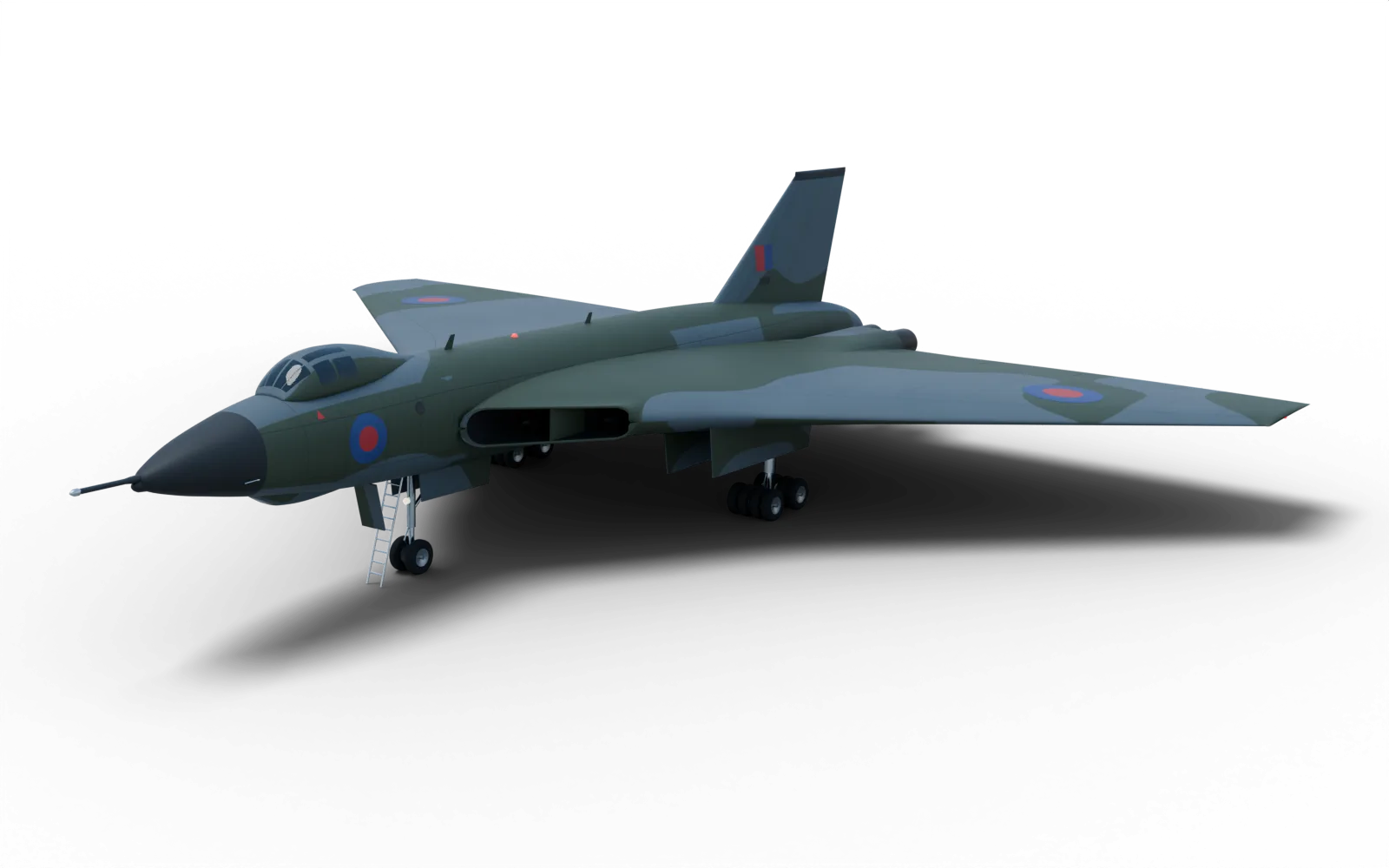
| 9 | Avro Vulcan | 11 | 1952 | B.2 XH558 |
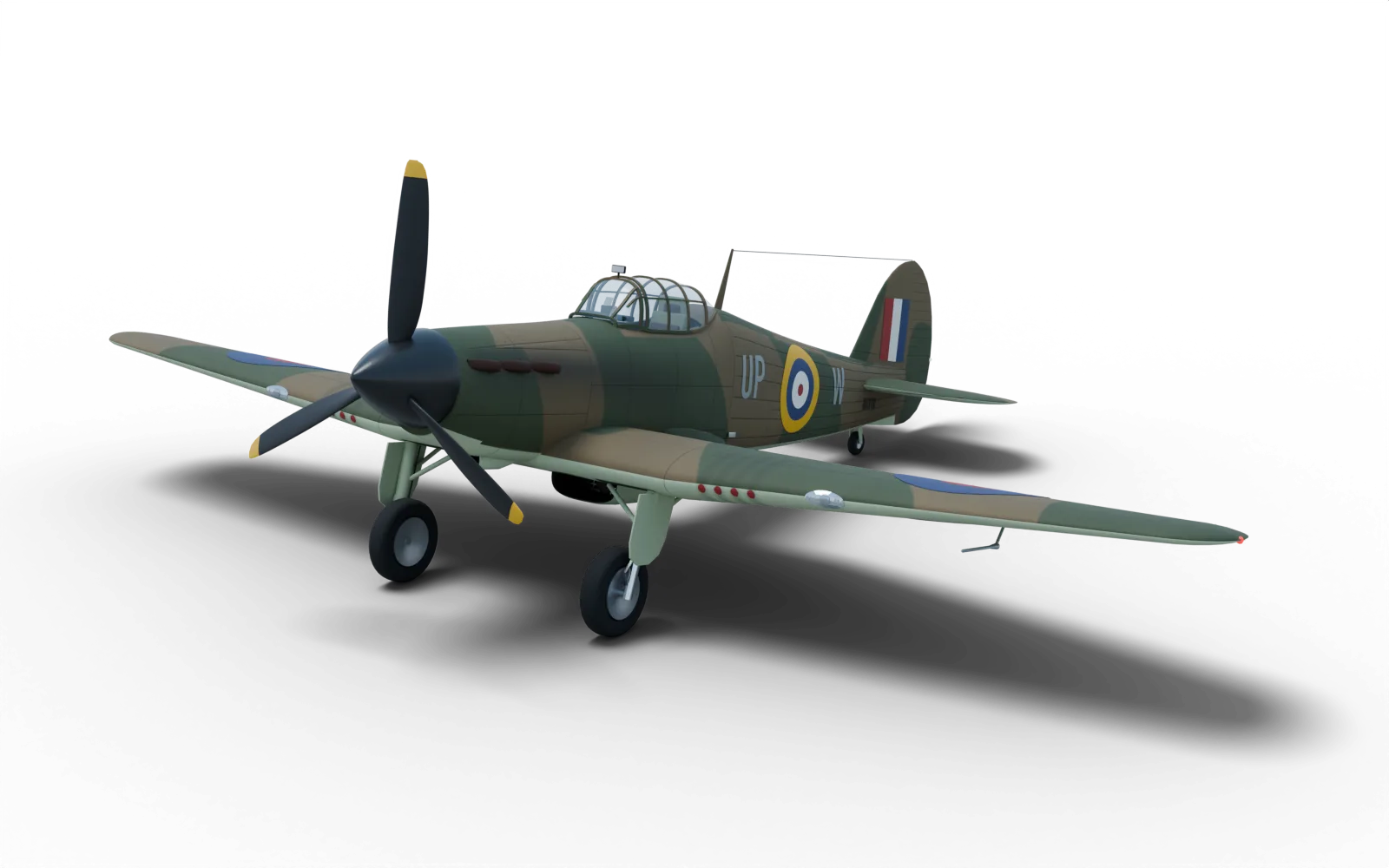
| 10 | Hawker Hurricane | 10 | 1935 | Mk I R4118 |
Five types tie for tenth place on ten collections each: the Hurricane, the Jet Provost, the Phantom, the Tornado and the Wessex. The Hurricane takes the place here.
1. de Havilland Vampire — 17 collections
Britain's second jet fighter, and the most widely kept aircraft in the gazetteer. The twin-boom layout kept the jet pipe short, so the modest thrust of the de Havilland Goblin was not wasted in a long tailpipe. A Sea Vampire made the first landing by a pure jet on an aircraft carrier, in December 1945. Its numbers in museums owe much to the T.11, the side-by-side trainer that taught a generation of RAF pilots to fly jets.
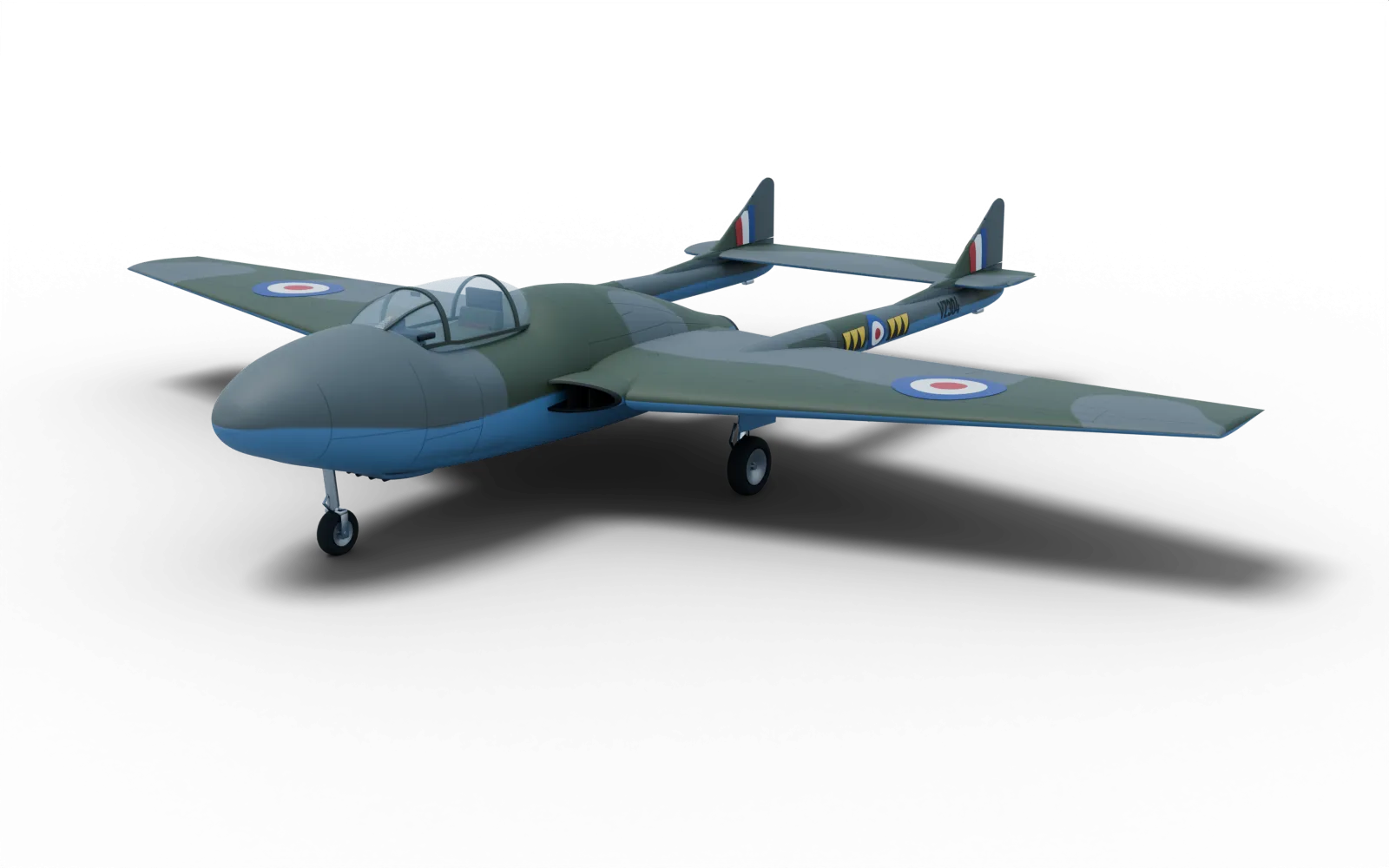
Where to see a Vampire — and the gazetteer's own Vampire supplement.
2. Harrier family — 15 collections
The first operational jet fighter that could take off and land vertically, the Harrier began as the P.1127 in 1960. Four rotating nozzles direct the thrust of a single Pegasus engine, from straight down to straight back. The GR.3 modelled here went to war in 1982, when No. 1(F) Squadron flew ground-attack missions in the Falklands from the deck of HMS Hermes.
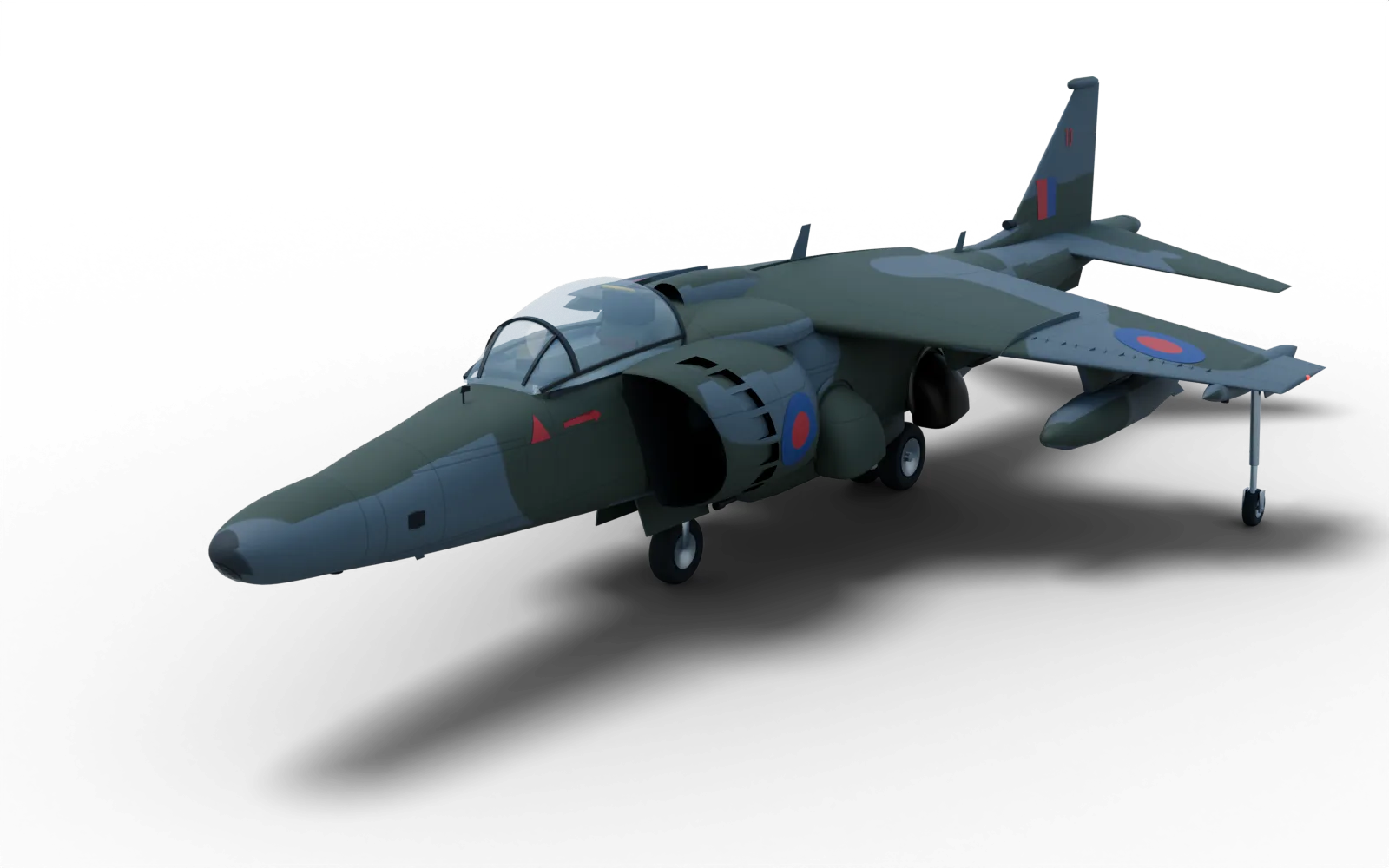
3. Gloster Meteor — 14 collections
The only Allied jet fighter to see operational service in the Second World War: No. 616 Squadron took Meteors into action against V-1 flying bombs in the summer of 1944. The F.8 shown here, with its taller tail and blown canopy, was the main post-war day-fighter version, and Meteors stayed in RAF service in other roles for decades after.
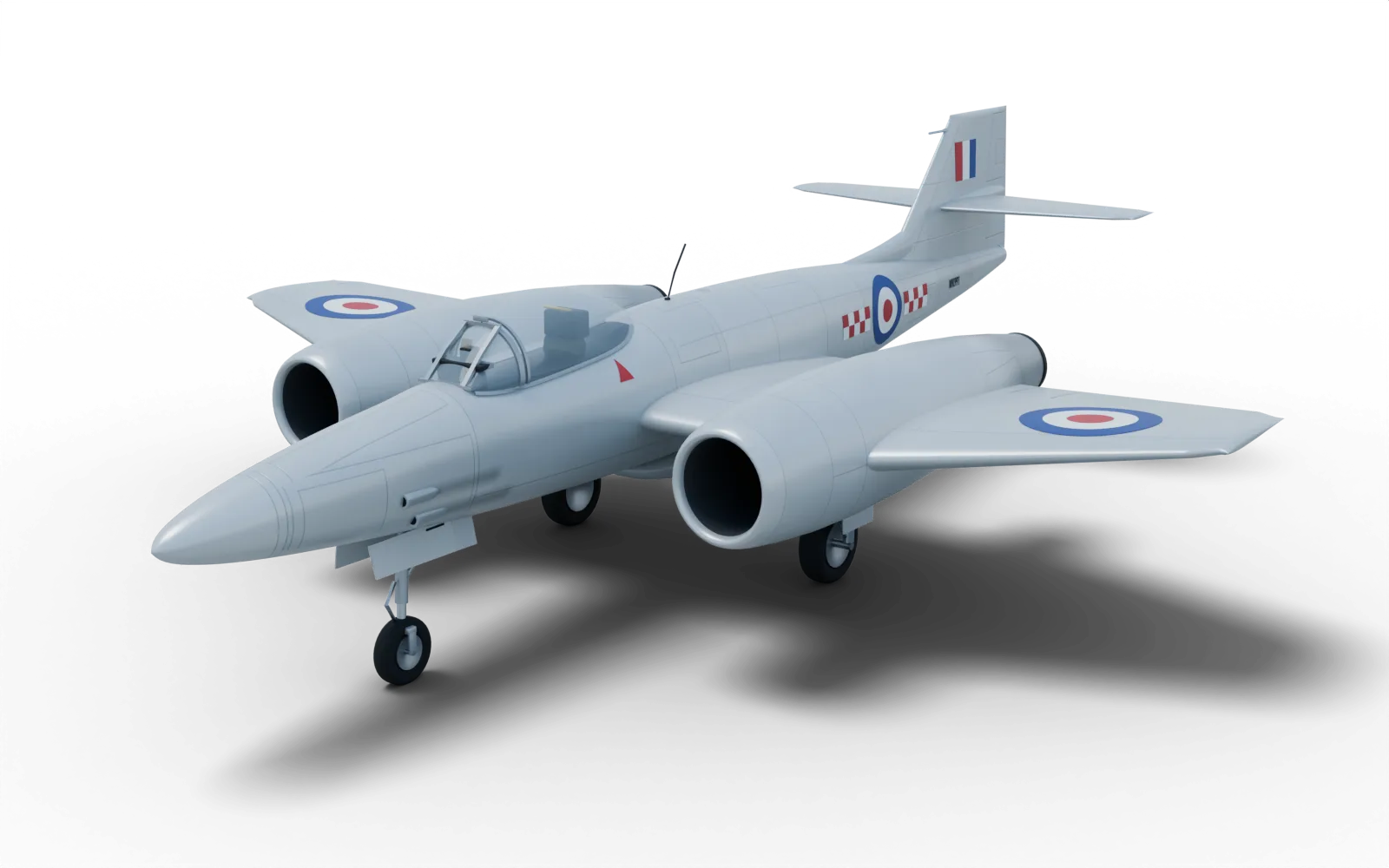
3. Hawker Hunter — 14 collections
Sydney Camm's swept-wing fighter first flew in 1951, and in 1953 Neville Duke took the world air speed record in one at 727.6 mph. That aircraft, WB188, is among the Hunters the gazetteer records. In 1958 the Black Arrows of No. 111 Squadron looped 22 Hunters in formation at Farnborough. The F.6 was the definitive single-seat fighter version.
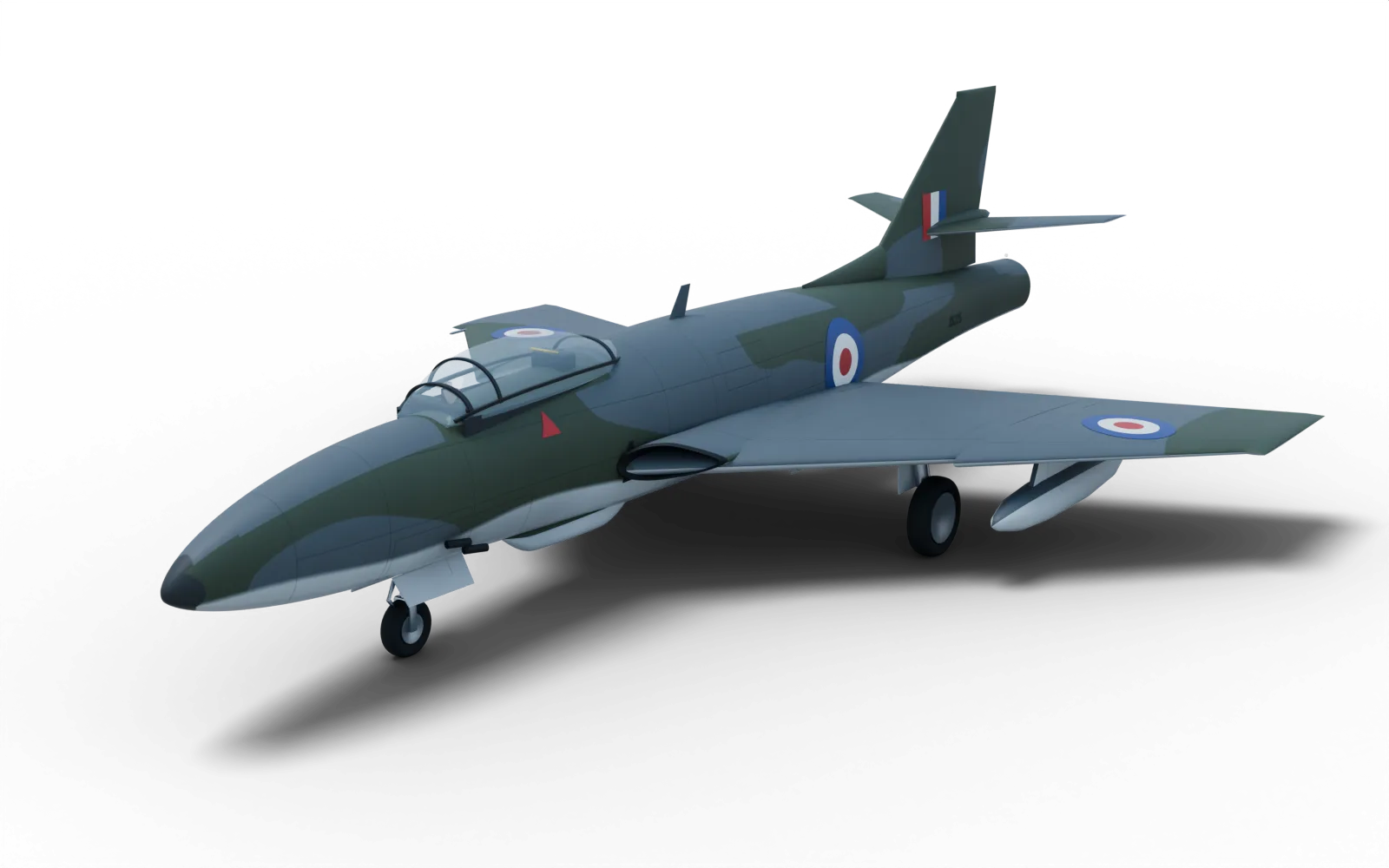
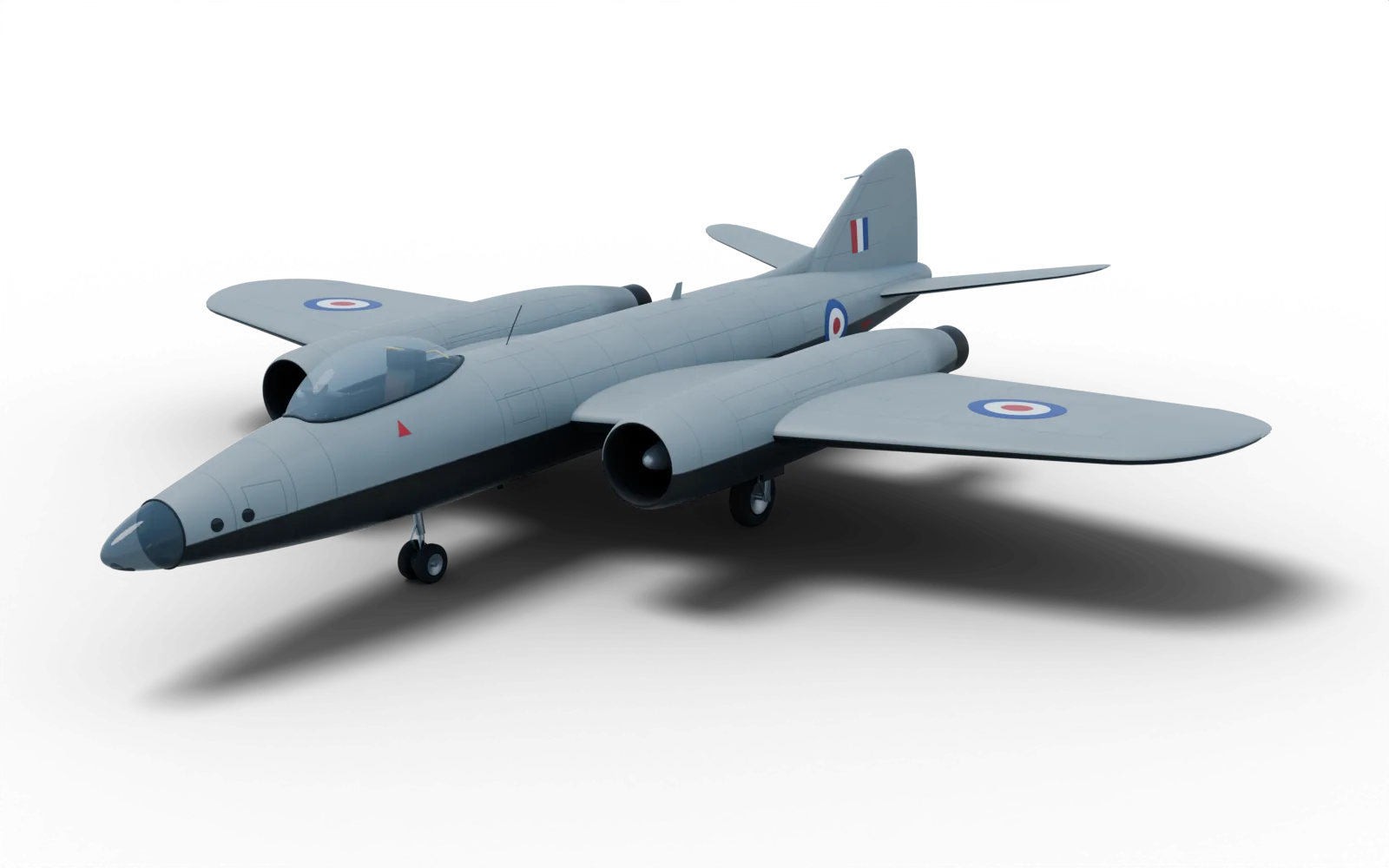
3. English Electric Canberra — 14 collections
Britain's first jet bomber flew in 1949 and was fast and high-flying enough to outpace the fighters of its day. The United States built it under licence as the Martin B-57, and the RAF flew its photo-reconnaissance PR.9s until 2006. The B.2 shown here wears the grey-over-black finish of early Bomber Command.
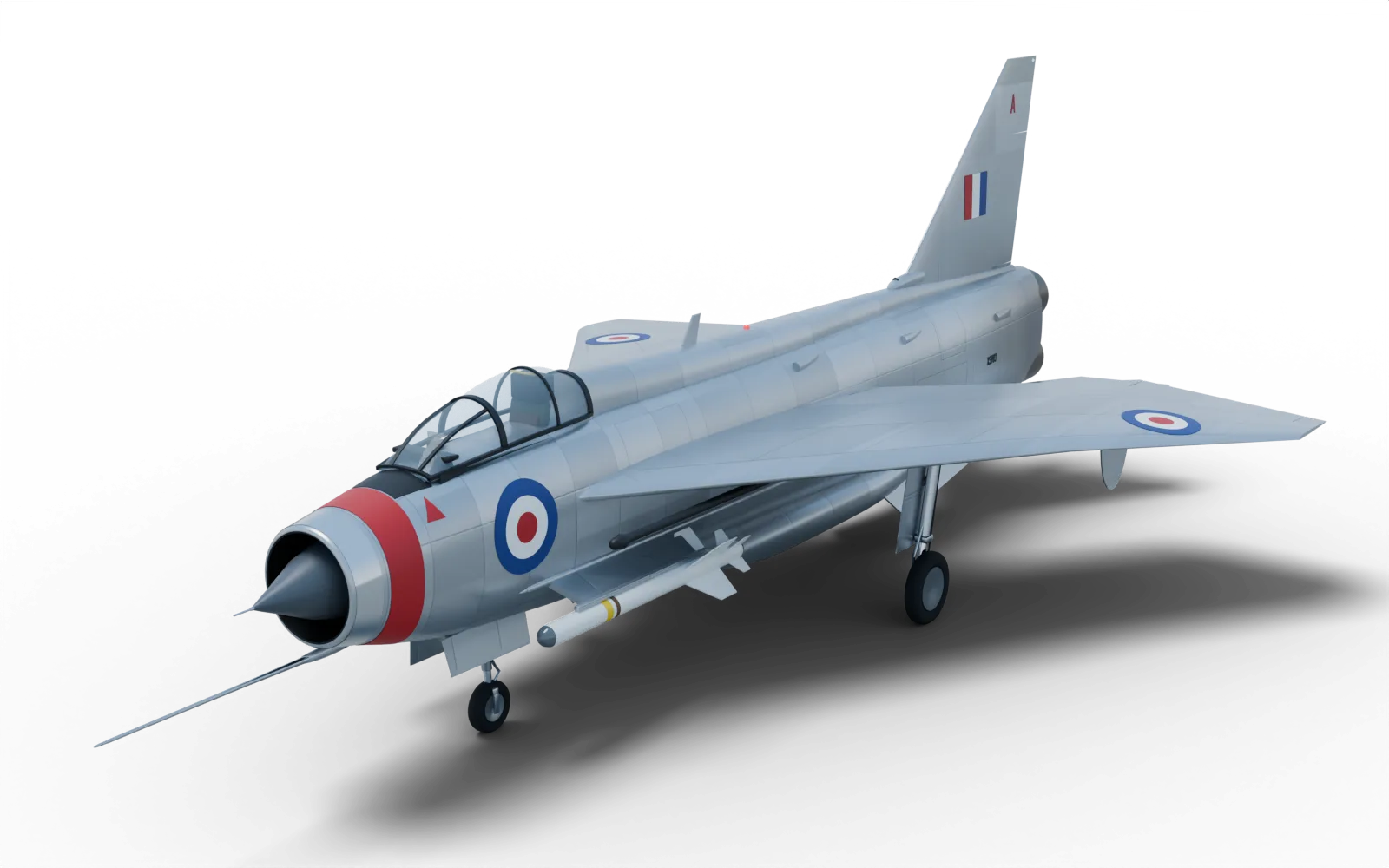
3. English Electric Lightning — 14 collections
Britain's only home-grown Mach 2 fighter, and a famous climber. Its two Avon engines sit one above the other, which gives the fuselage its slab-sided depth, and the intake in the nose is split around a conical radar housing. The F.6 modelled here is XS903, preserved at the Yorkshire Air Museum, painted in natural metal with No. 5 Squadron's red.
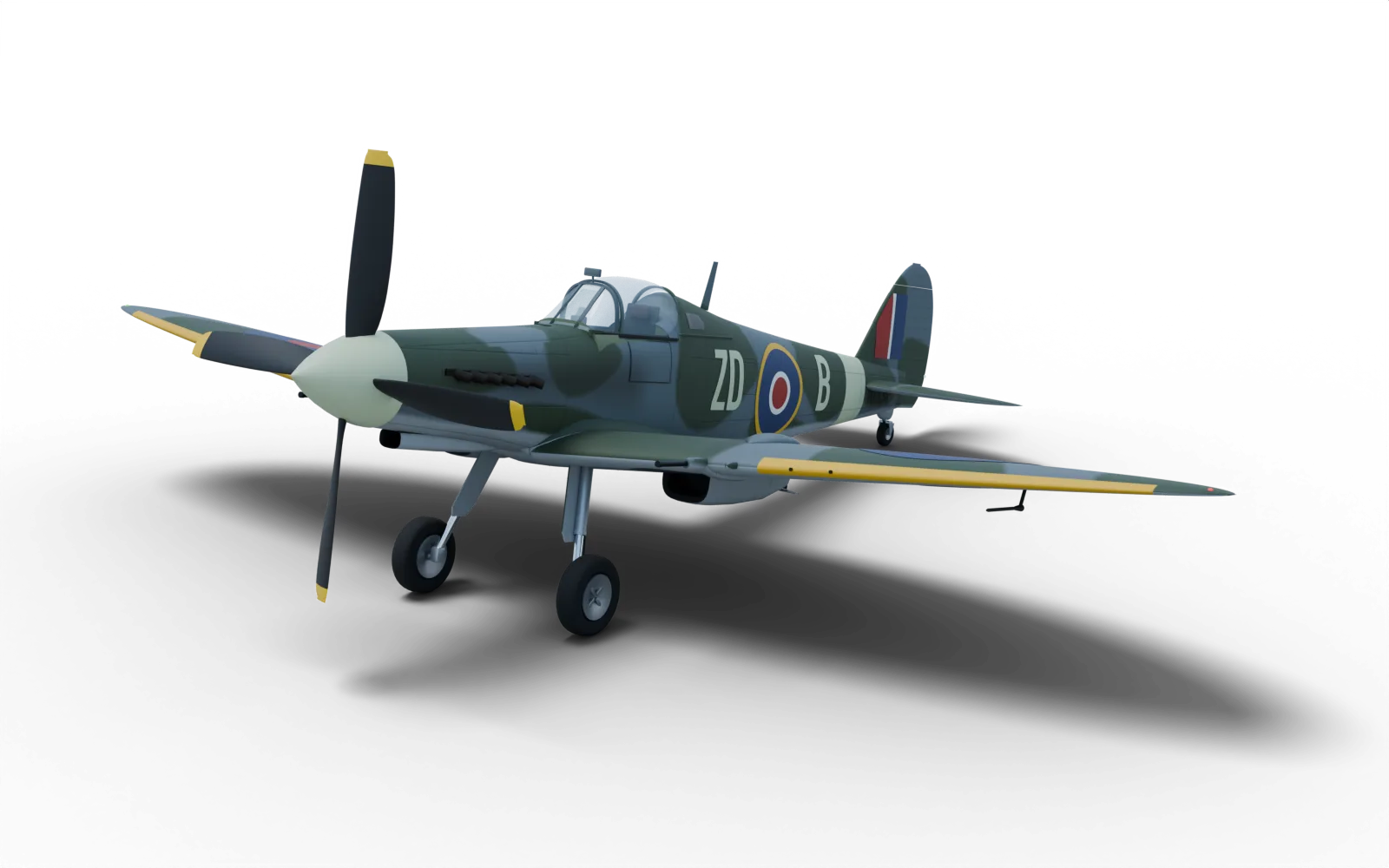
7. Supermarine Spitfire — 13 collections
First flown in 1936 and built throughout the war, with more than 22,000 completed including Seafires. The elliptical wing is the giveaway in plan view. MH434, the Mk IX shown here in No. 222 Squadron's 1943 markings, is still airworthy at Duxford.
Where to see a Spitfire — every UK museum airframe and flying venue — and the Spitfire supplement.
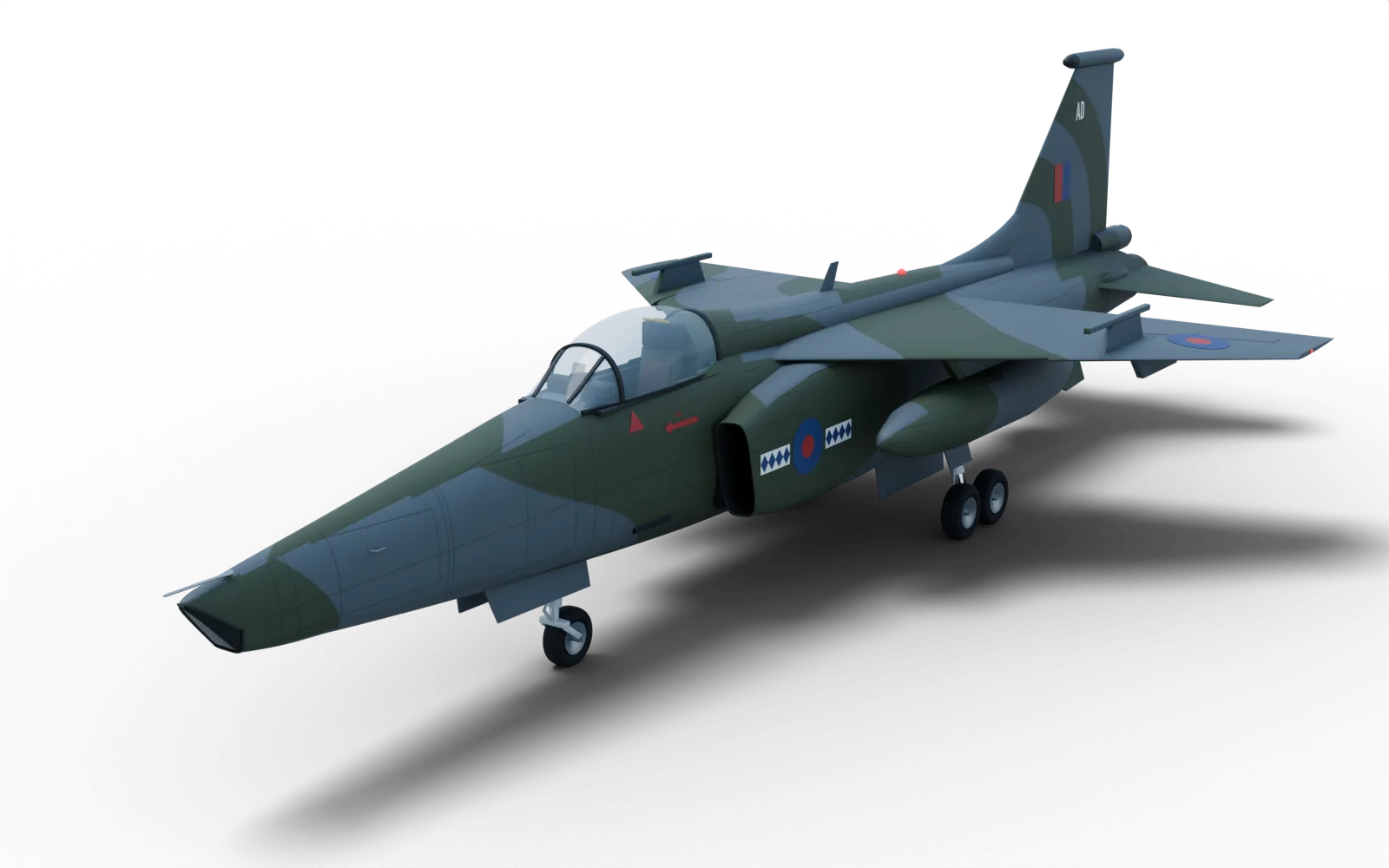
8. SEPECAT Jaguar — 12 collections
An Anglo-French strike aircraft built by SEPECAT, the partnership of Breguet and the British Aircraft Corporation. It first flew in 1968 and served the RAF from the Cold War in Germany to the 1991 Gulf War, retiring in 2007. The long nose holds a laser rangefinder behind a chisel-shaped window, and it has no ailerons: roll comes from spoilers on top of the wing, helped by the tailplane.
9. Avro Vulcan — 11 collections
Only 136 Vulcans were built, which makes eleven collections a remarkable survival rate. The delta flew in 1952, carried Britain's nuclear deterrent and, in 1982, flew the Black Buck raids on the Falklands. XH558, modelled here, was the last to fly, making its final flight in October 2015, and is now the centrepiece of The Vulcan Experience at Doncaster.
Where to see a Vulcan — including the three that still run their engines.
10. Hawker Hurricane — 10 collections
More numerous than the Spitfire in 1940 and credited with the majority of the RAF's victories in the Battle of Britain. Tube, fabric and eight guns made it quick to build and easy to repair. R4118, modelled here in No. 605 Squadron's markings, flew in the Battle itself and has been restored to fly again.
How the models were made
Each aircraft was generated in Blender 5 from Python, using one modelling toolkit shared by all ten. The fuselage is built from side and plan profiles and the wings from real airfoil sections. Ailerons, flaps and rudders are separate parts. Intakes and jet pipes are hollow, and every model has a cockpit, a seat, landing gear and doors.
The paint is drawn into textures from each airframe's documented scheme, with panel lines, rivets and exhaust staining. Roundels, fin flashes and serials are real geometry laid on the skin. Proportions were checked against three-view drawings and published photographs.
They are interpretations, not surveys. Camouflage patterns are approximations, and a few details of each scheme are the modeller's best judgement. Treat the museum airframes themselves as the reference. The models are a way to get to know the shapes before you go.
Can I download the models?
Yes. Each caption links to a .glb file, the standard 3D format, which opens in Blender, in most 3D viewers and in the Windows and macOS 3D previewers. They are 0.8 to 1.5 MB each, with compressed geometry and textures.
How accurate are they?
Each matches its real span, length and height to within about two per cent, and the shapes were checked against three-view drawings. Treat camouflage patterns and minor markings as approximate.
Why these ten?
They are the ten types recorded in the most UK collections in the gazetteer's Compendium. Five types tie for tenth on ten collections each, and the Hurricane takes the place here.
Collection counts from the Aviation Gazetteer Compendium, last verified 3 October 2026. Airframes move between collections and into storage — check each museum's page before travelling.