3D model
Turn it over
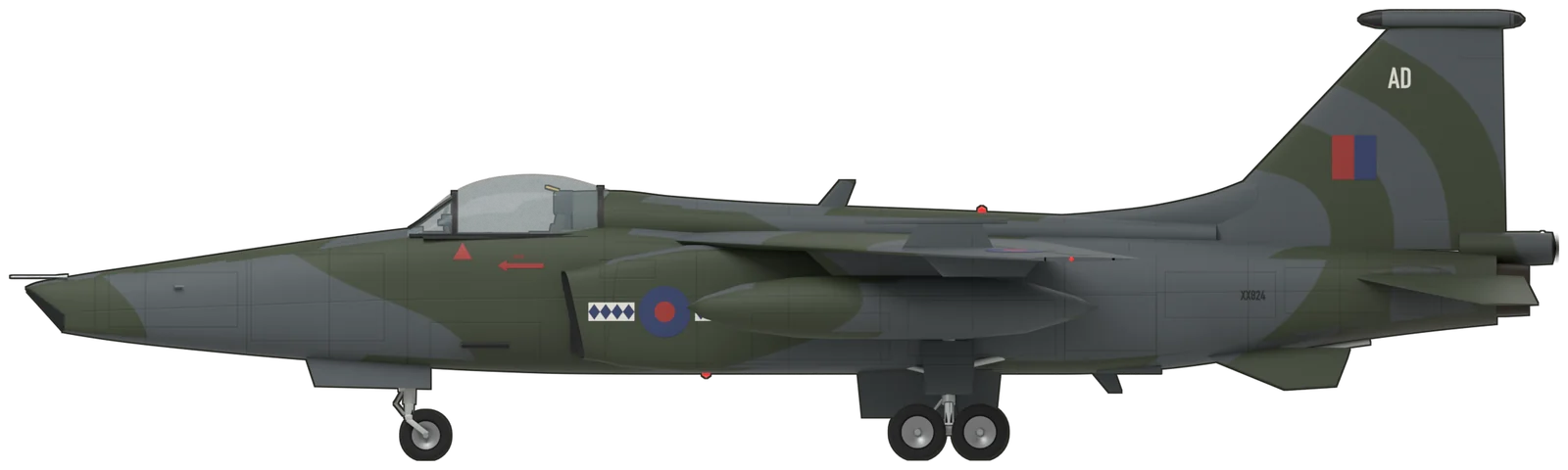
A procedural model built in Blender from published dimensions, drawings and photographs, painted as XX824 'AD' of No. 14 Squadron in the mid-1980s. Drag to orbit, scroll or pinch to zoom · download .glb (841 KB)
History
The Jaguar
The Jaguar was born as an Anglo-French trainer and grew into a strike aircraft. SEPECAT, a partnership of Breguet and the British Aircraft Corporation, built it with two Adour turbofans, a shoulder wing and a stalky undercarriage strong enough for rough strips. The first prototype flew in September 1968.
RAF single-seat GR.1s entered service in 1974, many with RAF Germany, flying low and fast with nuclear and conventional weapons. The chisel nose holds a laser rangefinder and marked-target seeker, and there are no ailerons: roll comes from spoilers on top of the wing, helped by the tailplane.
Jaguars flew in the 1991 Gulf War, over the Balkans and over northern Iraq before the RAF retired them in 2007. India built them under licence.
This airframe
GR.1A XX824
XX824 flew as “AD” with No. 14 Squadron at RAF Brüggen in West Germany in the mid-1980s and is preserved in those colours at the RAF Museum London: wraparound Dark Green and Dark Sea Grey, with the squadron’s white bars and blue diamonds beside the intake roundels.
Where to see one
In the gazetteer
The gazetteer records the Jaguar in 12 UK collections. The airframe modelled here is marked.
- Boscombe Down Aviation Collection
- Bournemouth Aviation Museum
- Montrose Air Station Museum
- Morayvia
- National Museum Of Flight
- Newark Air Museum
- RAF Air Defence Radar Museum
- Royal Air Force Museum London
- Royal Air Force Museum Midlands
- Solway Aviation Museum
- South Wales Aviation Museum
- Ulster Aviation Society (Maze Long Kesh)