AP 118 · No. 10 Section I · Museums Overseas supplement
Overseas supplement · Par avion

NorthAmericaEight to cross the Atlantic for

Britain keeps the finest small collections in the world. North America keeps the biggest ones. These eight are the museums worth a transatlantic ticket: one with a Lancaster that still flies, one aboard an aircraft carrier, and six that hold aircraft no British museum ever could.

8
Hero museums
2 + 6
Canada, United States
1,400+
Aircraft between them
Great-circle routes from London Heathrow to the eight museums in this supplement 120°W100°W80°W60°W40°W20°W0°30°N40°N50°N60°N CA-01 HamiltonCA-02 OttawaUS-01 DaytonUS-02 WashingtonUS-03 PensacolaUS-04 TucsonUS-05 SeattleUS-06 New York LHR London
Routes from Heathrow along the great circle, the shortest line on a curved earth, which is why they bow north across the chart. Choose a pin to open its page.
Despatch

Why go all that way

The gazetteer’s home ground is the 119 aviation museums of the United Kingdom, and it stays that way. But every British enthusiast eventually books the flight. This supplement is for that trip: two Canadian museums and six American ones, each chosen because it holds something that exists nowhere else, and each written up in more depth than the gazetteer gives any single station at home.

Canada comes first because the ties run deepest. The Royal Canadian Air Force flew Lancasters, Spitfires and Hurricanes alongside the RAF, more than 130,000 aircrew were trained in Canada under the British Commonwealth Air Training Plan, and Hamilton’s Lancaster is one of only two left in the air, the other being the Battle of Britain Memorial Flight’s at Coningsby.

The American six are the giants: the national Air Force collection at Dayton, the Smithsonian’s hangar by Dulles, the desert acres of Tucson, the Boeing city’s museum in Seattle, the Navy’s at Pensacola and the carrier Intrepid, moored on the Hudson in Manhattan. Between them they keep the first aircraft to fly the Atlantic, the B-29s that ended the war, the fastest jet ever built and two British Airways Concordes.

Every page here has the same furniture as a gazetteer station page, and then some: prices and hours checked against the museum’s own site, the airframes to find by serial, a printable checklist, the story of the collection, what ties it to Britain, and the great-circle track from Heathrow. Prices are in local currency.

CACanada2 hero museums

The flying Lancaster

CA-01

Canadian Warplane Heritage Museum

Hamilton, Ontario · 3,580 miles from London
~47aircraftTickets C$14.25
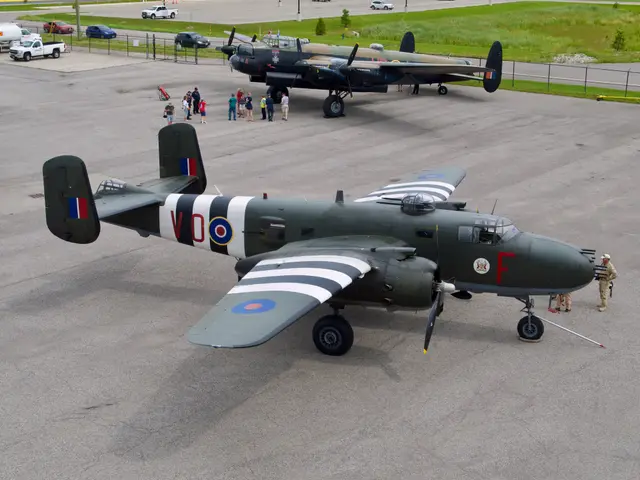
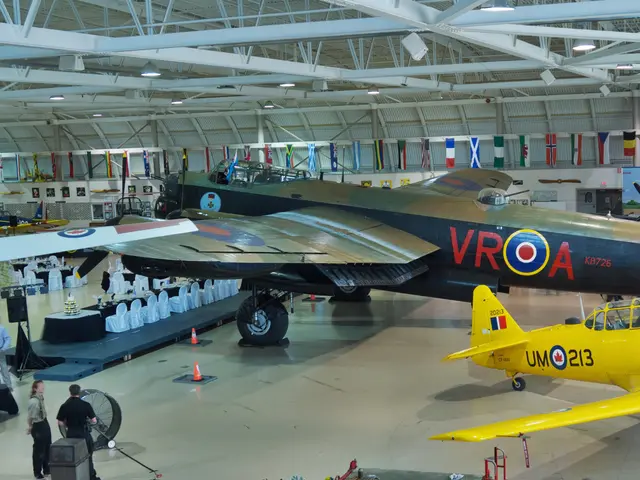
Dark green and brown Avro Lancaster bomber with red VR-A codes parked inside a bright hangar, with a yellow training aircraft in front
Order of battle ~47 airframes
~10Fighters
~6Bombers & patrol
~21Trainers
~7Transports
~3Liaison & observation

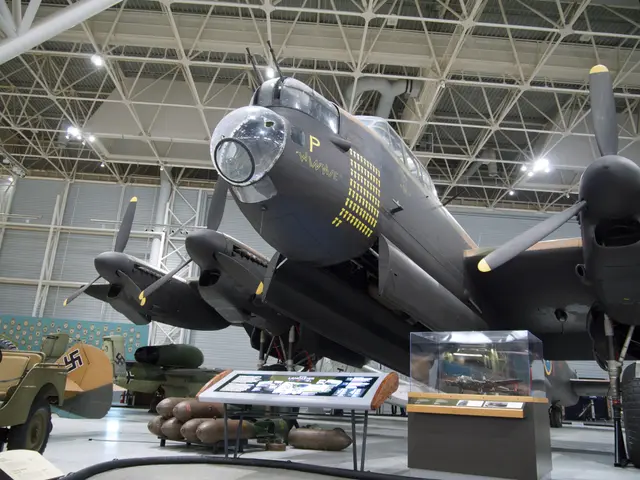
A delta-shaped hangar on the edge of Hamilton's airport, about an hour's drive from Toronto, that holds Canada's great flying collection. Most of its 45 or so aircraft are Canadian service types: yellow BCATP trainers, Cold War jets, and maritime aeroplanes from both coasts. The difference here is that a good many of them still fly. The centrepiece is Lancaster B.X FM213, one of only two airworthy Lancasters in the world and, by the museum's own account, the only one you can buy a seat in. Around it stand a flying Firefly, B-25, Canso and Dakota, a Castle Bromwich Spitfire, and a restoration floor where the work can be watched in progress. For a British visitor it is the other half of the Commonwealth air-training story, kept in working order by volunteers. It deserves a full day, and a flight if you have the money and the luck.

Star of the show

Avro Lancaster B.X FM213 (C-GVRA), the Mynarski Memorial Lancaster in the markings of 419 Squadron's KB726 VR-A, one of only two airworthy Lancasters in the world.

Prize exhibits
  • Avro Lancaster B.X FM213: the Mynarski Memorial Lancaster, one of two airworthy in the world
  • Fairey Firefly AS.6 WH632: per the museum, the only Firefly still flying
  • Supermarine Spitfire LF.XVIe TE214: built at Castle Bromwich and ex-RAF Central Gunnery School
  • Douglas C-47 Dakota FZ692: flew with 437 Squadron at Normandy and the Rhine crossing, and still flies
  • Consolidated Canso A 11084: airworthy, dedicated to David Hornell VC
Visitor intel

Allow two hours for the hangar, and longer on a flying day. Passenger flights need museum membership and advance booking. Lancaster seats for 2027 go on sale online at 9am EST on 19 November 2026 and usually sell out within minutes to hours; other aircraft go on sale on 1 December. The museum is a flying operation, so between spring and autumn particular aircraft may be away at airshows. Telephone before travelling to see one machine, and look out for the volunteer-staffed CF-100 cockpit, which visitors may climb into.
The national collection

CA-02

Canada Aviation and Space Museum

Ottawa, Ontario · 3,320 miles from London

~130aircraftTickets C$17.25
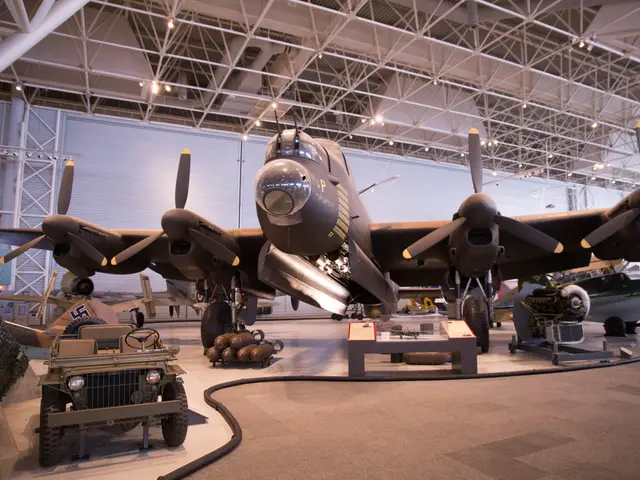
Avro Lancaster X bomber KB944 in dark green and brown camouflage, seen from the front under the museum's white steel roof trusses
Order of battle ~130 airframes
~18Fighters
~5Bombers & patrol
~9Trainers
~18Transports & bush planes
~6Helicopters & VTOL

Canada's national aviation collection lives in a delta-shaped hall on the old RCAF station at Rockcliffe, five kilometres north-east of Parliament Hill. More than 130 aircraft cover 1909 to the present, and few collections anywhere are this complete or this original. The big draw for a British visitor is Lancaster X KB944, the most complete Lancaster X in existence. Around it stand a Castle Bromwich Spitfire, a Canadian-built Hurricane, a Lysander and a Swordfish, plus a First World War room that holds the world's only surviving German multi-engined bomber of the war and the only complete Junkers J.I. Then come the things that are uniquely Canadian: the nose of Avro Arrow 25206, the first Beaver and the first Twin Otter, and the HS-2L La Vigilance, recovered from an Ontario lake. Allow a full day. Book the Reserve Hangar tour on arrival.

Star of the show

Avro Lancaster X KB944, built by Victory Aircraft at Malton in 1945 and described by the museum as the most complete Lancaster X in existence.

Prize exhibits
  • Avro Lancaster X KB944: the most complete Lancaster X in existence, delivered to No. 425 Squadron in 1945
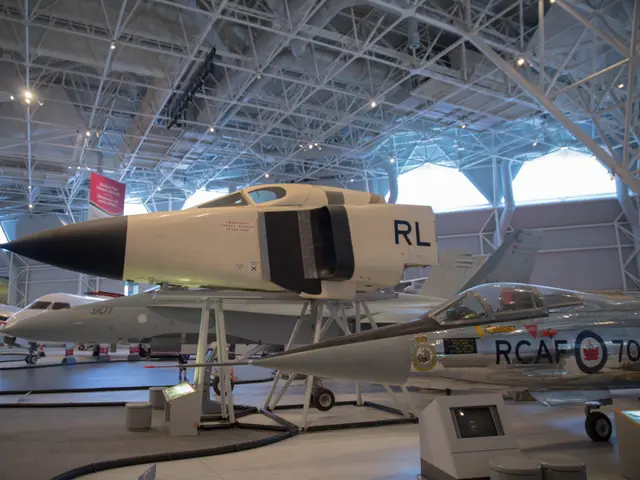
  • Avro Canada CF-105 Arrow 2 25206: the nose section, the largest surviving piece of any Arrow
  • A.E.G. G.IV 574/18: the only surviving German multi-engined bomber of the First World War
  • Junkers J.I 586/18: the only complete example, still in its original aluminium skin
  • DHC-2 Beaver CF-FHB: the first Beaver built, flown in from Lac la Ronge in 1980
Visitor intel

Tickets are timed; booking online is recommended, and entry is free in the last hour (4–5 p.m.), though that is too short for a proper visit. The museum suggests about two hours, but an enthusiast will need most of a day. Don't miss the Reserve Hangar next door, which holds more than 60 stored aircraft including the Mosquito, Bolingbroke and Jetliner nose: guided tours (C$8 adult) leave the admission desk at 11.30 and 13.30, take 15 people each and are first come, first served. Note that the museum is closed on Tuesdays.

USUnited States6 hero museums

The biggest military air museum on earth

US-01

National Museum of the United States Air Force

Dayton (Wright-Patterson AFB), Ohio · 3,900 miles from London

~360aircraftFree
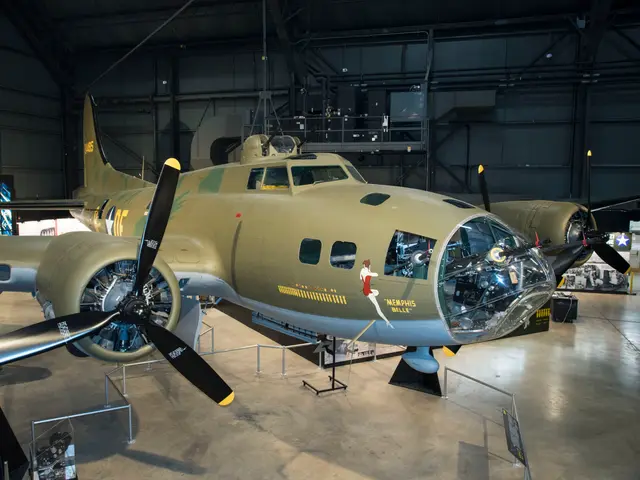
The olive-drab B-17F Memphis Belle, with her nose art, on display in a large museum hangar
Order of battle ~360 airframes
~90Fighters
~35Bombers
~40Transports & presidential
~40Research & X-planes
~15Helicopters
~70Missiles & space

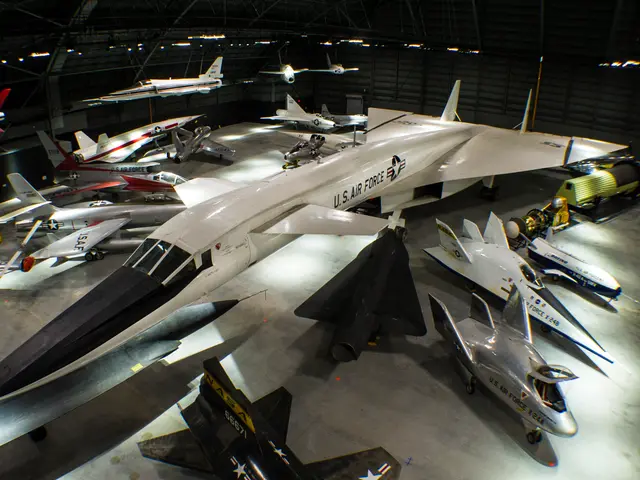
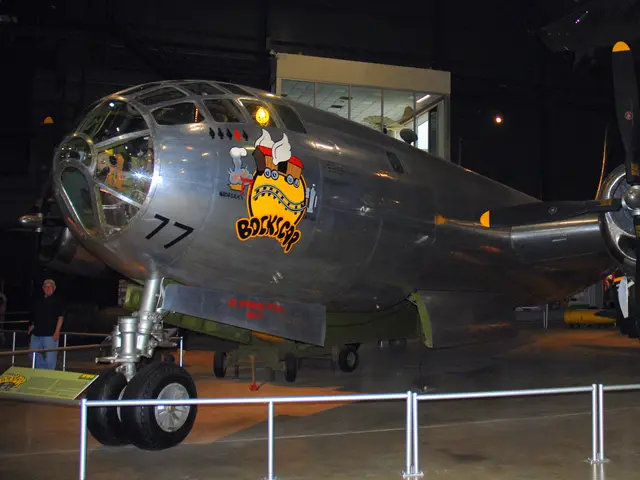
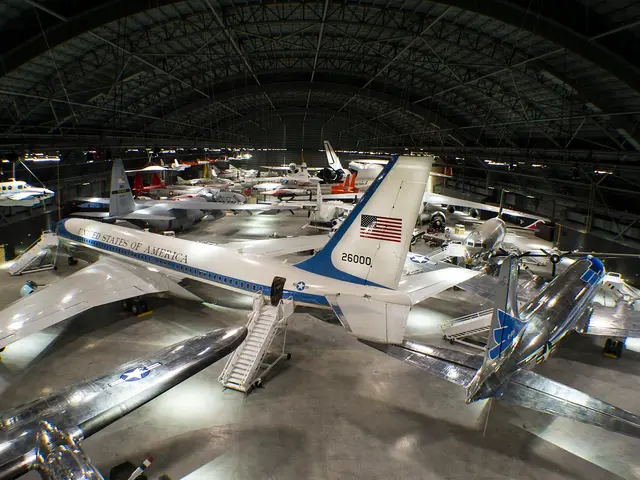
The official museum of the United States Air Force occupies four vast hangars on historic Wright Field, six miles north-east of Dayton, Ohio, the town where the Wright brothers built their aeroplanes. It is the oldest and largest military aviation museum in the world, with more than 360 aircraft, missiles and spacecraft, and admission is free. The galleries run in order from a reproduction 1909 Wright Military Flyer to the F-22A, by way of the B-17F Memphis Belle, the B-29 Bockscar, a B-36J and the only surviving XB-70A Valkyrie. Few museums anywhere hold so many sole survivors and record airframes. The fourth building adds the presidential fleet, SAM 26000 among them, and you may walk through four of them. Allow a full day at least; the museum suggests two.

Star of the show

Boeing B-17F Flying Fortress 41-24485 Memphis Belle, the first USAAF heavy bomber to come home after 25 missions over Europe, flown from Bassingbourn in 1942–43.

Prize exhibits
  • B-17F 41-24485 Memphis Belle: the 25-mission bomber from Bassingbourn
  • B-29 44-27297 Bockscar: dropped Fat Man on Nagasaki, 9 August 1945
  • XB-70A 62-0001: the only Valkyrie left, and the first to reach Mach 3
  • VC-137C 62-6000 SAM 26000: Kennedy’s Air Force One, open to walk through
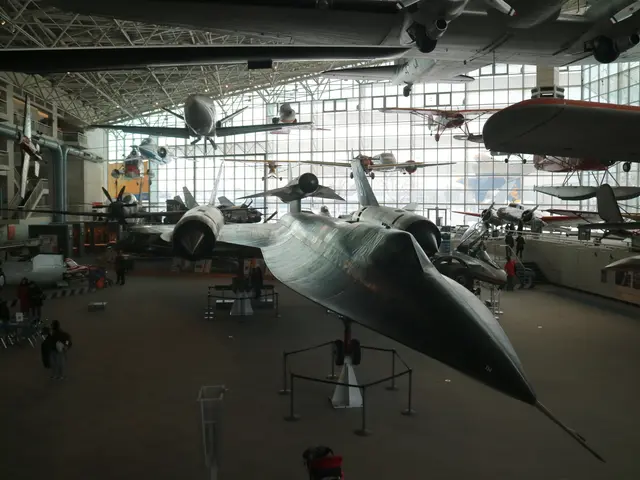
  • SR-71A 61-7976: flew the first operational Blackbird sortie and more sorties than any other SR-71
Visitor intel

Expect airport-style screening at the door: no pocket knives, no firearms (concealed carry included) and no outside food, and there is no cloakroom, so leave things in the car. The fourth building, with the XB-70, SAM 26000 and the walk-through presidential aircraft, is at the far end and is easily rushed at 4 p.m.; go there first or plan two days, as the museum itself suggests. Free guided tours of about 1 hr 15 min run daily without booking.

The Smithsonian's hangar

US-02

Smithsonian National Air and Space Museum Steven F. Udvar-Hazy Center

Chantilly, Virginia · 3,670 miles from London

200+aircraftFree
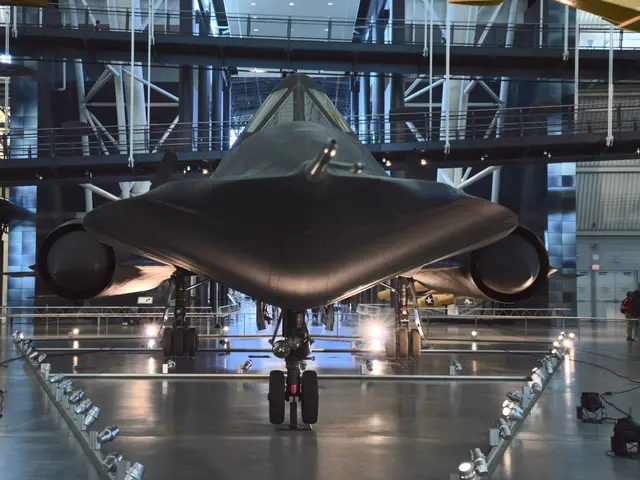
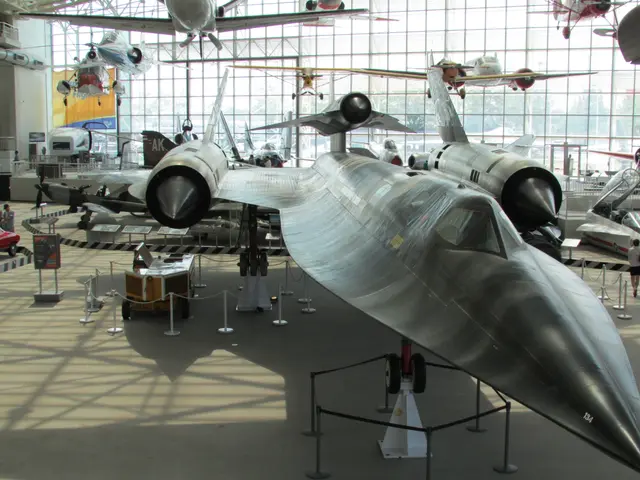
Head-on view of a black Lockheed SR-71 Blackbird on the hangar floor, with its wide chined fuselage and two engine nacelles
Order of battle 200+ airframes
~45Fighters
~10Bombers & attack
~15Airliners & transports
~40Research, racers & record-breakers
~20Helicopters & rotorcraft
~150Spacecraft & large space artefacts

The Smithsonian's out-of-town annexe, built beside Washington Dulles airport because the National Mall building could never hold the big stuff. Two vast arched hangars — the Boeing Aviation Hangar and the James S. McDonnell Space Hangar — contain well over 200 aircraft and spacecraft, parked nose-to-tail on the floor and hung three deep from the trusses. The roll of honour is absurd: SR-71A 61-7972, which landed here after a record coast-to-coast dash; the B-29 Enola Gay; Air France Concorde F-BVFA; the Boeing 367-80 that begat the 707; and the Space Shuttle Discovery. Behind them sit the only surviving Do 335, Ar 234 and Kyushu Shinden. Admission is free, the parking is not, and a whole day is barely enough. For the British visitor there is also a beautifully restored Hurricane IIC.

Star of the show

Lockheed SR-71A Blackbird 61-7972, which flew Los Angeles to Washington in 1 hr 4 min 20 sec on 6 March 1990 and landed at Dulles to be handed straight to the Smithsonian.

Prize exhibits
  • SR-71A Blackbird 61-7972 — Los Angeles to Washington in 64 minutes, 1990
  • Boeing B-29 Superfortress Enola Gay 44-86292
  • Space Shuttle Discovery OV-103 — 39 missions, 365 days in space
  • Air France Concorde F-BVFA, delivered on its last flight in 2003
  • Dornier Do 335 A-0 Pfeil 240102 — the only survivor
Visitor intel

Without a car, take the Metro Silver Line to Innovation Center and change to Fairfax Connector bus 983, which runs every 25–60 minutes and stops at the museum; bus drivers carry no change. Go up the Donald D. Engen Observation Tower to watch Dulles traffic, and look down from the Mary Baker Engen Restoration Hangar gallery at whatever is on the trestles. Allow a full day if you want both hangars, the tower and a simulator; car parking becomes free after 4 pm.

The Navy's own

US-03

National Naval Aviation Museum

Pensacola, Florida · 4,480 miles from London

150+aircraftFree
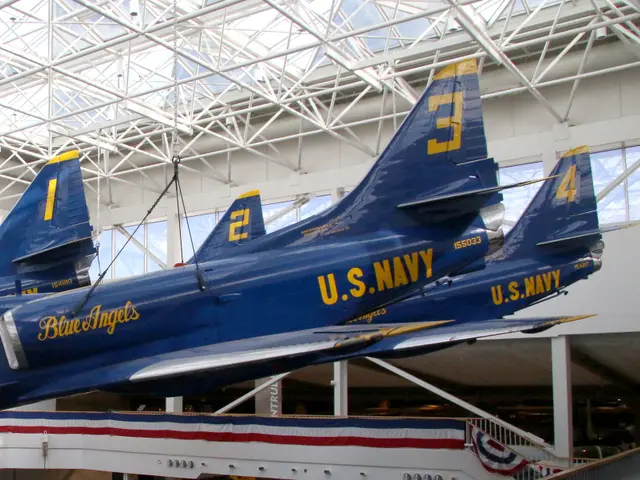
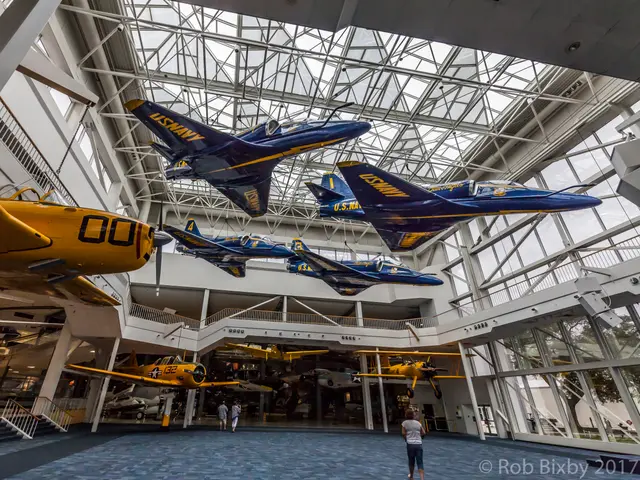
Four blue and gold A-4 Skyhawk jets suspended in diamond formation beneath a glass atrium roof
Order of battle 150+ airframes
~50Fighters
~25Attack & bombers
~15Patrol, transport & flying boats
~25Trainers & early types
~20Helicopters

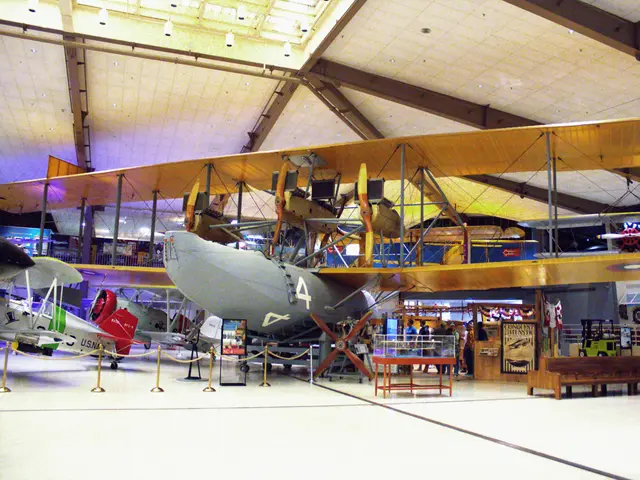
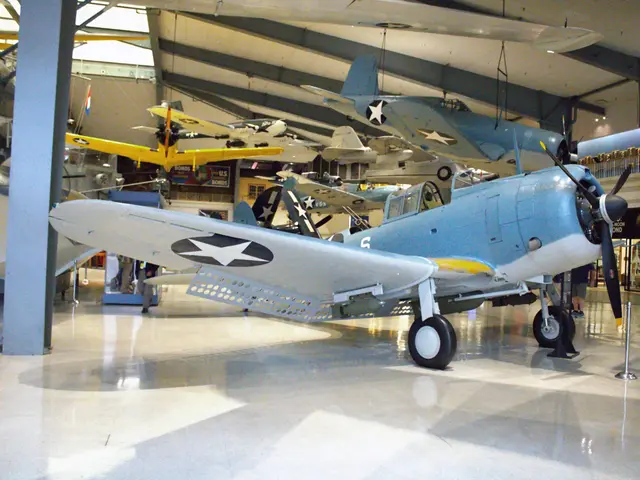
The National Naval Aviation Museum is the US Navy's own aviation museum, and the largest of its kind anywhere. It occupies some 350,000 sq ft of halls and 37 acres of grounds aboard Naval Air Station Pensacola, the 'Cradle of Naval Aviation' on the Florida Panhandle. More than 150 Navy, Marine Corps and Coast Guard aircraft are displayed, from a 1911 Triad replica to an F-14D Tomcat. Among them is the Curtiss NC-4, the first aeroplane across the Atlantic, which finished its flight at Plymouth in 1919. Four Blue Angels Skyhawks hang in diamond formation in a glass atrium, and the Lake Michigan wrecks have come home restored, including a Dauntless that fought at Midway. Admission is free. Getting through the base gate is the hard part, especially for a British passport-holder (see Access). The team practises overhead most spring and summer weeks.

Star of the show

Curtiss NC-4 A-2294, the first aeroplane to fly the Atlantic. It reached Lisbon on 27 May 1919 and alighted at Plymouth on 31 May; it has been on loan from the Smithsonian since 1974.

Prize exhibits
  • Curtiss NC-4 A-2294: first aeroplane across the Atlantic, Lisbon 27 May and Plymouth 31 May 1919
  • Douglas SBD-2 Dauntless 2106: survived Pearl Harbor, bombed the Japanese fleet at Midway, raised from Lake Michigan in 1994
  • Four Blue Angels A-4 Skyhawks in diamond formation under the atrium glass
  • Douglas R4D-5L 'Que Sera Sera' 12418: first aircraft to land at the South Pole, 31 October 1956
  • Grumman F-14D Tomcat 161159: flew the Tomcat's last combat sortie, 8 February 2006
Visitor intel

Foreign nationals get in only with a US citizen driving them through the West Gate, and the museum's published document list goes beyond a passport (see Access), so a British visitor should settle this before travelling. In season the Blue Angels practise over the flight line behind the museum at about 10.30am on most Tuesdays and Wednesdays (gates 9.30am; 500 free bleacher seats, $6 chairs), with autographs after selected Wednesday practices. Allow a full day: free docent tours at 9.30, 11.00 and 13.00, and Hangar Bay One shuts at 3.30pm.

Four hundred aircraft under a desert sky

US-04

Pima Air & Space Museum

Tucson, Arizona · 5,290 miles from London

~400aircraftTickets $22.50
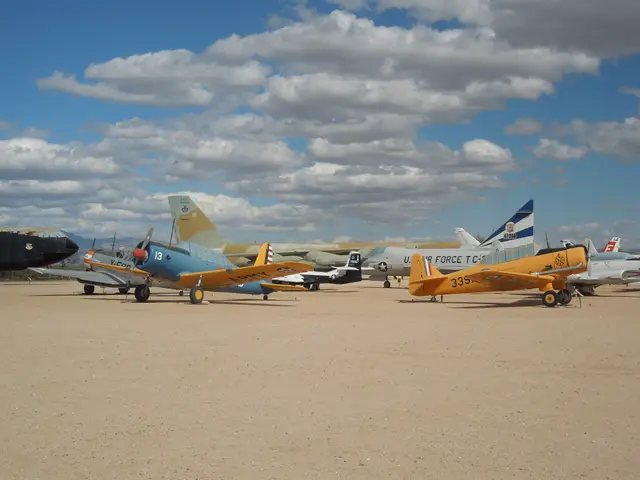
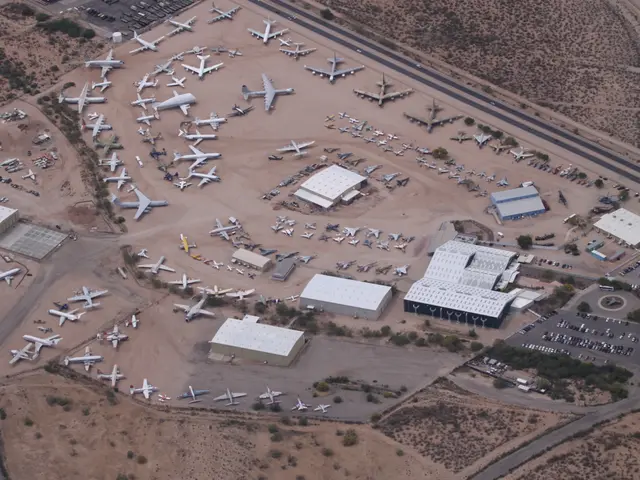
Lines of propeller aircraft parked on sandy ground beneath scattered white clouds
Order of battle ~400 airframes
~85Fighters & attack
~40Bombers
~85Transports & airliners
~90Trainers & light aircraft
~45Helicopters

Pima Air & Space is what happens when a museum is built next door to the world's largest aircraft storage yard. Laid out over 80 acres of Sonoran Desert beside Davis-Monthan Air Force Base, south-east of Tucson, it shows something near 400 aircraft, about half of them parked out under a hard blue sky and the rest in six hangars. The scale is the point: a B-36 that dwarfs everything around it, a full row of B-52s, the Kennedy-era Air Force One, NASA's SOFIA 747 and the oldest surviving SR-71. Yet there are quieter rewards for the visitor from Britain, among them a Shackleton, a Gannet and the 390th Bomb Group's own memorial museum with its restored B-17. Allow a full day, carry water, and be warned that the famous Boneyard bus tours have ended for good.

Star of the show

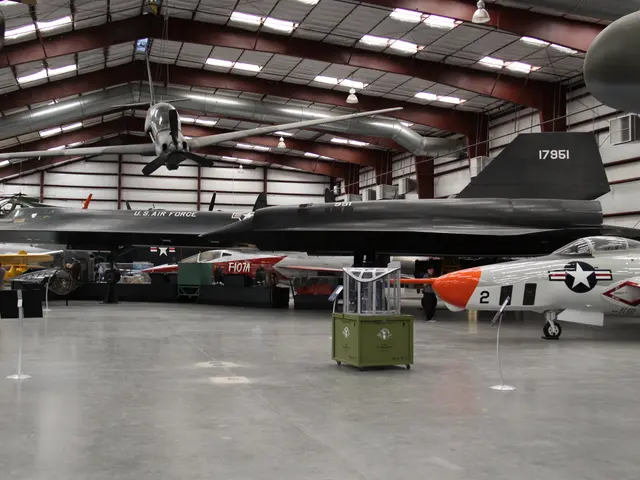
Lockheed SR-71A Blackbird 61-7951, the second production SR-71 and the oldest survivor, which flew NASA research in the 1970s disguised as 'YF-12C 06937'.

Prize exhibits
  • Lockheed SR-71A 61-7951 — oldest surviving Blackbird, ex-NASA 'YF-12C'
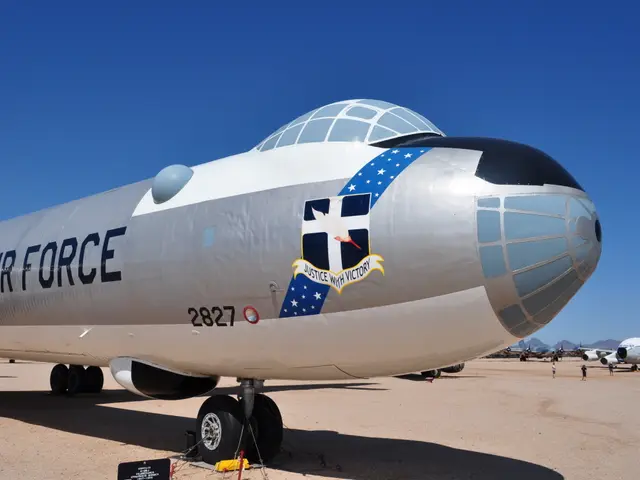
  • Convair B-36J 52-2827 'City of Fort Worth' — the last Peacemaker built
  • Douglas VC-118A 53-3240 — Air Force One for Kennedy and Johnson
  • Boeing NB-52A 52-0003 — oldest B-52, X-15 mother ship
  • Boeing B-17G 44-85828 — the 390th Bomb Group's memorial Fortress
Visitor intel

Arrive at 9am, wear a hat and carry water: the outdoor rows have little shade and summer hours end at 3pm. The 45-minute tram tour ($10, card only, bought at the boarding point by the Aerospace Gallery, no advance sales) covers the 1.5-mile outdoor circuit but does not enter AMARG — the Boneyard bus tours have permanently ended. The museum suggests three to four hours; enthusiasts will want the two-day ticket.

The Boeing city's museum

US-05

The Museum of Flight

Seattle, Washington · 4,780 miles from London

~150aircraftTickets $29
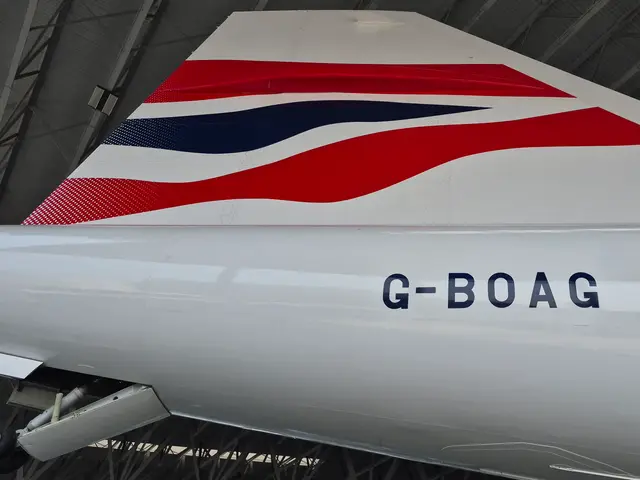
Tail fin of Concorde G-BOAG in British Airways Chatham Dockyard livery, registration painted on the rear fuselage
Order of battle ~150 airframes
~40Fighters (WWI, WWII & jet)
~5Bombers
~14Airliners & transports
~8Research & record-breakers
~3Helicopters
~4Spacecraft

The Museum of Flight stands on the western edge of Boeing Field, a few miles south of downtown Seattle. It is the museum the Boeing company's home town deserves. The core of it is Boeing's own first factory, the 1909 Red Barn, floated two miles up the Duwamish to where it stands now. Around it are the T.A. Wilson Great Gallery, a glass hall of more than fifty aircraft; a two-storey wing of First and Second World War fighters; a space gallery holding NASA's shuttle trainer; and the Aviation Pavilion, a three-acre roof over nineteen big aeroplanes. The collection is full of firsts: the first 747, the first 727, the first jet Air Force One and the only surviving M-21 Blackbird. For a British visitor there is also Concorde G-BOAG, which you can walk through, and a D-Day Spitfire. Allow a full day.

Star of the show

Lockheed M-21 60-6940, with its D-21 drone mounted on its back. It is the only M-21 left of the two built (the other was lost in a D-21 launch accident in 1966), it hangs in no other museum on earth, and it sits at the centre of the Great Gallery.

Prize exhibits
  • Lockheed M-21 60-6940 and D-21 drone – the only surviving M-21
  • Boeing 747-121 N7470 'RA001' – the first 747 ever built
  • Concorde G-BOAG – New York to Seattle in 3 hr 55 min 2 sec, 5 November 2003
  • Boeing VC-137B SAM 970 – the first presidential jet, used by Eisenhower, Kennedy, Johnson and Nixon
  • Boeing 80A-1 N224M – the only surviving Model 80, recovered from an Anchorage dump
Visitor intel

Free car parks serve both sides of East Marginal Way. The Skybridge from the Personal Courage Wing crosses the road to the Space Gallery and the Aviation Pavilion, where Concorde, SAM 970, the 787 and the first 747 are open to walk through from 11:00 to 16:00 (on busy days, start with the 747 and work backwards). The museum's own map plans three hours for just the headline aircraft, so allow a full day, and drive round to the B-52 in the Vietnam Veterans Memorial Park before or after.

An aircraft carrier on the Hudson

US-06

Intrepid Museum

New York, New York · 3,450 miles from London

~30aircraftTickets $38
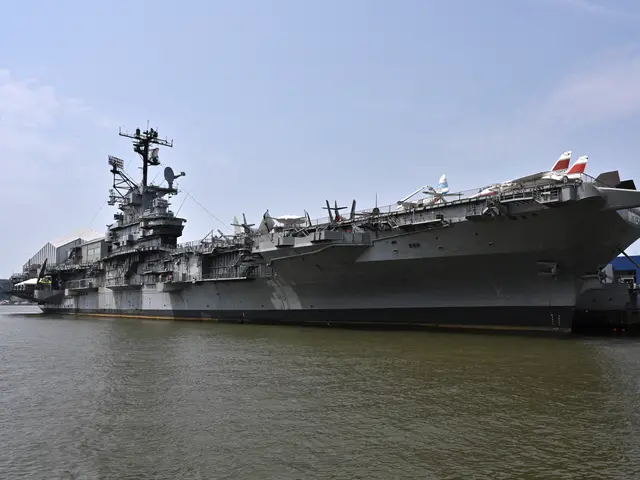
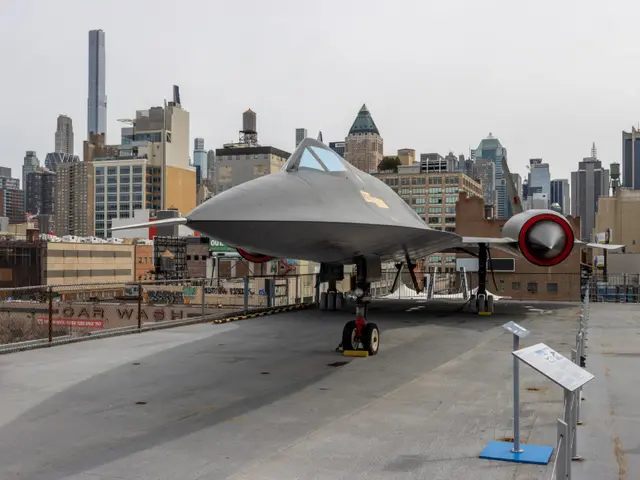
The grey aircraft carrier Intrepid moored on the Hudson, its island superstructure at left and jets parked along the flight deck
Order of battle ~30 airframes
~18Fighters & attack
~2Patrol, AEW & reconnaissance
~6Helicopters
~3Research & spacecraft
~1Airliners & transports
~3Trainers

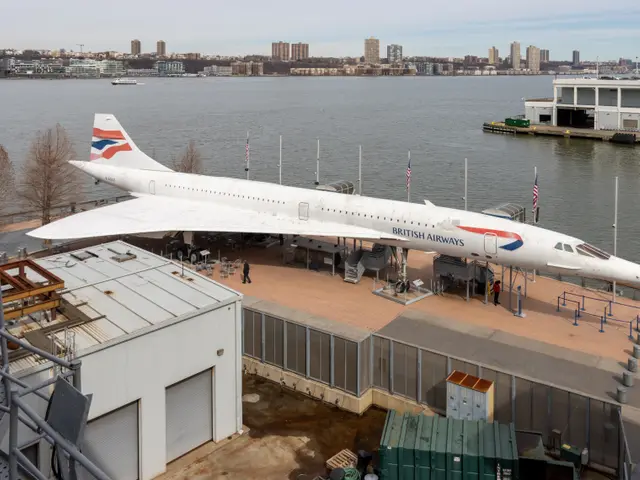
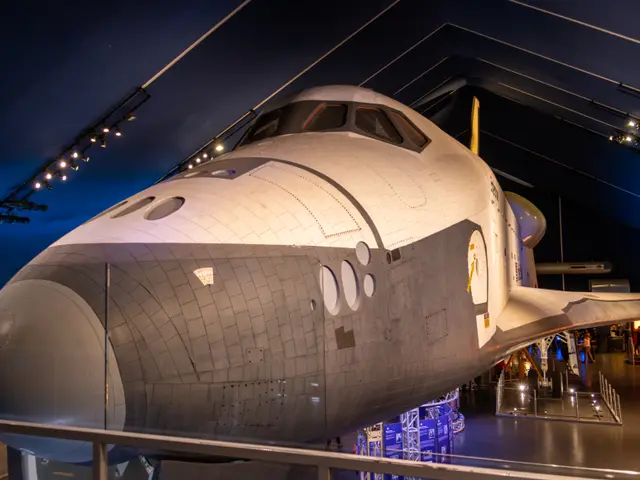
An Essex-class aircraft carrier tied up at the end of West 46th Street, carrying a Space Shuttle, a CIA spy plane and the fastest Concorde of them all. USS Intrepid (CV-11) fought from Truk to Okinawa, soaked up kamikazes, hunted Soviet submarines, went three times to Vietnam and fished two NASA crews out of the Atlantic; since 1982 she has been a museum on the Hudson. The hangar deck holds the ship's history and a restored Corsair, the flight deck a park of some two dozen naval jets and helicopters with Manhattan's towers as backdrop, and a pavilion aft shelters the orbiter Enterprise. Alongside lies Growler, the only American nuclear-missile submarine open to the public, and on the pier sits British Airways' G-BOAD. Allow a day, bring a jumper for the flight deck wind, and do not skip the bridge.

Star of the show

British Airways Concorde G-BOAD 'Alpha Delta', holder of the fastest Atlantic crossing by a commercial aircraft: JFK to Heathrow in 2 hours 52 minutes 59 seconds on 7 February 1996, a Guinness record that still stands.

Prize exhibits
  • Concorde G-BOAD, Atlantic record holder at 2h 52m 59s
  • Lockheed A-12 60-6925, CIA Oxcart spy plane
  • Space Shuttle Enterprise OV-101, the first orbiter
  • USS Growler, the only US nuclear-missile sub open to visitors
  • Grumman F-14 157986, the seventh Tomcat built
Visitor intel

Tickets are timed to a 30-minute arrival slot, so book online and arrive on time; the Concorde tour ($15, 20 minutes, every half hour from 11:00, ages 5+) has limited places and is best added at booking. Growler has a capped capacity and its queue can close early, so do it first. Allow four to five hours for carrier, pavilion, submarine and Concorde; weekdays outside school holidays are quietest, and the neighbouring cruise terminal at Piers 88–90 can make 12th Avenue busy on ship days.

At a glance

The eight side by side

MuseumAircraftAdult ticketNearest airportLocal timeAllow
CA-01 · HamiltonCanadian Warplane Heritage Museum~47C$14.25Toronto Pearson (YYZ), about an hour by roadEastern time, five hours behind LondonTwo hours; a day when they fly
CA-02 · OttawaCanada Aviation and Space Museum~130C$17.25Ottawa (YOW), about 25 minutes by roadEastern time, five hours behind LondonThree to four hours
US-01 · Dayton (Wright-Patterson AFB)National Museum of the United States Air Force~360FreeDayton (DAY), about 25 minutes by roadEastern time, five hours behind LondonA full day; two to see it properly
US-02 · ChantillySmithsonian National Air and Space Museum Steven F. Udvar-Hazy Center200+FreeWashington Dulles (IAD), on the airport's doorstepEastern time, five hours behind LondonHalf a day at least
US-03 · PensacolaNational Naval Aviation Museum150+FreePensacola (PNS), about 30 minutes by roadCentral time, six hours behind LondonFour hours to a day
US-04 · TucsonPima Air & Space Museum~400$22.50Tucson (TUS), about 15 minutes; Phoenix (PHX) about two hoursArizona time, seven hours behind London in winter, eight in summerHalf a day; a full day with the tram
US-05 · SeattleThe Museum of Flight~150$29Seattle–Tacoma (SEA), about 15 minutes by roadPacific time, eight hours behind LondonFour hours to a day
US-06 · New YorkIntrepid Museum~30$38New York JFK (JFK) or Newark (EWR), about an hour by road or railEastern time, five hours behind LondonFour hours to a day

Prices in local currency, as published by each museum on 28 October 2026. Distances are great-circle miles from Heathrow. Check each museum’s own site before travelling.