AP 118 · No. 10 Section I · Museums Overseas supplement · US-03
US-03Hero museum

National Naval Aviation Museum

Pensacola, Florida · United States

The US Navy's aviation museum at NAS Pensacola, Florida: 150+ aircraft incl. the transatlantic NC-4 and a Midway Dauntless. Free; strict base access.

150+
Aircraft
Free
Admission
1963
Opened
4,480
Miles from London
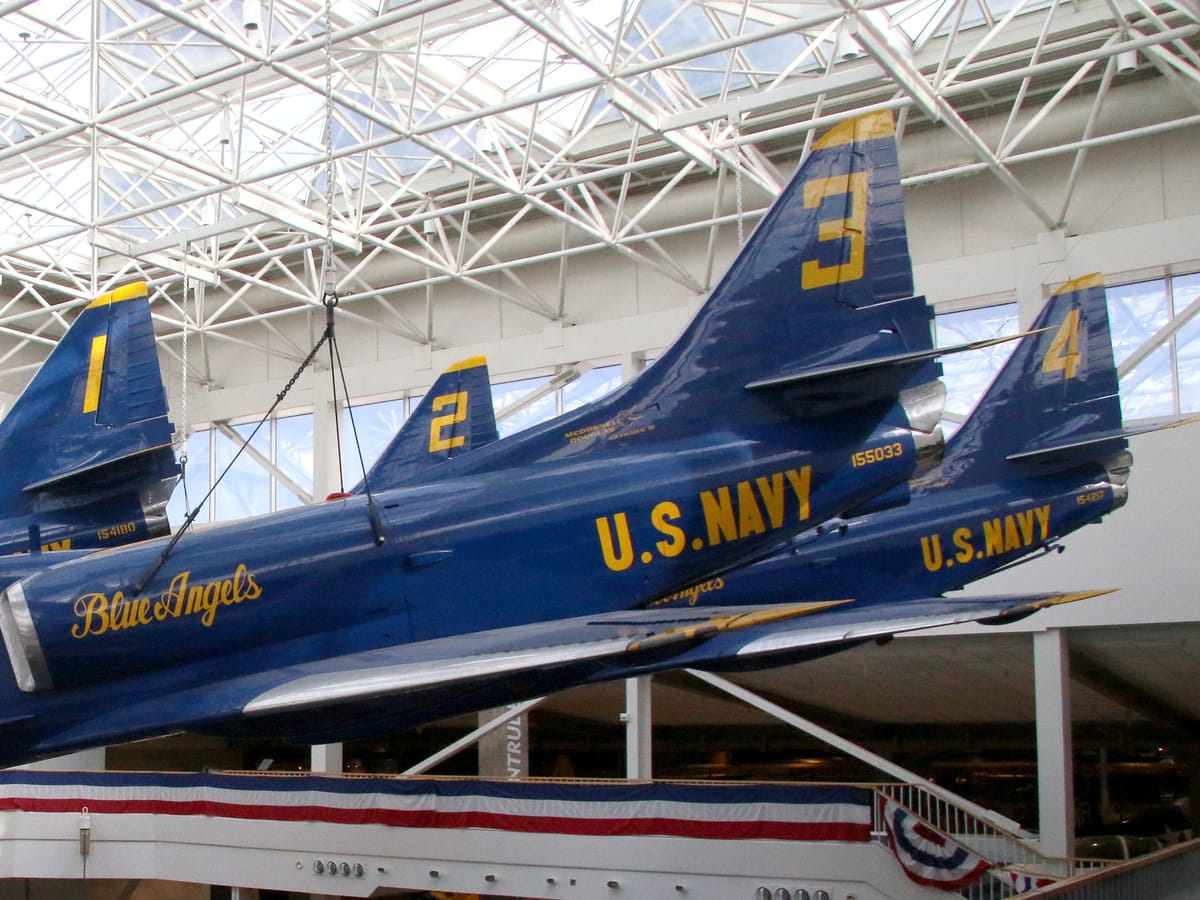
Four blue and gold A-4 Skyhawk jets suspended in diamond formation beneath a glass atrium roof
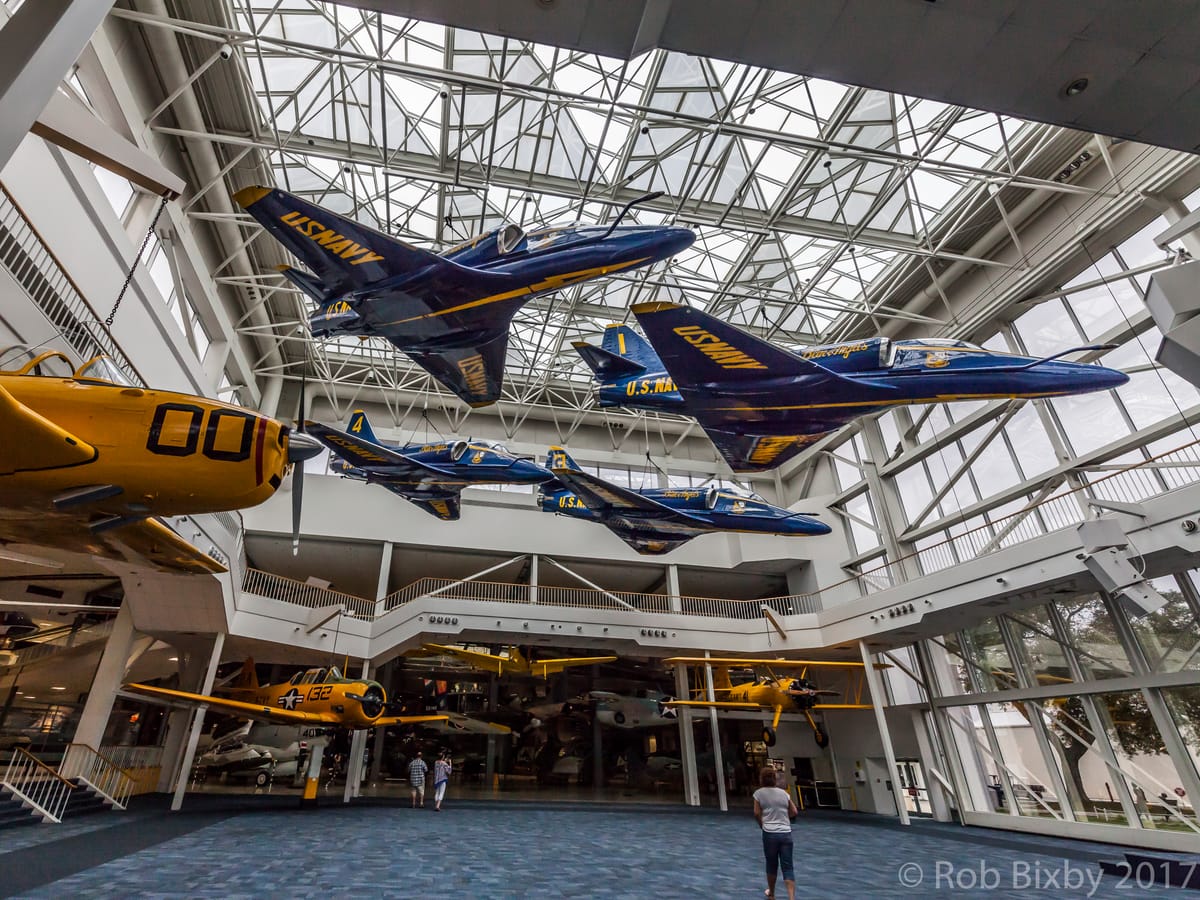
Four Blue Angels A-4 Skyhawks in diamond formation in the Blue Angel Atrium, 2018 · kitmasterbloke · CC BY 2.0
Flight plan

Getting there from Britain

Great-circle route from London Heathrow to National Naval Aviation Museum 120°W100°W80°W60°W40°W20°W0°30°N40°N50°N60°N US-03 Pensacola LHR London
The way there: the great-circle track from Heathrow, the shortest line on a curved earth, drawn on a flat chart.
From Heathrow
4,480 miles
Nearest airport
Pensacola (PNS), about 30 minutes by road
Local time
Central time, six hours behind London
Allow
Four hours to a day
Visit

Tickets & opening times

Admission

Free (museum, parking, Blue Angels practices and autograph sessions). Giant Screen theatre $11.50 adult; simulators extra (MaxFlight 360 $40 for one or two; Afterburner motion ride $7.50). Cashless.

Parking. Free. The main car park is on the west side of the museum, with separate bus and motorhome parking and accessible bays by the main entrance. When the base's car parks fill, security stops admitting the public.

Food. Cubi Bar Café (lunch, 11am–2pm: Monday–Saturday June–August, Tuesday–Saturday September–May), a reconstruction of the Cubi Point Officers' Club bar in the Philippines, walls hung with squadron plaques; also the Top Gun Café by the Giant Screen theatre (daily 9am–4pm). No outside food; only water in a sealed container.

Access. Free standard and bariatric wheelchairs at the Information Desk, first come first served. Ramps at level changes, ground-floor lavatories in the Quarterdeck and West Wing, and wheelchair seating, a lift and captioning devices in the Giant Screen theatre. Accessible parking by the entrance. Service animals only, and none on the flight line.

Checked against the museum’s own site, 28 October 2026.

Opening times

Daily 9am–4pm (Hangar Bay One 9.15am–3.30pm). Closed Thanksgiving, Christmas Eve, Christmas Day and New Year's Day. Public entry to the air station is only 9am–3pm, so arrive by 3pm.

DayAll year
Monday9am–4pm
Tuesday9am–4pm
Wednesday9am–4pm
Thursday9am–4pm
Friday9am–4pm
Saturday9am–4pm
Sunday9am–4pm

Hours in local time, from the museum’s site, 28 October 2026.

Before you go

The museum stands inside Naval Air Station Pensacola, an active base. Since 1 May 2026 the public may enter seven days a week, 9am–3pm, by the West Gate only, at the south end of Blue Angel Parkway; entry stops when the car parks are full. US citizens aged 18 and over need a REAL ID or a US passport, and so does every driver. Foreign nationals, including British visitors, must be escorted by a US citizen who drives the same vehicle; that escort is background-checked at the Navy Boulevard/Front Gate Visitor Center. The museum adds that non-US visitors not processed through the Foreign Visit System Confirmation Module must present a permanent resident card, Form I-551, or a foreign passport carrying a temporary I-551 stamp or MRIV notification. Without those, or without a US-citizen escort, they "will not be able to access NAS Pensacola": the museum says there are no exceptions and it cannot provide escorts. So a British tourist arriving alone with only a UK passport should expect to be turned away. No rideshare (Uber/Lyft), weapons, backpacks, coolers, alcohol or drones; felons barred; all vehicles subject to search. Sources: https://navalaviationmuseum.org/museum-faqs/ ; https://navalaviationmuseum.org/plan-your-visit/ ; https://www.fox10tv.com/2026/05/02/daily-public-access-resumes-naval-air-station-pensacola/

Station briefing

About this museum

The National Naval Aviation Museum is the US Navy's own aviation museum, and the largest of its kind anywhere. It occupies some 350,000 sq ft of halls and 37 acres of grounds aboard Naval Air Station Pensacola, the 'Cradle of Naval Aviation' on the Florida Panhandle. More than 150 Navy, Marine Corps and Coast Guard aircraft are displayed, from a 1911 Triad replica to an F-14D Tomcat. Among them is the Curtiss NC-4, the first aeroplane across the Atlantic, which finished its flight at Plymouth in 1919. Four Blue Angels Skyhawks hang in diamond formation in a glass atrium, and the Lake Michigan wrecks have come home restored, including a Dauntless that fought at Midway. Admission is free. Getting through the base gate is the hard part, especially for a British passport-holder (see Access). The team practises overhead most spring and summer weeks.

~50Fighters~25Attack & bombers~15Patrol, transport & flying boats~25Trainers & early types~20Helicopters
Prize exhibits
  • Curtiss NC-4 A-2294: first aeroplane across the Atlantic, Lisbon 27 May and Plymouth 31 May 1919
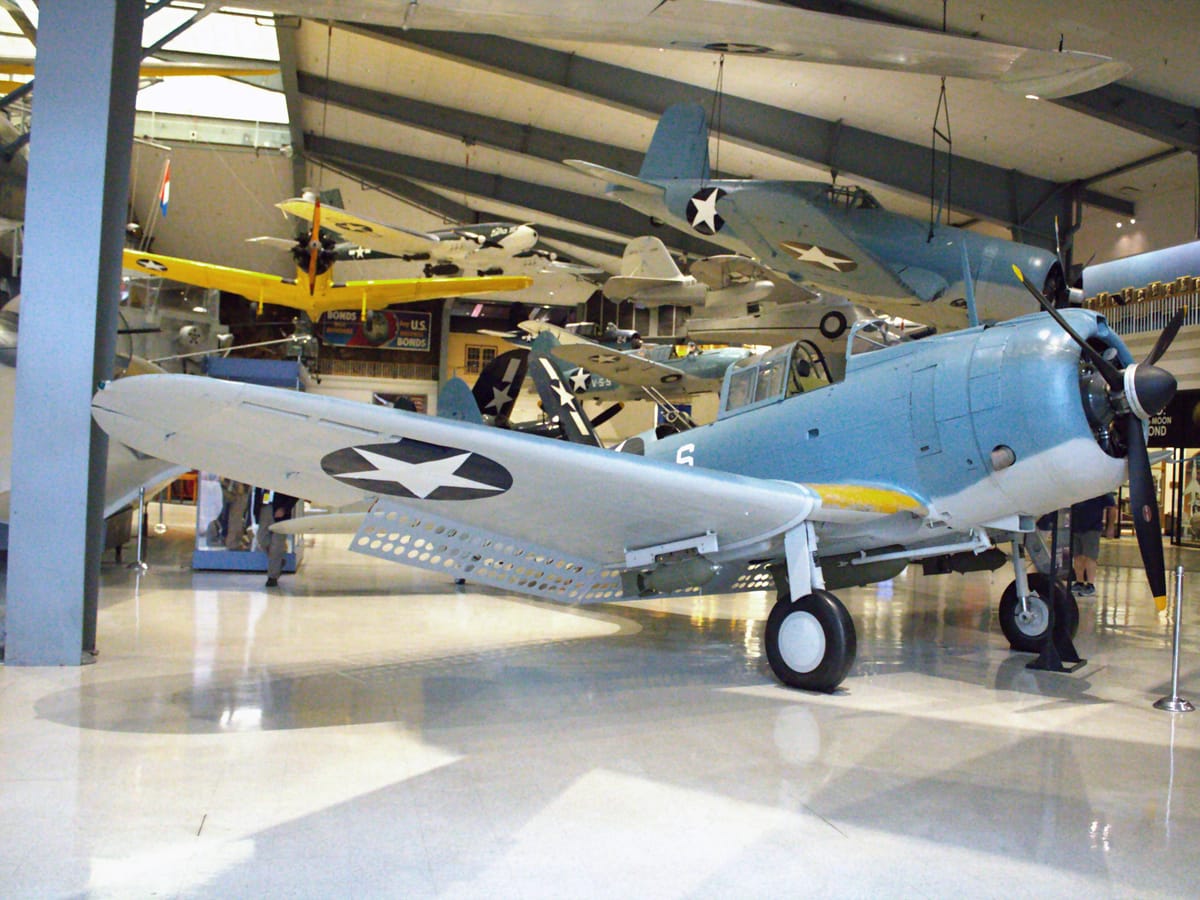
  • Douglas SBD-2 Dauntless 2106: survived Pearl Harbor, bombed the Japanese fleet at Midway, raised from Lake Michigan in 1994
  • Four Blue Angels A-4 Skyhawks in diamond formation under the atrium glass
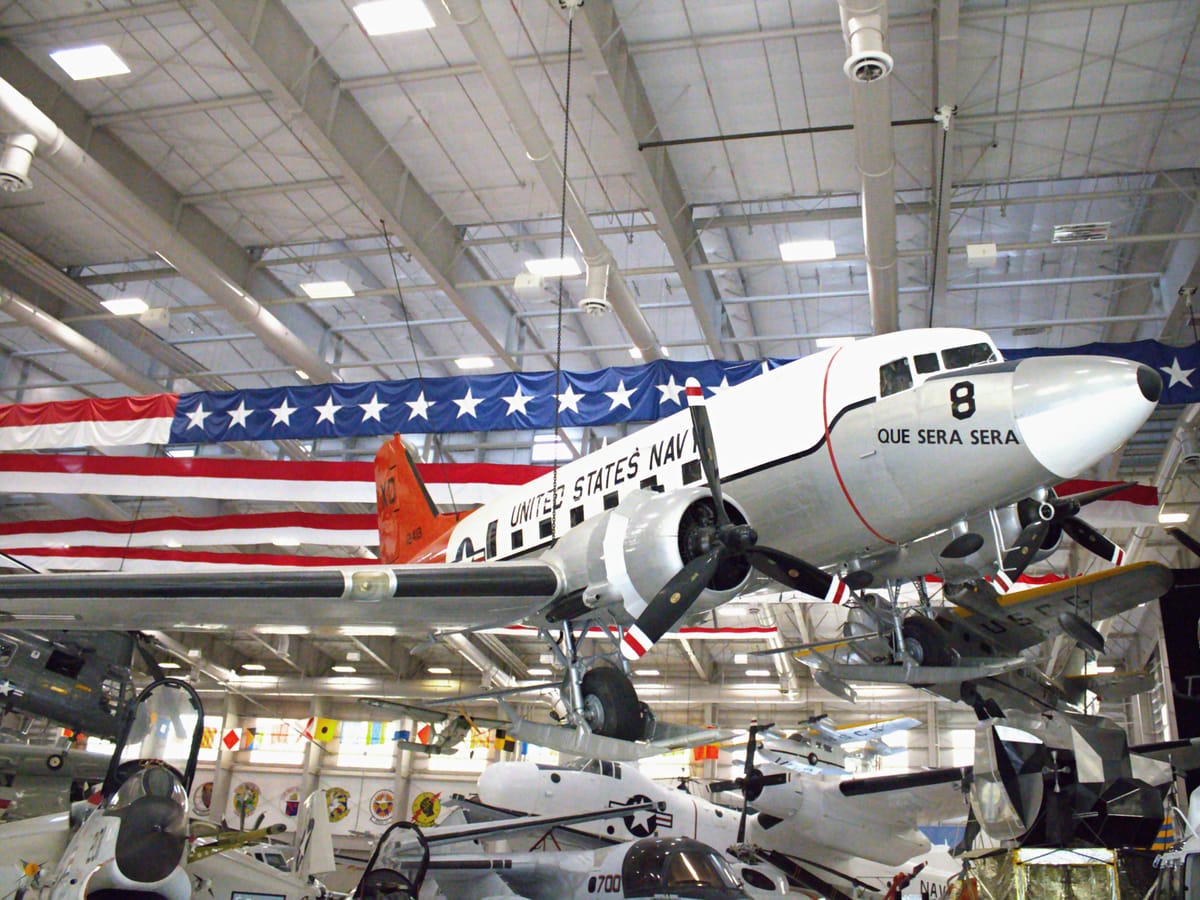
  • Douglas R4D-5L 'Que Sera Sera' 12418: first aircraft to land at the South Pole, 31 October 1956
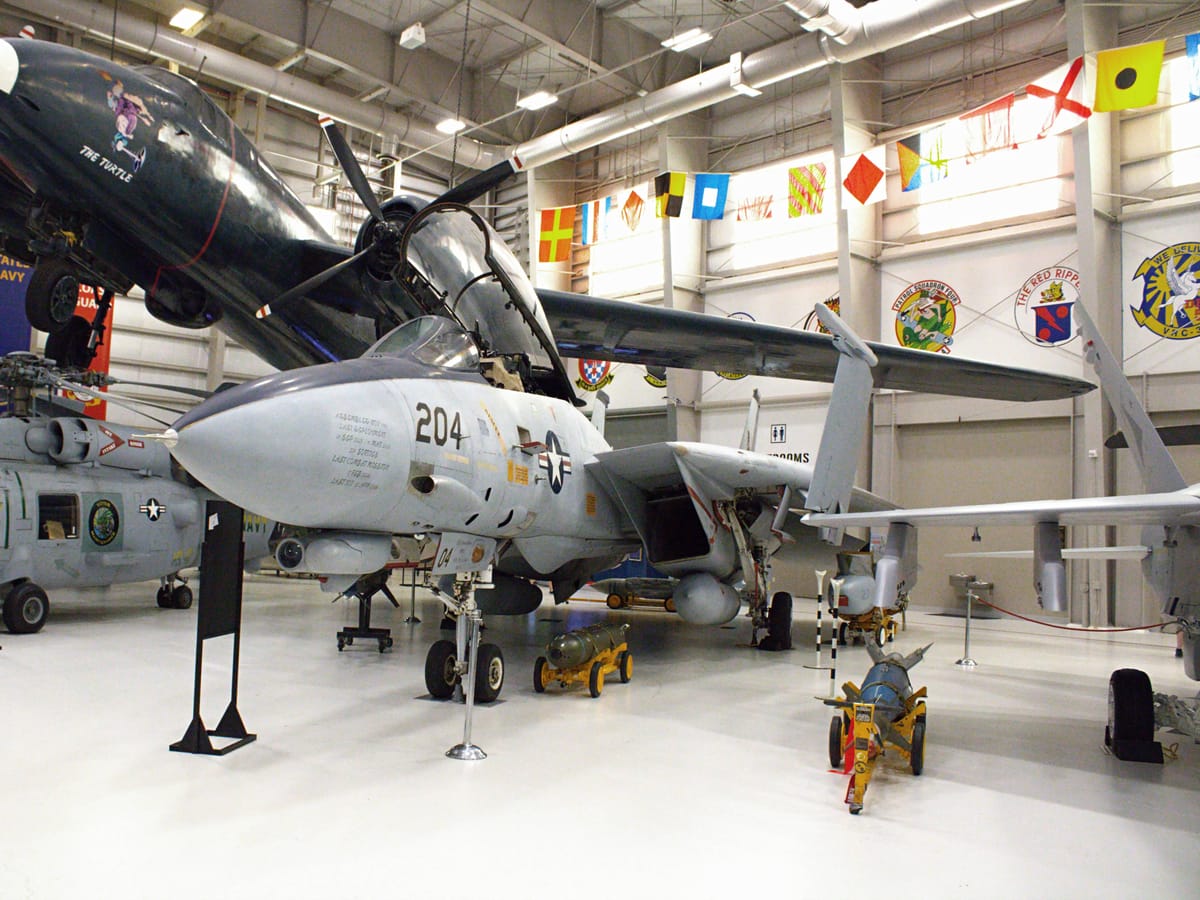
  • Grumman F-14D Tomcat 161159: flew the Tomcat's last combat sortie, 8 February 2006
Star of the show

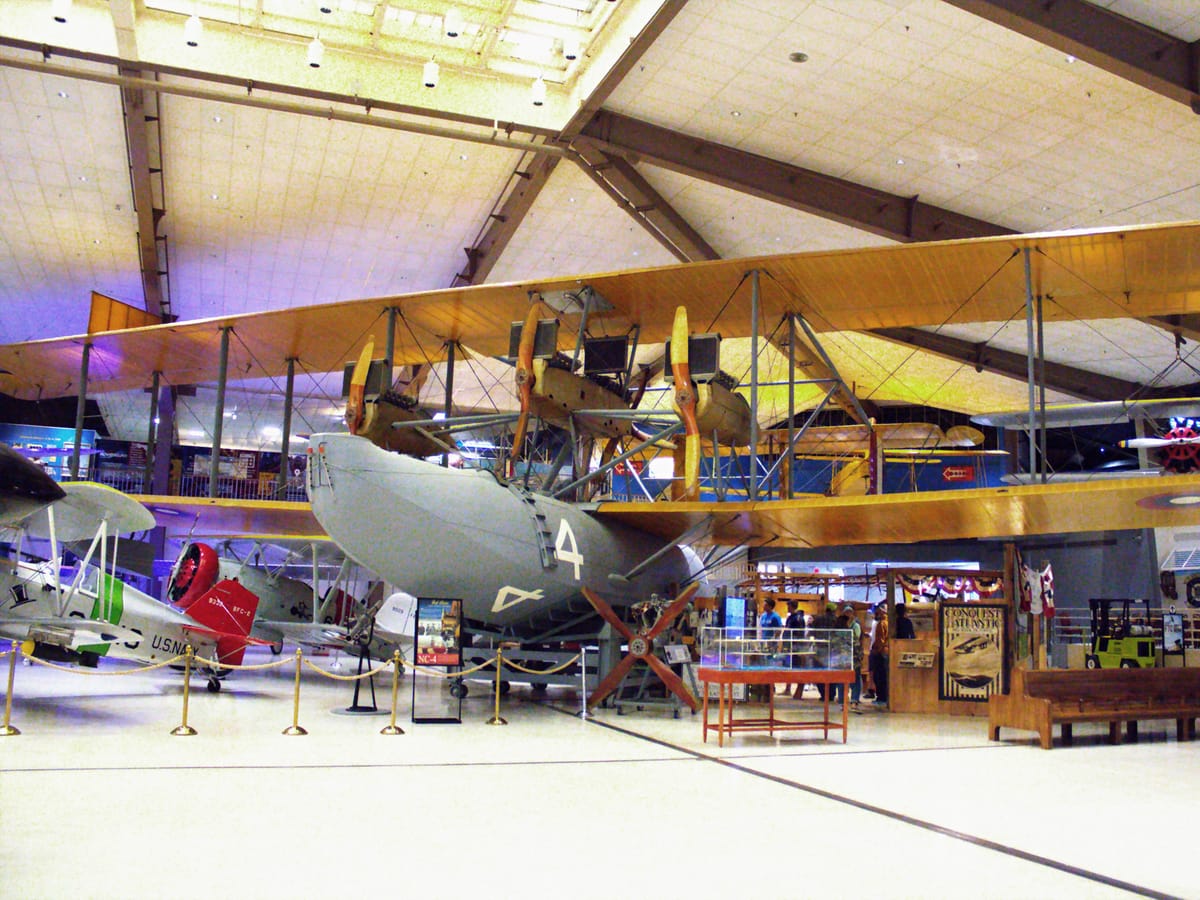
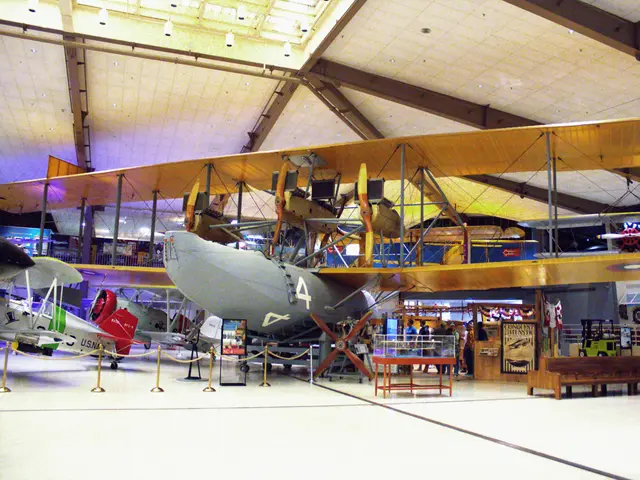
Curtiss NC-4 A-2294, the first aeroplane to fly the Atlantic. It reached Lisbon on 27 May 1919 and alighted at Plymouth on 31 May; it has been on loan from the Smithsonian since 1974.

Visitor intel

Foreign nationals get in only with a US citizen driving them through the West Gate, and the museum's published document list goes beyond a passport (see Access), so a British visitor should settle this before travelling. In season the Blue Angels practise over the flight line behind the museum at about 10.30am on most Tuesdays and Wednesdays (gates 9.30am; 500 free bleacher seats, $6 chairs), with autographs after selected Wednesday practices. Allow a full day: free docent tours at 9.30, 11.00 and 13.00, and Hangar Bay One shuts at 3.30pm.

The story

How the collection came to be

The museum was established on 14 December 1962 and dedicated in June 1963 in a cramped wartime building of some 8,500 sq ft at Pensacola, the air station where the Navy had trained its aviators since 1914. In 1966 the Naval Aviation Museum Foundation was set up to raise money, and it raised enough for a purpose-built museum. Construction began in November 1972. Phase I opened in November 1974 and was dedicated on 13 April 1975. Phases II and III followed in 1980 and 1990, and in May 1989 the institution became the National Museum of Naval Aviation, now styled the National Naval Aviation Museum. The Quarterdeck entrance opened in 1994, with the fifth Grumman YF-14A prototype, BuNo 157984, mounted outside as gate guardian. The Emil Buehler library arrived in 1992, the Cubi Bar and the giant-screen theatre in 1996.

The collection's headline loan arrived in 1974. The Smithsonian placed Curtiss NC-4 A-2294 at Pensacola, five years after it had been restored and shown on the National Mall for the transatlantic flight's fiftieth anniversary. The museum also acted as the Navy's programme manager for retired airframes. That made it a clearing house as well as a display, which is why the airframes it shows tend to come with exact histories: BuNos, squadrons and the names of the men who flew them. The SBD-2, BuNo 2106, survived Pearl Harbor on Ford Island. It bombed shipping at Lae and Salamaua from USS Lexington on 10 March 1942, and was flown at Midway on 4 June 1942 by 1st Lt Daniel Iverson of VMSB-241, coming home with more than 200 holes in it.

Much of the Second World War collection came out of Lake Michigan. Training carriers USS Wolverine and USS Sable worked from NAS Glenview, and dozens of aircraft were lost over their sides during carrier qualification. The museum began salvaging them in the early 1990s. F4F-3 Wildcat (ditched 17 August 1943) came up in 1990. SBD-2 2106 (ditched 11 June 1943) was raised in 1994 and put on show in 2001. F6F-3 Hellcat BuNo 25910, a VF-38 Solomons veteran lost in January 1945, followed in 2009. An F4U-1 'Birdcage' Corsair, the 312th built and lost on 12 June 1943, was recovered in 2010 and finished restoration in 2024. The only surviving SB2U Vindicator came from the same lake.

The galleries run roughly in chronological order. The South Wing carries the NC-4 and the inter-war biplanes, and the West Wing the war in the Pacific, with the PB2Y-5R Coronado BuNo 7099 that carried Nimitz's staff into Tokyo Bay. The glass Blue Angel Atrium holds four A-4 Skyhawks in diamond formation. Hangar Bay One brings the story up to date with Vietnam, the Cold War, Coast Guard and presidential exhibits, among them the R4D-5L 'Que Sera Sera', first aircraft to land at the South Pole on 31 October 1956, and F-14D 161159, which flew the Tomcat's last combat sortie on 8 February 2006. Behind the restoration hangar the outdoor flight line holds the larger types, Fat Albert among them. A C-2A Greyhound, BuNo 162159, was added in July 2026.

Getting in has been the difficulty. Hurricane Ivan damaged the museum and outdoor aircraft in September 2004. After the shooting at NAS Pensacola on 6 December 2019, the base was closed to the general public, and the museum stayed shut to non-DoD visitors until 17 May 2023, apart from a seven-month COVID closure in 2020. In 2026 it shut again during the federal funding lapse from 31 January. Public access was then cut to weekends from March, and flight-line viewing of the Blue Angels was suspended on 30 March. Daily public access returned on 1 May 2026 and public practices on 5 May. Capt Sterling Gilliam, a former Prowler pilot, has been the museum's fourth director since 2015.
Across the water

The British connection

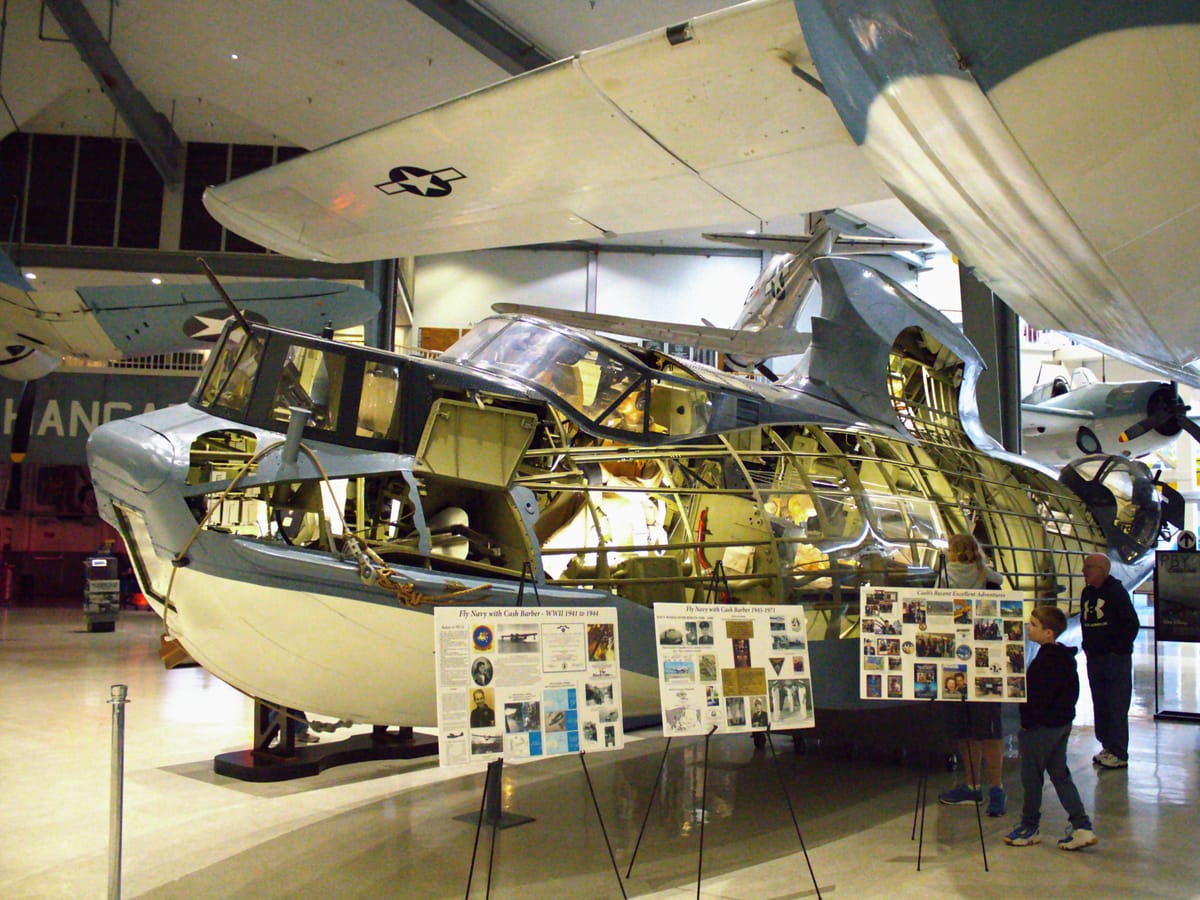
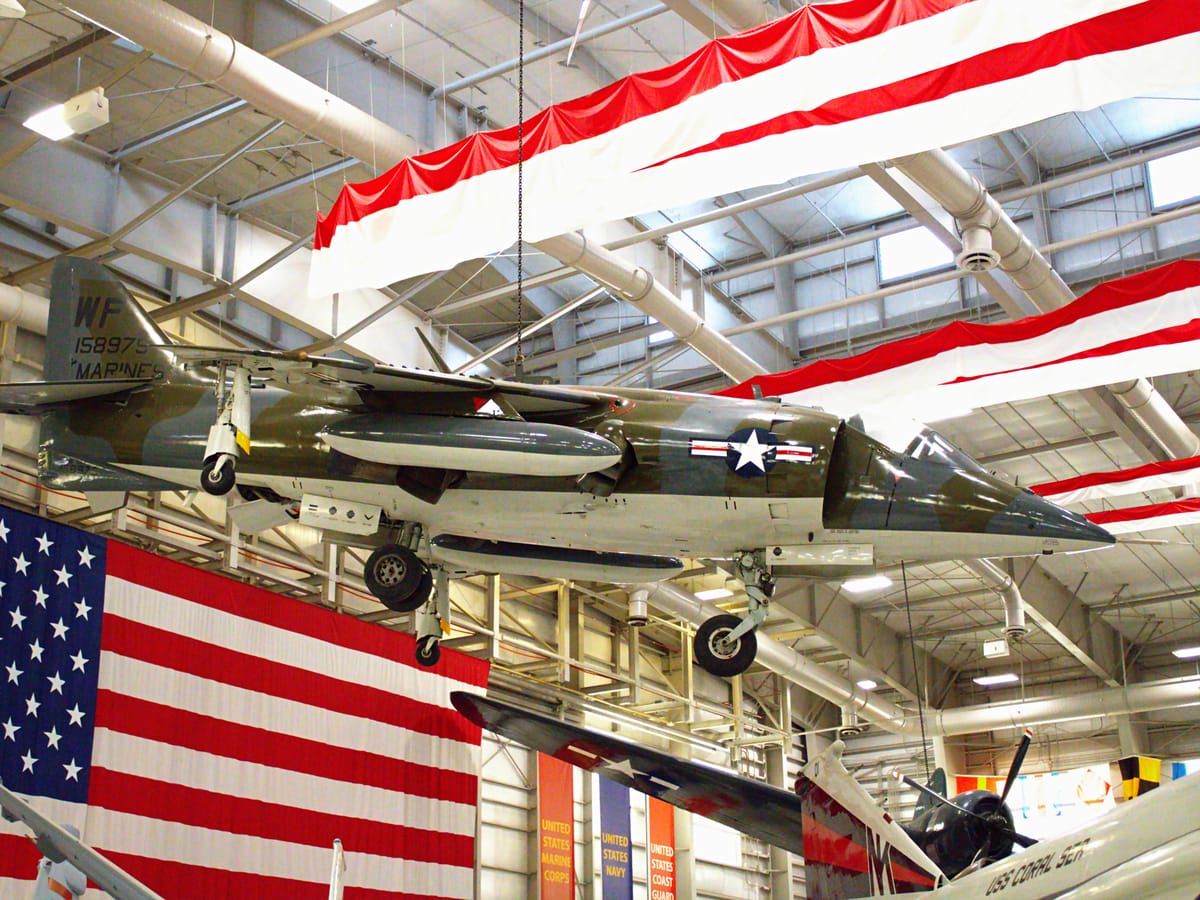
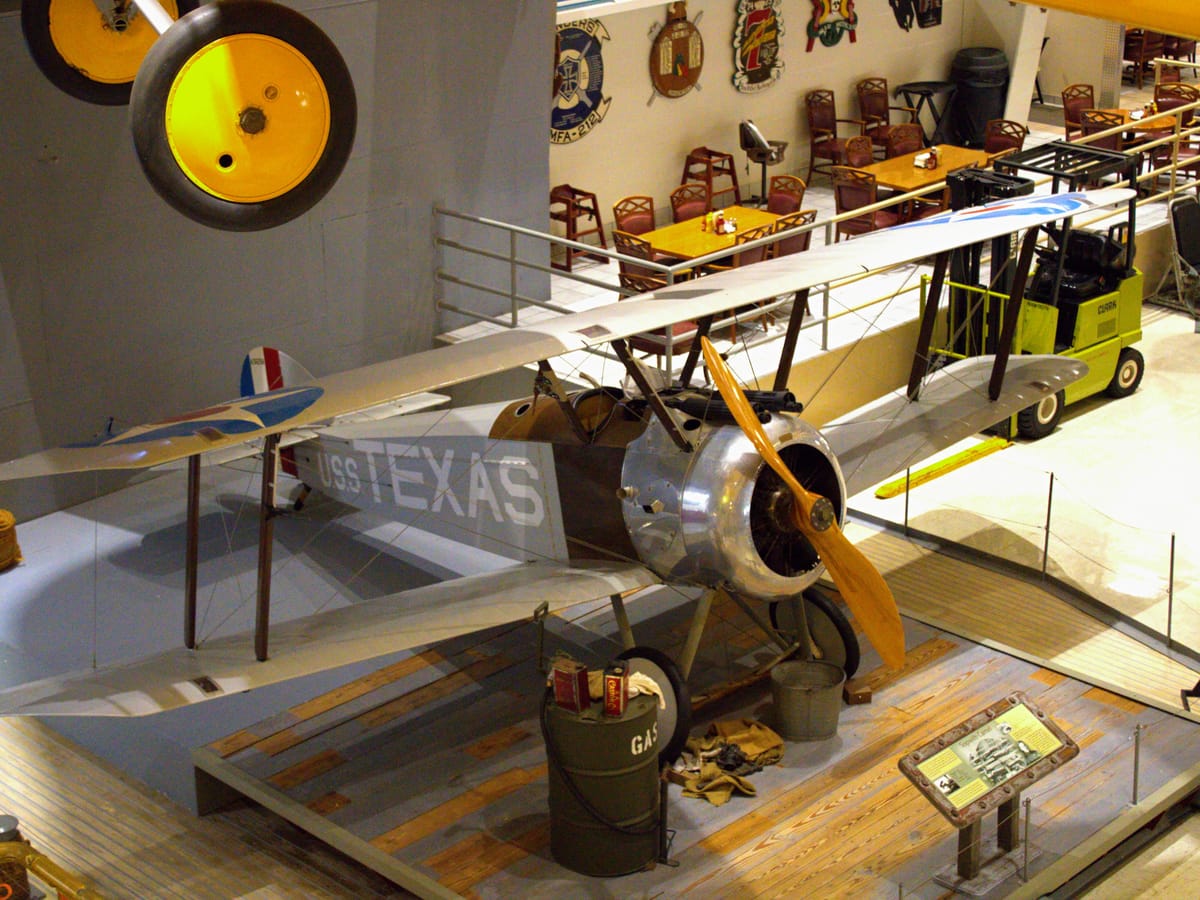
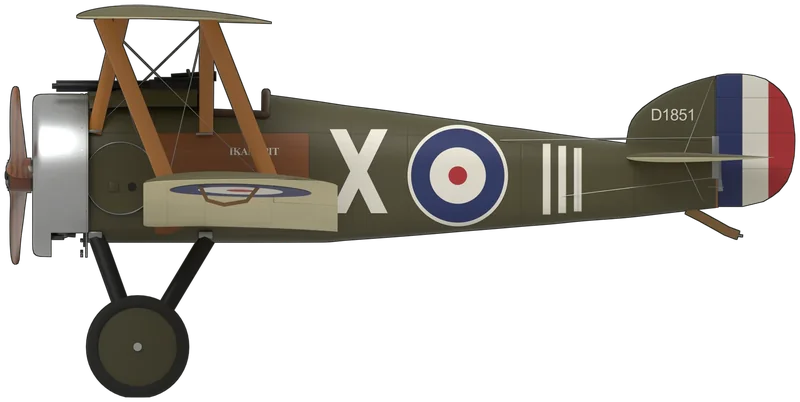
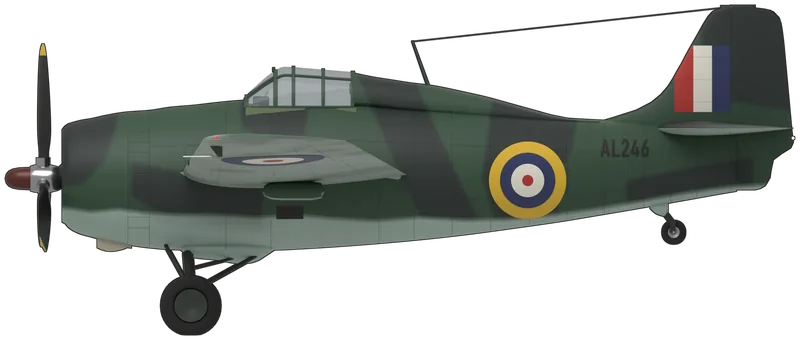
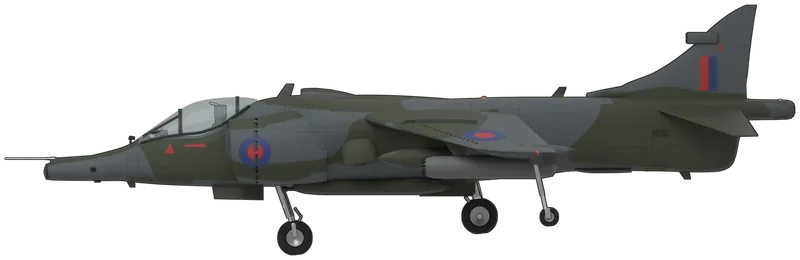
The NC-4's transatlantic flight ended in England. Having reached Lisbon on 27 May 1919, Lt Cdr Albert Read's flying boat flew on to Plymouth and alighted there on 31 May 1919, a fortnight before Alcock and Brown made the first non-stop crossing. The Sopwith Camel in the South Wing is a British design. Lt (jg) David Ingalls became the US Navy's first ace flying Camels in 1918; the displayed machine represents one flown from a platform on USS Texas in 1919. The cutaway Catalina, FP-216, was accepted in July 1942 as a Lend-Lease PBY-5B for Britain, then diverted to Navy training at Pensacola. The museum also displays Brewster Bermuda Mk I FF860, an RAF-serialled aircraft shown as an SB2A Buccaneer, and an AV-8C Harrier, BuNo 158975, from the batch Hawker Siddeley built for the US Marine Corps. On the US Navy side, the Wildcat (the Fleet Air Arm's Martlet), Hellcat, Corsair and Avenger on display were all types the Fleet Air Arm flew in quantity. The museum's PBY gallery also records that a US Navy ensign, Leonard Smith, was aboard the RAF Catalina that found the Bismarck in May 1941.

Prize exhibits

9 airframes not to miss

  1. Coming soonThe Hangar · queue No. 13Being drawn

    Curtiss NC-4

    A-2294

    One of three Navy-Curtiss flying boats that left Rockaway on 8 May 1919 under Lt Cdr Albert Read. Engine trouble put it down off Massachusetts and the press named it the 'Lame Duck'. It recovered to become the only one of the three to reach the Azores, made Lisbon on 27 May and Plymouth on 31 May. After a recruiting tour of 20 states it went largely unseen until 1969. It has been on Smithsonian loan to Pensacola since 1974; 126 ft of wing at 85 mph.

    Next in The Hangar

  2. Coming soonThe Hangar · queue No. 14Being drawn

    Douglas SBD-2 Dauntless

    2106

    Joined VB-2 on New Year's Eve 1940. It was ashore on Ford Island during the Pearl Harbor attack and flew from Lexington against Lae and Salamaua on 10 March 1942. At Midway on 4 June 1942 1st Lt Daniel Iverson of VMSB-241 brought it home with more than 200 holes. It ditched in Lake Michigan off USS Sable on 11 June 1943, was raised in 1994 and has been on display since 2001: the only surviving aircraft known to have fought at Midway.

    Next in The Hangar

  3. Coming soonThe Hangar · queue No. 15Being drawn

    Douglas A-4E/F Skyhawk ×4 (Blue Angels)

    150076, 154983, 155033, 154217

    Four Skyhawks hang in the diamond under the atrium glass, the Blue Angels' mount from 1974 to 1986. Real separation is 36 inches; the display is looser. The museum says three of the four flew demonstrations with the team, and all four flew Vietnam combat tours with Navy or Marine squadrons. Another A-4E, an ex-TOPGUN aggressor, stands at the entrance in VA-163/VA-164 colours.

    Next in The Hangar

  4. Coming soonThe Hangar · queue No. 19Being drawn

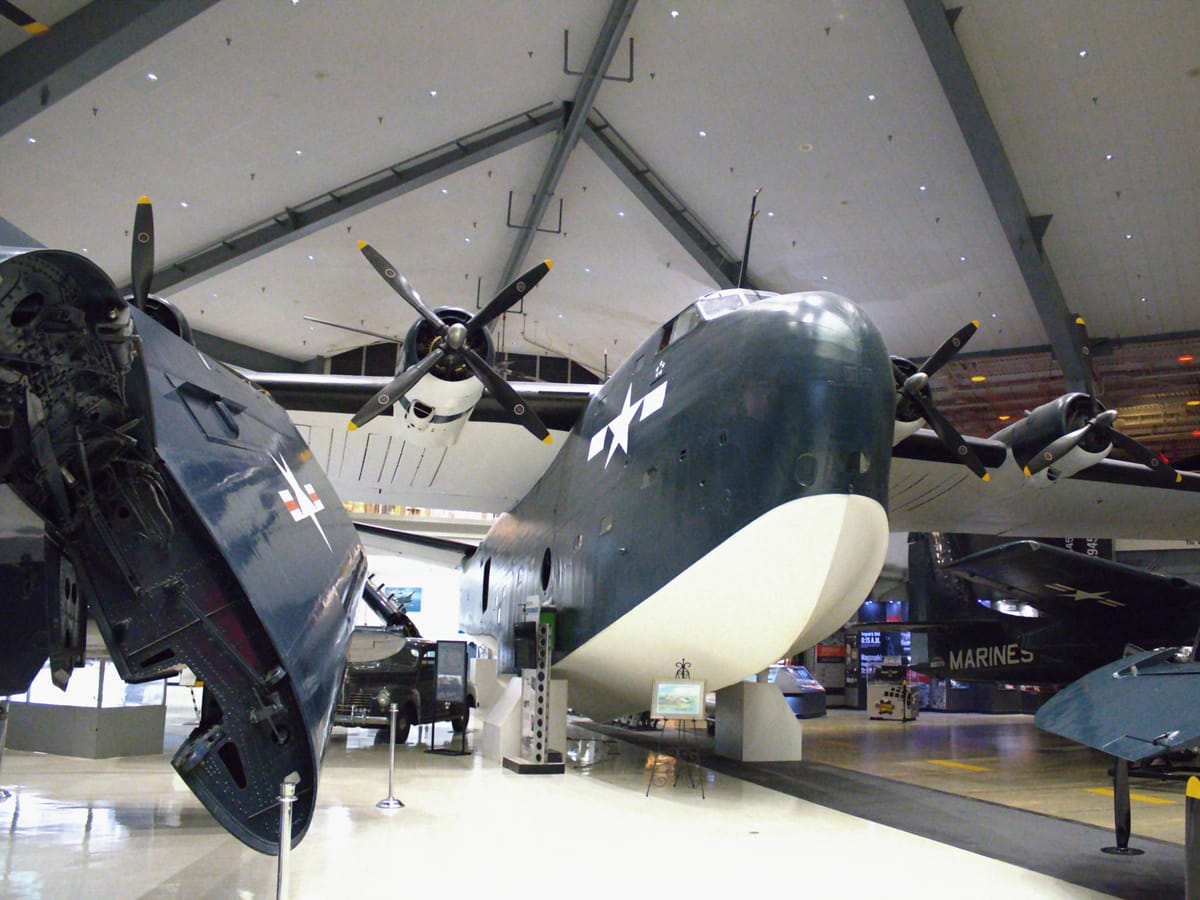
    Consolidated PB2Y-5R Coronado

    7099

    Delivered on 12 April 1943 and fitted out as a flag transport with a plush interior for senior officers. It carried members of Fleet Admiral Nimitz's staff to the Japanese surrender, becoming one of the first American aircraft to land in Tokyo Bay. Howard Hughes later owned it before it was donated to the museum.

    Next in The Hangar

  5. Hangar profile

    Douglas R4D-5L Skytrain 'Que Sera Sera'

    12418

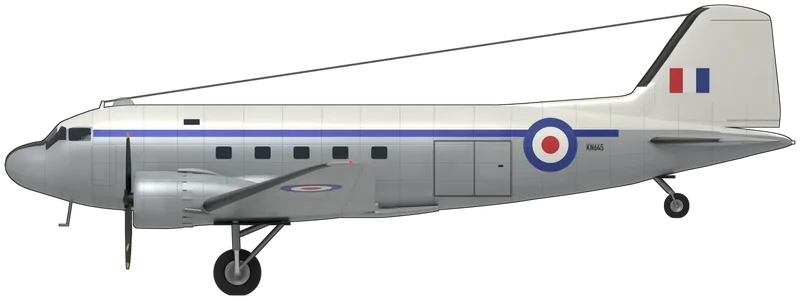
    A ski-equipped Navy DC-3 that made the first landing by any aircraft at the South Pole, on 31 October 1956, during Operation Deep Freeze. That came 27 years after another Naval Aviator, Richard Byrd, had become the first to fly over the Pole in 1929. A naval version of the C-47 that dropped paratroopers on D-Day, it was fitted with skis for the job. It now hangs in Hangar Bay One's explorers' corner beside the 'Truculent Turtle'.

    Turn it in 3DDouglas C-47 Dakota in Britain

  6. Coming soonThe Hangar · queue No. 17Being drawn

    Lockheed P2V-1 Neptune 'Truculent Turtle'

    89082

    Took off from Perth, Western Australia, on 29 September 1946 for Washington. Headwinds and about 1,000 lb of ice forced it down at Columbus, Ohio, at 11.28am on 1 October, after 11,235.6 miles in 55 hours 17 minutes, a world distance record that stood until 1962. Cdr Tom Davies' crew of four also carried a young kangaroo, 'Joe', bound for the National Zoo.

    Next in The Hangar

  7. Coming soonThe Hangar · queue No. 16Being drawn

    Grumman F-14D Tomcat

    161159

    The aircraft that flew the F-14's last combat sortie: its 224th and final combat mission, over Iraq on 8 February 2006, from USS Theodore Roosevelt. It now stands in Hangar Bay One as a reminder of the 'Big Fighter' whose variable-sweep wing moved automatically between 28 and 60 degrees. The fifth YF-14A prototype, BuNo 157984, has guarded the main entrance since the Quarterdeck opened in 1994.

    Next in The Hangar

  8. Coming soonThe Hangar · queue No. 18Being drawn

    McDonnell Douglas F/A-18C Hornet

    163508

    On 17 January 1991, the first day of Desert Storm, Lt Cdr Mark 'MRT' Fox of VFA-81 launched from USS Saratoga on a strike. He shot down an Iraqi MiG-21 with a Sidewinder and a Sparrow, then carried on to bomb the target. Delivered to the museum in 2019, it is shown in the markings it wore that day, near a MiG-21 in Iraqi colours.

    Next in The Hangar

  9. Hangar profile

    Consolidated PBY-5B Catalina (cutaway)

    FP-216

    Accepted on 14 July 1942 for Britain under Lend-Lease but diverted to Navy training. It was wrecked in a 'water loop' in Pensacola Bay on 28 May 1944. Its port side was then opened up and the hull built into the wall of the base survival-training school, where it stayed until the building came down in 1997. Restored with parts from Catalina veterans worldwide, it is now crewed by mannequins.

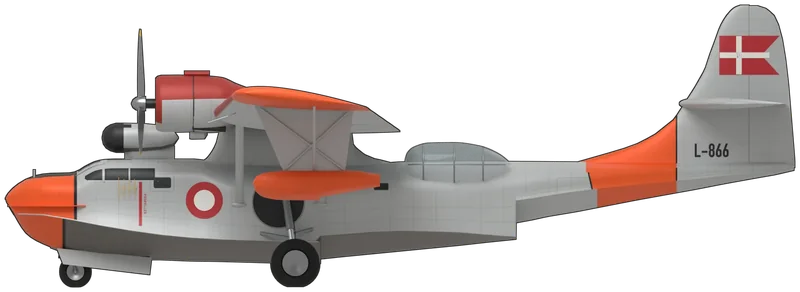
    Turn it in 3DConsolidated PBY Catalina in Britain

Walking order

The halls, in order

  1. QuarterdeckThe entrance hall, with the Spirit of Naval Aviation monument, the A-1 Triad replica, the D-558-1 Skystreak and a quarter-scale USS Nimitz deck and island housing the theatre box office.
  2. South WingThe early years: the NC-4, First World War aircraft and the inter-war biplanes, then early Second World War types and the jet-age experimentals such as the Cutlass, Skyray and Tiger, plus the Skylab command module.
  3. West WingThe Second World War in depth: the Lake Michigan recoveries, Home Front and Pacific island dioramas, the USS Cabot deck, the Coronado and Catalina, airship cars and the first naval jets.
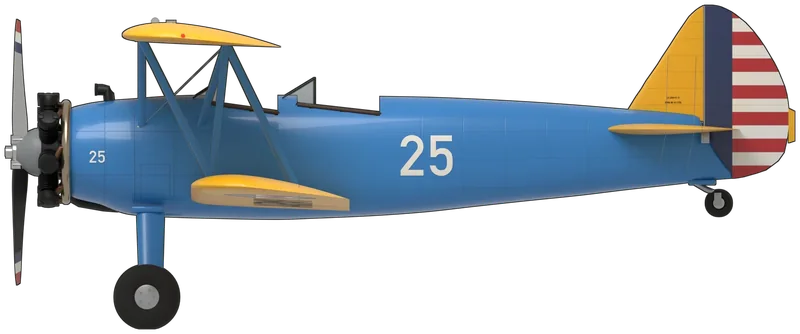
  4. Blue Angel AtriumA glass atrium in which four Blue Angels A-4 Skyhawks hold diamond formation above the SNJ and Stearman trainers.
  5. Hangar Bay OneThe annex for Vietnam, the explorers, the Coast Guard, presidential helicopters and modern naval aviation, including the 'Return with Honor' POW exhibition; open 9.15am–3.30pm.
  6. Flight LineThe outdoor display behind the restoration hangar, with larger types such as the Blue Angels' C-130 'Fat Albert' and the Forrestal KC-130F; it is also the public viewing area for Blue Angels practices.
Beyond the halls

Flights, tours & extras

Blue Angels practices

Free. The team practises over the flight line north of the museum at about 10.30am on most Tuesdays and Wednesdays from late March to October or November (viewing area opens 9.30am). There are 500 free bleacher seats, $6 chair hire and $12 Admiral's Club seats, none bookable in advance. Autograph sessions follow selected Wednesday practices. The 2027 dates were not yet published at the time of writing.

Giant Screen theatre

325-seat laser 4K theatre in the replica USS Nimitz island. Adult $11.50, senior/military $10.50, youth (5–17) $9.50, under-5s free; two films $21 adult. Films include The Magic of Flight (Blue Angels, narrated by Tom Selleck) and Aircraft Carrier.

Flight simulators

MaxFlight 360 full-rotation simulators, $40 for one or two people. The Afterburner 15-seat motion ride, $7.50 (Ultimate Flight Package with a giant-screen film, $16). Also the 'Fly with the Blues' F/A-18 Blue Angel No. 4 cockpit simulator and ParadropVR (prices not published online). Tickets on the second floor.

Free guided tours

Docent tours led by retired service volunteers leave the Information Desk daily at 9.30am, 11am and 1pm.

Cockpit trainers

Climb-in cockpits, including an F-14 Tomcat and helicopters, near the entrance, on the South Wing mezzanine and beside the aircraft they represent.

Cubi Bar Café

Lunch among the thousands of squadron plaques rescued from the Cubi Point Officers' Club in the Philippines when it closed in 1992. Open 11am–2pm, Monday–Saturday in summer and Tuesday–Saturday from September to May.

Return with Honor

The Vietnam prisoner-of-war exhibition, opened September 2025 in Hangar Bay One. It includes original components from the 'Hanoi Hilton' and an interactive question-and-answer session with Cdr Everett Alvarez Jr.

Photographs

At the museum

Four blue and gold A-4 Skyhawk jets suspended in diamond formation beneath a glass atrium roof
Four Blue Angels A-4 Skyhawks in diamond formation in the Blue Angel Atrium, 2018kitmasterbloke · CC BY 2.0
Large grey-hulled biplane flying boat with the number 4 on its bow, displayed inside the museum hall
Curtiss NC-4 A-2294, first aircraft across the Atlantic, in the South Wing, 2025ZLEA · CC BY-SA 4.0
Blue-grey Second World War dive bomber with white star markings on a polished museum floor
SBD-2 Dauntless 2106, a Battle of Midway veteran recovered from Lake Michigan, 2025ZLEA · CC BY-SA 4.0
Wide view of a glass-roofed atrium with blue jets and a yellow trainer suspended overhead
The Blue Angel Atrium seen from the floor, 2017Rob Bixby from Jacksonville, FL, USA · CC BY 2.0
White and orange twin-engined transport aircraft on skis below a large stars-and-stripes banner
R4D-5L 'Que Sera Sera', first aircraft to land at the South Pole, in Hangar Bay One, 2025ZLEA · CC BY-SA 4.0
Grey F-14 Tomcat fighter numbered 204 in a hangar with aircraft hanging above
F-14D Tomcat 161159, which flew the type's last combat sortie, 2025ZLEA · CC BY-SA 4.0
Catalina flying-boat hull with its side skin removed to reveal the interior structure
Cutaway PBY-5B Catalina FP-216, built for Britain under Lend-Lease, 2025ZLEA · CC BY-SA 4.0
Camouflaged Harrier jump jet suspended in front of a large American flag
British-built AV-8C Harrier 158975 of the US Marine Corps, 2025ZLEA · CC BY-SA 4.0
Silver and wooden First World War biplane on a raised wooden platform marked Texas
Sopwith Camel A5658 on its USS Texas turret platform, 2025ZLEA · CC BY-SA 4.0
Dark blue four-engined flying boat nose seen head-on in a museum hall
PB2Y-5R Coronado 7099, which carried Nimitz's staff to Tokyo Bay in 1945, 2025ZLEA · CC BY-SA 4.0

Freely licensed photographs from Wikimedia Commons, credited to their photographers.

In The Hangar

The collection in profile

18 types held here that we have drawn and built in 3D. Choose one to turn it over, or see all 301 in The Hangar.

Questions

Before you book

Is National Naval Aviation Museum free?

Yes. Free (museum, parking, Blue Angels practices and autograph sessions). Giant Screen theatre $11.50 adult; simulators extra (MaxFlight 360 $40 for one or two; Afterburner motion ride $7.50). Cashless.

What are the opening hours?

Daily 9am–4pm (Hangar Bay One 9.15am–3.30pm). Closed Thanksgiving, Christmas Eve, Christmas Day and New Year's Day. Public entry to the air station is only 9am–3pm, so arrive by 3pm. Check the museum's own website before travelling.

Can a British visitor get in?

The museum stands inside Naval Air Station Pensacola, an active base. Since 1 May 2026 the public may enter seven days a week, 9am–3pm, by the West Gate only, at the south end of Blue Angel Parkway; entry stops when the car parks are full. US citizens aged 18 and over need a REAL ID or a US passport, and so does every driver. Foreign nationals, including British visitors, must be escorted by a US citizen who drives the same vehicle; that escort is background-checked at the Navy Boulevard/Front Gate Visitor Center. The museum adds that non-US visitors not processed through the Foreign Visit System Confirmation Module must present a permanent resident card, Form I-551, or a foreign passport carrying a temporary I-551 stamp or MRIV notification. Without those, or without a US-citizen escort, they "will not be able to access NAS Pensacola": the museum says there are no exceptions and it cannot provide escorts. So a British tourist arriving alone with only a UK passport should expect to be turned away. No rideshare (Uber/Lyft), weapons, backpacks, coolers, alcohol or drones; felons barred; all vehicles subject to search. Sources: https://navalaviationmuseum.org/museum-faqs/ ; https://navalaviationmuseum.org/plan-your-visit/ ; https://www.fox10tv.com/2026/05/02/daily-public-access-resumes-naval-air-station-pensacola/

How far is it from London?

About 4,480 miles from Heathrow as the great circle flies. The nearest airport is Pensacola (PNS), about 30 minutes by road. Local time is Central time, six hours behind London.

How long should I allow?

Four hours to a full day, longer if you take the flight-line tram or stay for a Blue Angels practice.

How many aircraft are there?

150+ in the collection. The checklist on this page lists 90 of them by serial.

Order of battle

Airframe checklist

90 airframes on display, compiled on 28 October 2026 from the museum’s own listings and the published sources below. Collections move: aircraft go out on loan, into restoration or into the reserve hangar, so check the labels as you go.

SeenTypeSerial / registration
Curtiss NC-4A-2294
Curtiss A-1 Triad (replica)—
Curtiss JN-4D JennyA995
Naval Aircraft Factory MF flying boatA5483
Sopwith F.1 CamelA5658
Nieuport 28A5796
Thomas-Morse S-4C ScoutA5858
Curtiss F7C-1 SeahawkA7667
Curtiss N2C-2 FledglingA8529
New Standard NT-1A8588
Consolidated N2Y-1A8605
Grumman F3F-20976
Curtiss BFC-2 Goshawk9332
Canadian Car & Foundry G-23 Goblin (as Grumman FF-1)GN-3
Vought SB2U-2 Vindicator1383
Douglas SBD-2 Dauntless2106
Grumman F6F-3 Hellcat25910
Grumman F6F-5 Hellcat94203
Eastern FM-2 Wildcat16089
Eastern FM-2 Wildcat86747
Eastern TBM-3E Avenger53593
Grumman F7F-3 Tigercat80373
Grumman F8F-2P Bearcat121710
Brewster Bermuda Mk I (as SB2A Buccaneer)FF860
Vought OS2U-3 Kingfisher5926
Columbia J2F-6 Duck33581
Consolidated PBY-5 Catalina08317
Consolidated PBY-5B Catalina (cutaway)FP-216
Consolidated PB2Y-5R Coronado7099
Interstate TDR-1 'Edna III'33529
Boeing-Stearman N2S-3 Kaydet05369
Naval Aircraft Factory N3N-32693
Curtiss-Wright SNC-1 Falcon05194
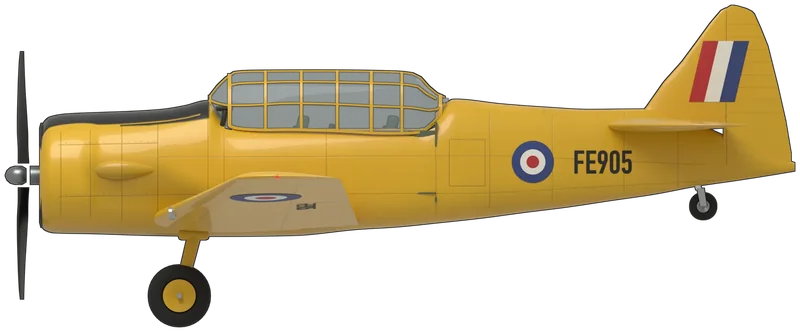
North American SNJ-5C Texan51849
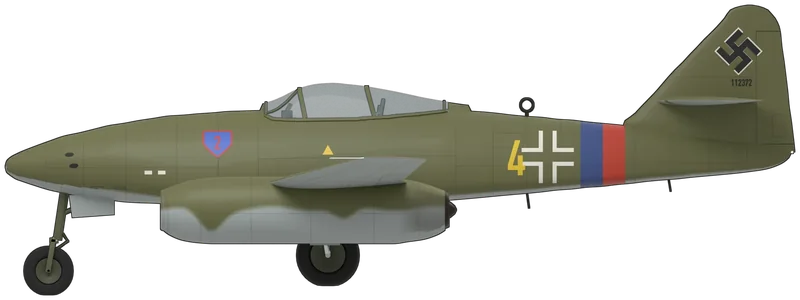
Messerschmitt Me 262B-1a121448
Douglas R4D-5L Skytrain 'Que Sera Sera'12418
Lockheed P2V-1 Neptune 'Truculent Turtle'89082
Martin SP-5B Marlin135533
Martin AM-1 Mauler122397
Grumman AF-2S Guardian123100
McDonnell FH-1 Phantom111793
McDonnell F2H-2P Banshee126673
McDonnell F2H-4 Banshee127663
Grumman F9F-2 Panther123050
Grumman F9F-6 Cougar128109
Douglas D-558-1 Skystreak37970
Vought F7U-3M Cutlass129655
North American FJ-2 Fury132023
North American FJ-4 Fury139486
McDonnell F3H-2M Demon137078
Douglas F4D-1 Skyray134806
Grumman F11F-1 Tiger141828
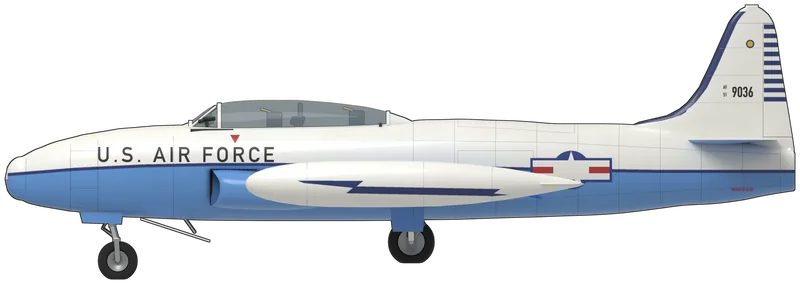
Lockheed TV-2 Shooting Star131816
Beechcraft T-34B Mentor144040
Beechcraft T-34C Turbo Mentor161842
North American T-2C Buckeye157058
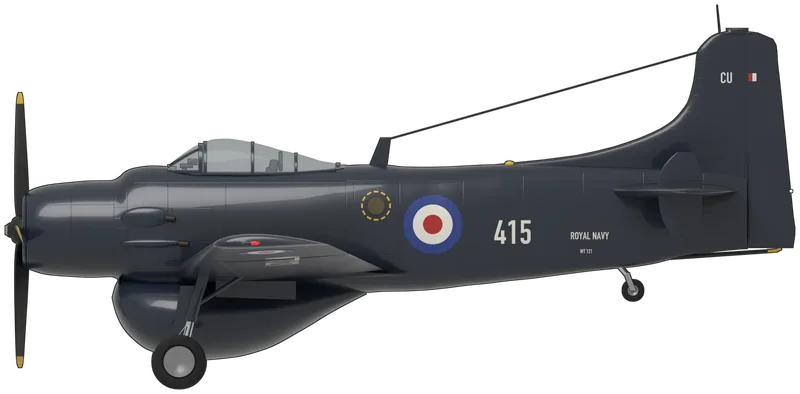
Douglas A-1H Skyraider135300
Douglas EA-1F Skyraider132532
Douglas A-4E Skyhawk (Blue Angels No. 1)150076
Douglas A-4F Skyhawk (Blue Angels)154983
Douglas A-4F Skyhawk (Blue Angels)155033
Douglas A-4F Skyhawk (Blue Angels)154217
Douglas A-4E Skyhawk149656
Vought F-8A Crusader145347
Vought RF-8G Crusader145609
McDonnell F-4B Phantom II (displayed as F-4N)153915
Vought A-7E Corsair II160714
Grumman A-6E Intruder155610
Grumman EA-6B Prowler156481
North American OV-10D Bronco155472
Hawker Siddeley AV-8C Harrier158975
Lockheed S-3B Viking159387
Grumman E-2C Hawkeye164494
Grumman YF-14A Tomcat157984
Grumman F-14D Tomcat161159
McDonnell Douglas F/A-18C Hornet163508
McDonnell Douglas F/A-18C Hornet163705
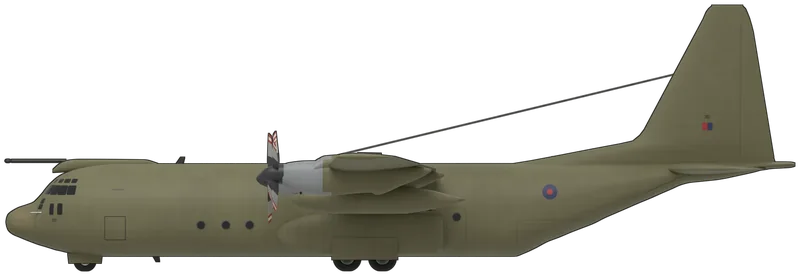
Lockheed KC-130F Hercules149806
Grumman C-2A Greyhound162159
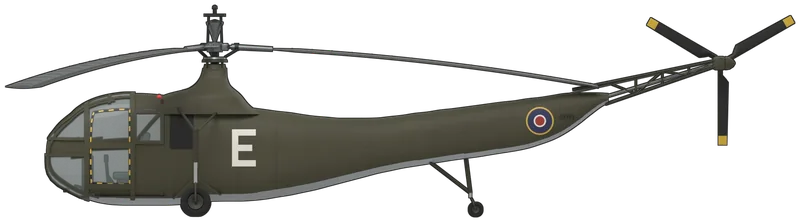
Sikorsky HNS-1 Hoverfly39047
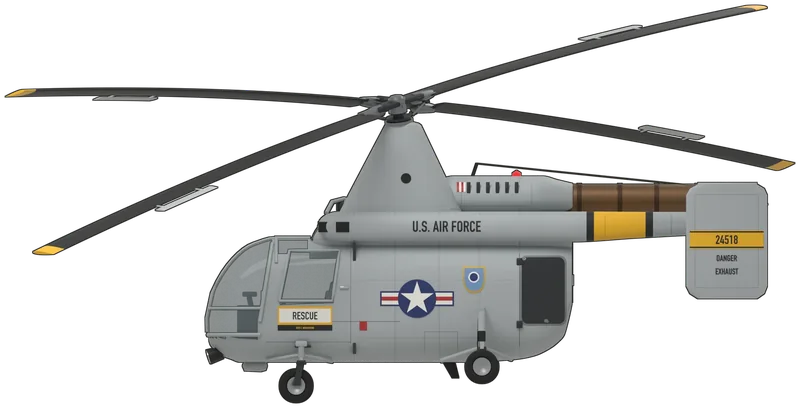
Sikorsky HO3S-1G235
Sikorsky HH-52A Seaguard1355
Sikorsky HH-3F Pelican1486
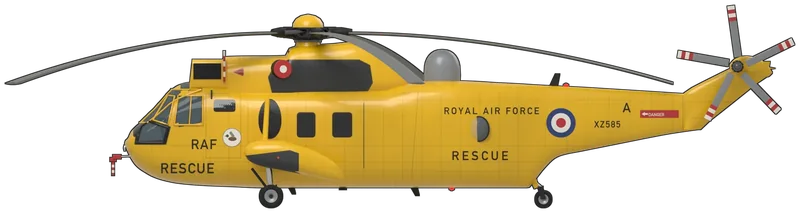
Sikorsky VH-3A Sea King150613
Kaman SH-2F Seasprite151312
Boeing Vertol CH-46D Sea Knight151952
Sikorsky CH-53D Sea Stallion157159
Bell AH-1W SuperCobra164578
Sikorsky HH-60H Seahawk163787
Bell TH-57C Sea Ranger162028
Contact

Location & contact

Address
1750 Radford Boulevard, Naval Air Station Pensacola, Pensacola, FL 32508
Phone
+1 850-452-8450
Website
navalaviationmuseum.org
Supplement
US-03 · North America

Facts checked against the museum’s own website on 28 October 2026. Sources: navalaviationmuseum.org, navalaviationmuseum.org, navalaviationmuseum.org, navalaviationmuseum.org, navalaviationmuseum.org, navalaviationmuseum.org. Corrections to mg@ub.io.

See also