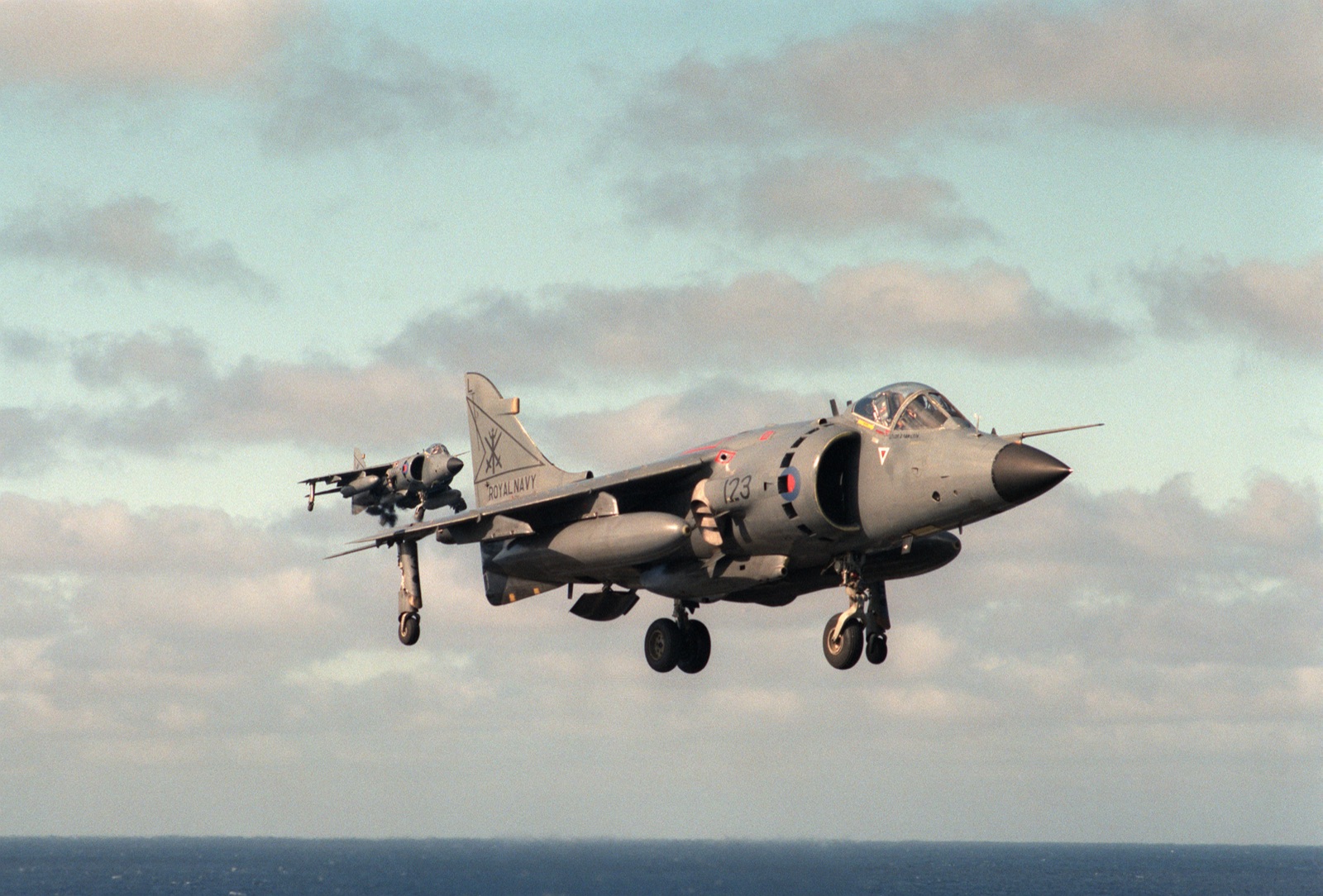
Argentina landed on the Falkland Islands on 2 April 1982 and surrendered at Stanley on 14 June. In between, the war at sea and on land was decided largely in the air: whether a few dozen subsonic Harriers flying off two small carriers could keep Argentina’s Skyhawks, Daggers and Mirages off a fleet that had no airborne early warning and very little room to hide.
They could, just. The figures that follow come from the loss-by-loss records compiled after the war and from the official histories. They are lopsided in one direction, the air-to-air score, and sobering in the other: Argentine pilots, flying at the limit of their fuel from the mainland, sank or wrecked seven ships and craft, and would have sunk more had their bombs been fuzed for the low heights they were forced to fly at.
The fighter screen
Two carriers, twenty-eight Sea Harriers, and a missile the Argentines did not have
The Royal Navy sailed with 20 Sea Harrier FRS.1s on Hermes and Invincible; eight more came south on Atlantic Conveyor and flew aboard in mid-May, and the RAF’s Harrier GR.3s followed to take on ground attack. Against them, Argentina could put up more than a hundred jet combat aircraft. The Sea Harrier’s advantages were manoeuvrability, the new all-aspect AIM-9L Sidewinder and the fact that its opponents arrived short of fuel, at low level, intent on ships rather than fighters.
The Harriers flew 1,435 sorties, more than 1,100 of them air-defence patrols. Their losses were all to ground fire or accidents.
Source Falklands War order of battle: British air forces; British Aerospace Sea Harrier (Wikipedia, after Ethell & Price and Burden et al.); naval-history.net
What the Sea Harriers shot down
aircraft destroyed in air combat, by typeSea Harrier and Harrier pilots also destroyed five aircraft and helicopters on the ground, and a Puma crashed while evading a Sea Harrier on 23 May; those are not counted here. Totals of 20 and 23 also appear in print, depending on how the damaged Mirage and the Puma are scored.
Source naval-history.net, Argentine aircraft lost (a5–a69); Falklands War order of battle: Argentine air forces (Wikipedia)
Sea Harrier FRS.1 against Mirage IIIEA
Sea Harrier FRS.1
Mirage IIIEA
- 733 mphTop speed1,460 mph
- 96 kNEngine thrust61 kN
- 11,900 kgMaximum take-off weight13,700 kg
- 15 mLength15 m
- 1,435Combat sorties over the islands58
- 0Lost in air combat2
Verdict On paper the Mirage was twice as fast. In the South Atlantic it was flying 400 nautical miles from base with fuel for a few minutes’ fighting, and after 1 May most were held back to guard the mainland against the Vulcans. The Harrier never had to chase it.
Sea Harrier speed is at sea level (about 1,180 km/h); the Mirage IIIEA’s 1,460 mph (Mach 2.2) is at altitude; published FRS.1 weights vary by a few hundred kilograms. Mirage sorties were decoy and escort missions. The second Mirage “loss” was the aircraft damaged by a Sea Harrier and then shot down by Argentine guns at Stanley.
Source Dassault Mirage III and British Aerospace Sea Harrier specifications (Wikipedia); Metal Wings Sea Harrier FRS.1 data; Argentine sortie figures from the FAA order of battle
The cost to Argentina
A hundred aircraft, and how each one was lost
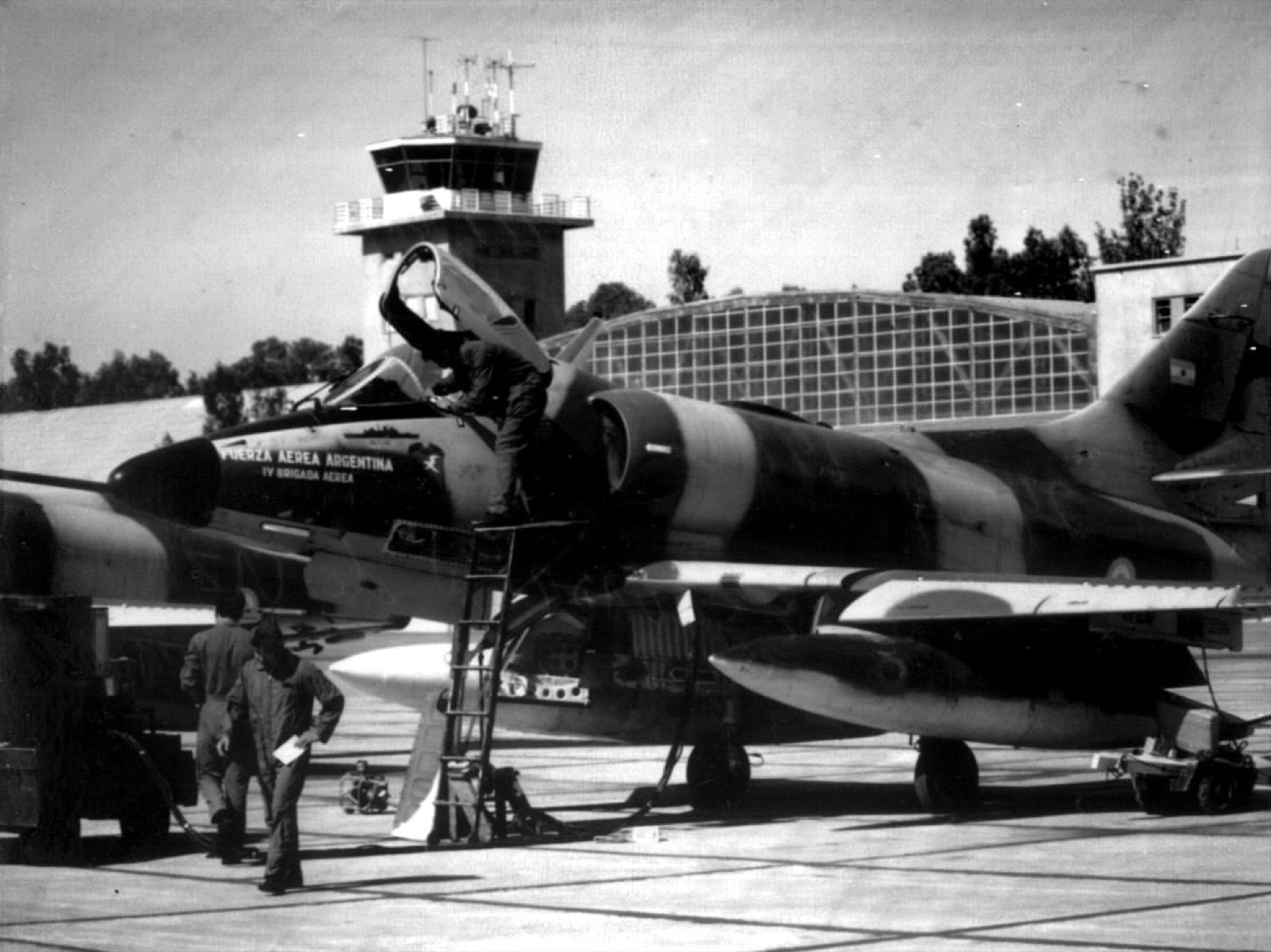
Argentina lost exactly a hundred aircraft by the British count: 45 in the air, the rest on the ground, in accidents, or captured when Stanley surrendered. The Skyhawks, which flew 231 of the 430 attack sorties launched from the mainland, lost 22. Every one of the 24 Pucarás sent to the islands was lost there, eleven of them simply left on the airfields at the end.
Fifty-five men of the Argentine Air Force were killed, 29 of them pilots, with ten more from naval and army aviation.
Argentine aircraft lost, by type
aircraft= 1 aircraft
- Pucará11 captured at Stanley25
- Skyhawk (A-4B, A-4C, A-4Q)22
- Dagger11
- UH-1H IroquoisArmy; most captured9
- Puma7
- Aermacchi MB-339ANavy5
- T-34C MentorNavy; all at Pebble Island4
- Agusta A1093
- Mirage IIIEA2
- Canberra B.622
- Chinook2
- Bell 212 and Skyvan4
- C-130E Hercules1
- Learjet 35A1
- LynxNavy; flying accident1
- Alouette IIIwent down with ARA General Belgrano1
Source naval-history.net, Argentine aircraft lost, entries a1–a100
How they were lost
aircraft, by type and cause- Sea Harrier, air to air
- Ships’ missiles and guns
- Land SAMs and ground fire
- Destroyed on the ground
- Captured at the surrender
- Accident, friendly fire, other
- 9
- 342
- 242
- 3
- 29112
- 3
- 26133
- 6
Ships’ weapons: Sea Dart 7, Sea Wolf 4, Sea Cat 1. Land-based weapons include Rapier, Blowpipe, Stinger and small-arms fire; several Skyhawks over San Carlos were hit by more than one. Two A-4Cs that vanished on 9 May may have been hit by Sea Dart or flown into South Jason Island in cloud; they are counted as accidents. “Destroyed on the ground” covers the SAS raid on Pebble Island, Harrier strikes and naval gunfire. Sources differ by one or two on how many helicopters were wrecked before the surrender rather than captured after it; this chart follows the Wikipedia order of battle (27 captured).
Source naval-history.net, Argentine aircraft lost; Falklands War order of battle: Argentine air forces (Wikipedia)
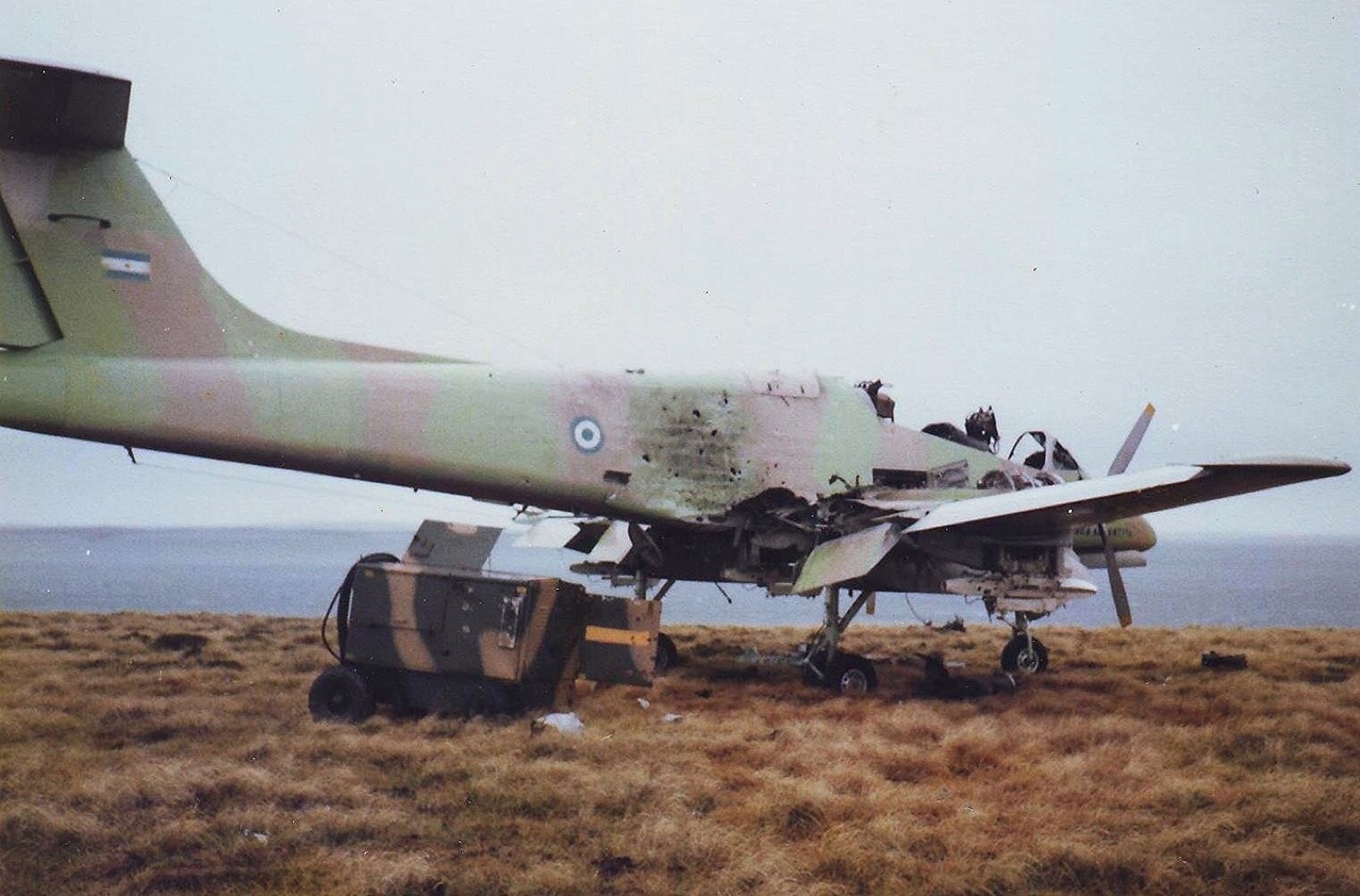
- Argentine flag on the fin: the Pucará was built at Córdoba, the country’s own design
- Fuselage peppered by blast and splinters
- Port engine and its nacelle torn apart; the starboard engine and propeller beyond survived
- Ground-equipment trolley in the same desert-and-green camouflage
How far they had to fly
statute miles to Stanley, great-circleDistances are calculated great-circle from airfield coordinates. Daggers and Mirages could not refuel in the air; over the islands a Dagger had, by Argentine accounts, less than ten minutes to find a target. Ascension lies 3,738 nautical miles from the Vulcans’ home at Waddington and 3,380 from Stanley.
Source Aviation Gazetteer calculation; unit bases from the FAA order of battle (Wikipedia) and Freedman, Official History
Black Buck
Seven raids planned, five flown, one bomb on the runway
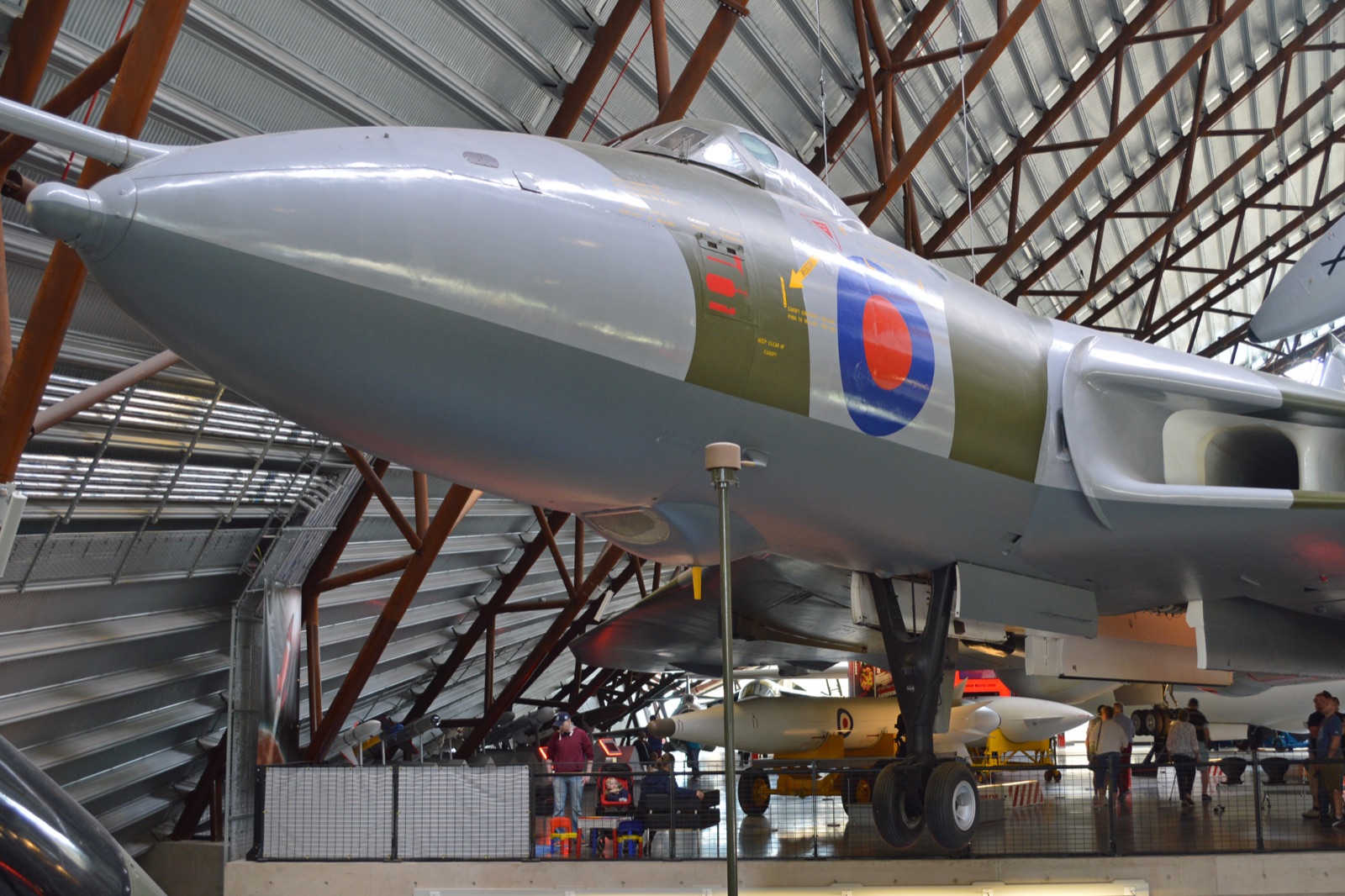
The Vulcans were weeks from retirement, their refuelling probes blocked off and their bomb bays fitted for nuclear work. To put one over Stanley with twenty-one 1,000 lb bombs meant launching eleven Victor tankers and two Vulcans from Ascension at one-minute intervals, then passing fuel down a relay of tankers that turned back one by one. The Vulcan on Black Buck 1 took on fuel seven times on the way out and once on the way home; the last Victor gave so much away that it nearly failed to get home itself.
One bomb hit the runway. The airfield was never closed to Argentine Hercules, which flew 33 night runs in. The raids’ value is still argued about; what is not in doubt is that they were, for a time, the longest bombing missions ever flown.
Source Operation Black Buck (Wikipedia, after White, Vulcan 607, and Burden et al., Falklands: The Air War); Brookes, Vulcan Units of the Cold War
The seven Black Buck missions
| Black Buck 1 | 30 Apr–1 May | Stanley runway | XM607 (Withers) | 21 | 0 | Flown; one crater mid-runway. Primary XM598 turned back with a cabin fault |
| Black Buck 2 | 3–4 May | Stanley runway | XM607 (Reeve) | 21 | 0 | Flown; no hit on the runway |
| Black Buck 3 | mid-May | Stanley runway | XM607 | 0 | 0 | Cancelled before take-off: headwinds |
| Black Buck 4 | 28 May | Air-defence radar | XM597 (McDougall) | 0 | 0 | Recalled after 5 hours: a Victor’s drogue unit failed |
| Black Buck 5 | 31 May | Air-defence radar | XM597 (McDougall) | 0 | 2 | Flown; minor damage, quickly repaired |
| Black Buck 6 | 3 June | Air-defence radar | XM597 (McDougall) | 0 | 2 | Destroyed a Skyguard fire-control radar; broken probe forced a diversion to Rio de Janeiro |
| Black Buck 7 | 12 June | Airfield stores and aircraft | XM607 (Withers) | 21 | 0 | Flown; bombs fuzed in error to burst on impact |
| Black Buck 3 is dated 13 May in one table of the standard history and 16 May in its text. Black Buck 6 carried four Shrikes and fired two. | ||||||
Source Burden, Draper, Rough, Smith, Falklands: The Air War (1986), via Operation Black Buck (Wikipedia)
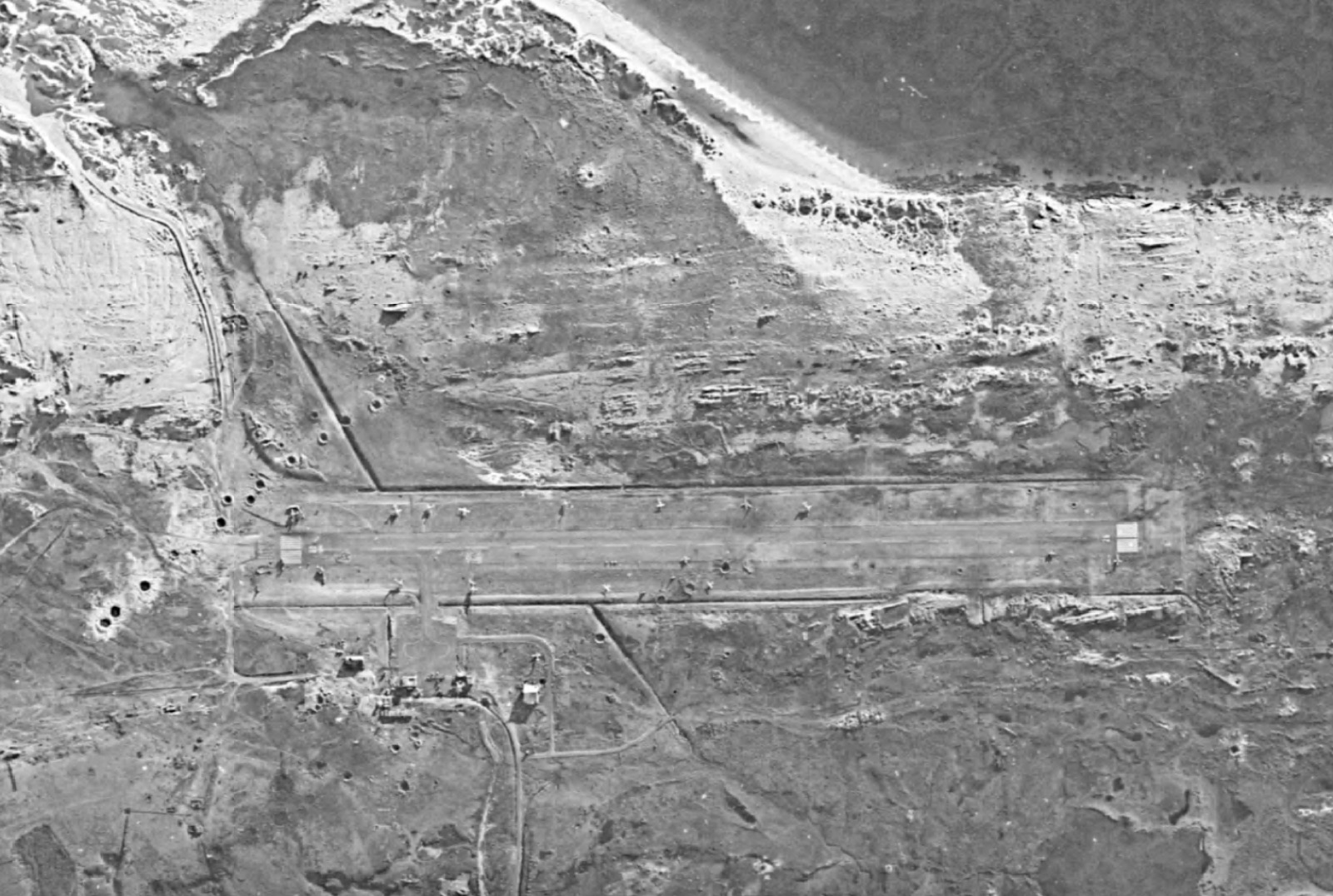
- The single runway: too short for Argentine fast jets to operate from, long enough for Hercules
- A line of craters north-west of the threshold
- A cluster of craters south-west of the runway
- Terminal, tower and airfield buildings
Bombs on the fleet
Seven sunk, thirteen damaged, thirteen duds
Argentina’s pilots had trained for this against their own Type 42 destroyers, and it showed. Flying at wave-top height to stay under the radar, they pressed attacks into San Carlos Water so low that their bombs often had no time to arm. Thirteen bombs hit British ships and failed to go off; the naval historian who compiled the list believed that, had they exploded, the task force might not have been able to go on.
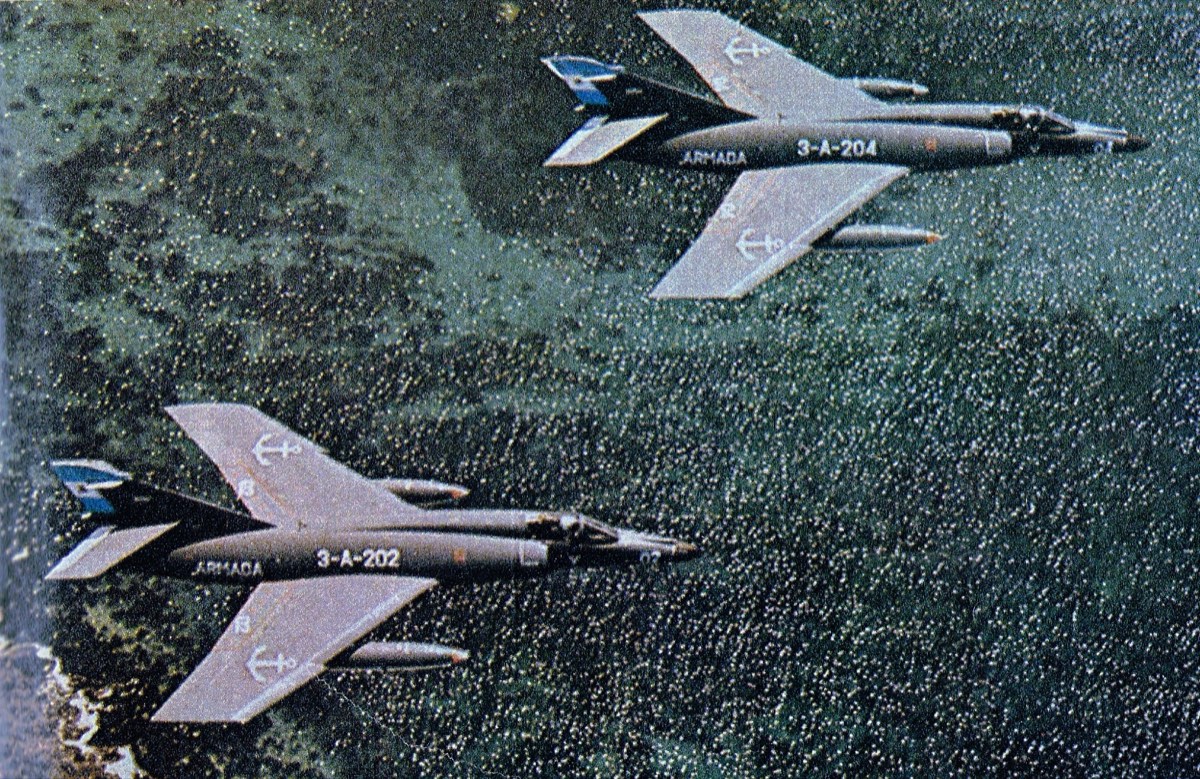
Two Exocets fired from Super Étendards did their work: Sheffield on 4 May and Atlantic Conveyor, with almost all the task force’s heavy-lift helicopters, on 25 May.
British ships hit by Argentine aircraft
ships and craft= 1 ships and craft
- Sunk or burnt outSheffield, Ardent, Antelope, Coventry, Atlantic Conveyor, Sir Galahad and landing craft F47
- Damagedfrom near misses and strafing to two bombs lodged inside13
Sir Galahad was hit by a bomb that failed to explode on 24 May and destroyed on 8 June; she is counted once, as sunk. Glamorgan’s Exocet hit on 12 June came from a launcher on land and is not counted.
Source naval-history.net, British ships lost and damaged
Every British ship hit from the air
| 1 May | HMS Alacrity | Daggers | Slight damage from near misses | 0 |
| 1 May | HMS Arrow | Daggers | Slight damage from cannon fire | 0 |
| 1 May | HMS Glamorgan | Daggers | Slight damage from near misses | 0 |
| 4 May | HMS Sheffield | Super Étendard, Exocet | Burnt out; sank in tow 10 May | 0 |
| 12 May | HMS Glasgow | A-4B Skyhawks | Bomb passed through the hull; went home | 1 |
| 21 May | HMS Antrim | Daggers | Seriously damaged | 1 |
| 21 May | HMS Broadsword | Daggers | Slight damage from cannon fire | 0 |
| 21 May | HMS Argonaut | MB-339A, then A-4B Skyhawks | Seriously damaged; two bombs lodged aboard | 2 |
| 21 May | HMS Brilliant | Daggers | Slight damage from cannon fire | 0 |
| 21 May | HMS Ardent | Daggers, then A-4Q Skyhawks | Sank the next evening | 1 |
| 23 May | HMS Antelope | A-4B Skyhawks | One of two lodged bombs exploded while being defused; sank 24 May | 2 |
| 24 May | RFA Sir Galahad | A-4C Skyhawks | Out of action for days | 1 |
| 24 May | RFA Sir Lancelot | A-4C Skyhawks | Not fully operational for nearly three weeks | 1 |
| 24 May | RFA Sir Bedivere | A-4C Skyhawks | Slight damage from a glancing bomb | 0 |
| 25 May | HMS Broadsword | A-4B Skyhawks | A bomb bounced up through the stern and out | 0 |
| 25 May | HMS Coventry | A-4B Skyhawks | Sunk by three bombs | 0 |
| 25 May | Atlantic Conveyor | Super Étendards, Exocet | Burnt out; sank in tow 28 May | 0 |
| 29 May | British Wye | C-130 Hercules | A bomb bounced off into the sea | 0 |
| 8 June | HMS Plymouth | Daggers | Damaged; four bombs failed to explode | 4 |
| 8 June | RFA Sir Galahad | A-4B Skyhawks | Burnt out at Fitzroy; later sunk as a war grave | 0 |
| 8 June | RFA Sir Tristram | A-4B Skyhawks | Badly damaged and abandoned; later repaired | 0 |
| 8 June | Landing craft F4 | A-4B Skyhawk | Sunk in Choiseul Sound | 0 |
| Attackers as identified in the British loss records. The thirteen unexploded bombs are numbered 1–13 in the same source; Ardent took more than one hit before she sank. | ||||
Source naval-history.net, Falklands War 1982, British ships sunk and damaged
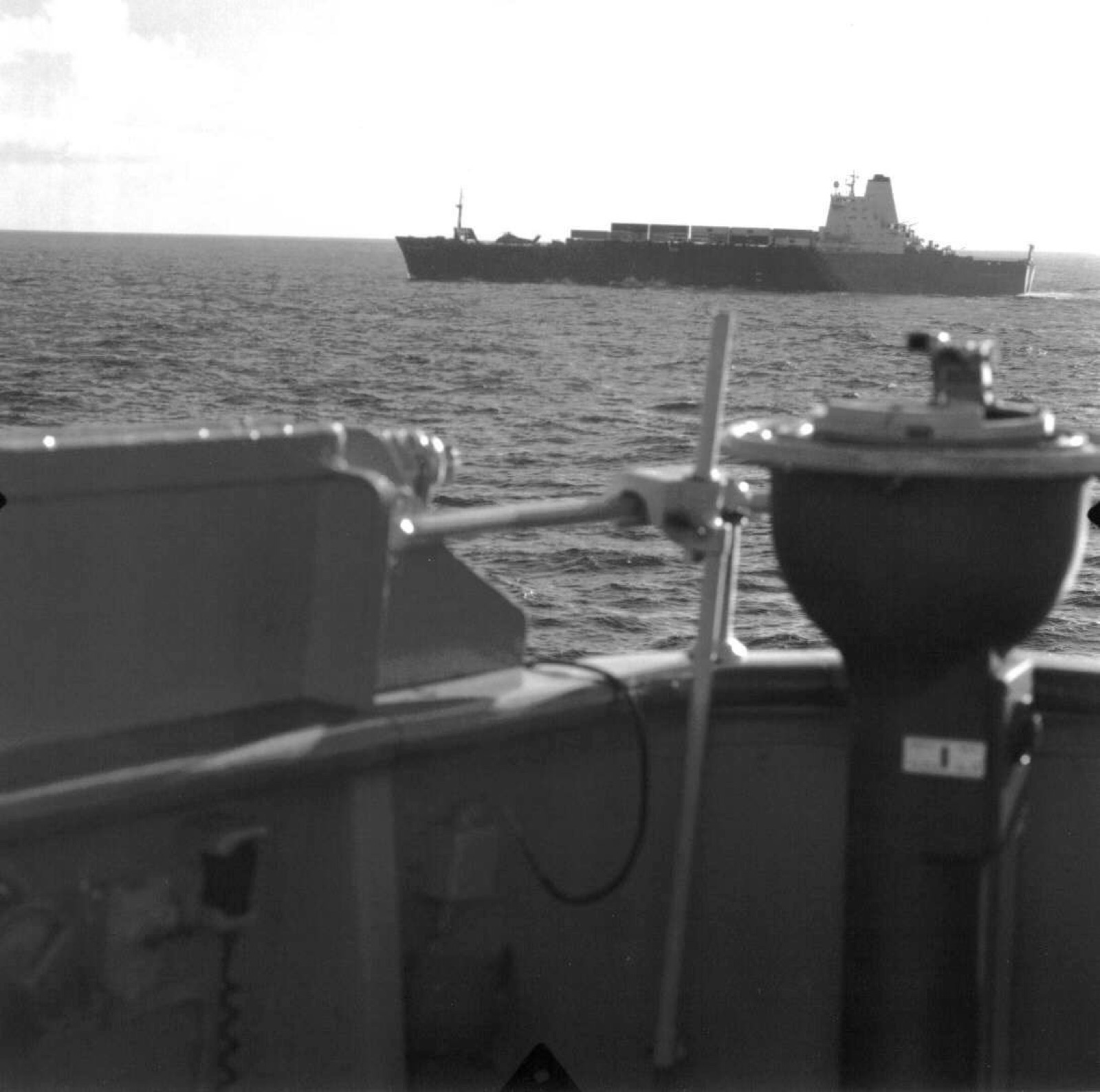
- A helicopter lashed down on the forward deck
- Walls of containers stacked along the deck to shelter the aircraft from the sea
- Bridge and accommodation, aft
What Atlantic Conveyor carried south
aircraft- Flown off or away from the ship
- Destroyed in the fire
- 8
- 6
- 23
- 16
- 1
The Harriers were landed on her deck at Ascension and flown off to the carriers in mid-May. One Chinook was left at Ascension; another, ZA718 “Bravo November”, was airborne when the Exocets struck and became the only RAF Chinook in the islands. Twelve men died in the ship.
Source SS Atlantic Conveyor (Wikipedia); naval-history.net, British aircraft lost (b17–b26)
The British losses
Thirty-four aircraft, most of them helicopters, most not to enemy fighters
Only one British aircraft was shot down by an Argentine aircraft: a Royal Marines Scout, caught by two Pucarás near Goose Green on 28 May. Far more were lost to the South Atlantic itself, to the weather, the dark and the sea, and to the ships they flew from. Ten went down with Atlantic Conveyor alone.
The worst single loss was a Sea King cross-decking troops on the night of 19 May: twenty-one men died, eighteen of them from the SAS.
British aircraft lost, by type
aircraft= 1 aircraft
- Wessexsix in Atlantic Conveyor9
- Sea Harrier6
- Sea King5
- Harrier GR.34
- Chinook3
- Lynx3
- Gazelleone shot down by a British Sea Dart3
- Scout1
Source naval-history.net, British aircraft lost, entries b1–b34
British aircraft losses, by cause
aircraftSource naval-history.net, British aircraft lost
The running toll
aircraft lost, cumulative, by day of the war (2 April = day 0)- Argentine aircraft destroyed in the fighting
- British aircraft lost
| Year | Argentine aircraft destroyed in the fighting | British aircraft lost |
|---|---|---|
| 0 | 0 | 0 |
| 1 | 1 | 0 |
| 20 | 1 | 2 |
| 21 | 1 | 3 |
| 29 | 8 | 3 |
| 30 | 10 | 3 |
| 31 | 12 | 3 |
| 32 | 12 | 4 |
| 34 | 12 | 6 |
| 37 | 15 | 6 |
| 40 | 19 | 7 |
| 43 | 30 | 7 |
| 45 | 30 | 8 |
| 46 | 30 | 9 |
| 47 | 30 | 10 |
| 49 | 44 | 14 |
| 51 | 49 | 15 |
| 52 | 53 | 15 |
| 53 | 56 | 26 |
| 55 | 57 | 27 |
| 56 | 60 | 28 |
| 57 | 61 | 29 |
| 58 | 64 | 30 |
| 60 | 65 | 31 |
| 65 | 65 | 32 |
| 66 | 66 | 32 |
| 67 | 69 | 33 |
| 71 | 69 | 34 |
| 72 | 70 | 34 |
| 73 | 70 | 34 |
Excludes the 29 Argentine aircraft captured at the surrender (counted in chapter 02 as 27 captured and two wrecked; sources differ) and a Pucará lost on an unknown date.
Source naval-history.net, Argentine and British aircraft lost
The dead
people killed= 20 people killed
- Argentine servicemen321 in ARA General Belgrano; 65 from the three air arms649
- British servicemen255
- Falkland Islanderskilled by a British shell in Stanley on the night of 12 June3
Source Falklands War (Wikipedia); Argentine Air Force roll of the fallen
The Argentine Air Force fought extremely well and we felt a great admiration for what they did.
Admiral Sandy Woodward, commander of the British carrier group, interviewed by Clarín, 2007 (translated)
Seventy-four days
Argentine forces land at Stanley; the next day a Puma is shot down at Grytviken, the war’s first aircraft loss
The carriers Hermes and Invincible sail from Portsmouth with 20 Sea Harriers between them
20Two Wessex crash in a blizzard on the Fortuna Glacier, South Georgia; every man is rescued
Black Buck 1 bombs Stanley; Sea Harriers shoot down a Mirage, a Dagger and a Canberra in the first air battles
3Exocet hits Sheffield; a Sea Harrier is shot down over Goose Green and Lt Nick Taylor killed
SAS raid on Pebble Island puts eleven aircraft out of action
11Landings at San Carlos; Ardent lost; the Sea Harriers’ busiest day
10Coventry sunk; Atlantic Conveyor hit, with ten helicopters
10Goose Green; a Scout shot down by Pucarás, the only British aircraft lost to an Argentine one
A Sea Harrier shoots down a C-130 north of Pebble Island; another Sea Harrier falls to a Roland missile
Sir Galahad and Sir Tristram bombed at Fitzroy; three Skyhawks shot down that afternoon
3Argentine forces at Stanley surrender
Source naval-history.net; Freedman, The Official History of the Falklands Campaign (2005)
Side by side
The British and Argentine types, in the Gazetteer’s own models
The air war at one scale
drawn to one scale-
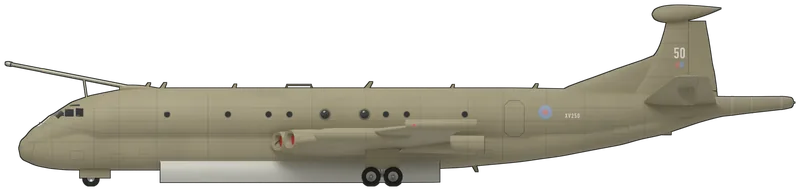 Nimrod MR.2 39.3 m
 -
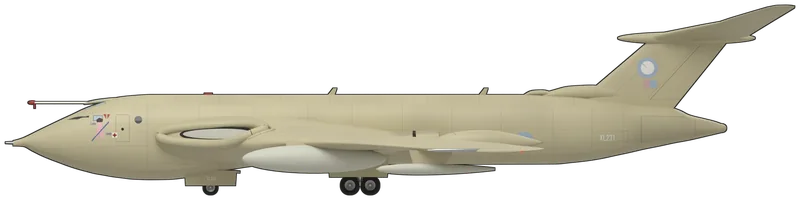 Victor K.2 35.1 m
 -
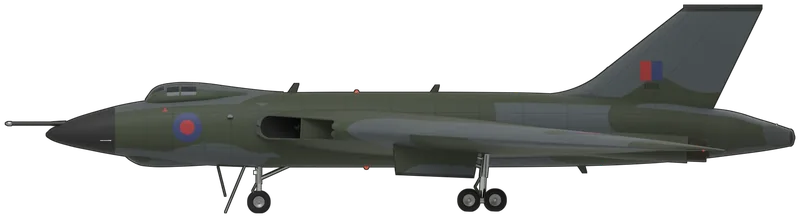 Vulcan B.2 30.5 m
 -
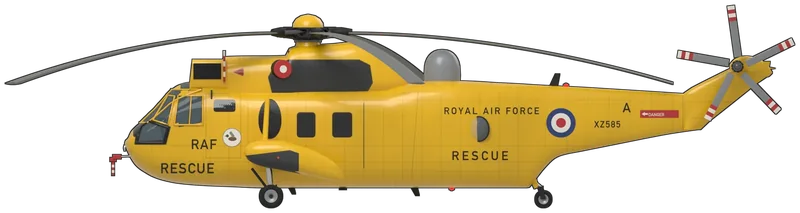 Sea King 22.2 m
 -
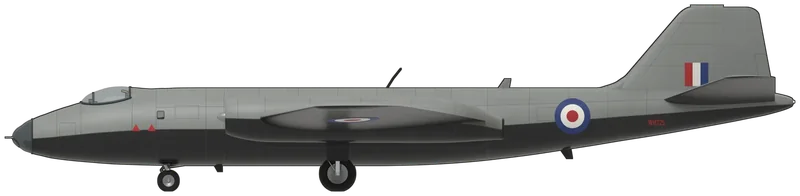 Canberra (Argentina flew 8, the B.62) 20.0 m
 -
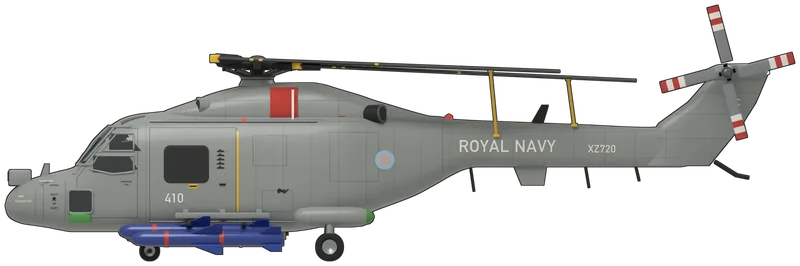 Lynx 15.2 m
 -
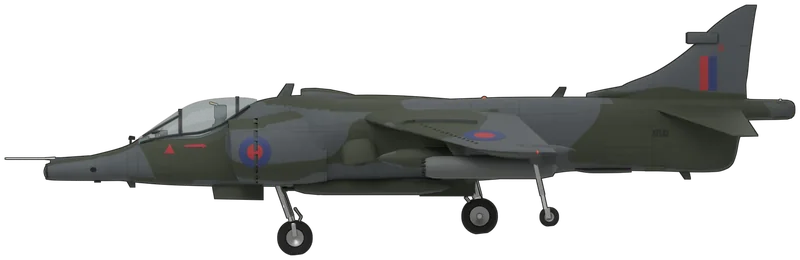 Harrier GR.3 14.3 m
 -
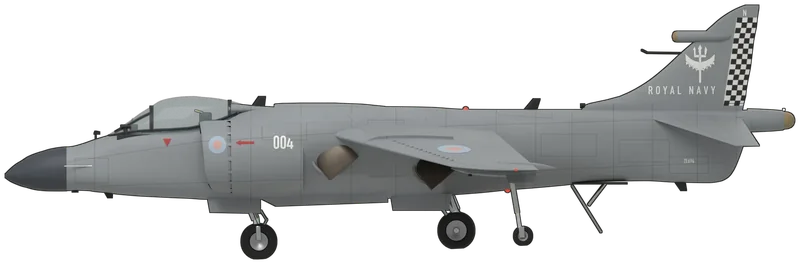 Sea Harrier 14.2 m · model is the later FA2; the war was fought by the FRS.1
 -
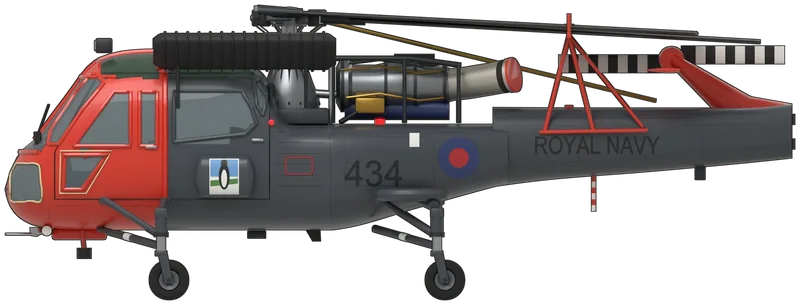 Scout and Wasp 12.3 m
 -
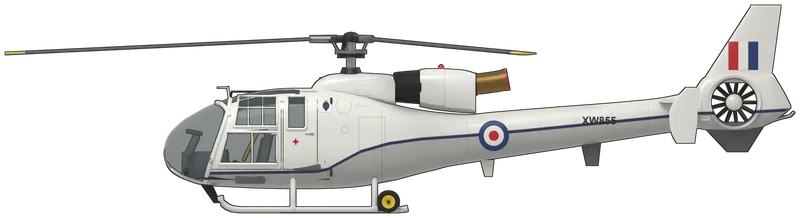 Gazelle 12.0 m
 -
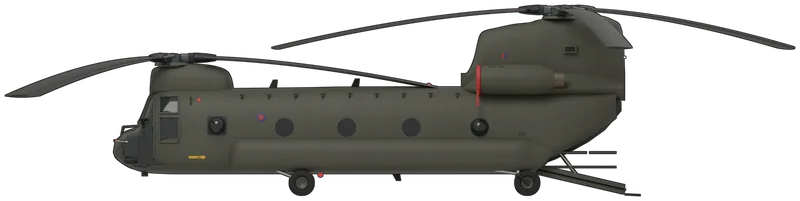 Chinook HC.1 “Bravo November” 15.5 m
 -
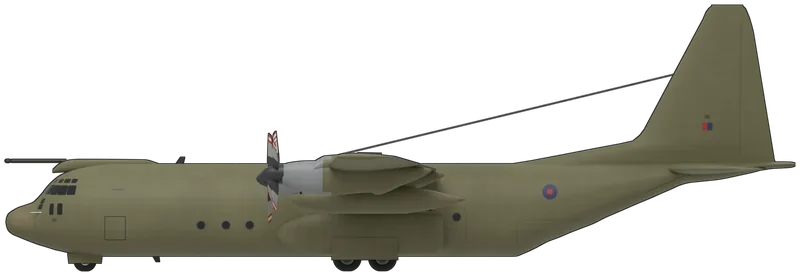 Hercules C.1 34.4 m
 -
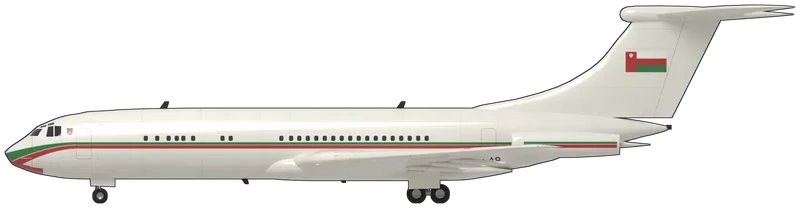 VC10 C.1 48.4 m
 -
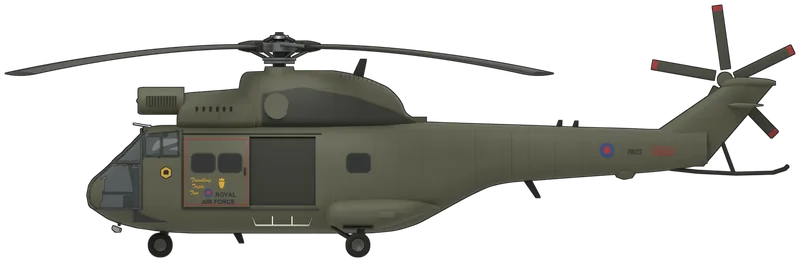 Puma (Argentine Army) 18.2 m
 -
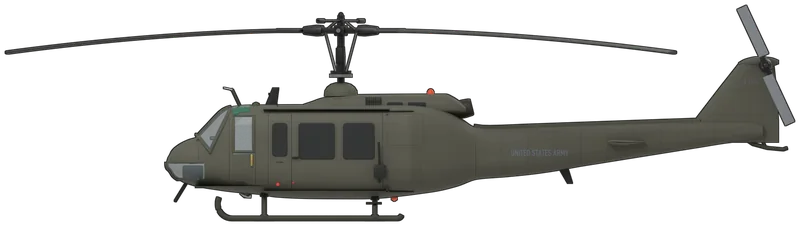 UH-1H (Argentine Army) 17.4 m
Helicopter spans are main-rotor diameters.
Wideawake, Ascension Island, May 1982
live 3D, true scale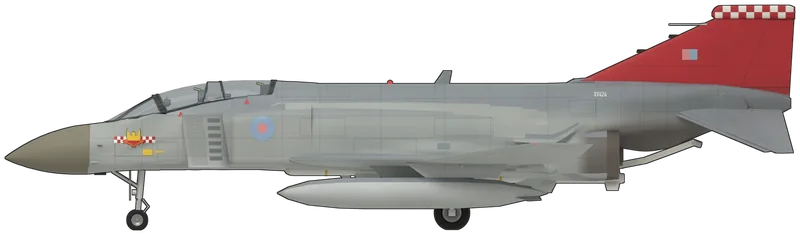
Drag to walk round · pinch or buttons to zoom
- Vulcan B.2 30.5 m long, 33.8 m span
- Victor K.2 35.1 m long, 36.6 m span
- Nimrod MR.2 39.3 m long, 35.0 m span
- Phantom FGR.2, 29 Squadron, guarding the island 17.6 m long, 11.7 m span
- Sea King HAR.3, 202 Squadron 22.2 m long, 18.9 m rotor
- Harrier GR.3, staging south 14.3 m long, 7.7 m span
- Chinook HC.1 “Bravo November” 15.5 m long, 18.3 m rotor
- Hercules C.1 34.4 m long, 40.4 m span
- VC10 C.1 48.4 m long, 44.6 m span
Fourteen Victor tankers were based at Wideawake by the end of April 1982, out of 23 in RAF service.
Where to see them
in British museums- Harrier family24 museums
Royal Air Force Museum London · IWM Duxford · Solent Sky · Gatwick Aviation Museum · Tangmere Military Aviation Museum · Fleet Air Arm Museum · Boscombe Down Aviation Collection · Aerospace Bristol · Royal Air Force Museum Midlands · Midland Air Museum · Newark Air Museum · Yorkshire Air Museum · South Wales Aviation Museum · Ulster Aviation Society (Maze Long Kesh) · Brooklands Museum · Solway Aviation Museum · National Museum Of Flight · City of Norwich Aviation Museum · Bentwaters Cold War Museum · Farnborough Air Sciences Trust Museum · Wings Aviation Museum · Hucknall Flight Test Museum · South Yorkshire Aircraft Museum · Airworld Aviation Museum
- Avro Vulcan19 museums
Royal Air Force Museum London · IWM Duxford · Vulcan Restoration Trust (XL426), Southend · Bournemouth Aviation Museum · Royal Air Force Museum Midlands · Midland Air Museum · Newark Air Museum · Avro Heritage Museum · Solway Aviation Museum · National Museum Of Flight · Morayvia · City of Norwich Aviation Museum · RAF Manston History Museum · Jet Age Museum · East Midlands Aeropark · North East Land, Sea and Air Museums · South Yorkshire Aircraft Museum · The Vulcan Experience (XH558) · Stoneykirk Aviation Museum
- Hawker Siddeley Nimrod12 museums
Royal Air Force Museum Midlands · Yorkshire Air Museum · Avro Heritage Museum · Runway Visitor Park, Manchester Airport · Morayvia · Boscombe Down Aviation Collection · South Wales Aviation Museum · National Museum Of Flight · City of Norwich Aviation Museum · RAF Manston History Museum · East Midlands Aeropark · South Yorkshire Aircraft Museum
- Westland Sea King13 museums
Royal Air Force Museum London · IWM Duxford · Fleet Air Arm Museum · South Wales Aviation Museum · Morayvia · The Helicopter Museum · Solway Aviation Museum · Montrose Air Station Museum · Ulster Aviation Society (Maze Long Kesh) · Cornwall at War Museum, Davidstow · East Midlands Aeropark · North East Land, Sea and Air Museums · South Yorkshire Aircraft Museum
- Westland Wessex16 museums
Royal Air Force Museum London · IWM Duxford · Tangmere Military Aviation Museum · Bournemouth Aviation Museum · Fleet Air Arm Museum · The Helicopter Museum · Newark Air Museum · South Wales Aviation Museum · Morayvia · Ulster Aviation Society (Maze Long Kesh) · Royal Air Force Museum Midlands · City of Norwich Aviation Museum · RAF Manston History Museum · East Midlands Aeropark · Thorpe Camp Visitor Centre · South Yorkshire Aircraft Museum
- Westland Lynx11 museums
Fleet Air Arm Museum · The Helicopter Museum · Newark Air Museum · South Wales Aviation Museum · Ulster Aviation Society (Maze Long Kesh) · IWM Duxford · Bournemouth Aviation Museum · Army Flying Museum · Farnborough Air Sciences Trust Museum · East Midlands Aeropark · South Yorkshire Aircraft Museum
- Westland Scout & Wasp10 museums
IWM Duxford · Bournemouth Aviation Museum · The Helicopter Museum · Ulster Aviation Society (Maze Long Kesh) · Fleet Air Arm Museum · Boscombe Down Aviation Collection · Midland Air Museum · Army Flying Museum · Farnborough Air Sciences Trust Museum · South Yorkshire Aircraft Museum
- Aérospatiale Gazelle & Alouette10 museums
Newark Air Museum · Ulster Aviation Society (Maze Long Kesh) · The Helicopter Museum · Fleet Air Arm Museum · Boscombe Down Aviation Collection · Royal Air Force Museum Midlands · Army Flying Museum · East Midlands Aeropark · North East Land, Sea and Air Museums · South Yorkshire Aircraft Museum
- English Electric Canberra32 museums
Royal Air Force Museum London · Norfolk and Suffolk Aviation Museum · Gatwick Aviation Museum · Tangmere Military Aviation Museum · Bournemouth Aviation Museum · Boscombe Down Aviation Collection · Royal Air Force Museum Midlands · Midland Air Museum · Newark Air Museum · Yorkshire Air Museum · Avro Heritage Museum · Solway Aviation Museum · South Wales Aviation Museum · Ulster Aviation Society (Maze Long Kesh) · Lincolnshire Aviation Heritage Centre · National Museum Of Flight · Morayvia · City of Norwich Aviation Museum · Suffolk Aviation Heritage Museum · Farnborough Air Sciences Trust Museum · RAF Manston History Museum · Wings Aviation Museum · Romney Marsh Wartime Collection · Robertsbridge Aviation Society · East Midlands Aeropark · RAF Defford Museum · Rolls Royce Heritage Trust · North East Land, Sea and Air Museums · South Yorkshire Aircraft Museum · Hooton Park Hangars · The Vulcan Experience (XH558) · Stoneykirk Aviation Museum
Several survivors are genuine Falklands veterans: Sea Harrier XZ499 at Yeovilton, Harrier GR.3 XZ133 at Duxford, Vulcans XM598 at Cosford and XM607 at Waddington, and captured Pucarás brought back as trophies.
Sources
- naval-history.net, Falklands War 1982, Part 54: Argentine aircraft lost
- naval-history.net, Falklands War 1982, Part 53: British aircraft lost
- naval-history.net, Falklands War 1982, Part 52: British ships lost and damaged
- Falklands War order of battle: Argentine air forces (Wikipedia)
- Falklands War order of battle: British air forces (Wikipedia)
- Operation Black Buck (Wikipedia)
- SS Atlantic Conveyor (Wikipedia)
- British Aerospace Sea Harrier (Wikipedia)
- Falklands War (Wikipedia): casualties
- Lawrence Freedman, The Official History of the Falklands Campaign, 2 vols (Routledge, 2005)
- Rodney Burden, Michael Draper, Douglas Rough, Colin Smith, David Wilton, Falklands: The Air War (Arms & Armour, 1986)
- Jeffrey Ethell and Alfred Price, Air War South Atlantic (Sidgwick & Jackson, 1983)
- Rowland White, Vulcan 607 (Bantam, 2006)
- John Pike, The Falkland Islands Conflict, 1982: Air Defense of the Fleet (GlobalSecurity.org)
- Metal Wings: Sea Harrier FRS.1 data
- Dassault Mirage III (Wikipedia): specifications
- Clarín, interview with Admiral Sandy Woodward, 3 April 2007
Photographs
- Sea Harrier FRS.1s of 800 Naval Air Squadron coming aboard a carrier in October — US Navy, Public domain · source
- An A-4C Skyhawk of IV Brigada Aérea at Mendoza on 24 May 1982. The Skyhawks flew — US Navy (National Museum of Naval Aviation), Public domain · source
- Argentine Navy Super Étendards 3-A-202 and 3-A-204 in 1982. Five aircraft and fi — Radiolandia 2000 (Argentina, 1982), Public domain · source
- A Pucará left wrecked on Pebble Island, photographed after the war. The SAS raid — Ken Griffiths, CC BY-SA 3.0 · source
- Stanley airfield from an American KH-9 Hexagon reconnaissance satellite on 13 Ju — US National Reconnaissance Office / USGS, Public domain · source
- Vulcan XM598 at the RAF Museum, Cosford. She was the primary aircraft for Black — Alan Wilson, CC BY-SA 2.0 · source
- Atlantic Conveyor approaching the Falklands, about 19 May 1982, photographed fro — DM Gerard, CC BY-SA 2.5 · source
Figures are drawn from the sources above; where they disagree the most widely cited figure is used and the range is given in the notes. Side profiles and 3D models are the gazetteer’s own procedural models, drawn to scale from published dimensions. Spotted an error? Tell us.