AP 118 · No. 10 Section II · Aircraft Collection 05 / 12

Aircraft/Collections/Americans in Britain

Eighth Air Force station · 1943–45

The Americans in wartime Britain

Flying Fortresses and Liberators on the hardstands, Mustangs and Thunderbolts in the circuit: the American air forces that filled East Anglia from 1942.

8
Aircraft
1942–45
Period
13
UK museums hold them

The diorama

Diorama · 1942–45

Loading the airfield…

A wartime airfield in East Anglia of the kind handed over to the United States Army Air Forces: three concrete runways, a perimeter track, hardstandings, T2 hangars and the control tower. Bombers, fighters and transports share the circuit.

Drag to look around · ctrl + scroll to zoom · pick an aircraft to follow it

From the summer of 1942 the United States Army Air Forces moved into Britain in enormous numbers. The Eighth Air Force took over dozens of airfields in Norfolk, Suffolk, Cambridgeshire and Essex, many of them built for it, and by 1944 it could send more than a thousand heavy bombers against Germany in a single day.

The Americans bombed by day, trusting to tight formations of B-17 Flying Fortresses and B-24 Liberators and their heavy defensive guns. Losses were severe until long-range escorts arrived: first the P-47 Thunderbolt, then the Merlin-engined P-51 Mustang, which could fly all the way to Berlin and back. The Ninth Air Force brought fighter-bombers and C-47 transports for D-Day, and RAF squadrons flew American types of their own, the B-25 Mitchell among them.

Some 26,000 men of the Eighth Air Force were killed. Their memorials, chapels and control towers still stand across East Anglia, and the American Air Museum at Duxford tells their story.

To scale

The collection side by side

Every aircraft drawn at the same scale, so a Flying Fortress and a Argus can be compared at a glance.

  • Boeing B-17 Flying Fortress side profile, to scaleFlying Fortress · 22.66 m
  • Consolidated B-24 Liberator side profile, to scaleLiberator · 20.6 m
  • North American B-25 Mitchell side profile, to scaleMitchell · 16.13 m
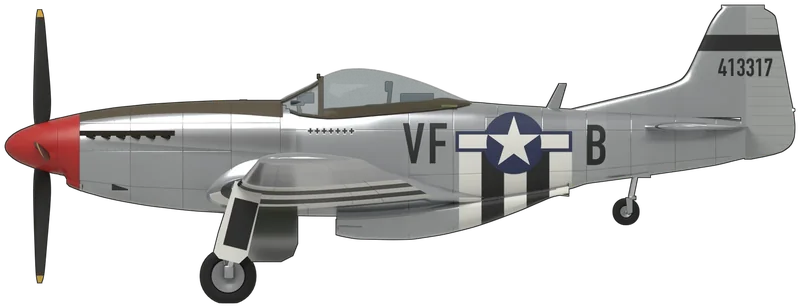
  • North American P-51 Mustang side profile, to scaleMustang · 9.83 m
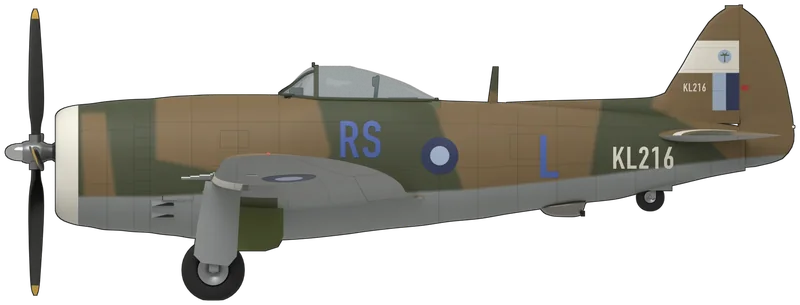
  • Republic P-47 Thunderbolt side profile, to scaleThunderbolt · 11.02 m
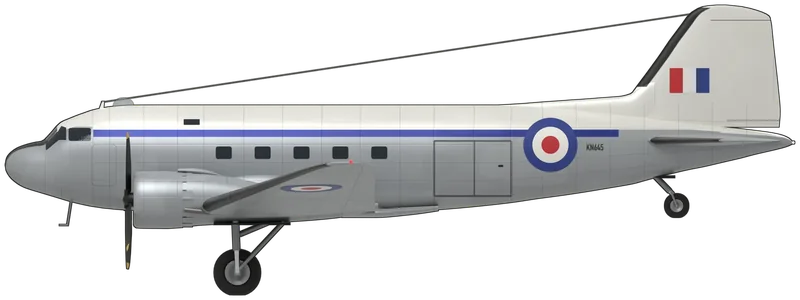
  • Douglas C-47 Dakota side profile, to scaleDakota IV · 19.65 m
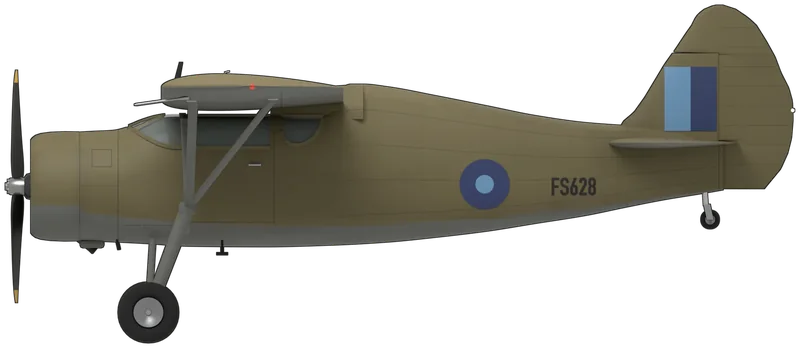
  • Fairchild Argus side profile, to scaleArgus · 7.26 m
  • North American Harvard side profile, to scaleHarvard · 8.84 m

10 m

Profiles

Side, top and front

Each aircraft drawn from its 3D model, painted as one real airframe, with its specification.

Boeing B-17 Flying Fortress

01 · Heavy bomber · B-17G 44-83735, as “Mary Alice”
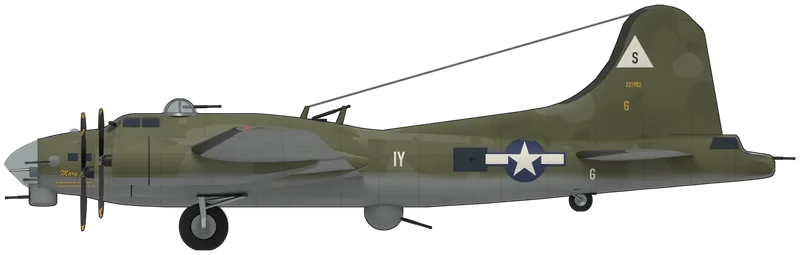
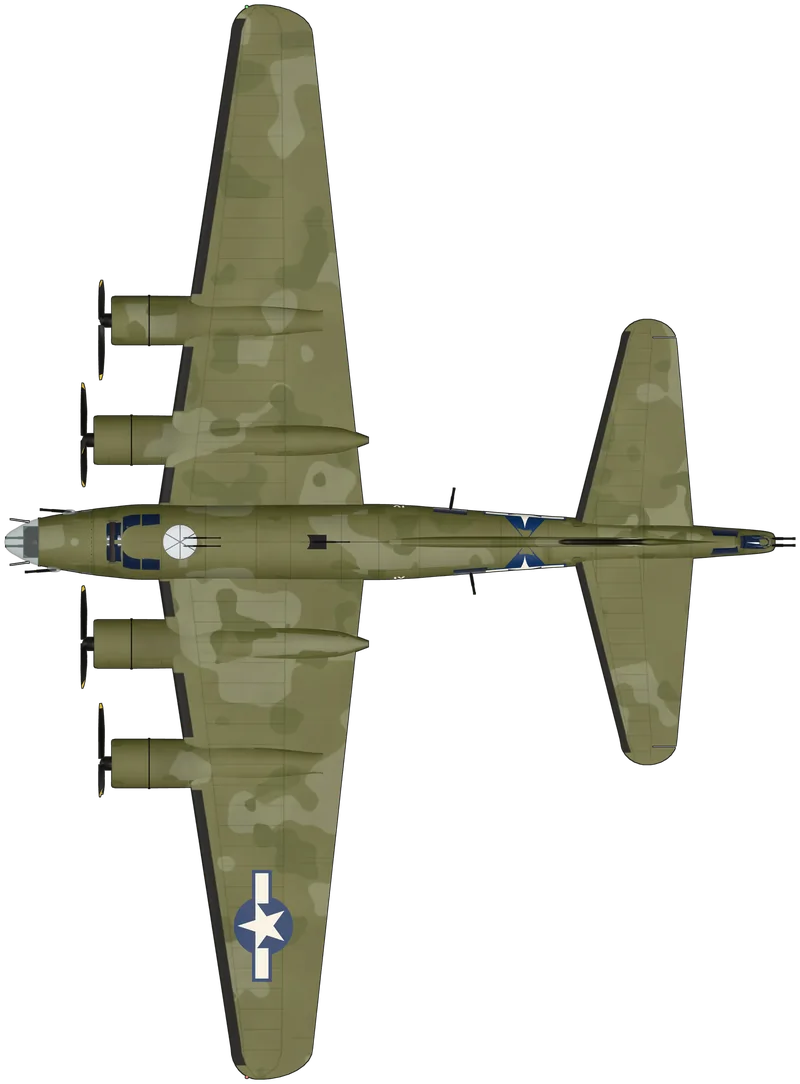
Side view of the Boeing B-17 Flying Fortress, B-17G 44-83735, as “Mary Alice”
Port side
Top view of the Boeing B-17 Flying Fortress, B-17G 44-83735, as “Mary Alice”
Plan, from above
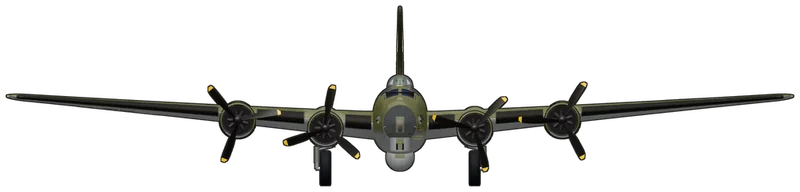
Front view of the Boeing B-17 Flying Fortress, B-17G 44-83735, as “Mary Alice”
Head-on

Boeing’s Model 299 first flew in July 1935, and a reporter’s description of the heavily armed prototype as a “flying fortress” stuck. The B-17 became the bomber with which the US Eighth Air Force set out to bomb Germany by day, in tight formations meant to protect each other with their guns.

A B-17G carried thirteen .50 calibre machine guns and a crew of ten.

IWM Duxford’s B-17G was built by Douglas at Long Beach and delivered in May 1945, too late for the war.

First flight
28 July 1935
Role
Heavy bomber
Maker
Boeing, United States
Engine
4 × Wright R-1820-97 Cyclone turbocharged radials, 1,200 hp each
Crew
10
Wingspan
31.62 m (103 ft 9 in)
Length
22.66 m (74 ft 4 in)
Height
5.82 m (19 ft 1 in)
Top speed
287 mph
Built
12,731
In service
1938–1959

Consolidated B-24 Liberator

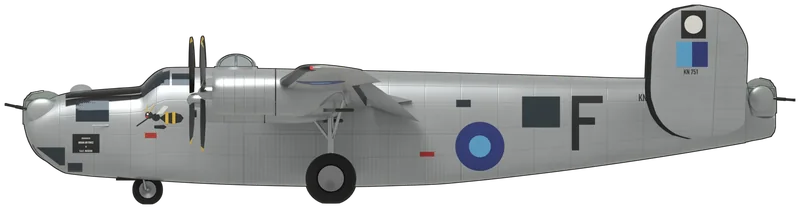
02 · Heavy bomber · Liberator B.VI KN751 “F”
Side view of the Consolidated B-24 Liberator, Liberator B.VI KN751 “F”
Port side
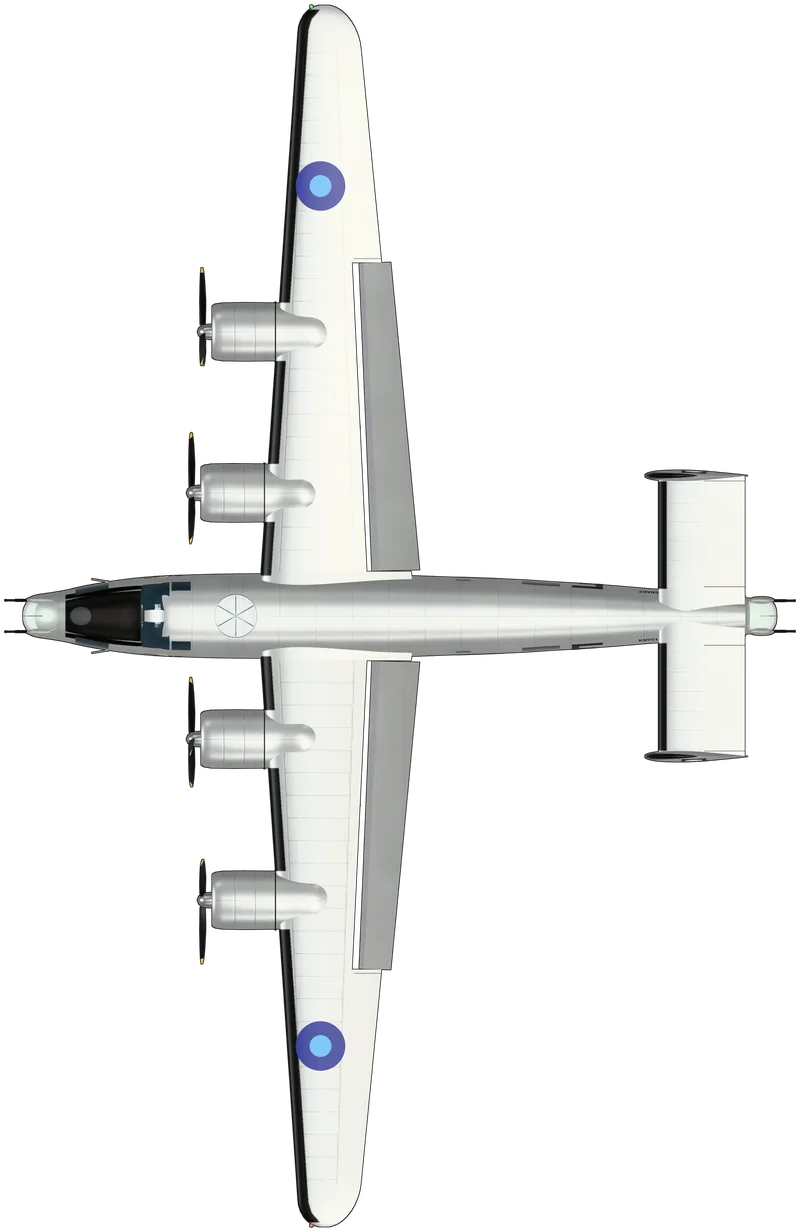
Top view of the Consolidated B-24 Liberator, Liberator B.VI KN751 “F”
Plan, from above
Front view of the Consolidated B-24 Liberator, Liberator B.VI KN751 “F”
Head-on

In 1938 the US Army Air Corps asked Consolidated of San Diego to build the Boeing B-17 under licence. Consolidated proposed a new design of its own instead, built round the long, narrow, high-lift wing devised by the engineer David R. Davis. The Model 32 put that wing high on a deep, slab-sided fuselage with a capacious bomb bay closed by roller-shutter doors, twin oval fins and a tricycle undercarriage, which no previous American heavy bomber had.

At its peak in 1944, Ford’s Willow Run factory was completing a Liberator about every hour.

KN751 was built by Ford at Willow Run in December 1944 as B-24L 44-50206.

First flight
29 December 1939
Role
Heavy bomber
Maker
Consolidated, United States
Engine
4 × Pratt & Whitney R-1830 Twin Wasp turbo-supercharged fourteen-cylinder radials, 1,200 hp each
Crew
8–10
Wingspan
33.53 m (110 ft 0 in)
Length
20.6 m (67 ft 7 in)
Height
5.46 m (17 ft 11 in)
Top speed
290 mph
Built
18,482
In service
1941–1968

North American B-25 Mitchell

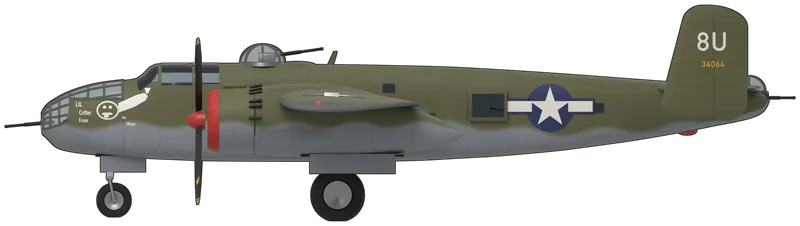
03 · Medium bomber · B-25J-30-NC 44-31171, painted as 43-4064 “Lil Critter From The Moon”
Side view of the North American B-25 Mitchell, B-25J-30-NC 44-31171, painted as 43-4064 “Lil Critter From The Moon”
Port side
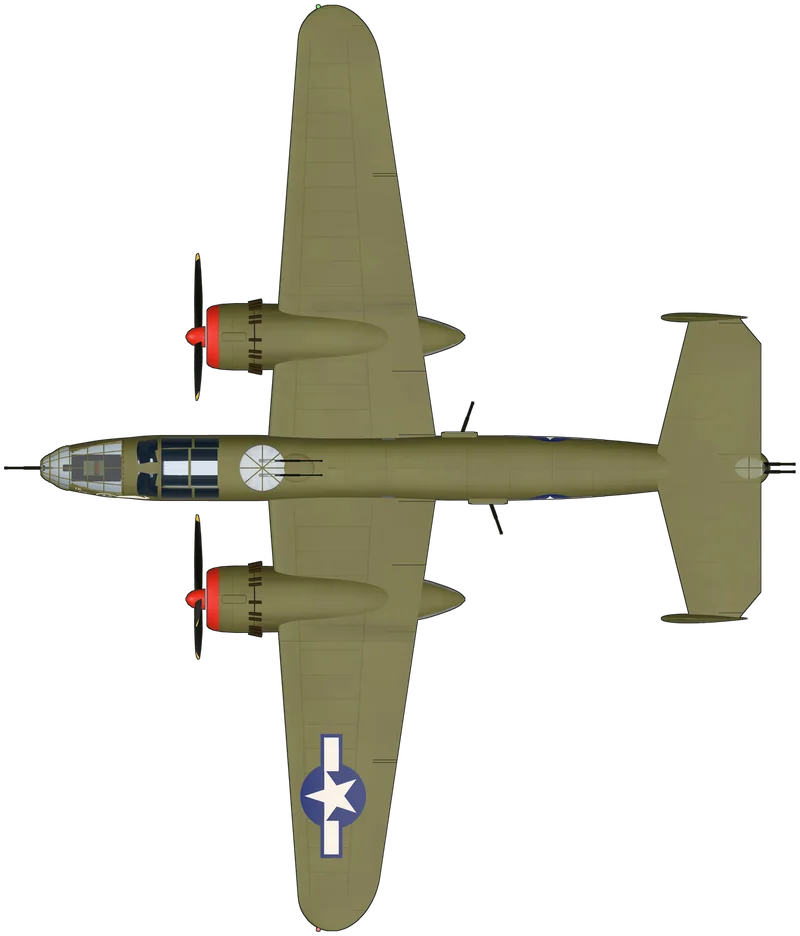
Top view of the North American B-25 Mitchell, B-25J-30-NC 44-31171, painted as 43-4064 “Lil Critter From The Moon”
Plan, from above
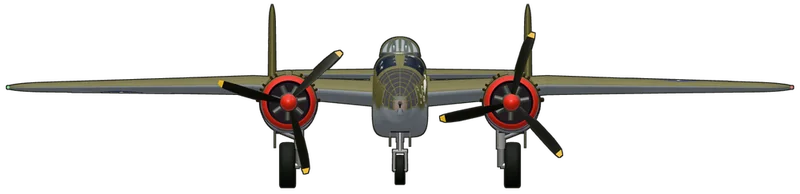
Front view of the North American B-25 Mitchell, B-25J-30-NC 44-31171, painted as 43-4064 “Lil Critter From The Moon”
Head-on

The Mitchell grew out of a US Army Air Corps competition of 1939 for a twin-engined attack bomber. North American’s entry, the NA-40, flew in January 1939 and was lost in a crash that April, but the Army liked the design enough to order a larger, faster development straight off the drawing board in September 1939, without a prototype. The first B-25 flew on 19 August 1940.

Joseph Heller flew sixty missions as a B-25 bombardier with the 340th Bomb Group from Corsica, the experience behind his novel Catch-22.

44-31171 was built at Kansas City as a B-25J-30 and spent its post-war years as a trainer and test aircraft, converted in turn to TB-, EB- and JTB-25J standard.

First flight
19 August 1940
Role
Medium bomber
Maker
North American, United States
Engine
2 × Wright R-2600 Twin Cyclone fourteen-cylinder radials, 1,700 hp each
Crew
6
Wingspan
20.6 m (67 ft 7 in)
Length
16.13 m (52 ft 11 in)
Height
4.98 m (16 ft 4 in)
Top speed
272 mph
Built
9,816
In service
1941–1979

North American P-51 Mustang

04 · Long-range escort fighter · P-51D-30-NA 44-74409, painted as 44-13317 “VF-B”
Side view of the North American P-51 Mustang, P-51D-30-NA 44-74409, painted as 44-13317 “VF-B”
Port side
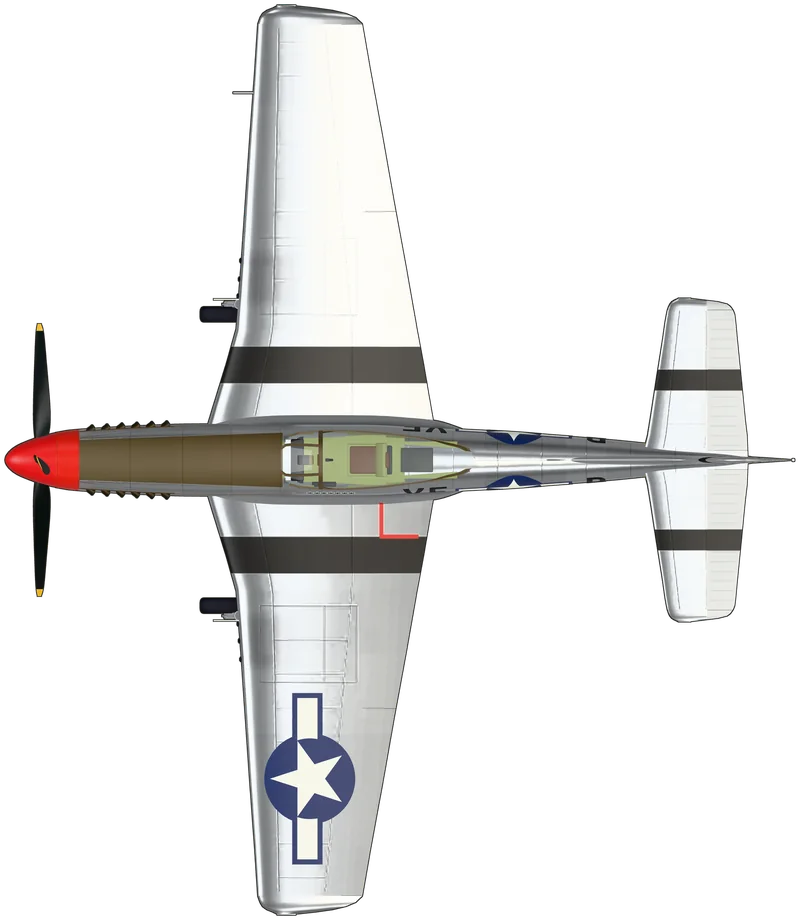
Top view of the North American P-51 Mustang, P-51D-30-NA 44-74409, painted as 44-13317 “VF-B”
Plan, from above
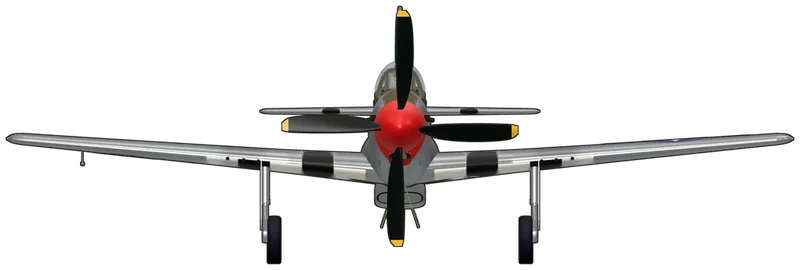
Front view of the North American P-51 Mustang, P-51D-30-NA 44-74409, painted as 44-13317 “VF-B”
Head-on

The Mustang was designed for Britain. In April 1940 the British Purchasing Commission asked North American Aviation of Inglewood, California, to build Curtiss P-40s under licence; the company’s president, James “Dutch” Kindelberger, offered a better fighter of its own instead. Edgar Schmued’s team drew a clean low-winged monoplane with a laminar-flow wing and a radiator set far back under the fuselage, where a carefully shaped duct recovered much of its drag as thrust.

The RAF ordered the Mustang before the prototype had flown, and it was the RAF that named it: the US Army Air Forces adopted the British name.

44-74409 was built at Inglewood in 1945, too late for the war, and served with a USAAF training unit.

First flight
26 October 1940
Role
Long-range escort fighter
Maker
North American, United States
Engine
Packard V-1650-7 Merlin twelve-cylinder liquid-cooled V-12 with two-stage supercharger, 1,490 hp
Crew
1
Wingspan
11.28 m (37 ft 0 in)
Length
9.83 m (32 ft 3 in)
Height
4.08 m (13 ft 5 in)
Top speed
437 mph
Built
15,586
In service
1942–1984

Republic P-47 Thunderbolt

05 · Escort fighter and fighter-bomber · P-47D-40-RA 45-49295, painted as Thunderbolt II KL216 “RS-L”
Side view of the Republic P-47 Thunderbolt, P-47D-40-RA 45-49295, painted as Thunderbolt II KL216 “RS-L”
Port side
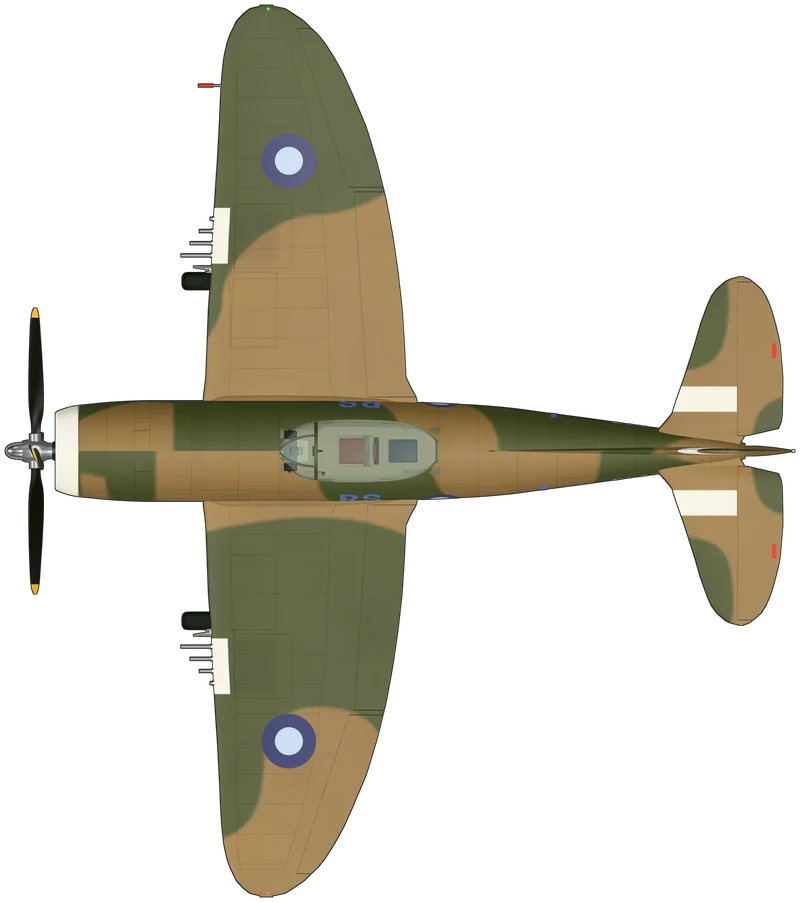
Top view of the Republic P-47 Thunderbolt, P-47D-40-RA 45-49295, painted as Thunderbolt II KL216 “RS-L”
Plan, from above
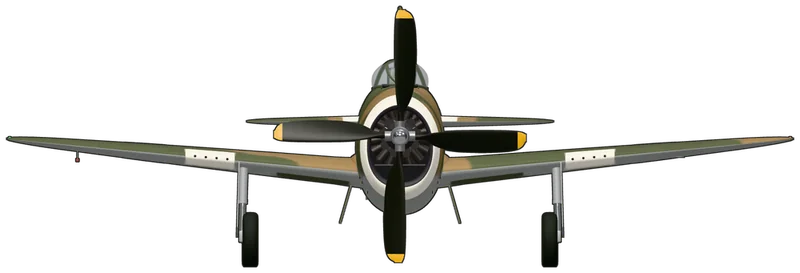
Front view of the Republic P-47 Thunderbolt, P-47D-40-RA 45-49295, painted as Thunderbolt II KL216 “RS-L”
Head-on

Republic Aviation of Farmingdale, Long Island, the former Seversky company, had built a line of radial-engined fighters to the designs of its chief engineer, Alexander Kartveli. In 1940 the US Army Air Corps, impressed by reports from the air war over Europe, asked for something much heavier and better armed. Kartveli designed the largest single-seat fighter yet built around the new Pratt & Whitney R-2800 Double Wasp, with a General Electric turbo-supercharger in the rear fuselage and ducting running the length of the aircraft to feed it, and eight .50 in machine guns in an elliptical wing.

With 15,636 built, more Thunderbolts were made than any other American fighter, before or since.

45-49295 was built at Evansville, Indiana, in 1945 as a P-47D-40, one of the last Thunderbolts made.

First flight
6 May 1941
Role
Escort fighter and fighter-bomber
Maker
Republic, United States
Engine
Pratt & Whitney R-2800-59 Double Wasp eighteen-cylinder air-cooled radial with turbo-supercharger, 2,000 hp (2,535 hp with water injection)
Crew
1
Wingspan
12.43 m (40 ft 9 in)
Length
11.02 m (36 ft 2 in)
Height
4.44 m (14 ft 7 in)
Top speed
433 mph
Built
15,636
In service
1942–1966

Douglas C-47 Dakota

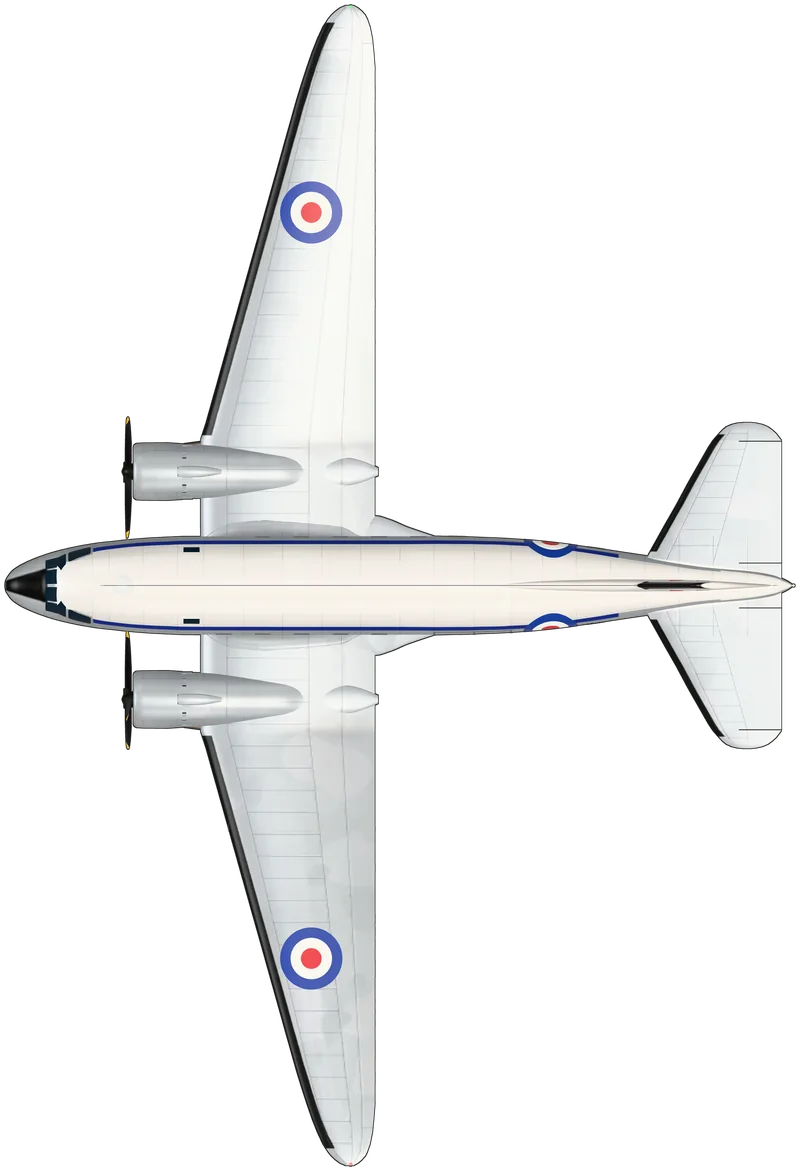
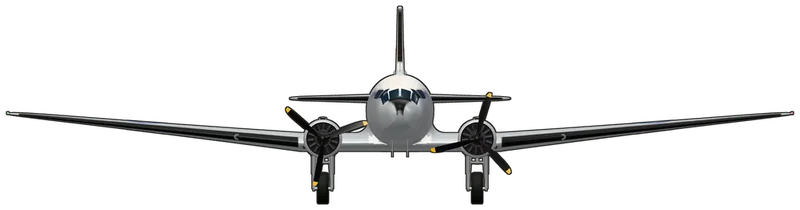
06 · Military transport · Dakota IV KN645
Side view of the Douglas C-47 Dakota, Dakota IV KN645
Port side
Top view of the Douglas C-47 Dakota, Dakota IV KN645
Plan, from above
Front view of the Douglas C-47 Dakota, Dakota IV KN645
Head-on

The Dakota began as an airliner. In 1934 American Airlines asked Douglas for a wider sleeper version of its DC-2, and the Douglas Sleeper Transport flew at Santa Monica on 17 December 1935, 32 years to the day after the Wright brothers’ first flight. Its day-coach sister, the 21-seat DC-3, could cross the United States in about 15 hours with three stops and was the first airliner that could make a profit from passengers alone, without a mail contract.

David Lord’s Victoria Cross was the only one ever won by a member of Transport Command. Over Arnhem on 19 September 1944, with his starboard engine on fire, he held Dakota KG374 low over the drop zone for a second run to deliver the last of its supply panniers, and ordered his crew to jump moments before the wing gave way.

KN645 was built at Oklahoma City as a C-47B, USAAF serial 44-77003, and taken on RAF charge under Lend-Lease on 18 May 1945.

First flight
17 December 1935
Role
Military transport
Maker
Douglas Aircraft Company, United States
Engine
2 × Pratt & Whitney R-1830-90C Twin Wasp fourteen-cylinder radials, 1,200 hp each
Crew
3 or 4 (pilots, navigator and wireless operator), with up to 28 troops or 6,000 lb of freight
Wingspan
28.96 m (95 ft 0 in)
Length
19.65 m (64 ft 6 in)
Height
5.16 m (16 ft 11 in)
Top speed
224 mph
Built
~16,000
In service
1942–1970 (RAF)

Fairchild Argus

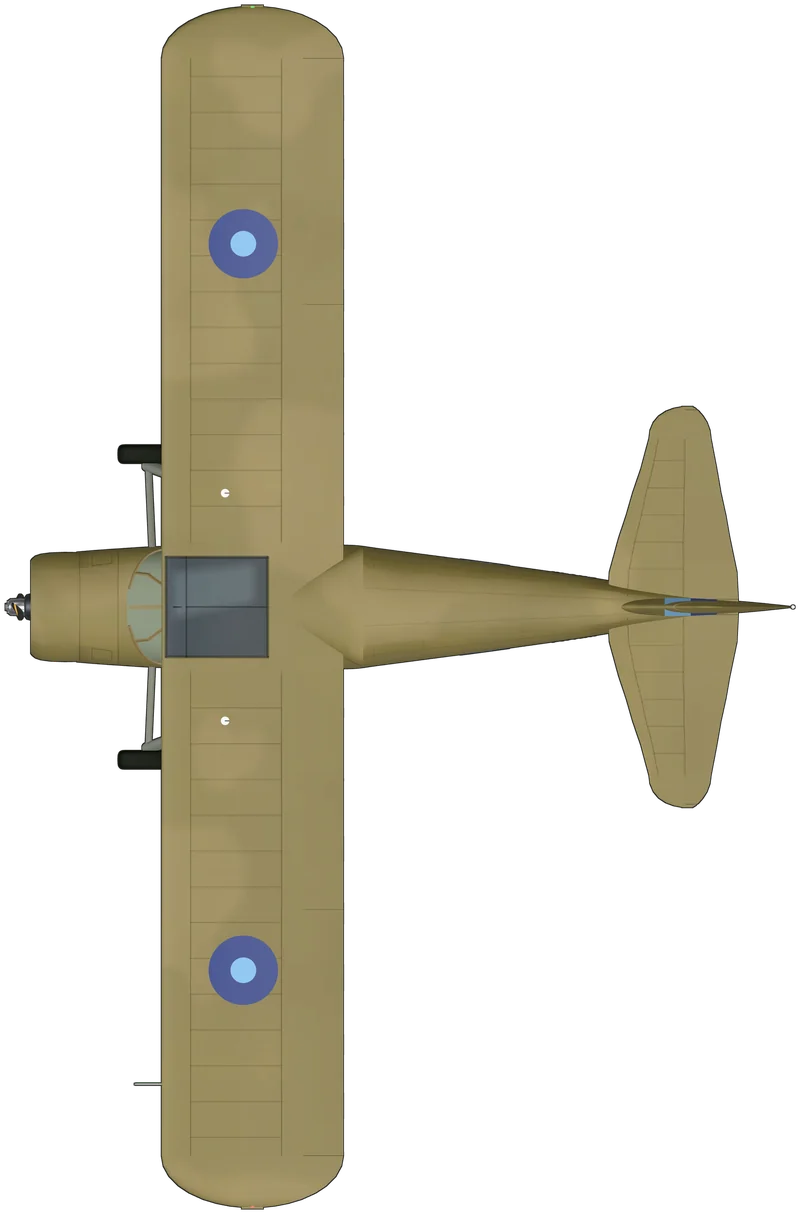
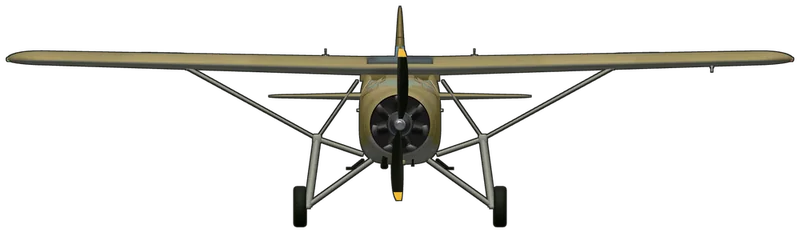
07 · Light communications and ferry-taxi monoplane · Argus II “FS628” (43-14601, G-AIZE)
Side view of the Fairchild Argus, Argus II “FS628” (43-14601, G-AIZE)
Port side
Top view of the Fairchild Argus, Argus II “FS628” (43-14601, G-AIZE)
Plan, from above
Front view of the Fairchild Argus, Argus II “FS628” (43-14601, G-AIZE)
Head-on

The Fairchild 24 began as a two-seat cabin monoplane for private owners, built by Fairchild’s Kreider-Reisner division at Hagerstown, Maryland, and first flown in 1932. It had a strut-braced high wing, a welded steel-tube fuselage covered in fabric, a fixed undercarriage and a roomy, well-glazed cabin, and over the decade it grew into a four-seater offered with either a Warner Scarab radial or a Ranger inverted inline engine. The radial-engined version was the Model 24W.

Air Transport Auxiliary ferry pilots spent much of their working day as passengers: an Argus would drop several of them at a factory to collect new aircraft, then fly to the airfields where they had delivered them to bring them home.

The Cosford Argus was built at Hagerstown in June 1943 as UC-61A c/n 565 and delivered to the US Army Air Forces as 43-14601.

First flight
1932
Role
Light communications and ferry-taxi monoplane
Maker
Fairchild Aircraft, United States
Engine
Warner R-500 Super Scarab seven-cylinder radial, 165 hp
Crew
1 + 3 passengers
Wingspan
11.07 m (36 ft 4 in)
Length
7.26 m (23 ft 10 in)
Height
2.32 m (7 ft 7 in)
Top speed
132 mph
Built
~970
In service
1941–1946

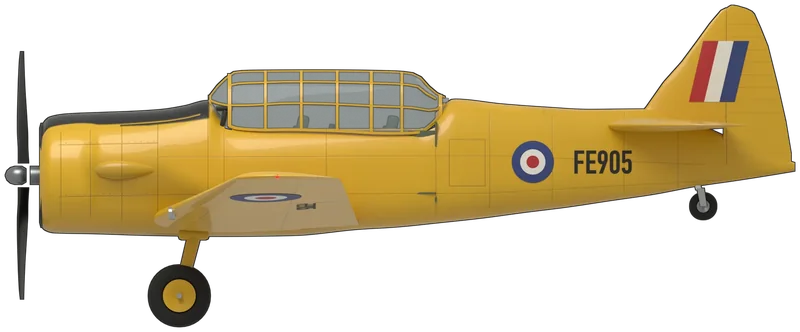
North American Harvard

08 · Advanced trainer · Harvard IIB FE905
Side view of the North American Harvard, Harvard IIB FE905
Port side
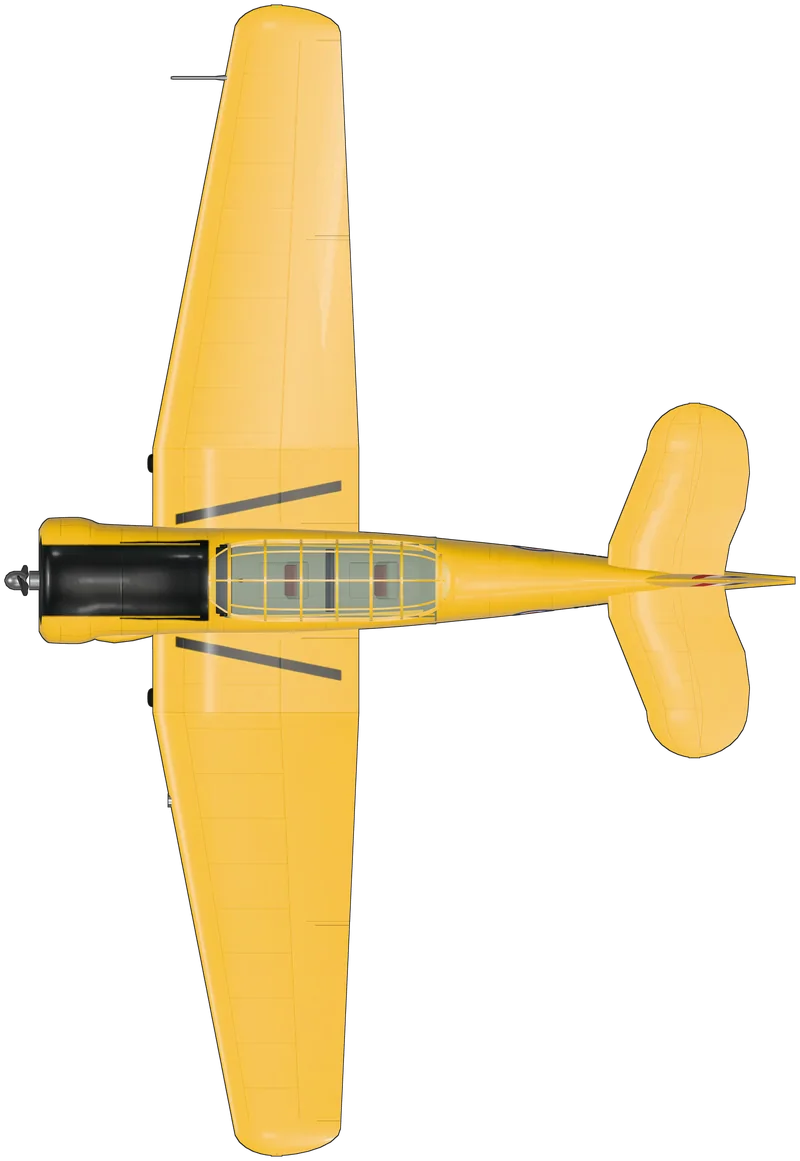
Top view of the North American Harvard, Harvard IIB FE905
Plan, from above
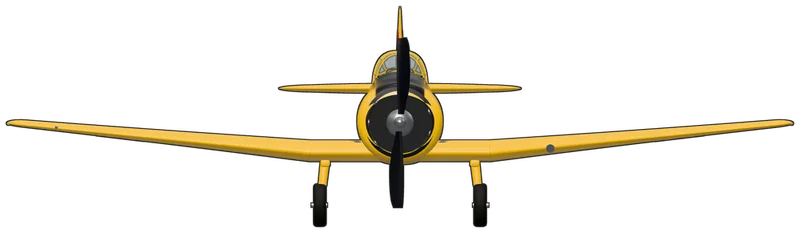
Front view of the North American Harvard, Harvard IIB FE905
Head-on

North American Aviation’s NA-16 first flew on 1 April 1935 and became the pattern for a long line of advanced trainers. A low-wing monoplane with a Wasp radial, a framed greenhouse canopy over two tandem cockpits and a retractable undercarriage, it taught pupils the habits of a fast, heavy fighter before they ever flew one. The RAF ordered it as the Harvard and the first arrived in 1938.

The Harvard’s propeller tips can reach supersonic speed in a dive or at full power, which is what gives the aircraft its distinctive snarl.

FE905 was built by Noorduyn in Montreal in 1943 as a Harvard IIB for the Royal Canadian Air Force.

First flight
1 April 1935
Role
Advanced trainer
Maker
North American Aviation (Noorduyn in Canada), United States
Engine
one Pratt & Whitney R-1340 Wasp nine-cylinder radial, 600 hp
Crew
2
Wingspan
12.81 m (42 ft 0 in)
Length
8.84 m (29 ft 0 in)
Height
3.57 m (11 ft 9 in)
Top speed
208 mph
Built
~20,000 (family)
In service
1938–1950s

Compared

Specifications at a glance

Span, length, speed and production for every aircraft on this page.

Specifications compared
AircraftFirst flewRoleSpanLengthTop speedBuiltUK museums
Boeing B-17 Flying Fortress1935Heavy bomber31.62 m22.66 m287 mph12,7312
Consolidated B-24 Liberator1939Heavy bomber33.53 m20.6 m290 mph18,4822
North American B-25 Mitchell1940Medium bomber20.6 m16.13 m272 mph9,8162
North American P-51 Mustang1940Long-range escort fighter11.28 m9.83 m437 mph15,5863
Republic P-47 Thunderbolt1941Escort fighter and fighter-bomber12.43 m11.02 m433 mph15,6362
Douglas C-47 Dakota1935Military transport28.96 m19.65 m224 mph~16,0005
Fairchild Argus1932Light communications and ferry-taxi monoplane11.07 m7.26 m132 mph~9704
North American Harvard1935Advanced trainer12.81 m8.84 m208 mph~20,000 (family)6

Questions

Asked and answered

Where were the American airfields in Britain?

Mostly in East Anglia: Norfolk, Suffolk, Cambridgeshire and Essex, with fighter and transport bases further afield. Many control towers, such as Thorpe Abbotts and Rougham, are now museums.

What was the Mighty Eighth?

The nickname of the US Eighth Air Force, the strategic bombing force based in England from 1942 to 1945.

Which was built in greater numbers, the B-17 or the B-24?

The B-24 Liberator: more than 18,000 were built, making it the most-produced American military aircraft of all. About 12,700 B-17s were built.

More dioramas

Other collections

The models and drawings are procedural interpretations built from published dimensions, three-view drawings and photographs of each airframe, and the airfield is a compressed impression of its period, not a plan of a real station. Treat the museum aircraft as the reference.