AP 118 · No. 10 Section II · Aircraft Collection 04 / 12

Aircraft/Collections/Bomber Command

Heavy bomber station · 1943–45

Bomber Command at war

Concrete runways laid in an A, T2 hangars, Nissen huts and dispersals round the perimeter track: the bomber airfields that covered Lincolnshire and East Anglia.

7
Aircraft
1939–45
Period
14
UK museums hold them

The diorama

Diorama · 1939–45

Loading the airfield…

A Class A bomber airfield of 1943: concrete runways in the classic A pattern, a perimeter track with hardstandings, steel T2 hangars, the watch office and rows of Nissen huts. The heavies taxi out one after another, and the runway is never used by two aircraft at once.

Drag to look around · ctrl + scroll to zoom · pick an aircraft to follow it

Bomber Command was the only British force able to strike at Germany itself for most of the war. It began in 1939 with Blenheims, Hampdens, Whitleys and Wellingtons, aircraft too small and too few for the task, and learned at terrible cost that unescorted bombers could not survive by day. It turned to night bombing, and then to the four-engined heavies: the Stirling, the Halifax and above all the Lancaster.

To house them, hundreds of new airfields were built, many in Lincolnshire and East Anglia. The wartime standard, the Class A airfield, had three concrete runways laid in an A, a perimeter track linking dozens of dispersed hardstandings, two or three T2 hangars and a watch office, with the crews living in Nissen huts scattered across the surrounding farmland.

The Mosquito, built largely of wood, could outrun most fighters and became the most versatile aircraft of the war, marking targets for the Pathfinders and bombing Berlin with little loss. Of some 125,000 men who served in Bomber Command, more than 55,000 were killed.

To scale

The collection side by side

Every aircraft drawn at the same scale, so a Halifax and a Oxford can be compared at a glance.

  • Avro Lancaster side profile, to scaleLancaster · 21.11 m
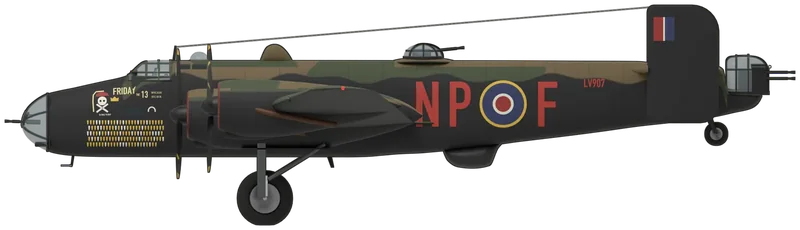
  • Handley Page Halifax side profile, to scaleHalifax · 21.82 m
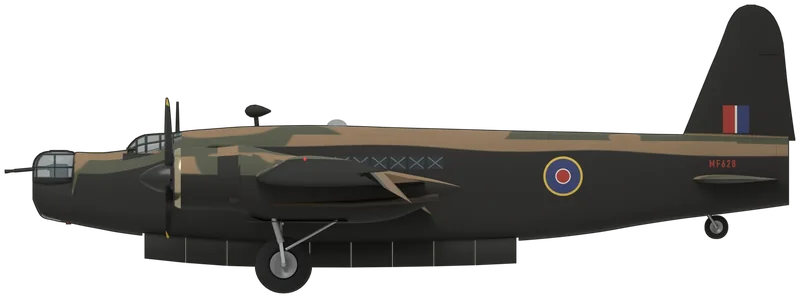
  • Vickers Wellington side profile, to scaleWellington · 19.68 m
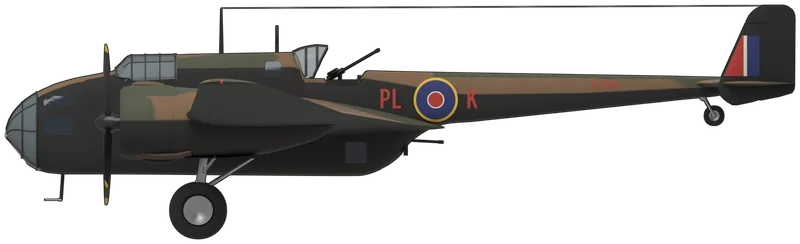
  • Handley Page Hampden side profile, to scaleHampden · 16.33 m
  • de Havilland Mosquito side profile, to scaleMosquito B.35 · 12.34 m
  • Bristol Blenheim side profile, to scaleBlenheim Mk IV · 12.98 m
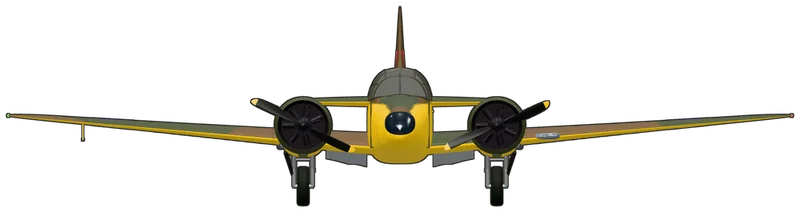
  • Airspeed Oxford side profile, to scaleOxford · 10.52 m

10 m

Profiles

Side, top and front

Each aircraft drawn from its 3D model, painted as one real airframe, with its specification.

Avro Lancaster

01 · Heavy bomber · B.I R5868 “S for Sugar”
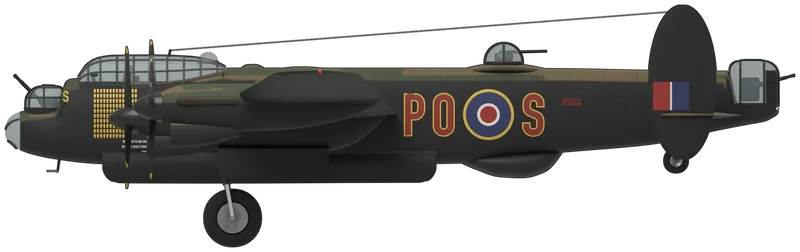
Side view of the Avro Lancaster, B.I R5868 “S for Sugar”
Port side
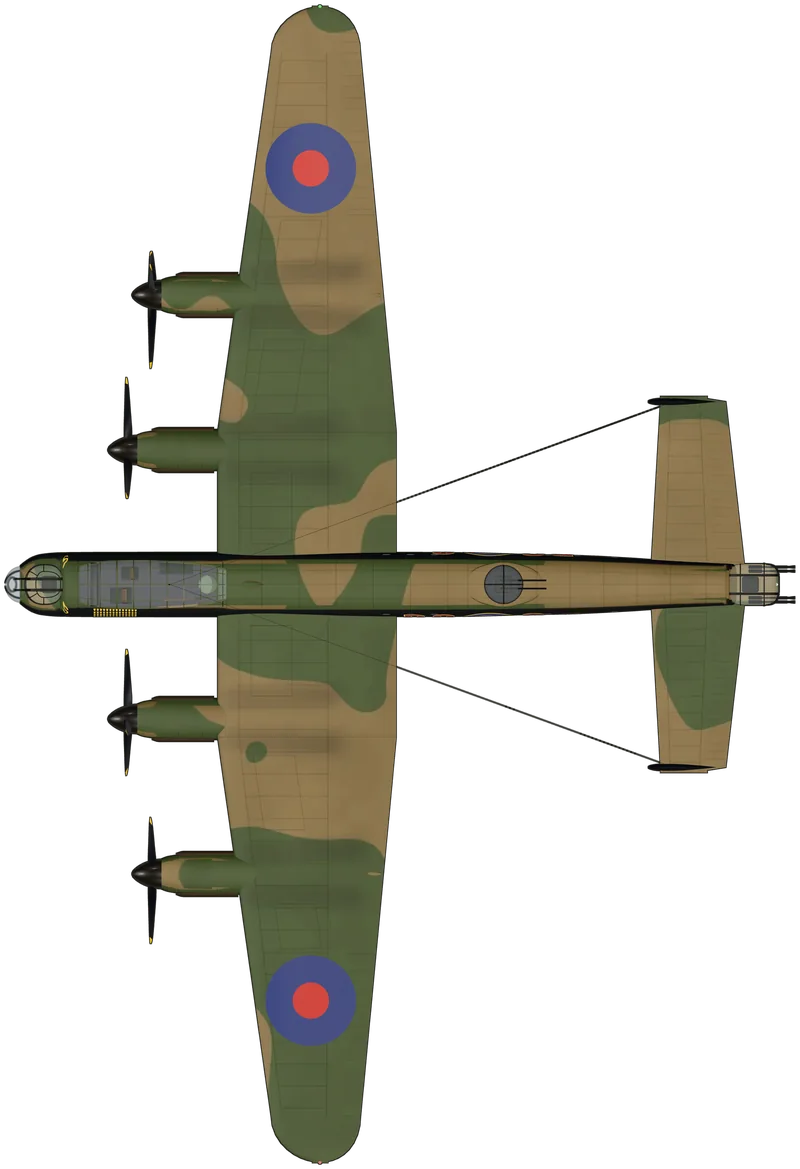
Top view of the Avro Lancaster, B.I R5868 “S for Sugar”
Plan, from above
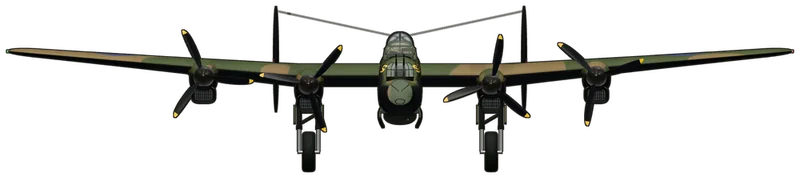
Front view of the Avro Lancaster, B.I R5868 “S for Sugar”
Head-on

The Lancaster rose from a failure. Avro’s twin-engined Manchester was let down by its Rolls-Royce Vulture engines, so Roy Chadwick’s team gave it a longer wing and four Merlins. The prototype flew in January 1941, and the Lancaster became Bomber Command’s most successful heavy bomber.

R5868’s nose carries 137 bomb symbols, one for each operational sortie it flew.

R5868 was built by Metropolitan-Vickers in 1942 and flew 68 sorties with No. 83 Squadron as OL-Q before joining No. 467 Squadron RAAF at Bottesford as PO-S, “S for Sugar”.

First flight
9 January 1941
Role
Heavy bomber
Maker
Avro, Britain
Engine
4 × Rolls-Royce Merlin XX/22 V-12s, 1,280 hp each
Crew
7
Wingspan
31.09 m (102 ft 0 in)
Length
21.11 m (69 ft 3 in)
Height
5.94 m (19 ft 6 in)
Top speed
282 mph
Built
7,377
In service
1942–1956

Handley Page Halifax

02 · Heavy bomber · Halifax B.III “Friday the 13th”
Side view of the Handley Page Halifax, Halifax B.III “Friday the 13th”
Port side
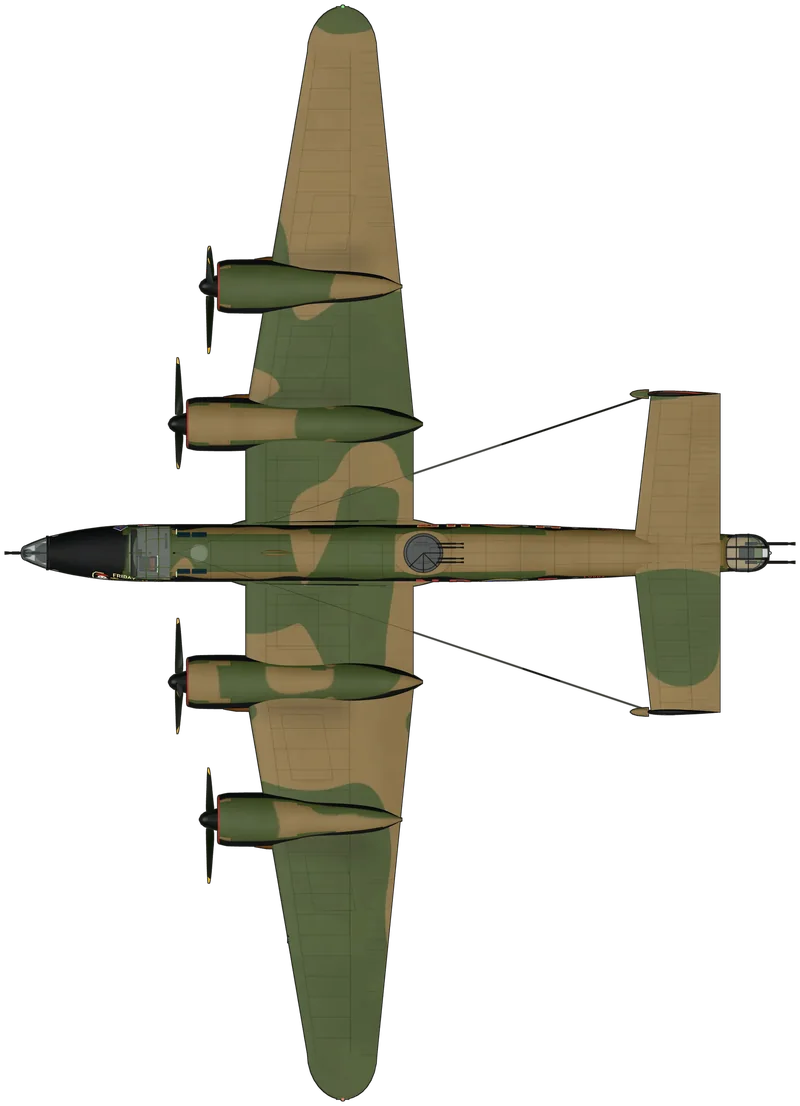
Top view of the Handley Page Halifax, Halifax B.III “Friday the 13th”
Plan, from above
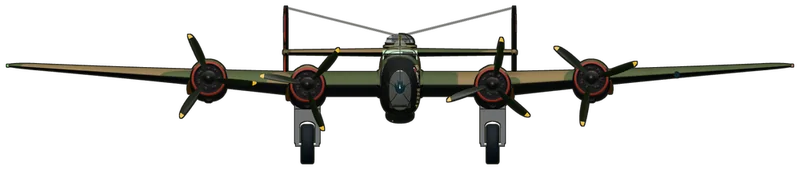
Front view of the Handley Page Halifax, Halifax B.III “Friday the 13th”
Head-on

The Halifax began as Handley Page’s design to specification P.13/36 for a twin-engined bomber powered by the Rolls-Royce Vulture. When it became clear that the Vulture would be late and unreliable, the design was enlarged to take four Rolls-Royce Merlins instead. The prototype, L7244, first flew from Bicester on 25 October 1939, and the first Halifaxes reached No. 35 Squadron at Leeming in November 1940.

The Halifax was the only aircraft that could tow the General Aircraft Hamilcar, the glider that carried a light tank, on operations.

The Yorkshire Air Museum’s Halifax was rebuilt by its volunteers at Elvington, the wartime home of the two French Halifax squadrons.

First flight
25 October 1939
Role
Heavy bomber
Maker
Handley Page, Britain
Engine
4 × Bristol Hercules XVI fourteen-cylinder sleeve-valve radials, 1,615 hp each
Crew
7
Wingspan
31.75 m (104 ft 2 in)
Length
21.82 m (71 ft 7 in)
Height
6.32 m (20 ft 9 in)
Top speed
282 mph
Built
6,176
In service
1940–1952

Vickers Wellington

03 · Medium bomber · Wellington B.X MF628
Side view of the Vickers Wellington, Wellington B.X MF628
Port side
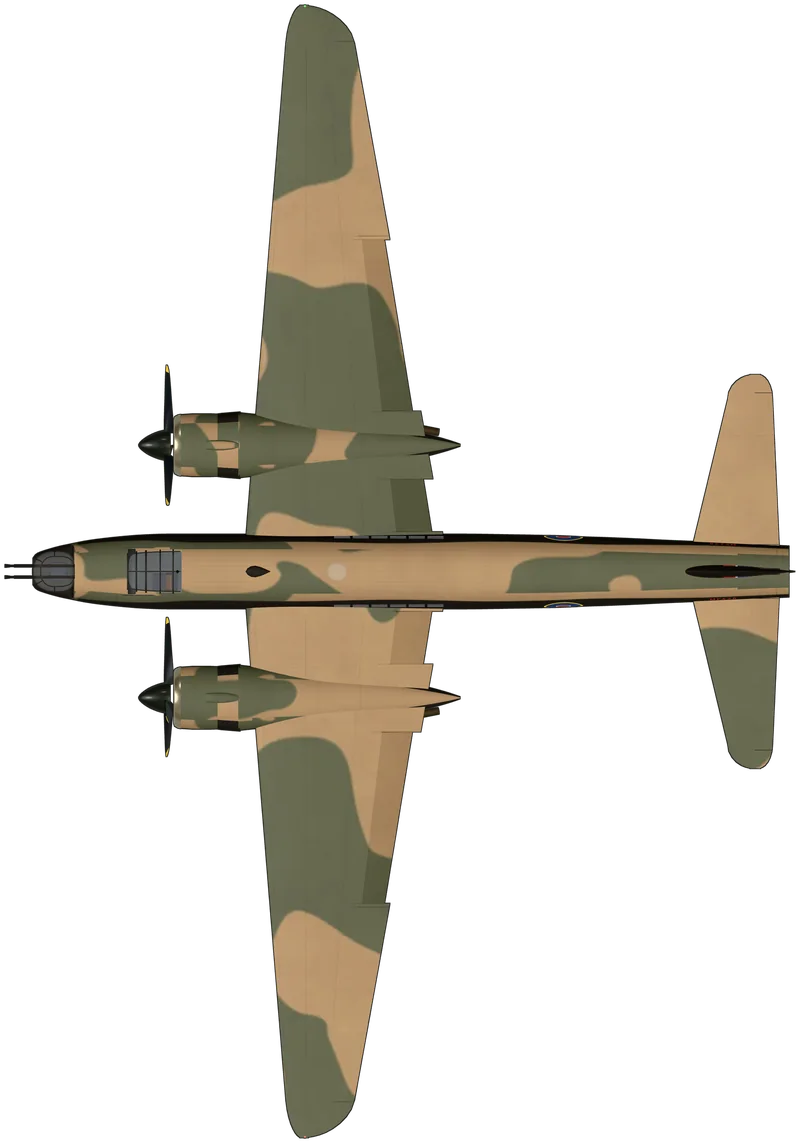
Top view of the Vickers Wellington, Wellington B.X MF628
Plan, from above
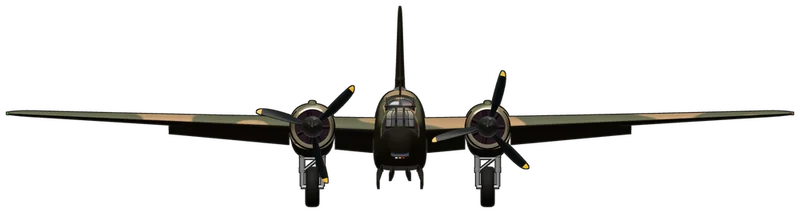
Front view of the Vickers Wellington, Wellington B.X MF628
Head-on

The Wellington was designed at Weybridge to Air Ministry specification B.9/32 for a twin-engined day bomber. Its structure came from Barnes Wallis, who had used geodetic construction on the R100 airship and the Wellesley bomber: a lattice of curved light-alloy members crossing each other in a basket weave, so that the loads in one member were balanced by those in its neighbours, all covered in doped fabric. The result was light, roomy and immensely strong.

Its crews called the Wellington the “Wimpy”, after J. Wellington Wimpy, the hamburger-loving friend of Popeye in the cartoons.

MF628 was built by Vickers-Armstrongs at Blackpool and first flew there on 9 May 1944, and two days later it went into store at No. 18 Maintenance Unit at Tinwald Downs.

First flight
15 June 1936
Role
Medium bomber
Maker
Vickers-Armstrongs, Britain
Engine
2 × Bristol Hercules XVI fourteen-cylinder sleeve-valve radials, 1,675 hp each
Crew
6
Wingspan
26.26 m (86 ft 2 in)
Length
19.68 m (64 ft 7 in)
Height
5.31 m (17 ft 5 in)
Top speed
235 mph
Built
11,461
In service
1938–1953

Handley Page Hampden

04 · Medium bomber and torpedo bomber · Hampden TB.I P1344
Side view of the Handley Page Hampden, Hampden TB.I P1344
Port side
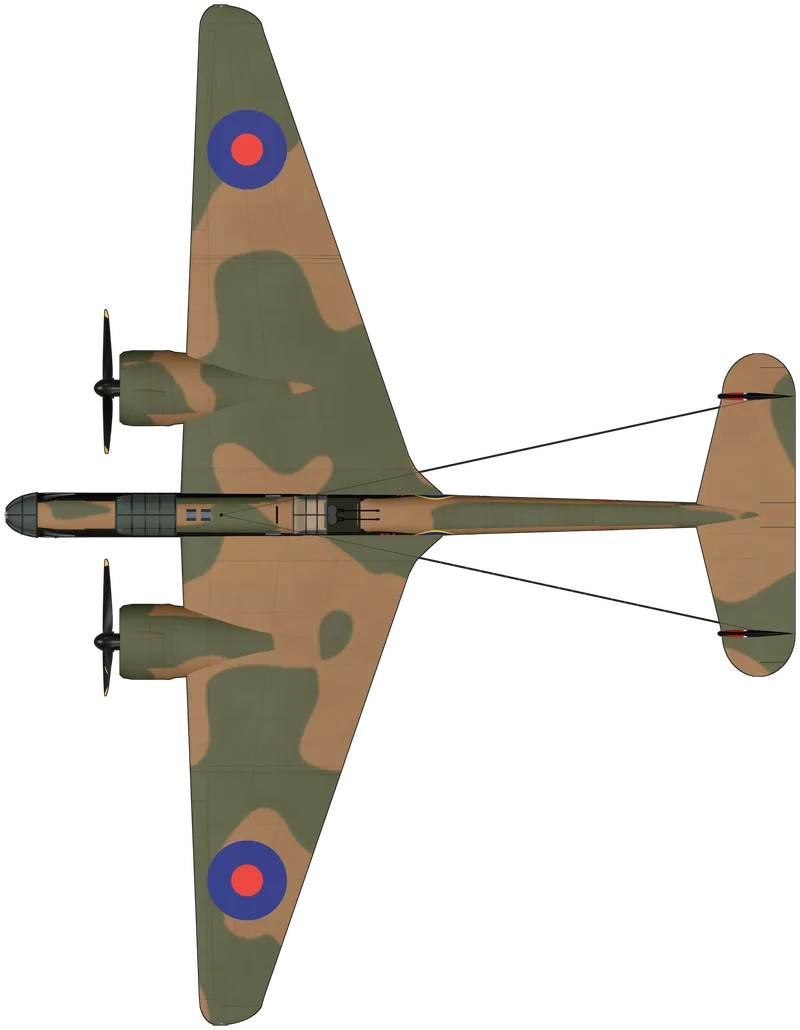
Top view of the Handley Page Hampden, Hampden TB.I P1344
Plan, from above
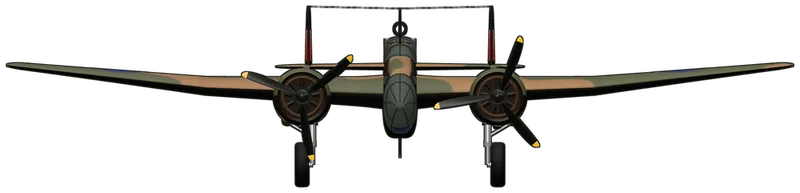
Front view of the Handley Page Hampden, Hampden TB.I P1344
Head-on

The Hampden was Handley Page’s answer to Air Ministry specification B.9/32, the same requirement that produced the Wellington. Gustav Lachmann’s design packed a crew of four into a deep fuselage pod only three feet wide, with the pilot sitting high above a glazed nose and gunners above and below the trailing edge, and carried the twin fins and tailplane on a slender boom behind it. Leading-edge slats and big flaps gave it a low landing speed, and it was fast and agile for a bomber of its day.

The fuselage was so narrow that the crew could not change places in flight. Crews called the Hampden the “Flying Suitcase”.

P1344 was built by Handley Page at Cricklewood and delivered in December 1939.

First flight
21 June 1936
Role
Medium bomber and torpedo bomber
Maker
Handley Page, Britain
Engine
2 × Bristol Pegasus XVIII nine-cylinder radials, 1,000 hp each
Crew
4
Wingspan
21.08 m (69 ft 2 in)
Length
16.33 m (53 ft 7 in)
Height
4.55 m (14 ft 11 in)
Top speed
254 mph
Built
1,430
In service
1938–1943

de Havilland Mosquito

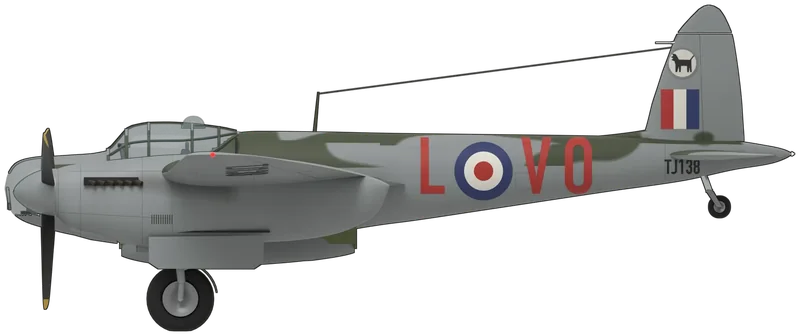
05 · High-speed light bomber · B.35 TJ138
Side view of the de Havilland Mosquito, B.35 TJ138
Port side
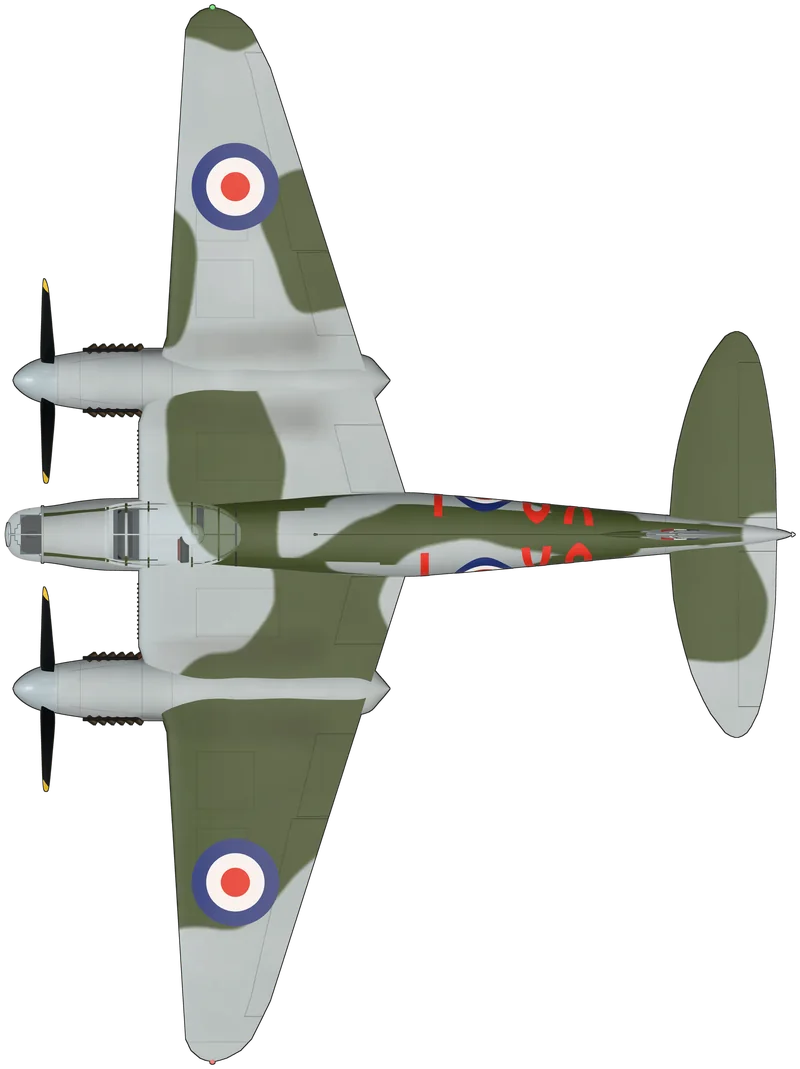
Top view of the de Havilland Mosquito, B.35 TJ138
Plan, from above
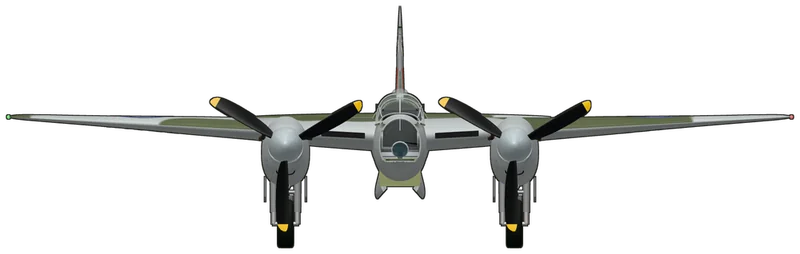
Front view of the de Havilland Mosquito, B.35 TJ138
Head-on

De Havilland proposed the Mosquito in 1938 as an unarmed bomber that would rely on speed rather than guns to survive. It was built almost entirely of wood, with a fuselage of plywood skins over a balsa core, so it could be made by furniture and joinery firms without using scarce light alloy. The Air Ministry ordered a prototype in March 1940; W4050 was built in secret at Salisbury Hall in Hertfordshire and first flew from Hatfield on 25 November 1940, with Geoffrey de Havilland Jr at the controls.

Mosquitoes with the bulged bomb bay could carry a 4,000 lb ‘cookie’ to Berlin, and some crews of the Light Night Striking Force flew there twice in one night.

TJ138 was built at Hatfield in 1945 and flew with No. 98 Squadron in the British occupation forces in Germany, based at Celle.

First flight
25 November 1940
Role
High-speed light bomber
Maker
de Havilland, Britain
Engine
2 × Rolls-Royce Merlin 113/114 two-stage supercharged V-12, 1,690 hp each
Crew
2
Wingspan
16.51 m (54 ft 2 in)
Length
12.34 m (40 ft 6 in)
Height
3.81 m (12 ft 6 in)
Top speed
415 mph
Built
7,781
In service
1941–1963 (B.35 from 1946)

Bristol Blenheim

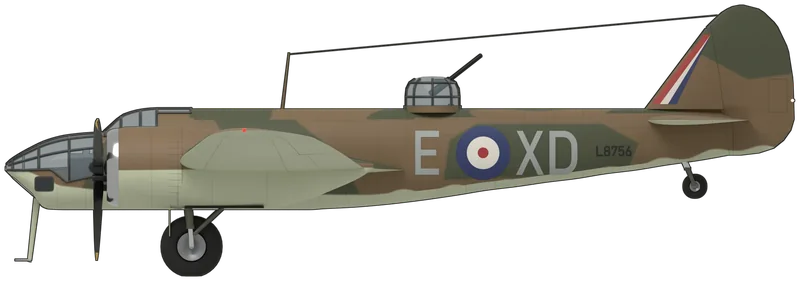
06 · Light bomber · Blenheim IV ‘L8756’
Side view of the Bristol Blenheim, Blenheim IV ‘L8756’
Port side
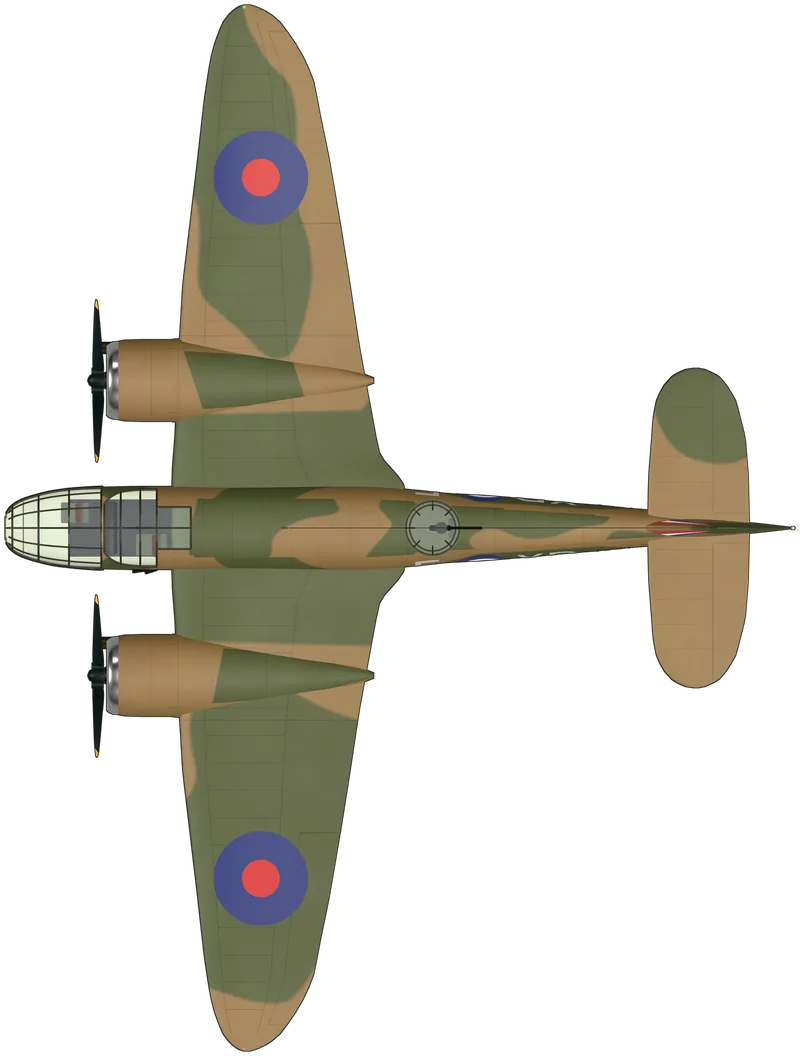
Top view of the Bristol Blenheim, Blenheim IV ‘L8756’
Plan, from above
Front view of the Bristol Blenheim, Blenheim IV ‘L8756’
Head-on

The Blenheim began as a private venture. In 1934 the newspaper owner Lord Rothermere asked Bristol for a fast executive aircraft, and the all-metal Type 142 that resulted, which he named ‘Britain First’, flew in April 1935 and proved faster than any fighter the RAF then had. Rothermere gave it to the nation, and the Air Ministry ordered a bomber version straight off the drawing board.

‘Britain First’, the private aircraft from which the Blenheim grew, flew at over 300 mph in 1935, some 70 mph faster than the Gloster Gauntlet the RAF was then bringing into service.

This aircraft is really Bolingbroke IV-T 10001, built by Fairchild at Longueuil, Quebec, and taken on RCAF charge in October 1942 as a gunnery and navigation trainer at the Bombing and Gunnery Schools in Manitoba and Saskatchewan.

First flight
25 June 1936
Role
Light bomber
Maker
Bristol Aeroplane Company (Fairchild in Canada as the Bolingbroke), Britain
Engine
2 × Bristol Mercury XV nine-cylinder radials, 905 hp each
Crew
3
Wingspan
17.17 m (56 ft 4 in)
Length
12.98 m (42 ft 7 in)
Height
3 m (9 ft 10 in)
Top speed
266 mph
Built
~4,400
In service
1937–1958 (RAF front line to 1944)

Airspeed Oxford

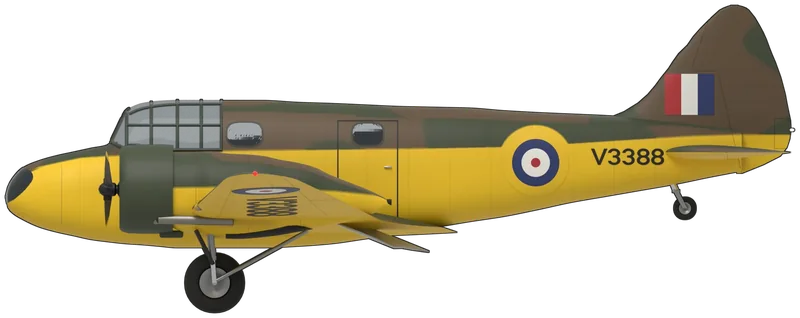
07 · Multi-engine trainer · Oxford I V3388
Side view of the Airspeed Oxford, Oxford I V3388
Port side
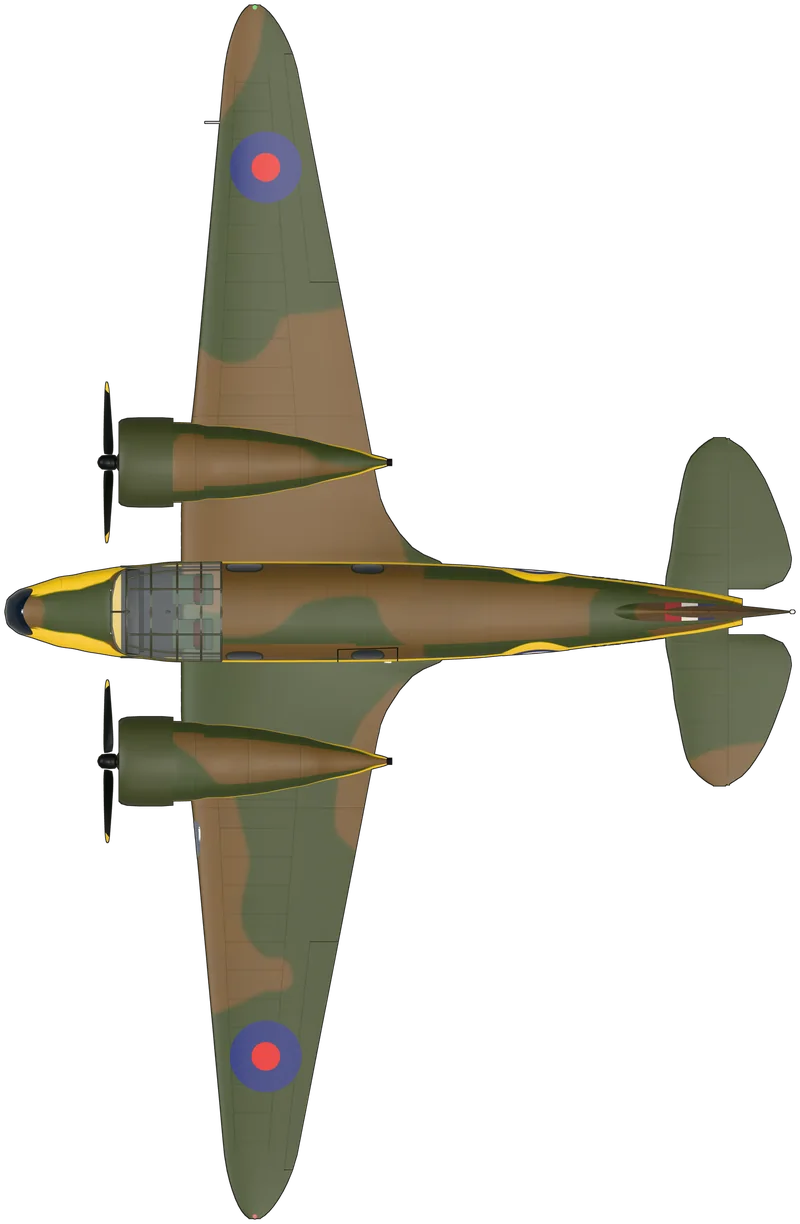
Top view of the Airspeed Oxford, Oxford I V3388
Plan, from above
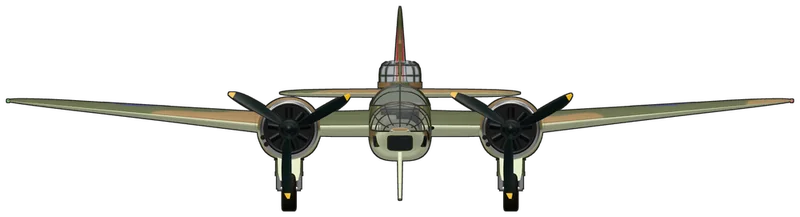
Front view of the Airspeed Oxford, Oxford I V3388
Head-on

Airspeed based the Oxford on its Envoy, a small twin-engined airliner, to meet an Air Ministry specification for a multi-engined trainer. It was a low-winged wooden monoplane with a retractable undercarriage, flaps and a cabin for a pilot, a navigator or bomb aimer and a wireless operator or gunner. The prototype, L4534, first flew at Portsmouth on 19 June 1937, and the Central Flying School received the first Oxfords that November.

Amy Johnson was killed in an Oxford in January 1941, while ferrying one for the Air Transport Auxiliary; it came down in the Thames Estuary.

V3388 was built by de Havilland in 1940 and, after a spell in storage, had an uneventful wartime career.

First flight
19 June 1937
Role
Multi-engine trainer
Maker
Airspeed, Britain
Engine
2 × Armstrong Siddeley Cheetah X seven-cylinder radials, 375 hp each
Crew
3
Wingspan
16.26 m (53 ft 4 in)
Length
10.52 m (34 ft 6 in)
Height
3.38 m (11 ft 1 in)
Top speed
192 mph
Built
8,586
In service
1937–1956

Compared

Specifications at a glance

Span, length, speed and production for every aircraft on this page.

Specifications compared
AircraftFirst flewRoleSpanLengthTop speedBuiltUK museums
Avro Lancaster1941Heavy bomber31.09 m21.11 m282 mph7,3777
Handley Page Halifax1939Heavy bomber31.75 m21.82 m282 mph6,1763
Vickers Wellington1936Medium bomber26.26 m19.68 m235 mph11,4612
Handley Page Hampden1936Medium bomber and torpedo bomber21.08 m16.33 m254 mph1,4302
de Havilland Mosquito1940High-speed light bomber16.51 m12.34 m415 mph7,7816
Bristol Blenheim1936Light bomber17.17 m12.98 m266 mph~4,4005
Airspeed Oxford1937Multi-engine trainer16.26 m10.52 m192 mph8,5862

Questions

Asked and answered

What was the main RAF bomber of WW2?

The Avro Lancaster, which carried the heaviest bomb loads and flew more than 150,000 sorties. The Wellington was the most-produced British bomber, with over 11,000 built.

Why did bomber airfields have three runways?

So that aircraft could always take off and land roughly into wind. The standard layout was a main runway of about 2,000 yards and two shorter ones of 1,400 yards, laid in an A.

Where can I see a Lancaster?

At the RAF Museum London, IWM Duxford, the Lincolnshire Aviation Heritage Centre at East Kirkby, where NX611 taxis, and with the Battle of Britain Memorial Flight at Coningsby. See where to see a Lancaster.

More dioramas

Other collections

The models and drawings are procedural interpretations built from published dimensions, three-view drawings and photographs of each airframe, and the airfield is a compressed impression of its period, not a plan of a real station. Treat the museum aircraft as the reference.