AP 118 · No. 10 Section II · Aircraft Collection 07 / 12

Aircraft/Collections/V-force and QRA

V-bomber station · 1956–70s

The V-force and Quick Reaction Alert

Four-minute warnings, crews in caravans at the runway’s end and delta-winged bombers that could be airborne together in under two minutes: the Cold War RAF at its height.

8
Aircraft
1956–1970s
Period
22
UK museums hold them

The diorama

Diorama · 1956–1970s

Loading the airfield…

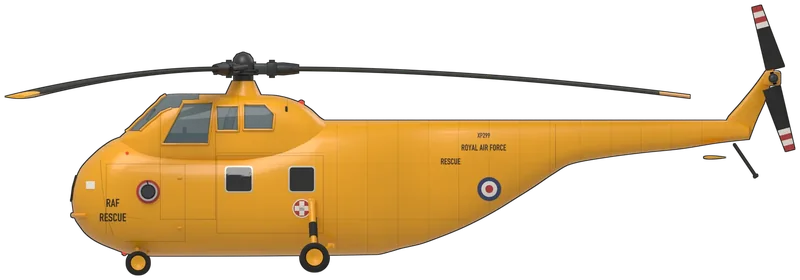
A Cold War bomber station: a long runway with an operational readiness platform at its threshold for the alert aircraft, a taxiway, dispersal pans and a glass-topped control tower. A Whirlwind of the search and rescue flight lifts off from the apron.

Drag to look around · ctrl + scroll to zoom · pick an aircraft to follow it

From 1955 Britain’s nuclear deterrent was carried by the V-bombers: the Valiant, the Victor and the Vulcan. In the early 1960s, at the height of the Cold War, part of the force was kept on Quick Reaction Alert, crews living beside their aircraft and ready to be airborne within fifteen minutes, with the aim of getting the bombers away inside the four minutes of warning that radar might give.

For the most urgent alerts the V-bombers waited on operational readiness platforms beside the runway threshold, and could start all their engines at once and take off in quick succession. The deterrent passed to the Royal Navy’s Polaris submarines in 1969, and the Vulcans and Victors went on as low-level bombers, reconnaissance aircraft and tankers, the Vulcan bowing out after the Black Buck raids of the Falklands War.

Defending the bases were the interceptors: the Javelin, then the Lightning, which could climb to its operating height in minutes and fly at twice the speed of sound, and later the Phantom. The Shackleton patrolled the oceans for submarines, the Buccaneer trained for strikes beneath enemy radar, and the Gnat and Jet Provost trained the pilots.

To scale

The collection side by side

Every aircraft drawn at the same scale, so a Victor and a Gnat T.1 can be compared at a glance.

  • Avro Vulcan side profile, to scaleVulcan · 30.45 m
  • Handley Page Victor side profile, to scaleVictor · 35.05 m
  • English Electric Lightning side profile, to scaleLightning · 16.84 m
  • Gloster Javelin side profile, to scaleJavelin FAW.9 · 17.3 m
  • Avro Shackleton side profile, to scaleShackleton MR.3 · 28.19 m
  • Blackburn Buccaneer side profile, to scaleBuccaneer · 19.33 m
  • Folland Gnat side profile, to scaleGnat T.1 · 9.68 m
  • Westland Whirlwind side profile, to scaleWhirlwind · 14.27 m

10 m

Profiles

Side, top and front

Each aircraft drawn from its 3D model, painted as one real airframe, with its specification.

Avro Vulcan

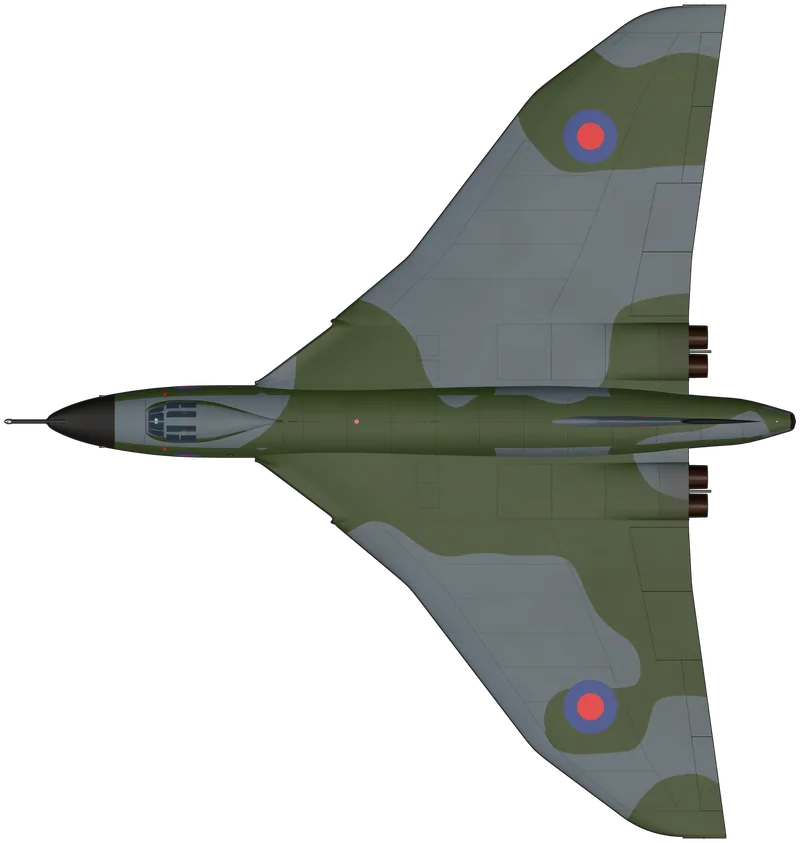
01 · Strategic bomber · B.2 XH558
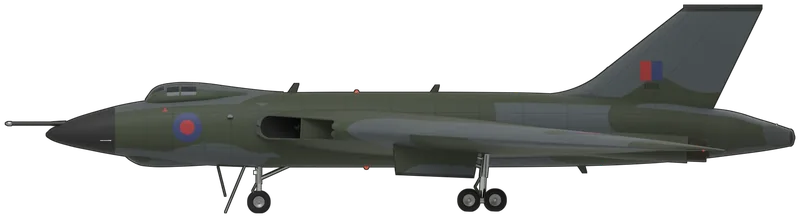
Side view of the Avro Vulcan, B.2 XH558
Port side
Top view of the Avro Vulcan, B.2 XH558
Plan, from above
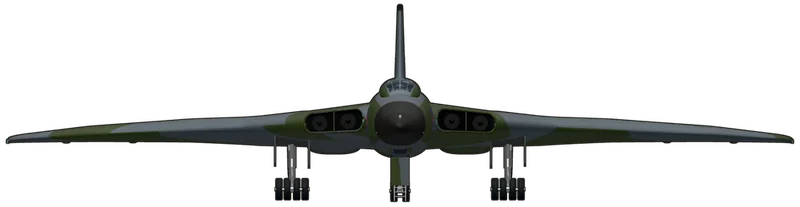
Front view of the Avro Vulcan, B.2 XH558
Head-on

Avro’s Vulcan was one of the three V-bombers built to carry Britain’s nuclear deterrent, and the boldest: a vast delta wing with four Olympus engines buried in its roots. The prototype first flew in August 1952, and the B.2 of 1958 added a bigger, thinner wing and far more power.

The Black Buck raids of 1982 were, at the time, the longest bombing missions ever flown: nearly 8,000 miles there and back.

XH558 was delivered to the RAF in 1960 and was the last Vulcan in service, flying as the RAF’s display aircraft until 1992.

First flight
30 August 1952
Role
Strategic bomber
Maker
Avro, Britain
Engine
4 × Bristol Siddeley Olympus 301 turbojets, 20,000 lbf each
Crew
5
Wingspan
33.83 m (111 ft 0 in)
Length
30.45 m (99 ft 11 in)
Height
8.28 m (27 ft 2 in)
Top speed
645 mph
Built
136
In service
1956–1984

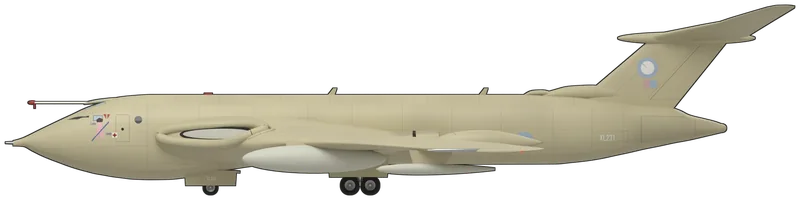
Handley Page Victor

02 · V-bomber and tanker · K.2 XL231 “Lusty Lindy”
Side view of the Handley Page Victor, K.2 XL231 “Lusty Lindy”
Port side
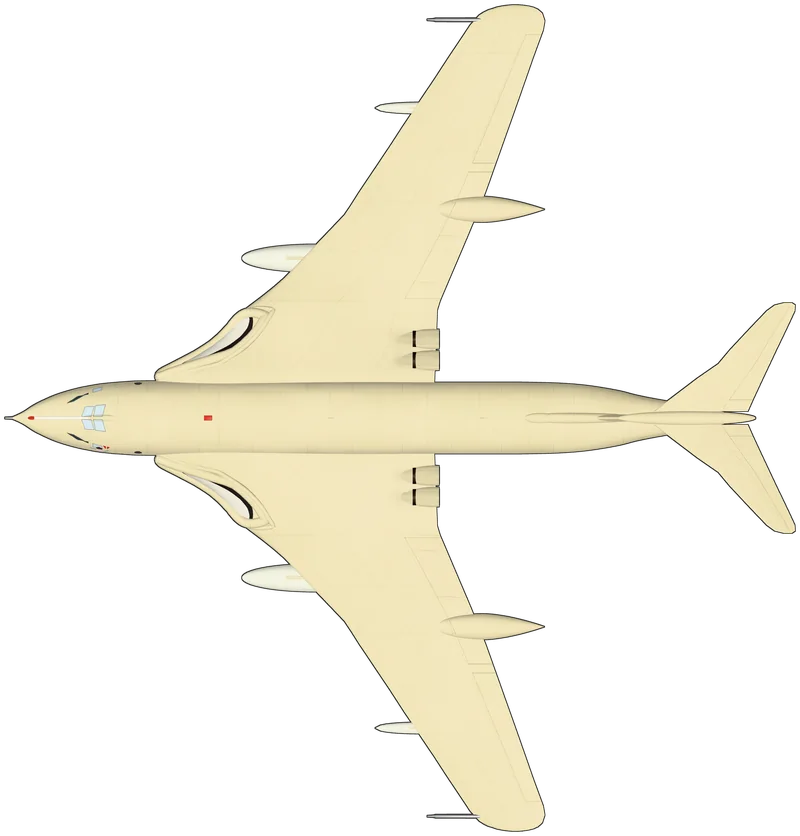
Top view of the Handley Page Victor, K.2 XL231 “Lusty Lindy”
Plan, from above
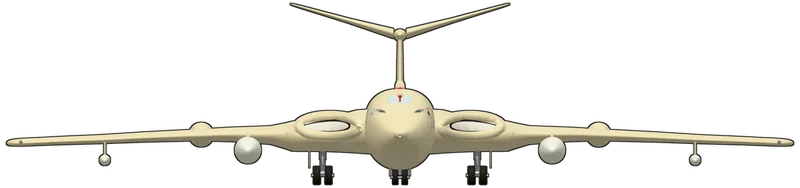
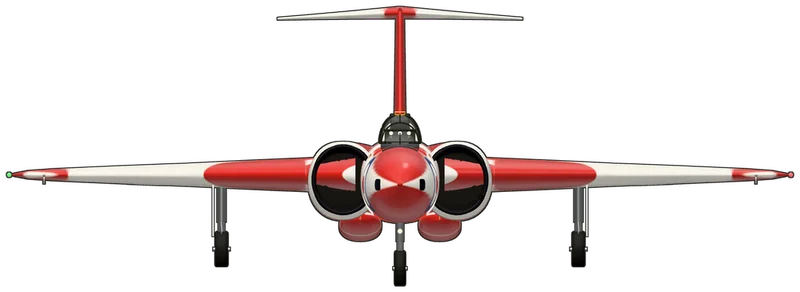
Front view of the Handley Page Victor, K.2 XL231 “Lusty Lindy”
Head-on

Handley Page’s Victor was the third of the V-bombers, and the strangest to look at: a crescent wing, thick at the root and thinning towards the tip so that it stayed efficient at high speed, with a T-tail and a nose like a bulbous glasshouse. The prototype first flew on Christmas Eve 1952, and the type entered service in 1958.

The first Black Buck raid needed eleven Victor tankers to get one Vulcan to the Falklands and back.

XL231 was built as a B.2 bomber and converted to a K.2 tanker.

First flight
24 December 1952
Role
V-bomber and tanker
Maker
Handley Page, Britain
Engine
4 × Rolls-Royce Conway RCo.17 turbofans, 20,600 lbf each
Crew
5
Wingspan
36.58 m (120 ft 0 in)
Length
35.05 m (115 ft 0 in)
Height
9.2 m (30 ft 2 in)
Top speed
627 mph
Built
86
In service
1958–1993

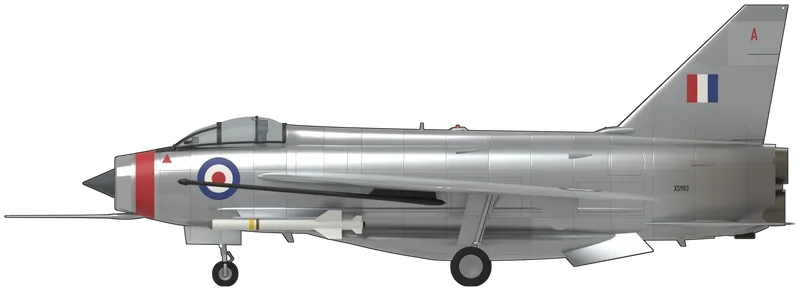
English Electric Lightning

03 · Interceptor · F.6 XS903
Side view of the English Electric Lightning, F.6 XS903
Port side
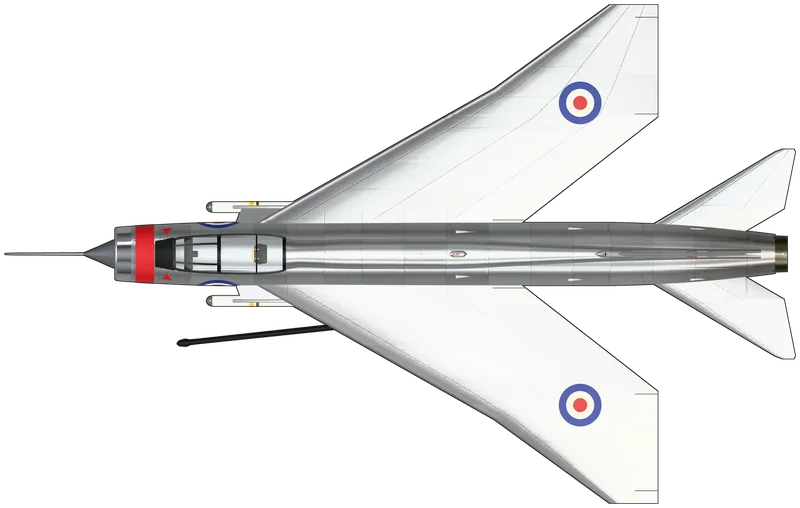
Top view of the English Electric Lightning, F.6 XS903
Plan, from above
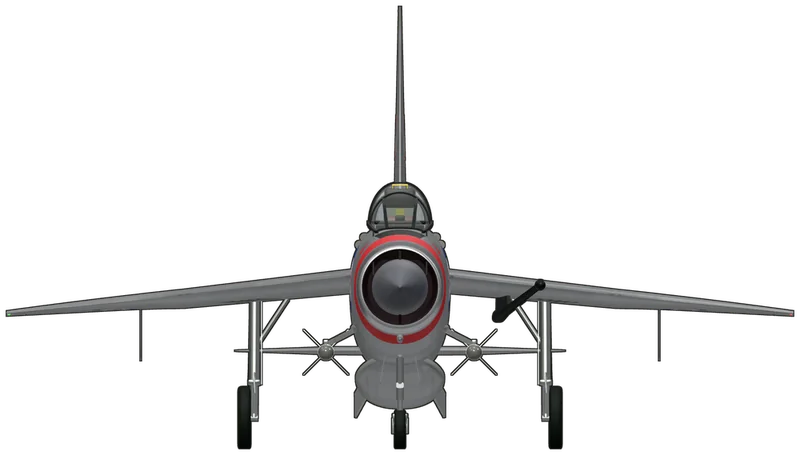
Front view of the English Electric Lightning, F.6 XS903
Head-on

The Lightning was built to climb. English Electric stacked two Rolls-Royce Avons one above the other in a deep, narrow fuselage, swept the wing back 60 degrees and fed the engines through a nose intake split around a radar cone. The P.1A research aircraft first flew in August 1954, and the Lightning became Britain’s only home-grown Mach 2 fighter.

A Lightning could climb from brakes-off to 36,000 ft in under three minutes.

XS903 first flew in August 1966 and joined No. 5 Squadron at Binbrook, flying as “A” in natural metal with a red nose band.

First flight
4 August 1954
Role
Interceptor
Maker
English Electric, Britain
Engine
2 × Rolls-Royce Avon 301R turbojets with reheat, about 16,300 lbf each
Crew
1
Wingspan
10.62 m (34 ft 10 in)
Length
16.84 m (55 ft 3 in)
Height
5.97 m (19 ft 7 in)
Top speed
Mach 2.0
Built
337
In service
1960–1988

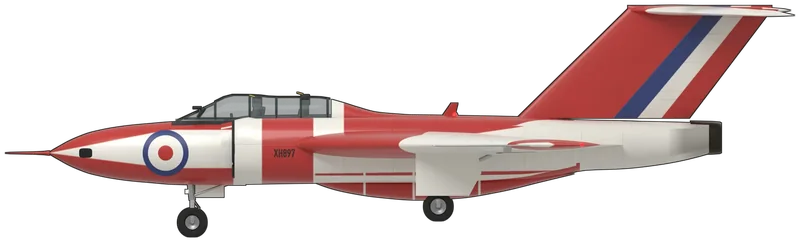
Gloster Javelin

04 · All-weather interceptor · FAW.9 XH897
Side view of the Gloster Javelin, FAW.9 XH897
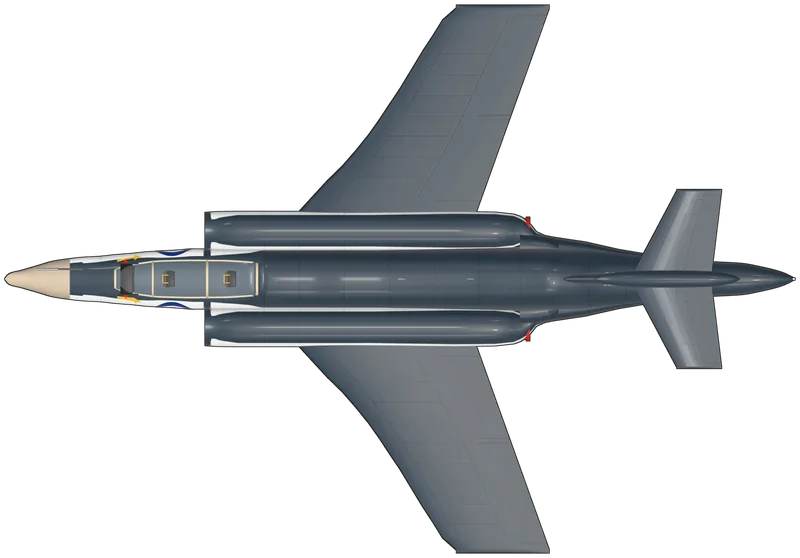
Port side
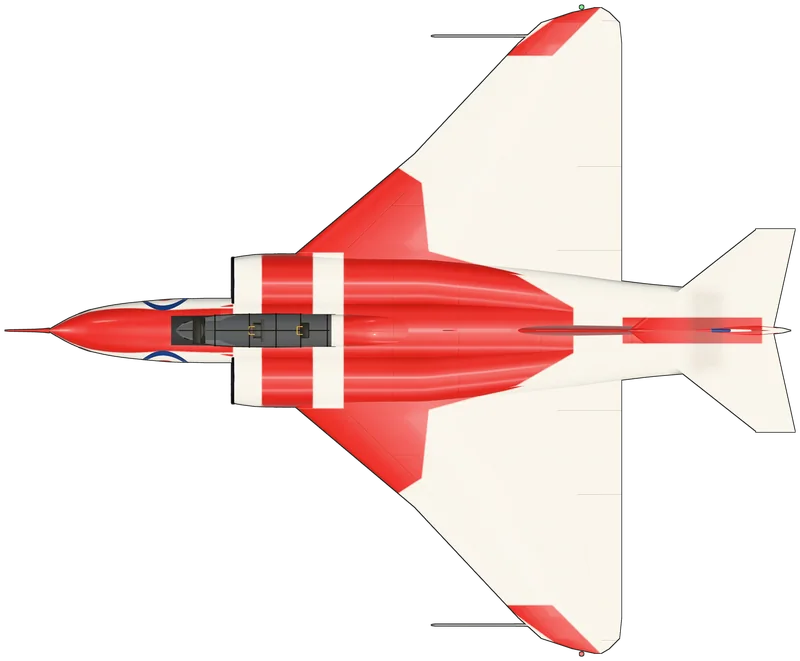
Top view of the Gloster Javelin, FAW.9 XH897
Plan, from above
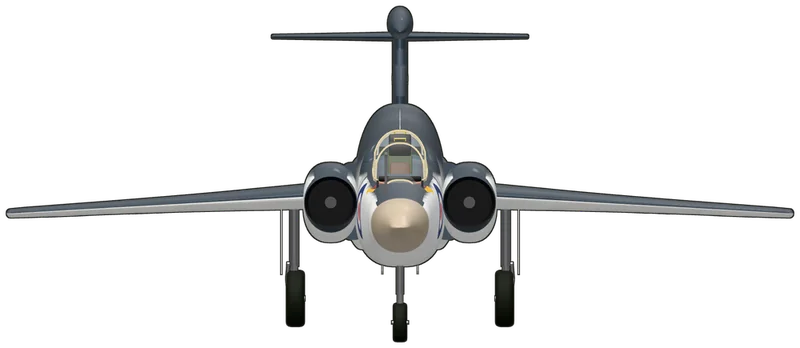
Front view of the Gloster Javelin, FAW.9 XH897
Head-on

The Javelin was designed to the Air Ministry’s demand for a two-seat night and all-weather fighter, one that could find bombers in the dark and cloud by radar. Gloster gave it a large delta wing, a high tailplane on a tall fin and two Sapphire turbojets, and the prototype flew on 26 November 1951.

The Javelin was the RAF’s first twin-engined delta-wing fighter, and its tailplane sits on top of the fin so that it stays clear of the wing’s turbulence.

XH897 is a Javelin FAW.9 that is kept at IWM Duxford in Cambridgeshire.

First flight
26 November 1951
Role
All-weather interceptor
Maker
Gloster Aircraft Company, Britain
Engine
two Armstrong Siddeley Sapphire turbojets with reheat
Crew
2
Wingspan
15.85 m (52 ft 0 in)
Length
17.3 m (56 ft 9 in)
Height
4.88 m (16 ft 0 in)
Top speed
710 mph
Built
436
In service
1956–1968

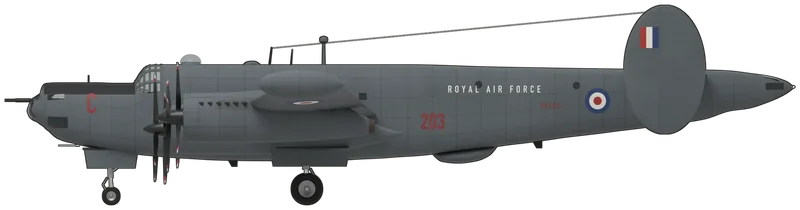
Avro Shackleton

05 · Maritime patrol aircraft · MR.3 XF708
Side view of the Avro Shackleton, MR.3 XF708
Port side
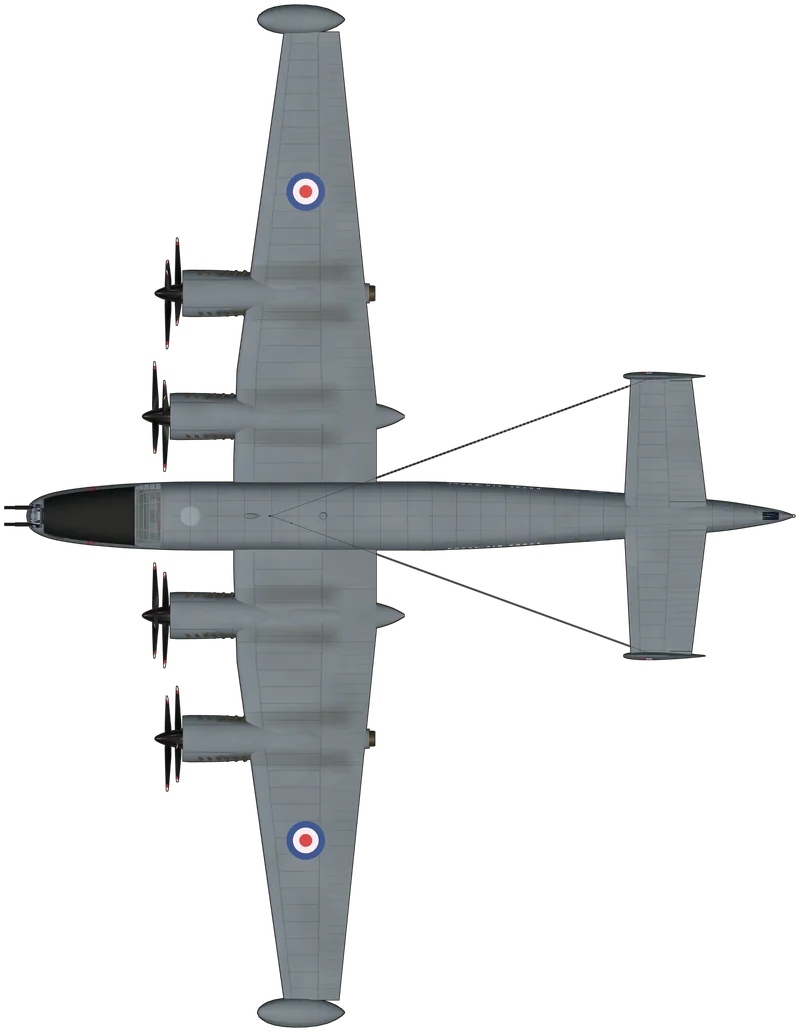
Top view of the Avro Shackleton, MR.3 XF708
Plan, from above
Front view of the Avro Shackleton, MR.3 XF708
Head-on

The Shackleton was the last of the line that began with the Manchester and the Lancaster. Coastal Command needed a long-range aircraft to replace its Liberators and Lancasters, and Avro’s answer, the Type 696, married the Lincoln’s wing and undercarriage to a deeper, wider fuselage and four Rolls-Royce Griffons driving contra-rotating propellers. The prototype flew at Woodford on 9 March 1949.

Crews called the Shackleton “ten thousand rivets flying in loose formation”; the last AEW.2s left RAF service in 1991, forty years after the MR.1 arrived.

XF708 was the last of 34 Shackleton MR.3s built for the RAF and was delivered in 1959.

First flight
9 March 1949
Role
Maritime patrol aircraft
Maker
Avro, Britain
Engine
4 × Rolls-Royce Griffon 57A V-12s, 2,455 hp each, with contra-rotating propellers; Phase 3 aircraft add 2 × Bristol Siddeley Viper 203 turbojets, 2,500 lbf each
Crew
10: two pilots, a flight engineer, navigators, signallers and radar and sonics operators
Wingspan
36.53 m (119 ft 10 in)
Length
28.19 m (92 ft 6 in)
Height
7.11 m (23 ft 4 in)
Top speed
302 mph
Built
185
In service
1951–1991

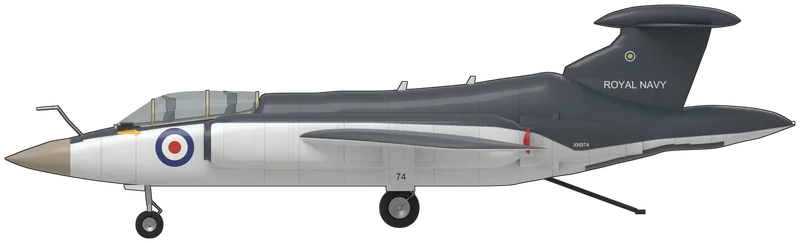
Blackburn Buccaneer

06 · Low-level strike aircraft · S.2 XN974
Side view of the Blackburn Buccaneer, S.2 XN974
Port side
Top view of the Blackburn Buccaneer, S.2 XN974
Plan, from above
Front view of the Blackburn Buccaneer, S.2 XN974
Head-on

The Admiralty wanted a carrier aircraft that could cross the sea at wave-top height, below the radar of the day, and hit a ship with a nuclear weapon or a conventional load. Blackburn’s answer, the NA.39, first flew on 30 April 1958. It had a small, thick, strong wing, a fuselage shaped to the area rule, and a bomb bay whose door rotated to carry the weapons in the belly.

The Buccaneer’s “area ruled” waist and blown wing let it fly fast and low with a heavy load while still landing slowly on a carrier deck.

XN974 is a Buccaneer S.2 preserved at the Yorkshire Air Museum at Elvington, near York.

First flight
30 April 1958
Role
Low-level strike aircraft
Maker
Blackburn (Hawker Siddeley), Britain
Engine
two Rolls-Royce Spey 101 turbofans, 11,100 lbf each
Crew
2
Wingspan
13.41 m (44 ft 0 in)
Length
19.33 m (63 ft 5 in)
Height
4.95 m (16 ft 3 in)
Top speed
667 mph
Built
211
In service
1962–1994

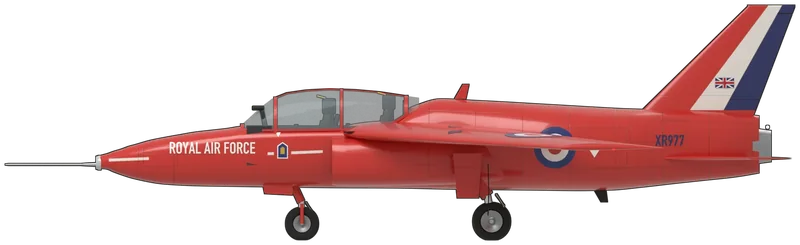
Folland Gnat

07 · Advanced jet trainer · T.1 XR977
Side view of the Folland Gnat, T.1 XR977
Port side
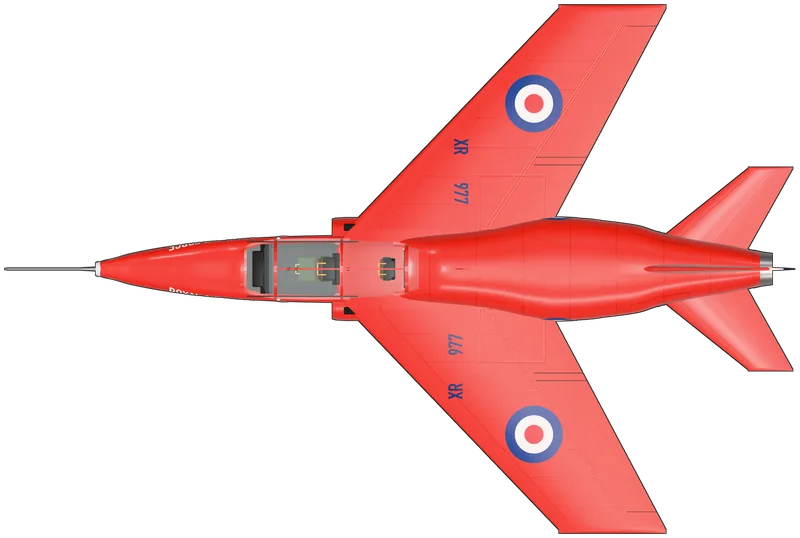
Top view of the Folland Gnat, T.1 XR977
Plan, from above
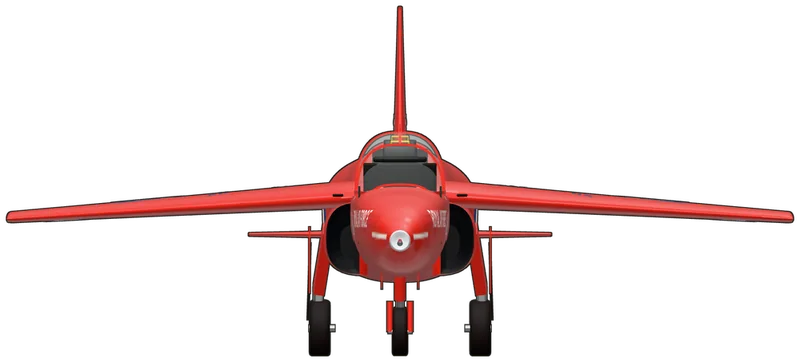
Front view of the Folland Gnat, T.1 XR977
Head-on

W. E. W. Petter designed the Gnat at Folland as a small, cheap lightweight fighter around the Bristol Saturn engine. When that engine was cancelled, the Gnat flew on 18 July 1955 with the smaller Bristol Orpheus. The RAF did not want it as a fighter, but India bought it, and Indian Gnats earned the nickname ‘Sabre Slayer’ against Pakistan’s F-86s.

The Gnat T.1 was small enough that the Red Arrows flew it in tight formation with a span of only 7.3 metres, and the whole team was painted red to stand out against the sky.

XR977 is a Gnat T.1 on show at the Royal Air Force Museum in London.

First flight
18 July 1955
Role
Advanced jet trainer
Maker
Folland Aircraft, Britain
Engine
one Bristol Siddeley Orpheus 101 turbojet
Crew
2
Wingspan
7.32 m (24 ft 0 in)
Length
9.68 m (31 ft 9 in)
Height
3.25 m (10 ft 8 in)
Top speed
695 mph
Built
449
In service
1959–1979 (Red Arrows 1965–1979)

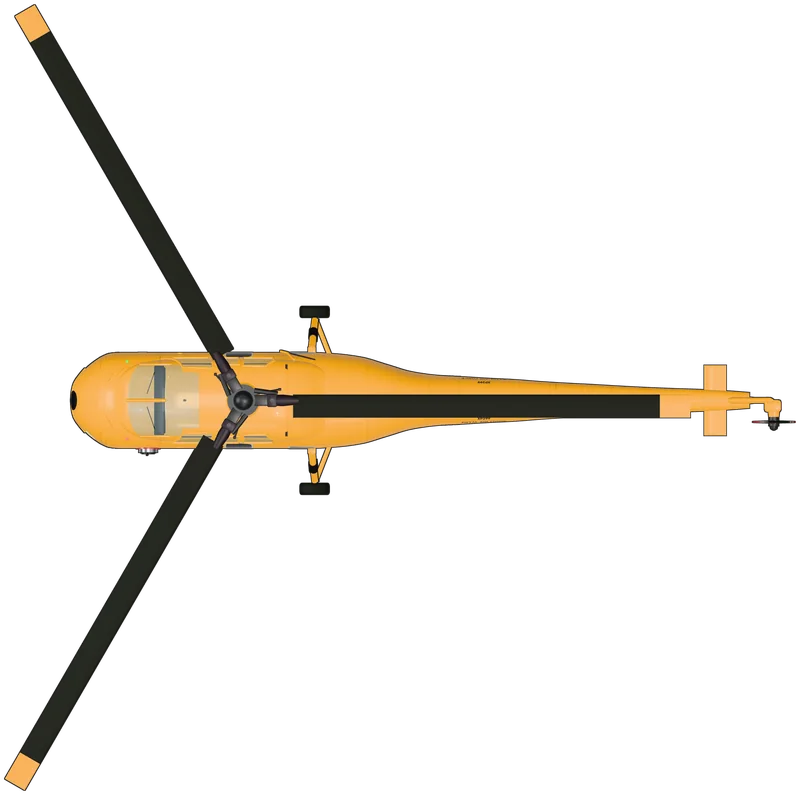
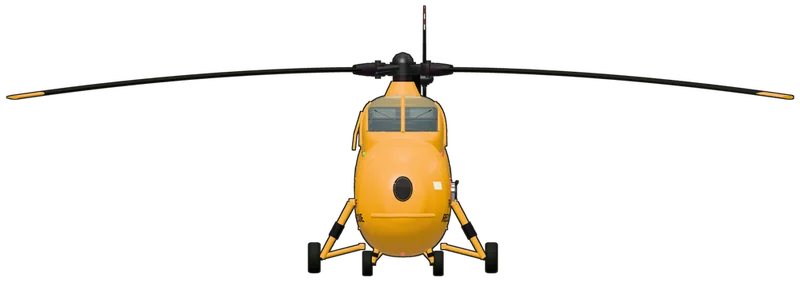
Westland Whirlwind

08 · Search-and-rescue helicopter · HAR.10 XP299
Side view of the Westland Whirlwind, HAR.10 XP299
Port side
Top view of the Westland Whirlwind, HAR.10 XP299
Plan, from above
Front view of the Westland Whirlwind, HAR.10 XP299
Head-on

Westland built the Whirlwind under licence from Sikorsky’s S-55. The first British-built machine flew in November 1953, and it served the Royal Navy and the RAF in a long run of marks, powered at first by the American Pratt & Whitney Wasp radial engine in the nose.

The Whirlwind’s turbine engine sits in the nose, so its single exhaust leaves through a port on the left side only.

XP299 is a Westland-built HAR.10 delivered to the RAF in 1962 and flown on search and rescue with No. 22 Squadron in the overall yellow scheme, with “RAF RESCUE” on the nose and a red-and-white rescue badge on each cabin side.

First flight
12 November 1953
Role
Search-and-rescue helicopter
Maker
Westland, Britain
Engine
Rolls-Royce Gnome H.1000 turboshaft, about 1,050 shp
Crew
2–3
Main rotor
16.15 m (53 ft 0 in)
Length
14.27 m (46 ft 10 in)
Height
4.65 m (15 ft 3 in)
Top speed
109 mph
Built
~400
In service
1955–1981

Compared

Specifications at a glance

Span, length, speed and production for every aircraft on this page.

Specifications compared
AircraftFirst flewRoleSpanLengthTop speedBuiltUK museums
Avro Vulcan1952Strategic bomber33.83 m30.45 m645 mph13611
Handley Page Victor1952V-bomber and tanker36.58 m35.05 m627 mph867
English Electric Lightning1954Interceptor10.62 m16.84 mMach 2.033715
Gloster Javelin1951All-weather interceptor15.85 m17.3 m710 mph4365
Avro Shackleton1949Maritime patrol aircraft36.53 m28.19 m302 mph1858
Blackburn Buccaneer1958Low-level strike aircraft13.41 m19.33 m667 mph21110
Folland Gnat1955Advanced jet trainer7.32 m9.68 m695 mph4498
Westland Whirlwind1953Search-and-rescue helicopter16.15 m rotor14.27 m109 mph~4009

Questions

Asked and answered

What were the V-bombers?

The Vickers Valiant, Handley Page Victor and Avro Vulcan, Britain’s jet bombers for the nuclear deterrent from 1955 until the Royal Navy took it over in 1969.

What was Quick Reaction Alert?

A state of readiness in which armed aircraft and crews waited to be airborne in minutes. V-bombers held it from 1962 to 1969; RAF fighters still hold it to intercept unidentified aircraft.

Where can I see a Vulcan?

Several are on display in Britain, including at the RAF Museum Cosford, IWM Duxford and the Avro Heritage Museum. See where to see a Vulcan.

More dioramas

Other collections

The models and drawings are procedural interpretations built from published dimensions, three-view drawings and photographs of each airframe, and the airfield is a compressed impression of its period, not a plan of a real station. Treat the museum aircraft as the reference.