AP 118 · No. 10 Section II · Aircraft Collection 02 / 12

Aircraft/Collections/Between the wars

Expansion-era aerodrome · 1919–38

Aircraft between the wars

Silver biplanes, brick hangars and an aerodrome circle cut in the grass: the years when the RAF fought to survive, then rearmed against a new war.

10
Aircraft
1919–38
Period
16
UK museums hold them

The diorama

Diorama · 1919–38

Loading the airfield…

A permanent RAF station of the mid-1930s: brick C-type hangars, a watch office, fuel pumps, a windsock and the white aerodrome circle. The field is still grass. A Schneider Trophy seaplane, which could never land here, makes a fast pass overhead.

Drag to look around · ctrl + scroll to zoom · pick an aircraft to follow it

After 1918 the RAF shrank from the largest air force in the world to a handful of squadrons, and for a decade it argued for its own existence. It flew colonial policing in the Middle East, put on the annual RAF Display at Hendon and, in the Schneider Trophy races, pushed seaplane speed far beyond anything a fighter could reach. Britain won the trophy outright in 1931, and the lessons in streamlining and engine design went straight into the Spitfire.

From 1934 a series of expansion schemes rebuilt the service against the threat from Germany. Permanent stations with brick hangars and messes went up across eastern England, and the aircraft changed from fabric biplanes to all-metal monoplanes in barely five years. The Hart family of light bombers, faster than the fighters of their day, gave way to the Gladiator, the last RAF biplane fighter, and to the Anson, the first RAF monoplane with a retractable undercarriage.

It was also a golden age of private flying. The de Havilland Moths put aeroplanes within reach of flying clubs, the autogiro promised flight without stalling, and in 1935–36 hundreds of amateurs built their own Flying Fleas until a run of fatal accidents grounded them.

To scale

The collection side by side

Every aircraft drawn at the same scale, so a Anson and a Flying Flea can be compared at a glance.

  • Hawker Hart family side profile, to scaleHind · 9.02 m
  • Gloster Gladiator side profile, to scaleGladiator · 8.36 m
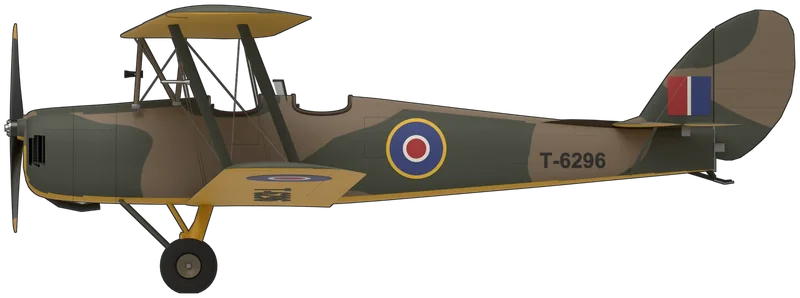
  • de Havilland Tiger Moth side profile, to scaleTiger Moth II · 7.29 m
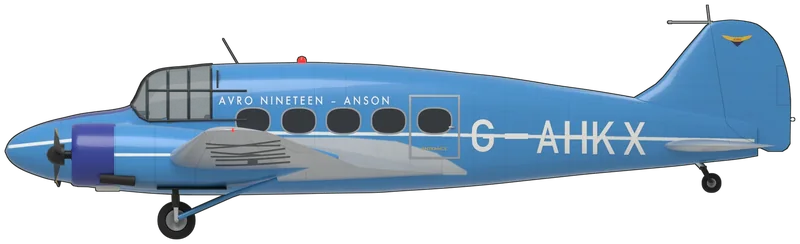
  • Avro Anson side profile, to scaleAnson · 12.88 m
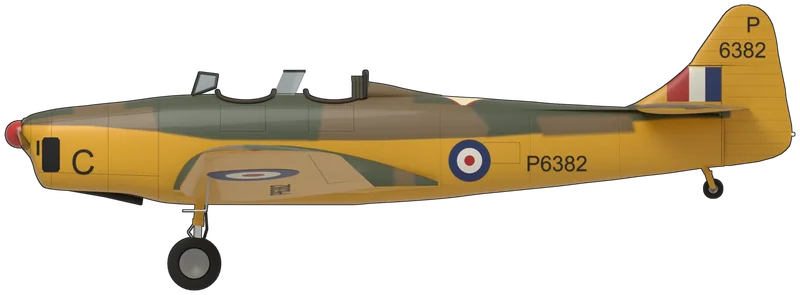
  • Miles Magister side profile, to scaleMagister · 7.51 m
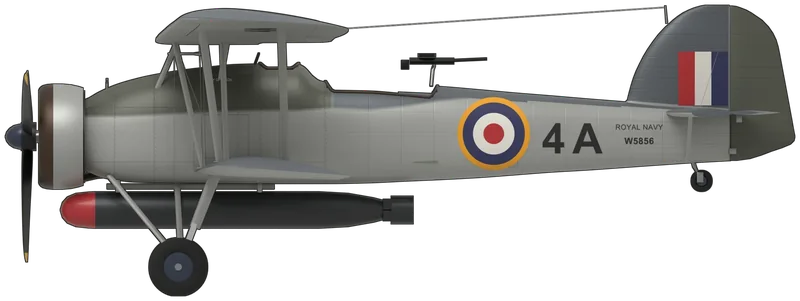
  • Fairey Swordfish side profile, to scaleSwordfish · 10.87 m
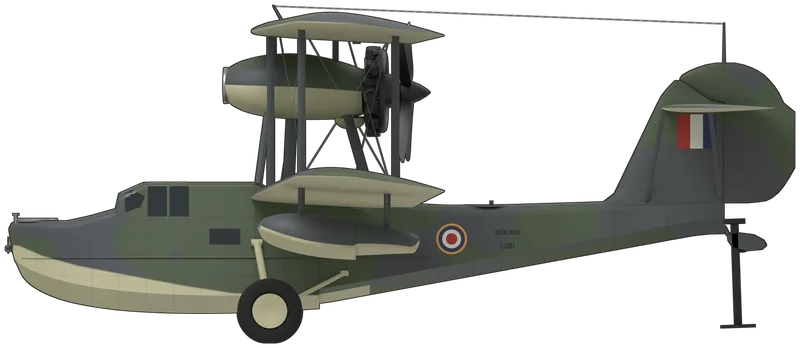
  • Supermarine Walrus side profile, to scaleWalrus · 11.45 m
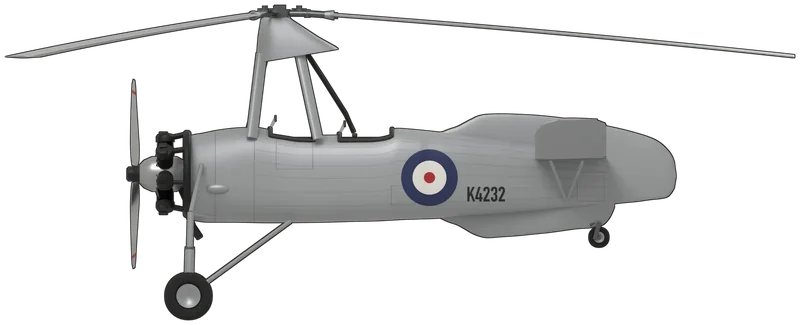
  • Avro Rota I side profile, to scaleRota I · 6.01 m
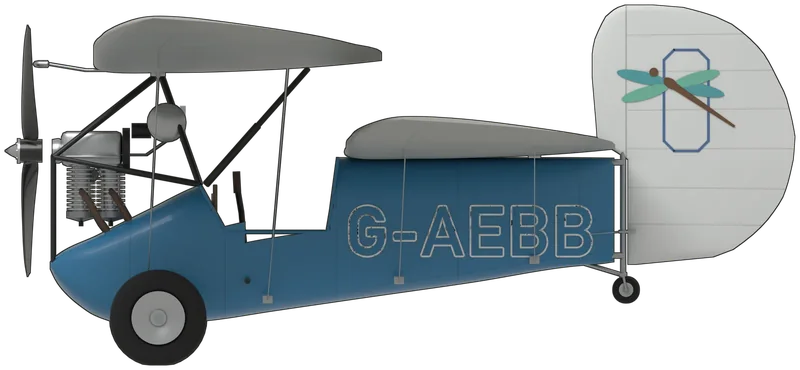
  • Mignet HM.14 Flying Flea side profile, to scaleFlying Flea · 3.91 m
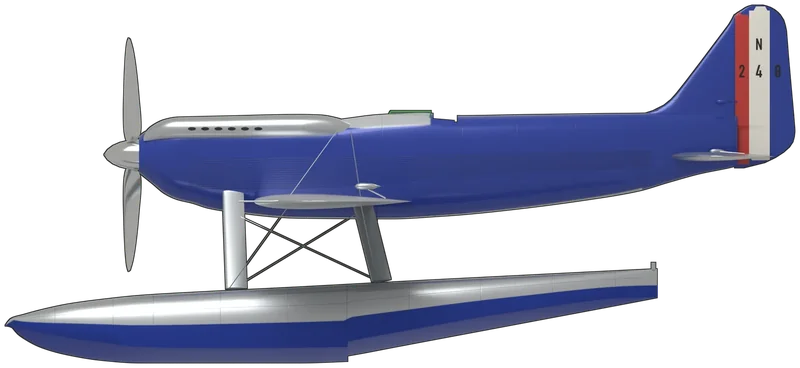
  • Supermarine S.6A side profile, to scaleS.6A · 8.79 m

10 m

Profiles

Side, top and front

Each aircraft drawn from its 3D model, painted as one real airframe, with its specification.

Hawker Hart family

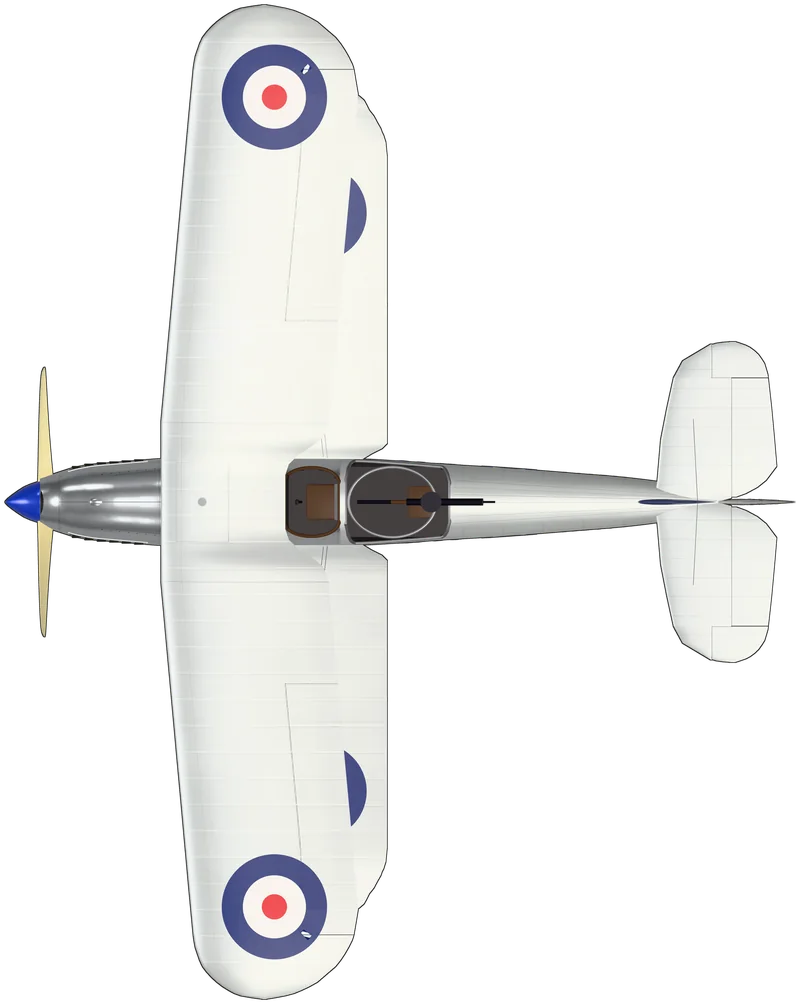
01 · Light day bomber · Hind K5414 (G-AENP)
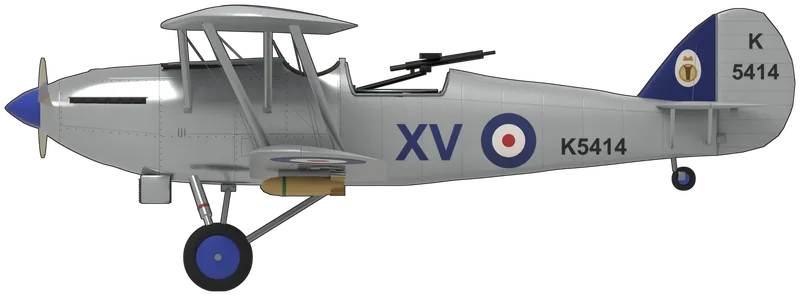
Side view of the Hawker Hart family, Hind K5414 (G-AENP)
Port side
Top view of the Hawker Hart family, Hind K5414 (G-AENP)
Plan, from above
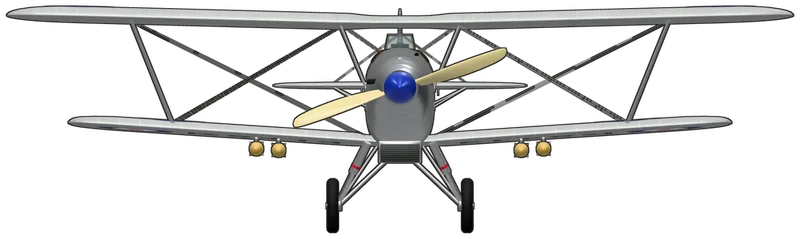
Front view of the Hawker Hart family, Hind K5414 (G-AENP)
Head-on

The Hind grew out of Sydney Camm’s Hart, the two-seat light day bomber that first flew in June 1928 and gave the RAF a shock in the 1930 air exercises, when it proved faster than the Siskins and Bulldogs sent to intercept it. Hawker turned the Hart into a whole family: the Demon two-seat fighter, the Audax for army co-operation, the Osprey for the Fleet Air Arm, and trainers and export versions besides, more than 2,800 aircraft in all. The Hind was the last of the bombers, a refined Hart with the more powerful Rolls-Royce Kestrel V, a tailwheel in place of the skid, ejector exhausts and a cut-down rear cockpit that gave the gunner a better field of fire for his Lewis gun.

In the 1930 air exercises the Hart, the Hind’s parent, was so much faster than the RAF’s own fighters that Hawker was asked to build a fighter version of the bomber, which became the Demon.

K5414 is the only Hawker Hind still flying.

First flight
12 September 1934
Role
Light day bomber
Maker
Hawker Aircraft, Britain
Engine
Rolls-Royce Kestrel V twelve-cylinder vee, 640 hp
Crew
2
Wingspan
11.35 m (37 ft 3 in)
Length
9.02 m (29 ft 7 in)
Height
3.23 m (10 ft 7 in)
Top speed
184 mph
Built
~3,000
In service
1935–1950s

Gloster Gladiator

02 · Biplane fighter · Gladiator I L8032 (G-AMRK)
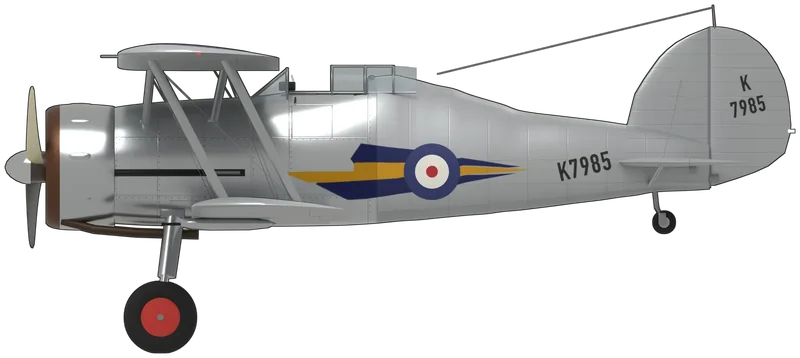
Side view of the Gloster Gladiator, Gladiator I L8032 (G-AMRK)
Port side
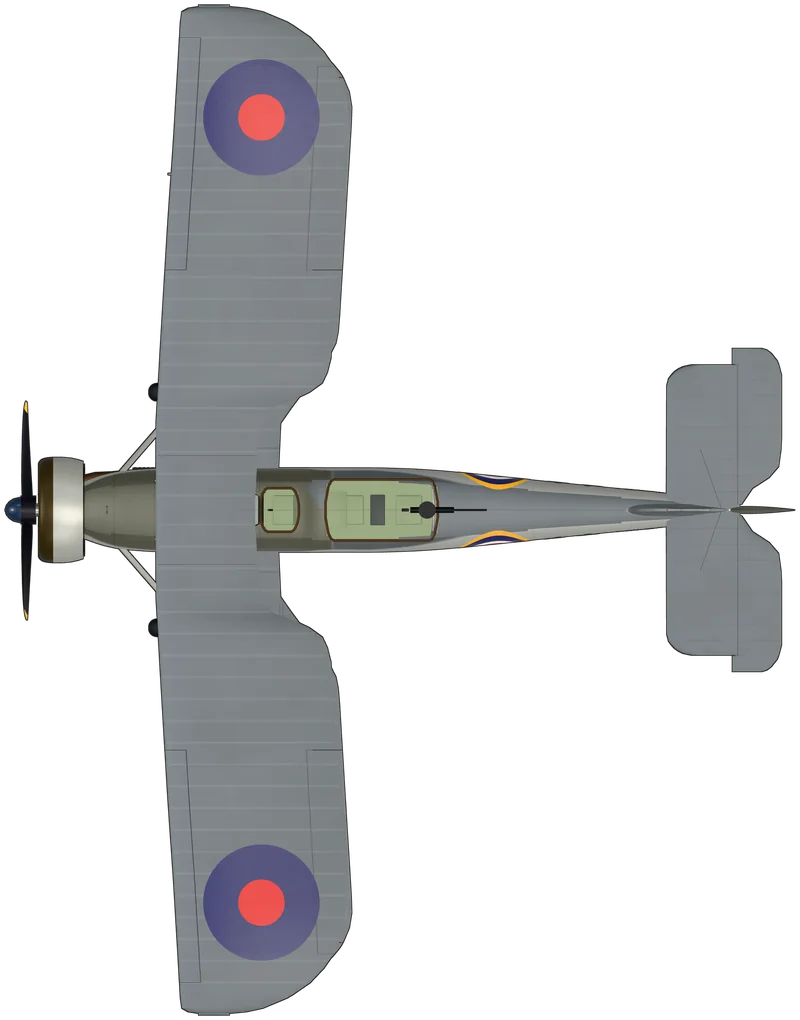
Top view of the Gloster Gladiator, Gladiator I L8032 (G-AMRK)
Plan, from above
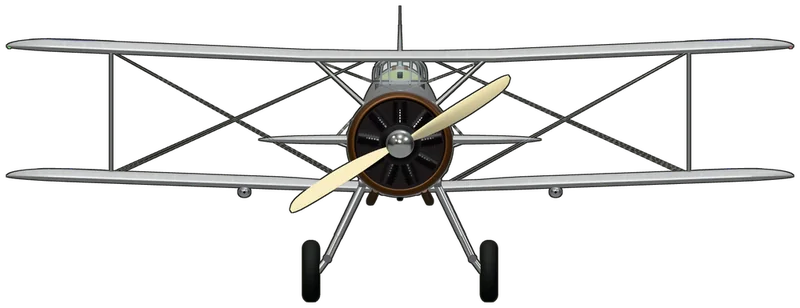
Front view of the Gloster Gladiator, Gladiator I L8032 (G-AMRK)
Head-on

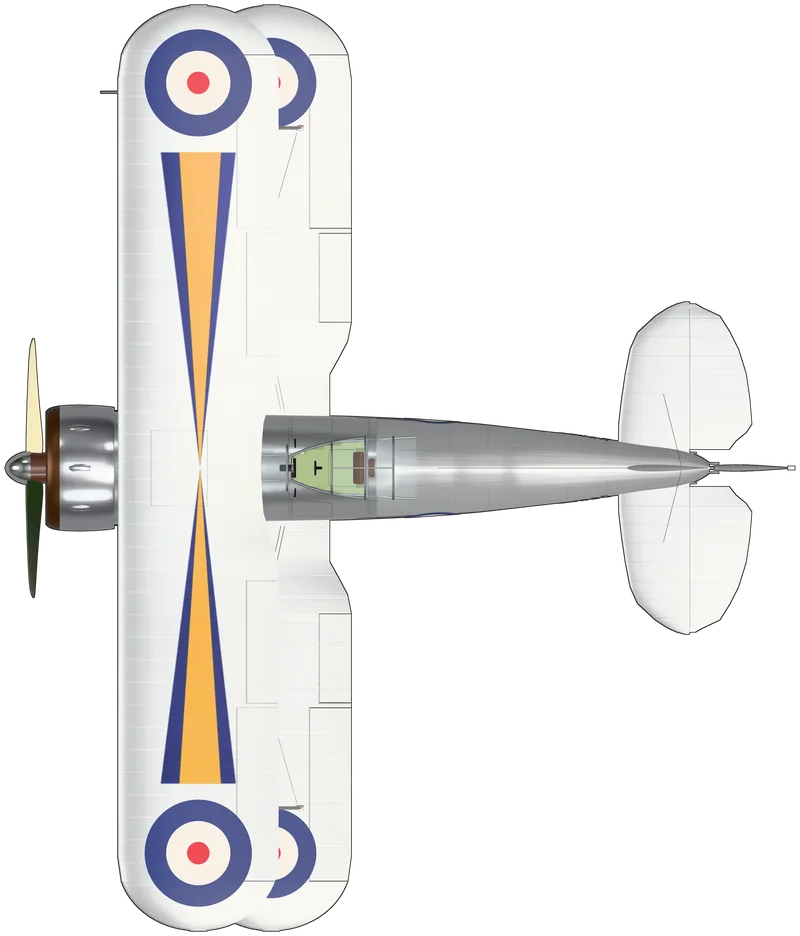
The Gladiator was Henry Folland’s last refinement of the open-cockpit Gauntlet. Gloster built it as a private venture, the SS.37, to meet an Air Ministry specification for a four-gun fighter, giving it single-bay wings braced by one pair of interplane struts on each side, cantilever main undercarriage legs with internal springing, flaps on both wings and a Bristol Mercury radial in a long-chord cowling. The prototype first flew on 12 September 1934 and reached about 242 mph, and the Air Ministry ordered the type in 1935 as the Gladiator, with an enclosed sliding canopy, the first on an RAF fighter, and four machine guns, two in the fuselage sides and one under each lower wing.

The Gladiator was the RAF’s last biplane fighter and also its first fighter with an enclosed cockpit: the pilot sat under a sliding canopy between wings braced with wires.

L8032 was the last Gladiator Mk I built.

First flight
12 September 1934
Role
Biplane fighter
Maker
Gloster Aircraft Company, Britain
Engine
Bristol Mercury IX nine-cylinder radial, 830 hp
Crew
1
Wingspan
9.83 m (32 ft 3 in)
Length
8.36 m (27 ft 5 in)
Height
3.58 m (11 ft 9 in)
Top speed
257 mph
Built
747
In service
1937–1945

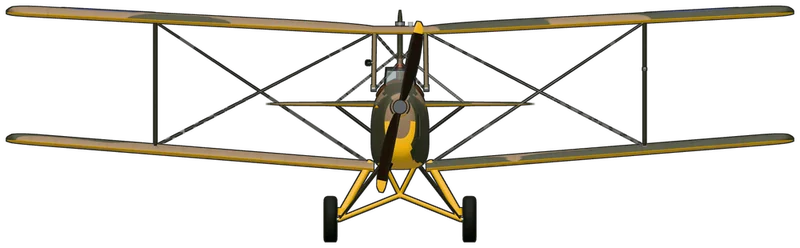
de Havilland Tiger Moth

03 · Elementary trainer · Tiger Moth II T6296
Side view of the de Havilland Tiger Moth, Tiger Moth II T6296
Port side
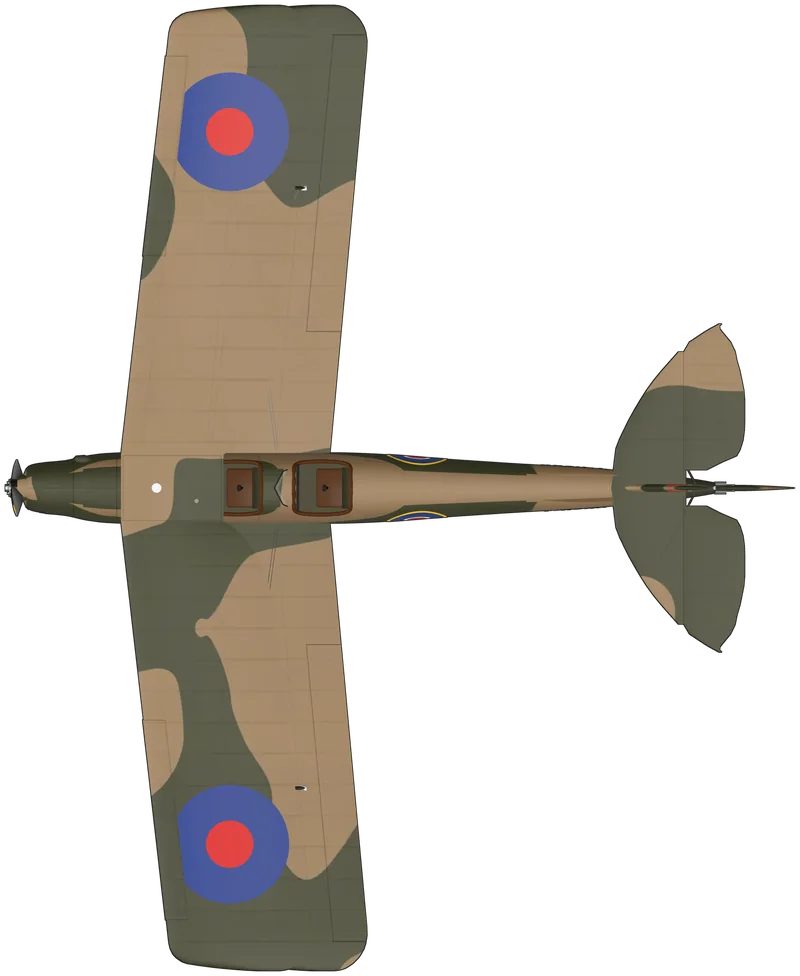
Top view of the de Havilland Tiger Moth, Tiger Moth II T6296
Plan, from above
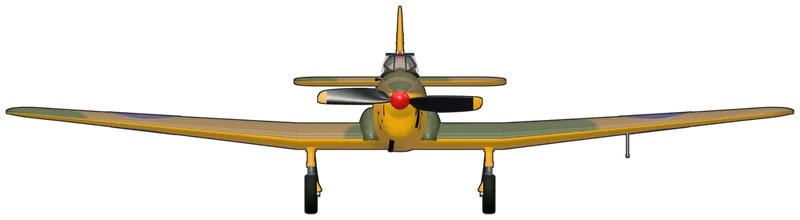
Front view of the de Havilland Tiger Moth, Tiger Moth II T6296
Head-on

The Tiger Moth grew out of de Havilland’s DH.60 Moth. To let the instructor in the front seat bail out wearing a parachute, the upper wing’s centre section was moved forward, clear of the front cockpit, and the wings were swept back slightly to keep the balance right. The first DH.82 flew at Stag Lane on 26 October 1931, and the RAF ordered it as an elementary trainer the following year.

The swept-back wings were not for speed: they balanced the aircraft after the upper centre section was moved forward so the front-seat occupant could escape by parachute.

T6296 was built by Morris Motors at Cowley in 1941 and taught RAF pupils at No. 1 Elementary Flying Training School at Hatfield and No. 7 EFTS at Desford.

First flight
26 October 1931
Role
Elementary trainer
Maker
de Havilland, Britain
Engine
de Havilland Gipsy Major I four-cylinder inverted inline, 130 hp
Crew
2
Wingspan
8.94 m (29 ft 4 in)
Length
7.29 m (23 ft 11 in)
Height
2.68 m (8 ft 10 in)
Top speed
109 mph
Built
8,868
In service
1932–1955 (Royal Navy to 1972)

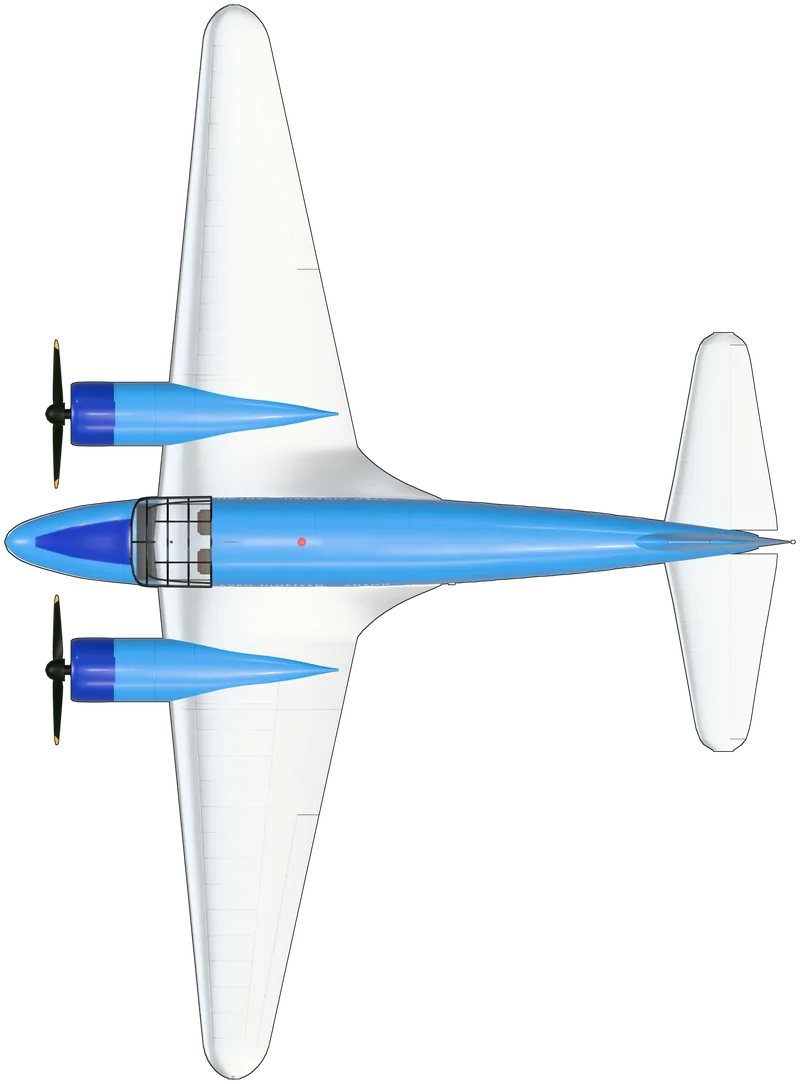
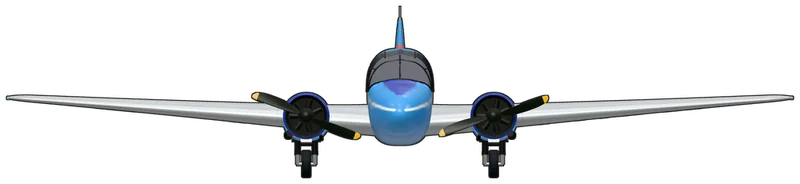
Avro Anson

04 · Light transport & trainer · Avro Nineteen Series 2 G-AHKX
Side view of the Avro Anson, Avro Nineteen Series 2 G-AHKX
Port side
Top view of the Avro Anson, Avro Nineteen Series 2 G-AHKX
Plan, from above
Front view of the Avro Anson, Avro Nineteen Series 2 G-AHKX
Head-on

The Anson grew out of the Avro 652, a small six-seat airliner built for Imperial Airways. A military version, the 652A, flew in March 1935 to meet an Air Ministry need for a coastal reconnaissance aircraft, and in 1936 it became the first RAF monoplane with a retractable undercarriage to reach squadron service.

Early Ansons had to have their undercarriage wound up by hand, 144 turns of a crank.

G-AHKX first flew in November 1946 and went to Smiths Instruments at Staverton, which used it for communications and instrument development until 1959.

First flight
24 March 1935
Role
Light transport & trainer
Maker
Avro, Britain
Engine
2 × Armstrong Siddeley Cheetah 15 seven-cylinder radials, 420 hp each
Crew
2
Wingspan
17.53 m (57 ft 6 in)
Length
12.88 m (42 ft 3 in)
Height
4.11 m (13 ft 6 in)
Top speed
188 mph
Built
11,020
In service
1936–1968

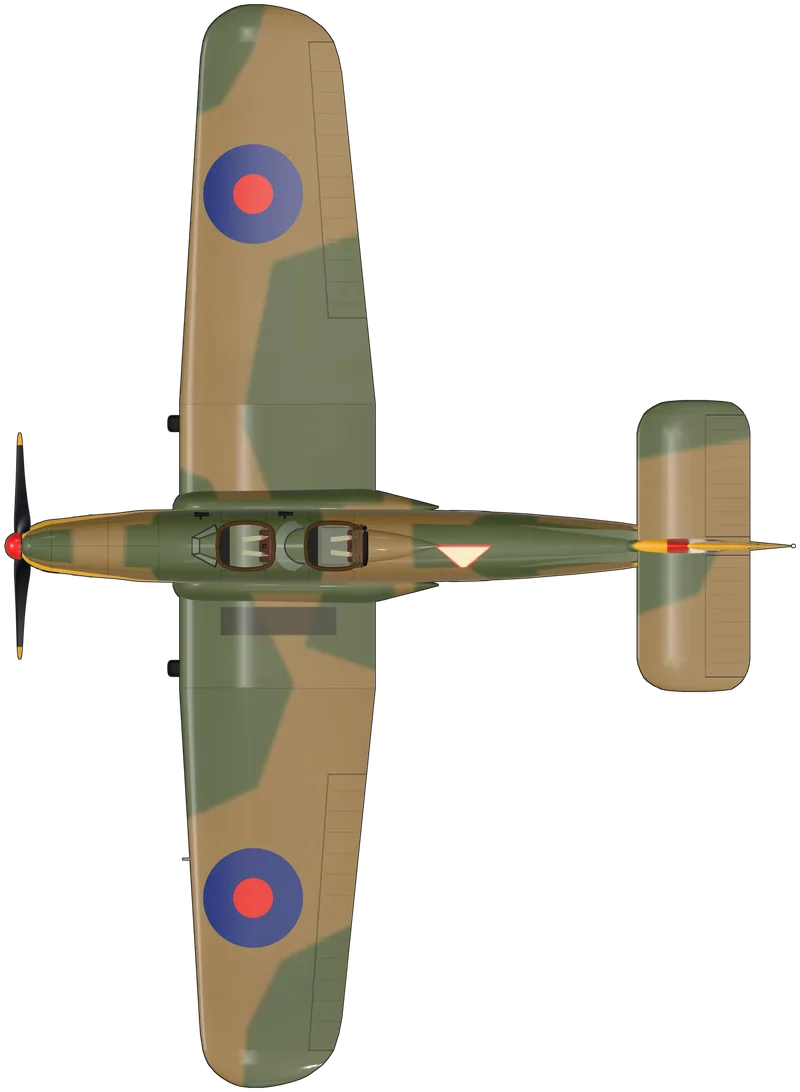
Miles Magister

05 · Elementary trainer · Magister I P6382 (G-AJRS)
Side view of the Miles Magister, Magister I P6382 (G-AJRS)
Port side
Top view of the Miles Magister, Magister I P6382 (G-AJRS)
Plan, from above
Front view of the Miles Magister, Magister I P6382 (G-AJRS)
Head-on

In the mid-1930s the RAF taught its pilots on biplanes, while the fighters they would go on to fly were becoming monoplanes. F. G. Miles of Phillips & Powis at Woodley, near Reading, had already built the Hawk Trainer, a two-seat version of his light Hawk monoplane, and the Air Ministry wrote specification T.40/36 around a militarised version of it. The prototype M.14, flown by Miles on 20 March 1937, was a low-wing monoplane built of spruce and plywood, with tandem open cockpits, flaps, a fixed undercarriage and a 130 hp de Havilland Gipsy Major I. It gave pupils the feel of a monoplane, flaps and all, before they moved on to the Harvard, the Master and then the Hurricane and Spitfire.

The Magister was the RAF’s first monoplane trainer, but it was built almost entirely of wood: a spruce and plywood airframe in an age that was turning to metal.

P6382 was built by Phillips & Powis at Woodley in 1939 and served with the RAF as an elementary trainer.

First flight
20 March 1937
Role
Elementary trainer
Maker
Phillips & Powis Aircraft (Miles), Britain
Engine
de Havilland Gipsy Major I four-cylinder inverted inline, 130 hp
Crew
2
Wingspan
10.31 m (33 ft 10 in)
Length
7.51 m (24 ft 8 in)
Height
2.03 m (6 ft 8 in)
Top speed
132 mph
Built
1,303
In service
1937–1940s

Fairey Swordfish

06 · Carrier torpedo bomber · Swordfish I W5856 (G-BMGC)
Side view of the Fairey Swordfish, Swordfish I W5856 (G-BMGC)
Port side
Top view of the Fairey Swordfish, Swordfish I W5856 (G-BMGC)
Plan, from above
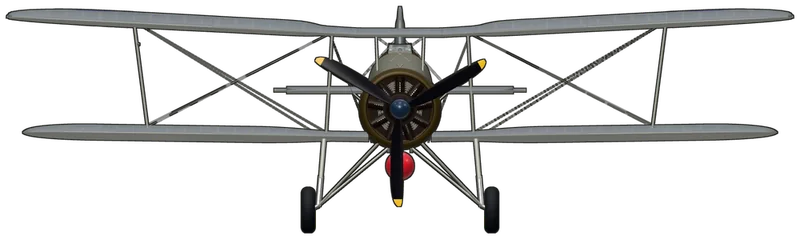
Front view of the Fairey Swordfish, Swordfish I W5856 (G-BMGC)
Head-on

Fairey built the Swordfish as a private venture, the TSR II, a torpedo, spotter and reconnaissance biplane for the Fleet Air Arm developed from an earlier design that had crashed in 1933. The prototype first flew on 17 April 1934, and the Admiralty ordered it into production as the Swordfish. It was a fabric-covered two-bay biplane of steel and light alloy with a Bristol Pegasus radial, open cockpits for a pilot, an observer and a telegraphist air gunner, and wings that folded back beside the fuselage for stowage aboard ship.

The Swordfish outlasted its intended replacement: the Fairey Albacore left front-line service before it did, and Swordfish were still flying operationally when the war in Europe ended.

W5856 was built by Blackburn at Sherburn-in-Elmet and first flew on 21 October 1941.

First flight
17 April 1934
Role
Carrier torpedo bomber
Maker
Fairey Aviation (Blackburn Aircraft under licence), Britain
Engine
Bristol Pegasus IIIM3 nine-cylinder radial, 690 hp
Crew
3
Wingspan
13.87 m (45 ft 6 in)
Length
10.87 m (35 ft 8 in)
Height
3.76 m (12 ft 4 in)
Top speed
139 mph
Built
2,391
In service
1936–1945

Supermarine Walrus

07 · Shipborne reconnaissance and air-sea rescue amphibian · Walrus I L2301
Side view of the Supermarine Walrus, Walrus I L2301
Port side
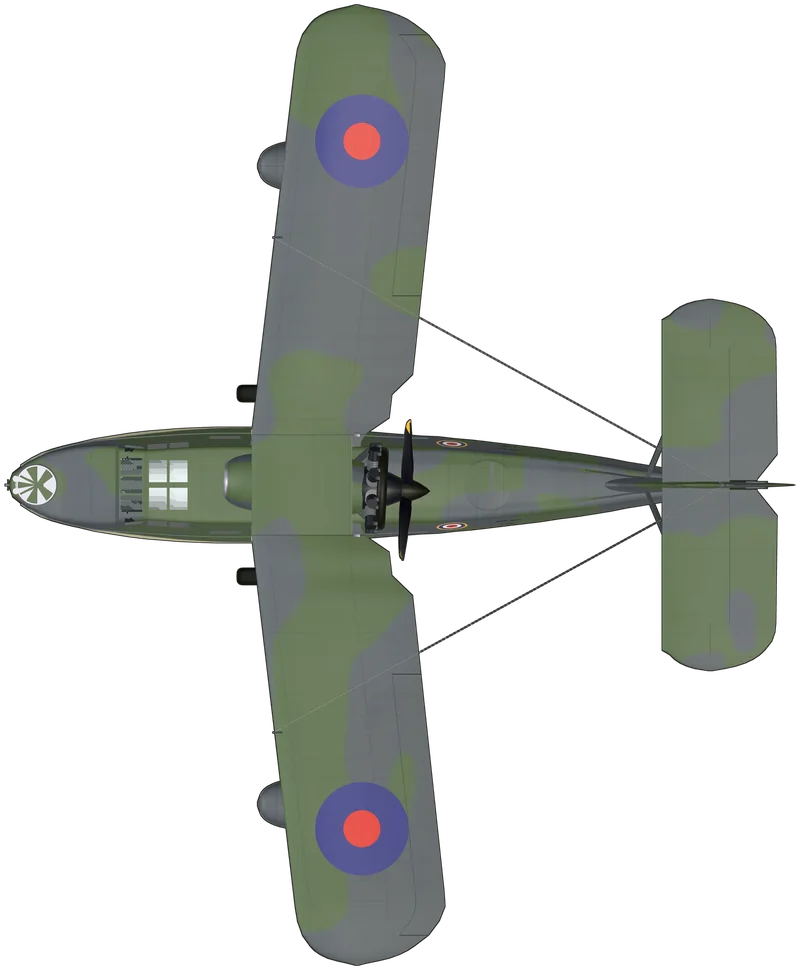
Top view of the Supermarine Walrus, Walrus I L2301
Plan, from above
Front view of the Supermarine Walrus, Walrus I L2301
Head-on

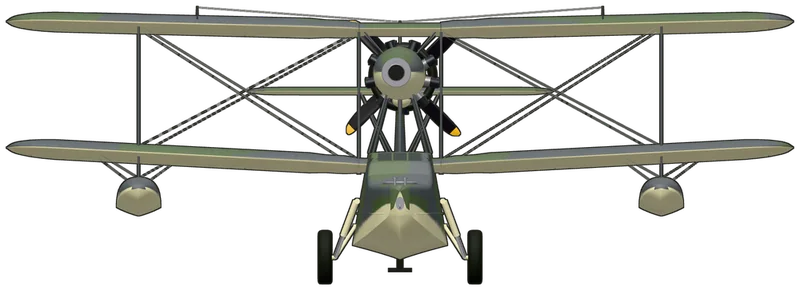
R. J. Mitchell designed the Walrus at Supermarine as a private venture, a small amphibian that warships could launch from a catapult to scout and spot for their guns. It grew out of the company’s earlier Seagull biplanes but had a single-step light-alloy hull, retractable main wheels and wings that folded back beside the hull. The Bristol Pegasus radial sat in a nacelle between the wings, driving a pusher propeller, and the whole aircraft was stressed to be catapulted with a full load.

The Walrus was the first British squadron aircraft with a retractable main undercarriage, completely enclosed crew accommodation and an all-metal fuselage, and the first amphibian to be catapulted from a ship with a full military load.

L2301 was built by Supermarine and delivered to the Irish Air Corps in March 1939 as N18, one of three Walruses used for coastal patrols during the Emergency; it suffered an engine failure and was damaged in a ditching on its delivery flight.

First flight
21 June 1933
Role
Shipborne reconnaissance and air-sea rescue amphibian
Maker
Supermarine (Saunders-Roe under licence), Britain
Engine
Bristol Pegasus VI nine-cylinder radial, 750 hp
Crew
3
Wingspan
13.97 m (45 ft 10 in)
Length
11.45 m (37 ft 7 in)
Height
4.65 m (15 ft 3 in)
Top speed
135 mph
Built
~740
In service
1936–1946

Avro Rota I

08 · Army co-operation autogiro · Rota I K4232
Side view of the Avro Rota I, Rota I K4232
Port side
Top view of the Avro Rota I, Rota I K4232
Plan, from above
Front view of the Avro Rota I, Rota I K4232
Head-on

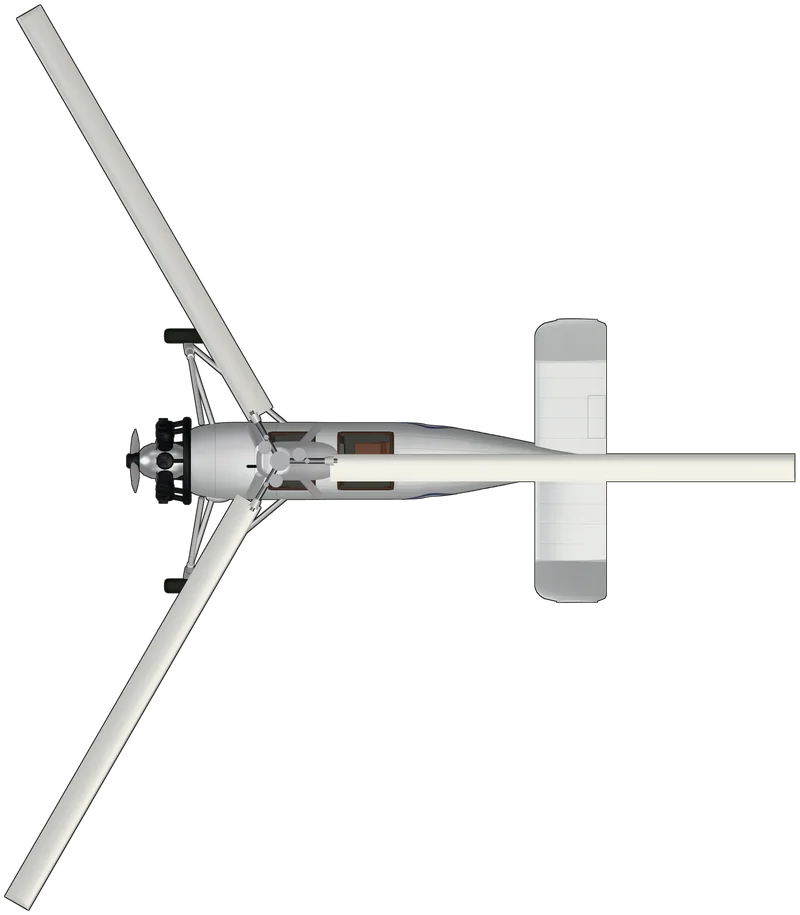
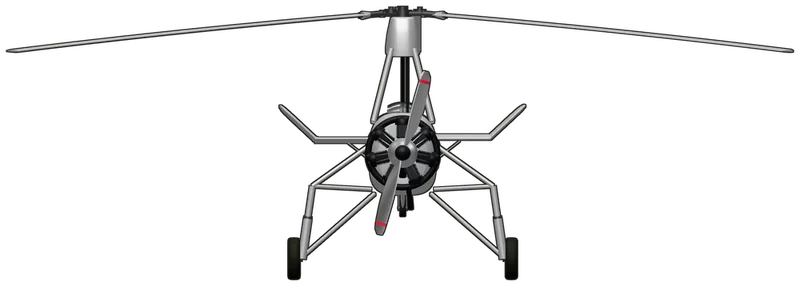
The Spanish engineer Juan de la Cierva invented the autogiro to make an aeroplane that could not stall. Its rotor was not driven by the engine: once the machine was moving, air flowing up through the blades kept them turning, and they went on lifting it at speeds at which a wing would have quit. His C.4 made the first successful autogiro flight at Getafe in January 1923, and in 1926 he moved his work to Britain and formed the Cierva Autogiro Company.

The C.30 had no ailerons, elevators or rudder: the pilot flew it by tilting the whole rotor head with a control column that hung down from the hub above his head.

K4232 is one of the ten Rotas built by Avro at Manchester for the RAF, and it was delivered to the School of Army Co-operation at Old Sarum, Wiltshire, on 25 August 1934.

First flight
1933
Role
Army co-operation autogiro
Maker
Cierva Autogiro Company / A. V. Roe (Avro), Britain
Engine
Armstrong Siddeley Genet Major IA radial, 140 hp
Crew
2
Wingspan
11.28 m (37 ft 0 in)
Length
6.01 m (19 ft 9 in)
Height
3.38 m (11 ft 1 in)
Top speed
110 mph
Built
~180
In service
1934–1945

Mignet HM.14 Flying Flea

09 · Home-built tandem-wing light aircraft · HM.14 G-AEBB
Side view of the Mignet HM.14 Flying Flea, HM.14 G-AEBB
Port side
Top view of the Mignet HM.14 Flying Flea, HM.14 G-AEBB
Plan, from above
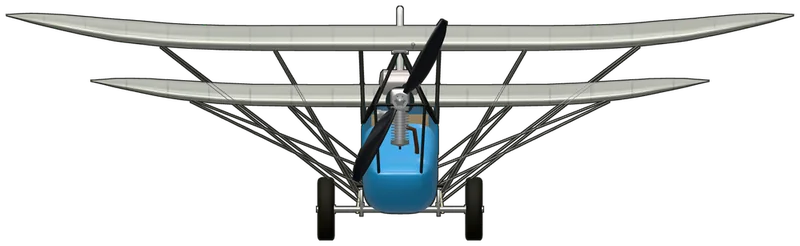
Front view of the Mignet HM.14 Flying Flea, HM.14 G-AEBB
Head-on

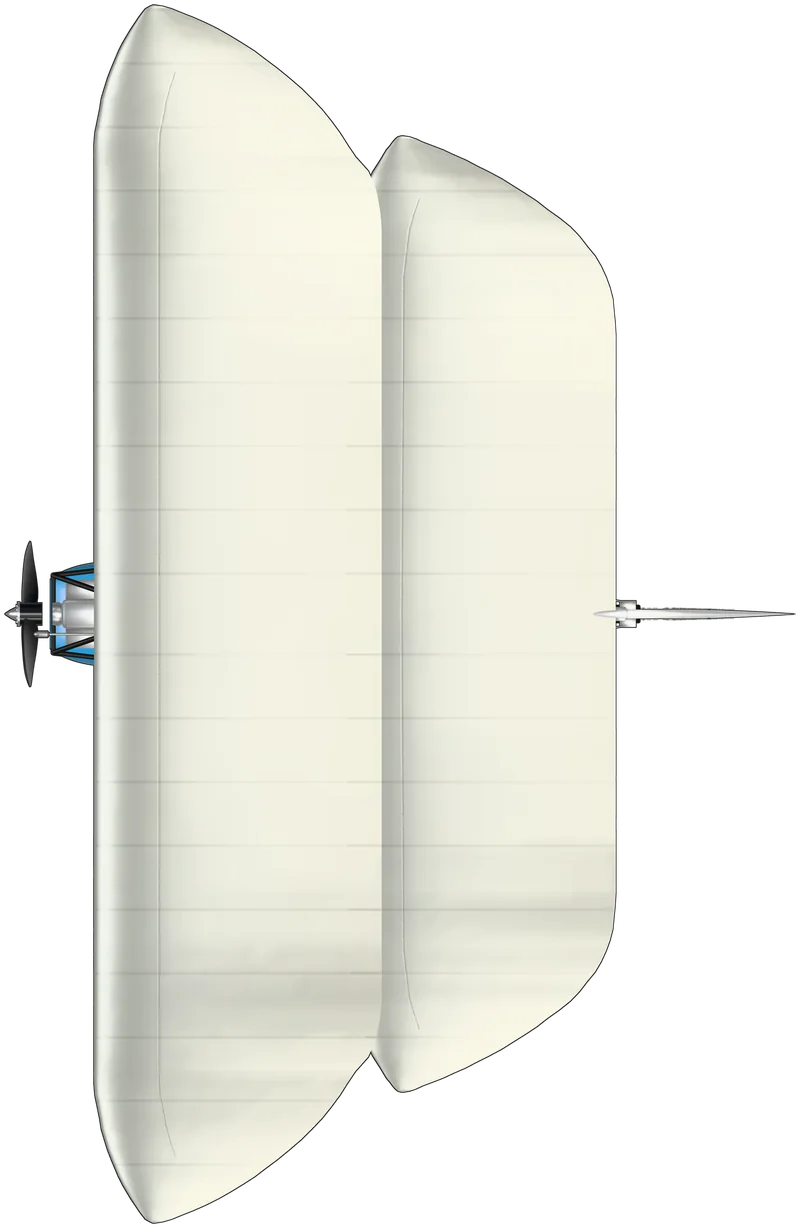
Henri Mignet was a self-taught French designer who wanted an aeroplane anyone could build and fly. His HM.14 Pou-du-Ciel, or ‘sky louse’, first flew on 10 September 1933. It had two wings in tandem and no tailplane: the pilot moved the stick fore and aft to tilt the whole front wing and side to side to swing the large rudder.

There were no ailerons and no rudder pedals: the stick tilted the front wing to climb or dive and swung the rudder to turn.

G-AEBB was built by K. W. Owen in Southampton in 1935–36 and registered in January 1936, just as the Flea was grounded; it probably never flew.

First flight
10 September 1933
Role
Home-built tandem-wing light aircraft
Maker
Henri Mignet (amateur-built), France
Engine
Scott Flying Squirrel two-stroke inverted twin, 16 hp
Crew
1
Wingspan
6 m (19 ft 8 in)
Length
3.91 m (12 ft 10 in)
Height
1.68 m (5 ft 6 in)
Top speed
62 mph
Built
hundreds, at home
In service
1933–1936 (grounded in Britain and France)

Supermarine S.6A

10 · Schneider Trophy racer · S.6A N248
Side view of the Supermarine S.6A, S.6A N248
Port side
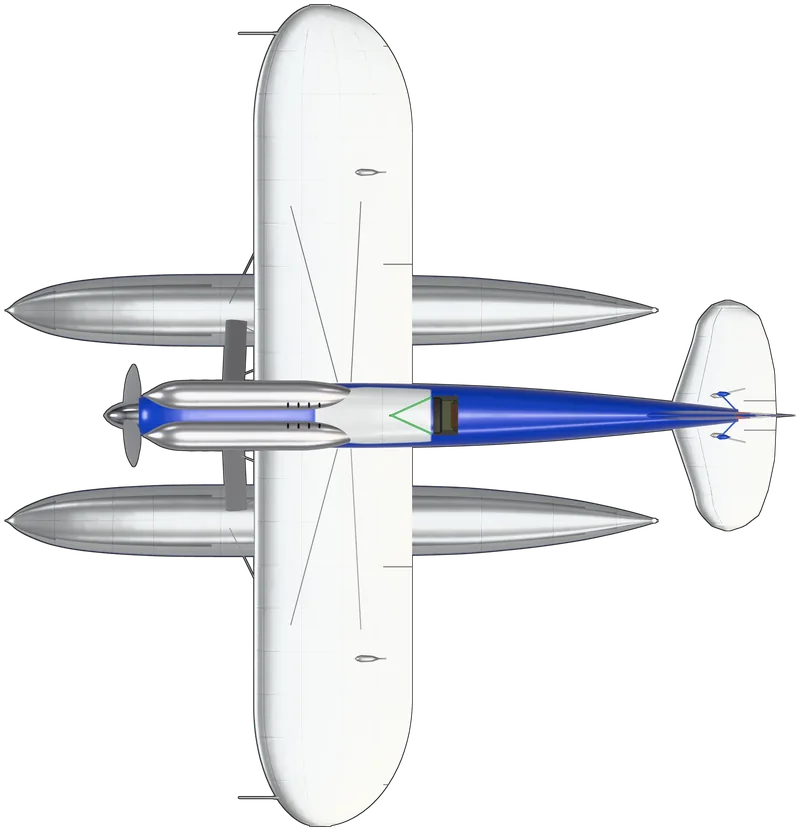
Top view of the Supermarine S.6A, S.6A N248
Plan, from above
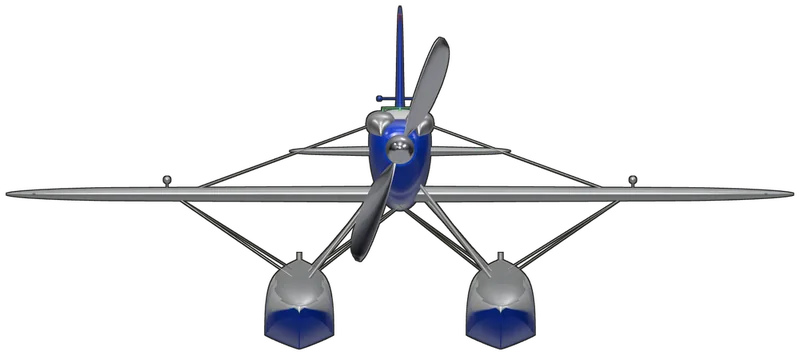
Front view of the Supermarine S.6A, S.6A N248
Head-on

R.J. Mitchell designed the S.6 for the 1929 Schneider Trophy, a seaplane race that had become a contest of national prestige. Rolls-Royce built the R engine for it, a supercharged V-12 of nearly 1,900 hp, and Mitchell wrapped it in the smallest metal airframe he could, cooling it through double-skinned radiators that formed the wings and float surfaces.

N248 played the S.6B in the 1942 film “The First of the Few”.

N248 was disqualified from the 1929 race for turning inside a marker pylon but still set world records for 50 and 100 km.

First flight
10 August 1929
Role
Schneider Trophy racer
Maker
Supermarine, Britain
Engine
Rolls-Royce R supercharged V-12, about 1,900 hp
Crew
1
Wingspan
9.14 m (30 ft 0 in)
Length
8.79 m (28 ft 10 in)
Height
4 m (13 ft 1 in)
Top speed
357 mph
Built
2
In service
1929–1931

Compared

Specifications at a glance

Span, length, speed and production for every aircraft on this page.

Specifications compared
AircraftFirst flewRoleSpanLengthTop speedBuiltUK museums
Hawker Hart family1934Light day bomber11.35 m9.02 m184 mph~3,0003
Gloster Gladiator1934Biplane fighter9.83 m8.36 m257 mph7475
de Havilland Tiger Moth1931Elementary trainer8.94 m7.29 m109 mph8,8687
Avro Anson1935Light transport & trainer17.53 m12.88 m188 mph11,0209
Miles Magister1937Elementary trainer10.31 m7.51 m132 mph1,3033
Fairey Swordfish1934Carrier torpedo bomber13.87 m10.87 m139 mph2,3913
Supermarine Walrus1933Shipborne reconnaissance and air-sea rescue amphibian13.97 m11.45 m135 mph~7403
Avro Rota I1933Army co-operation autogiro11.28 m6.01 m110 mph~1803
Mignet HM.14 Flying Flea1933Home-built tandem-wing light aircraft6 m3.91 m62 mphhundreds, at home6
Supermarine S.6A1929Schneider Trophy racer9.14 m8.79 m357 mph21

Questions

Asked and answered

What was the RAF’s last biplane fighter?

The Gloster Gladiator, which entered service in 1937. Gladiators still fought in 1940, in Norway, over Malta and during the Battle of Britain.

Why does the Schneider Trophy matter?

The races drove speed and engine development. The Supermarine racers led by R. J. Mitchell, and the Rolls-Royce R engine, fed directly into the Spitfire and the Merlin.

How many Tiger Moths were built?

More than 8,000. It was the RAF’s standard elementary trainer from 1932 until the Chipmunk replaced it in the early 1950s, and many still fly.

More dioramas

Other collections

The models and drawings are procedural interpretations built from published dimensions, three-view drawings and photographs of each airframe, and the airfield is a compressed impression of its period, not a plan of a real station. Aircraft shown overhead (S.6A) did not operate from airfields like this one. Treat the museum aircraft as the reference.