AP 118 · No. 10 Section II · Aircraft Collection 10 / 12

Aircraft/Collections/Helicopters

Helicopter base · 1950–2018

British military helicopters

From licence-built Sikorskys to Anglo-French designs and the fastest helicopter of its day: seventy years of rotary wings, lifting off from their pads.

9
Aircraft
1950–2018
Period
19
UK museums hold them

The diorama

Diorama · 1950–2018

Loading the airfield…

A helicopter base with a row of marked landing pads in front of the hangars and control tower. Each helicopter lifts into the hover, moves forward, flies a circuit at low level and returns to its own pad.

Drag to look around · ctrl + scroll to zoom · pick an aircraft to follow it

British military helicopters began with licences. Westland built Sikorsky designs as the Dragonfly, the Whirlwind, the Wessex and the Sea King, re-engining most of them with British turbines and making them its own, while the Bristol Sycamore became the first British-designed helicopter to enter service, in 1953.

Helicopters proved themselves in Malaya, at Suez, where Whirlwinds and Sycamores made the first helicopter assault landing in 1956, and in Borneo and Aden. The Army Air Corps took up the Skeeter, then the Scout and the Anglo-French Gazelle for observation; the RAF used the Puma and the Chinook to carry troops; and the yellow search and rescue Whirlwinds, Wessexes and Sea Kings became a familiar sight round the coast.

The Westland Lynx, another Anglo-French programme, set the world helicopter speed record in 1986 at more than 249 mph, and served the Army and Navy for four decades. Most of the types on this page can be seen in British museums, from the Helicopter Museum at Weston-super-Mare to the Army Flying Museum at Middle Wallop.

To scale

The collection side by side

Every aircraft drawn at the same scale, so a Sea King HAR.3 and a Skeeter AOP.12 can be compared at a glance.

  • Bristol Sycamore side profile, to scaleSycamore HR.14 · 14.07 m
  • Westland Dragonfly side profile, to scaleDragonfly · 17.54 m
  • Saunders-Roe Skeeter side profile, to scaleSkeeter AOP.12 · 8.13 m
  • Westland Whirlwind side profile, to scaleWhirlwind · 14.27 m
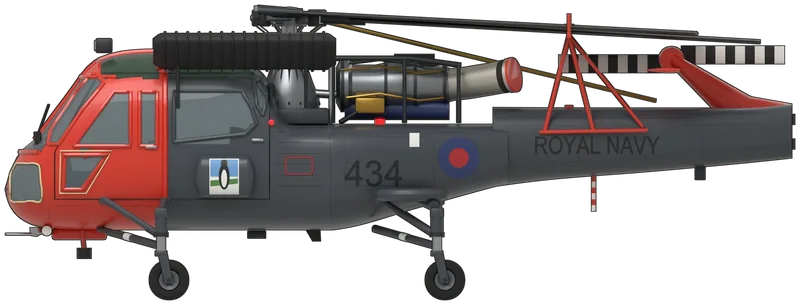
  • Westland Wasp side profile, to scaleWasp HAS.1 · 12.29 m
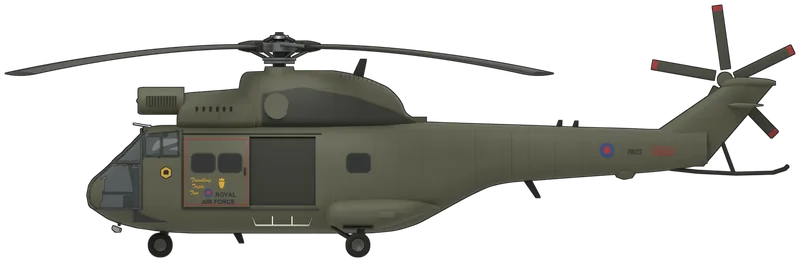
  • Westland/Aérospatiale Puma HC.1 side profile, to scalePuma HC.1 · 18.15 m
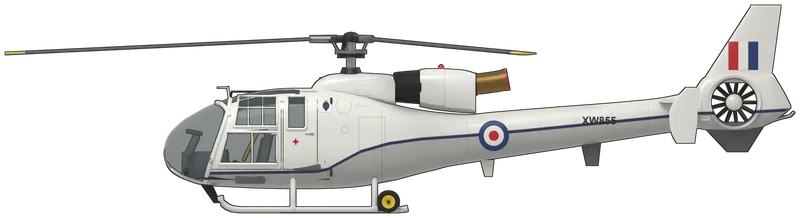
  • Aérospatiale Gazelle side profile, to scaleGazelle HCC.4 · 11.97 m
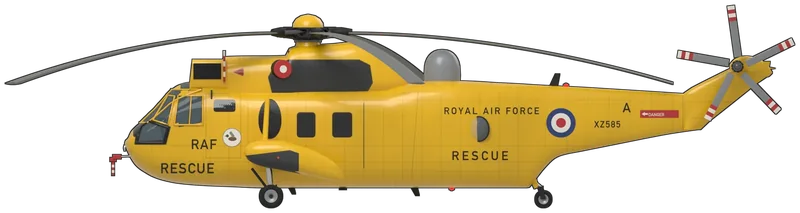
  • Westland Sea King side profile, to scaleSea King HAR.3 · 22.15 m
  • Westland Lynx side profile, to scaleLynx HAS.3 · 15.16 m

10 m

Profiles

Side, top and front

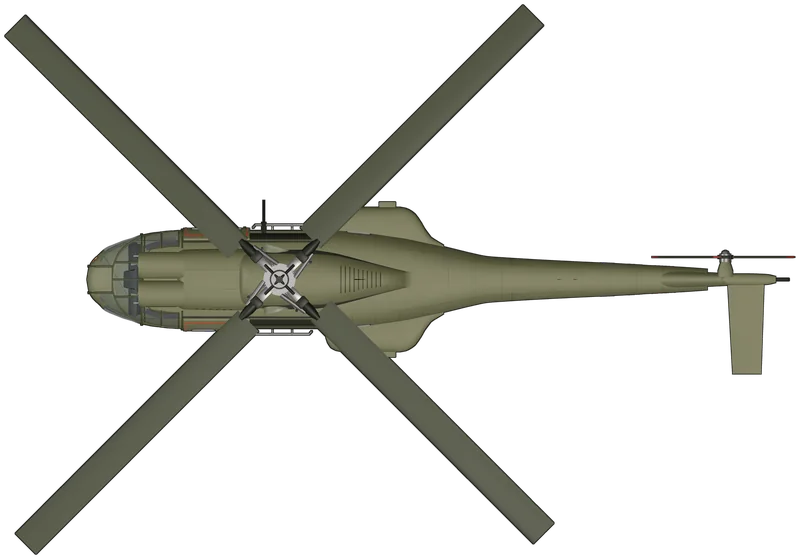
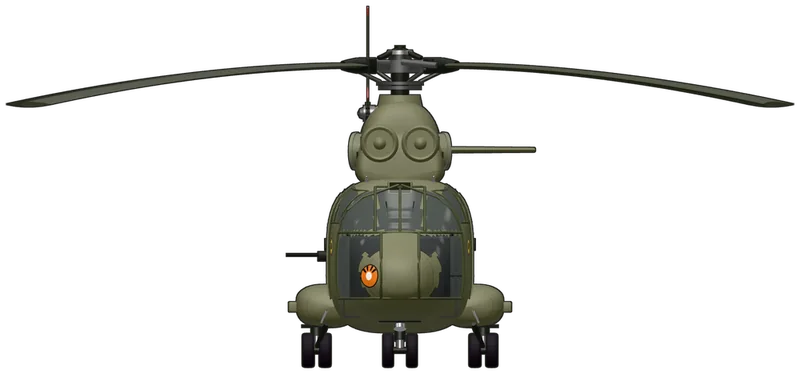
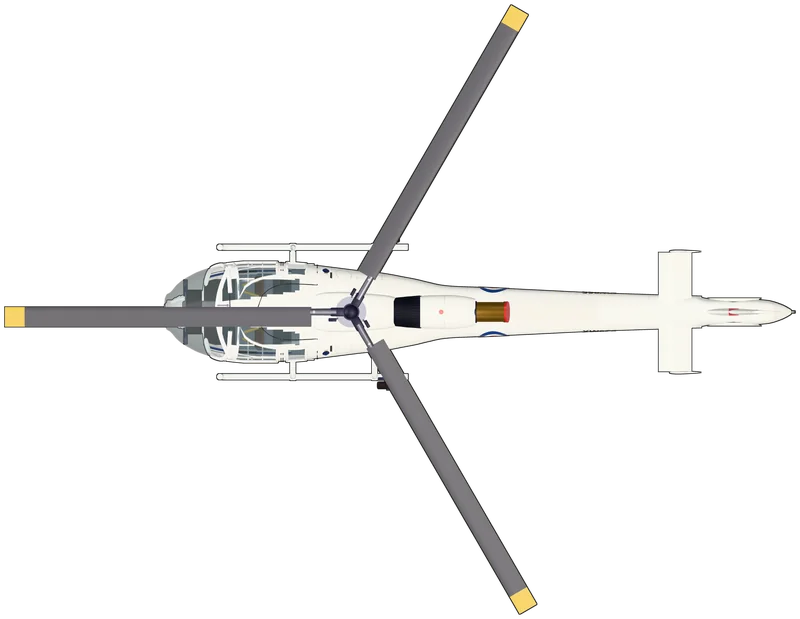
Each aircraft drawn from its 3D model, painted as one real airframe, with its specification.

Bristol Sycamore

01 · Rescue & utility helicopter · HR.14 XL829
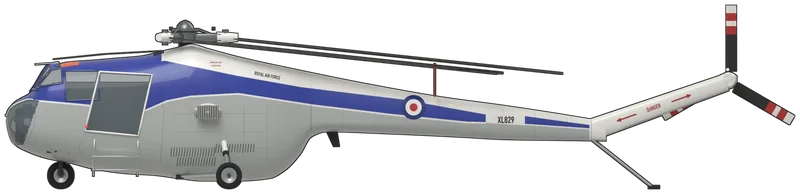
Side view of the Bristol Sycamore, HR.14 XL829
Port side
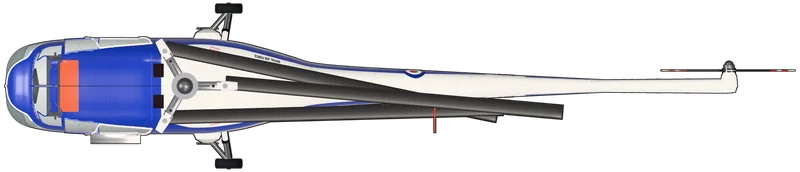
Top view of the Bristol Sycamore, HR.14 XL829
Plan, from above
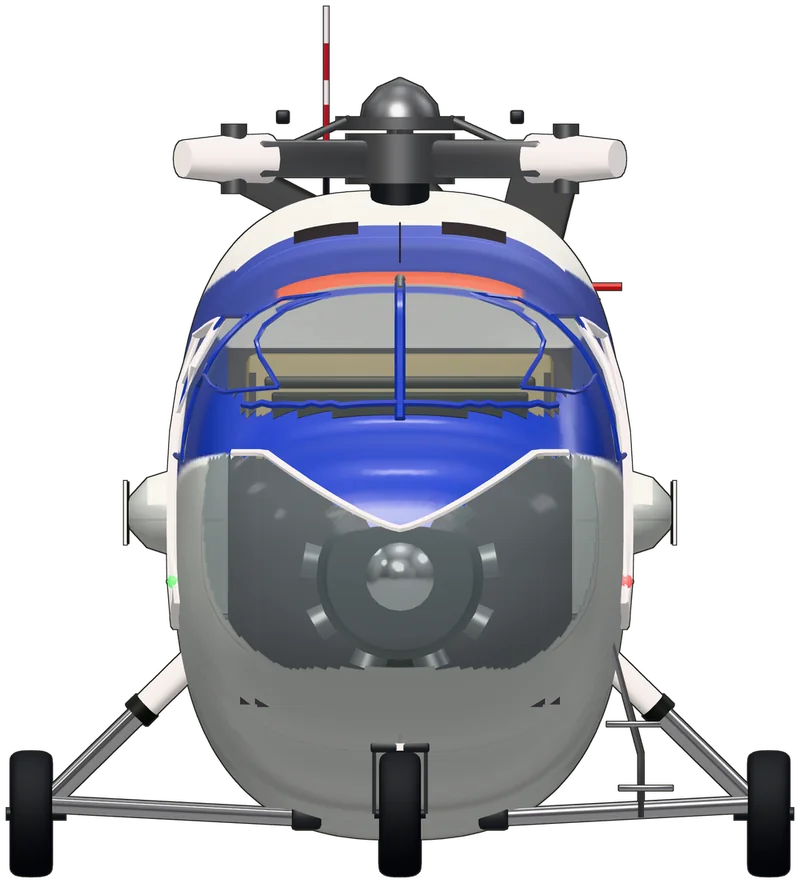
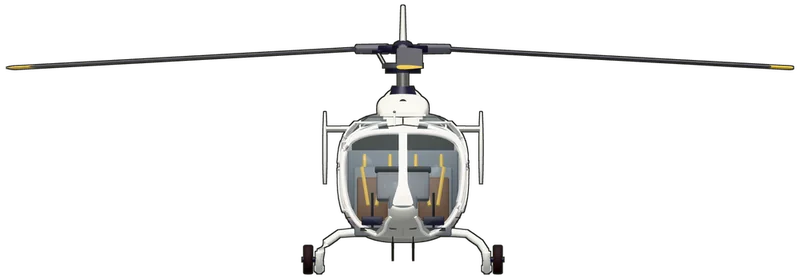
Front view of the Bristol Sycamore, HR.14 XL829
Head-on

Bristol’s helicopter department designed the Sycamore around a single main rotor and a piston radial engine mounted low in the nose, under the glazed dome. The prototype Type 171 flew on 27 July 1947, and the type was the first British-designed helicopter to enter RAF service.

The Sycamore’s Leonides engine sits in the nose, and a long shaft carries its power up and back to the rotor above the cabin.

XL829 is a Sycamore HR.14 in the RAF search-and-rescue finish of silver below and royal blue above, with a white cheat line, Type D roundels and the serial on the tail boom.

First flight
27 July 1947
Role
Rescue & utility helicopter
Maker
Bristol Aeroplane Company, Britain
Engine
one Alvis Leonides 73 nine-cylinder radial, 550 hp
Crew
1–2
Main rotor
14.81 m (48 ft 7 in)
Length
14.07 m (46 ft 2 in)
Height
3.71 m (12 ft 2 in)
Top speed
127 mph
Built
180
In service
1953–1972

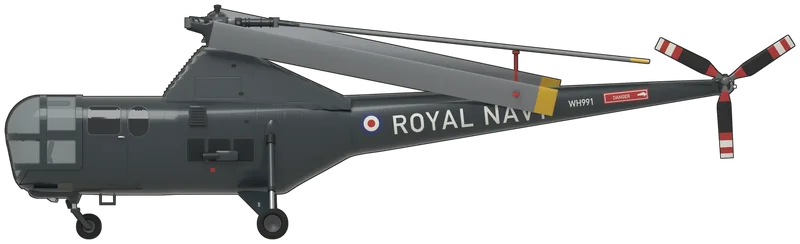
Westland Dragonfly

02 · Plane-guard and rescue helicopter · HR.5 WH991
Side view of the Westland Dragonfly, HR.5 WH991
Port side
Top view of the Westland Dragonfly, HR.5 WH991
Plan, from above
Front view of the Westland Dragonfly, HR.5 WH991
Head-on

The Dragonfly was the Sikorsky S-51 built under licence by Westland at Yeovil, with a British Alvis Leonides radial in place of the American Pratt & Whitney Wasp Junior. The first Westland machine flew on 5 October 1948, and 149 were built up to 1954. The Royal Navy took its first HR.1s in 1950, which made the Dragonfly the first British-built helicopter in military service.

The Dragonfly’s engine sits upright behind the cabin, under the rotor head, and drives the tail rotor through a long shaft down the boom; the pilot sits up front inside a fully glazed nose.

WH991 first flew on 4 February 1953 and joined HMS Illustrious soon afterwards, then served aboard HMS Centaur and at Lee-on-Solent and Eglinton in Northern Ireland.

First flight
5 October 1948
Role
Plane-guard and rescue helicopter
Maker
Westland (licence from Sikorsky), Britain
Engine
Alvis Leonides 23/1 nine-cylinder radial
Crew
1 (+3 passengers)
Main rotor
14.94 m (49 ft 0 in)
Length
17.54 m (57 ft 7 in)
Height
3.95 m (13 ft 0 in)
Top speed
103 mph
Built
~160
In service
1950–1967

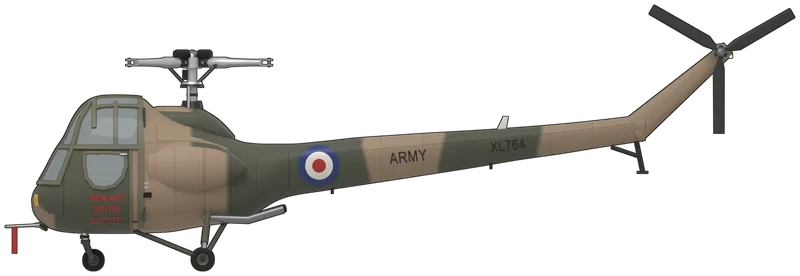
Saunders-Roe Skeeter

03 · Air observation post helicopter · AOP.12 XL764
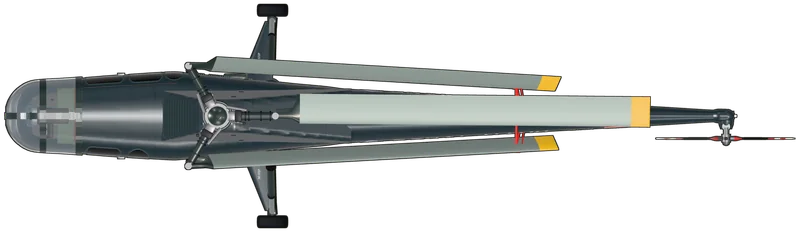
Side view of the Saunders-Roe Skeeter, AOP.12 XL764
Port side
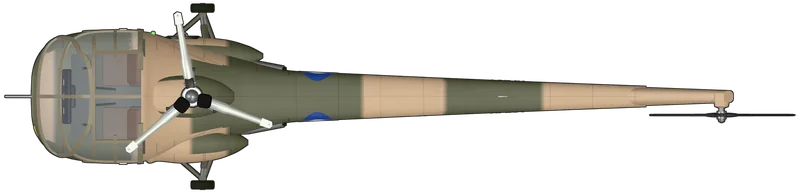
Top view of the Saunders-Roe Skeeter, AOP.12 XL764
Plan, from above
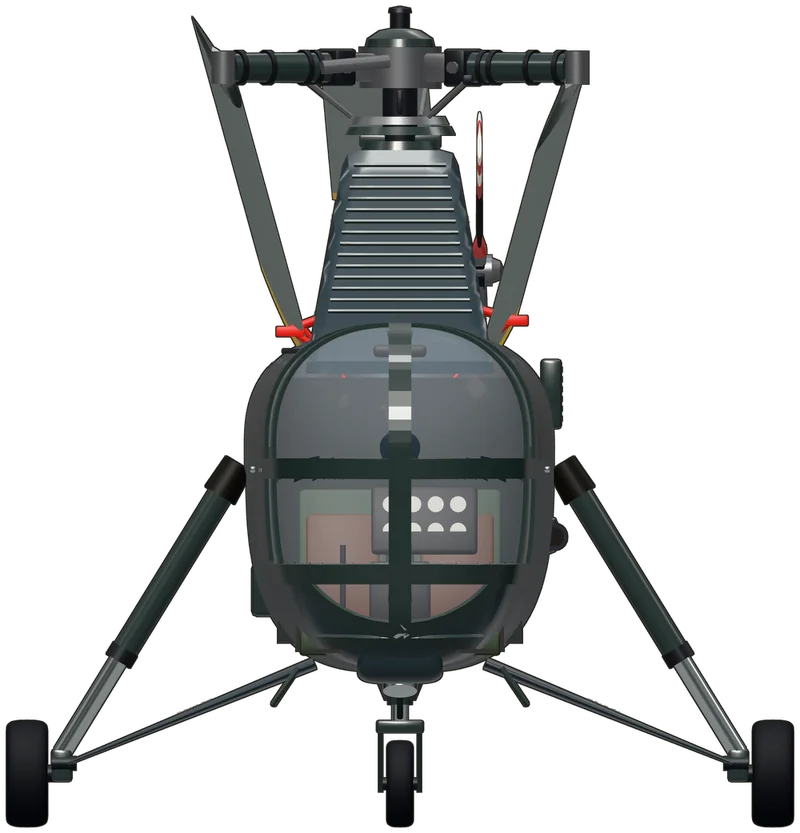
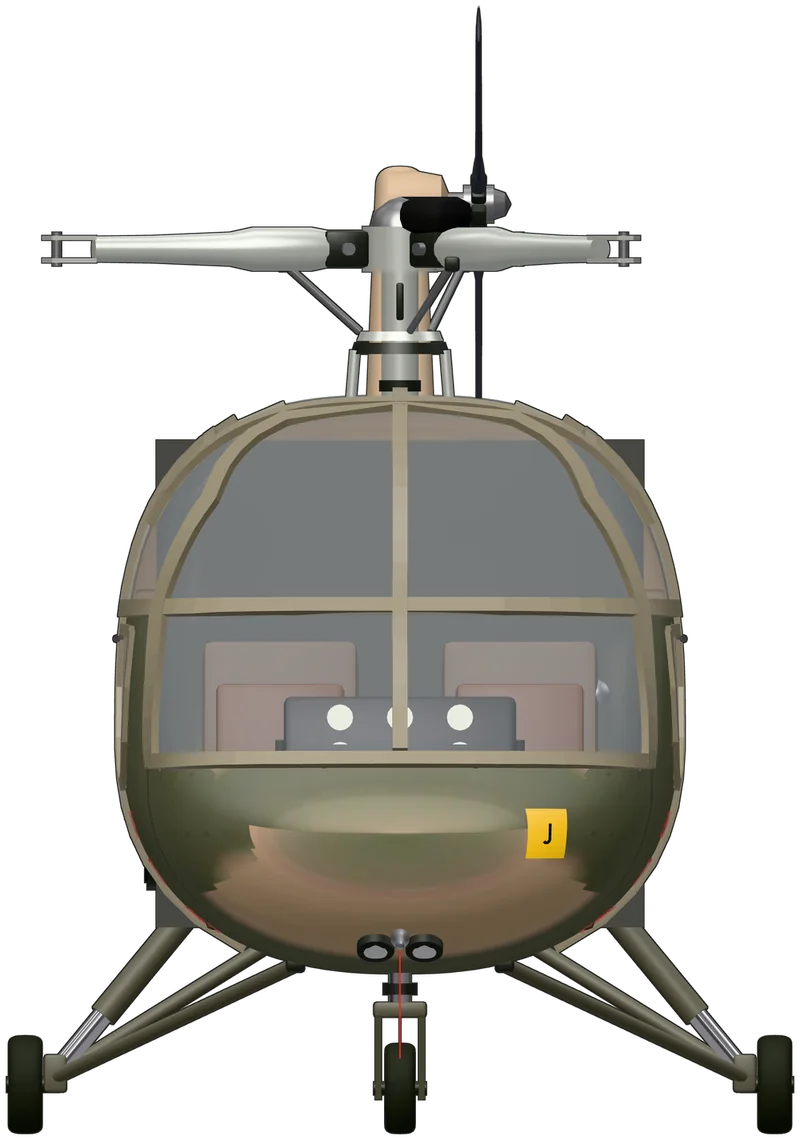
Front view of the Saunders-Roe Skeeter, AOP.12 XL764
Head-on

The Skeeter began as the Cierva W.14, a small two-seat helicopter designed by the Cierva Autogiro Company. The first prototype flew at Eastleigh on 10 October 1948 with a 110 hp Jameson engine. When Cierva’s helicopter work passed to Saunders-Roe in January 1951, the Skeeter came with it, and the Isle of Wight firm spent the next few years curing its faults.

The Skeeter’s engine came from the de Havilland Gipsy Major family that powered the Tiger Moth, here mounted behind the cabin to turn a rotor instead of a propeller.

XL764 was delivered to Eastleigh in September 1958 and joined the Army Air Corps at Middle Wallop on 9 October.

First flight
10 October 1948
Role
Air observation post helicopter
Maker
Saunders-Roe (Cierva design), Britain
Engine
de Havilland Gipsy Major 215 four-cylinder inline
Crew
2
Main rotor
9.75 m (32 ft 0 in)
Length
8.13 m (26 ft 8 in)
Height
2.9 m (9 ft 6 in)
Top speed
109 mph
Built
~80
In service
1956–1968

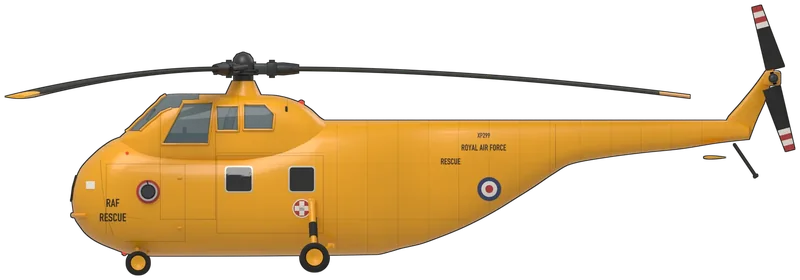
Westland Whirlwind

04 · Search-and-rescue helicopter · HAR.10 XP299
Side view of the Westland Whirlwind, HAR.10 XP299
Port side
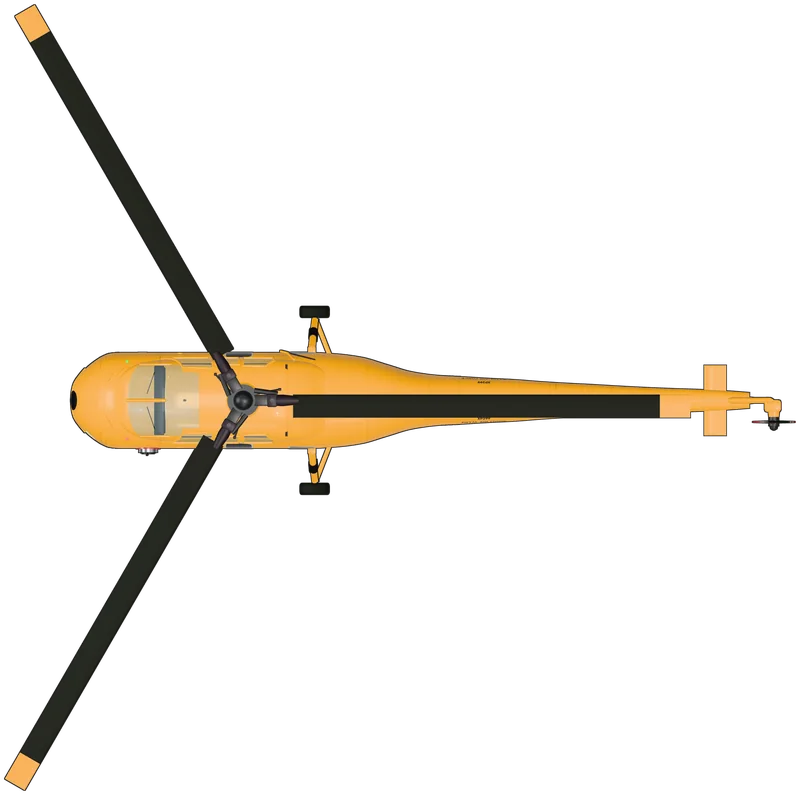
Top view of the Westland Whirlwind, HAR.10 XP299
Plan, from above
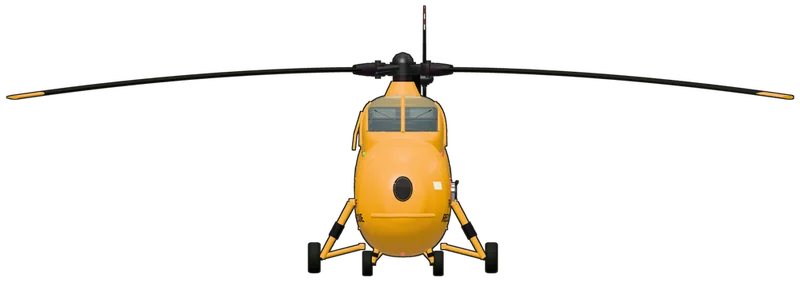
Front view of the Westland Whirlwind, HAR.10 XP299
Head-on

Westland built the Whirlwind under licence from Sikorsky’s S-55. The first British-built machine flew in November 1953, and it served the Royal Navy and the RAF in a long run of marks, powered at first by the American Pratt & Whitney Wasp radial engine in the nose.

The Whirlwind’s turbine engine sits in the nose, so its single exhaust leaves through a port on the left side only.

XP299 is a Westland-built HAR.10 delivered to the RAF in 1962 and flown on search and rescue with No. 22 Squadron in the overall yellow scheme, with “RAF RESCUE” on the nose and a red-and-white rescue badge on each cabin side.

First flight
12 November 1953
Role
Search-and-rescue helicopter
Maker
Westland, Britain
Engine
Rolls-Royce Gnome H.1000 turboshaft, about 1,050 shp
Crew
2–3
Main rotor
16.15 m (53 ft 0 in)
Length
14.27 m (46 ft 10 in)
Height
4.65 m (15 ft 3 in)
Top speed
109 mph
Built
~400
In service
1955–1981

Westland Wasp

05 · Shipborne anti-submarine helicopter · HAS.1 XS567
Side view of the Westland Wasp, HAS.1 XS567
Port side
Top view of the Westland Wasp, HAS.1 XS567
Plan, from above
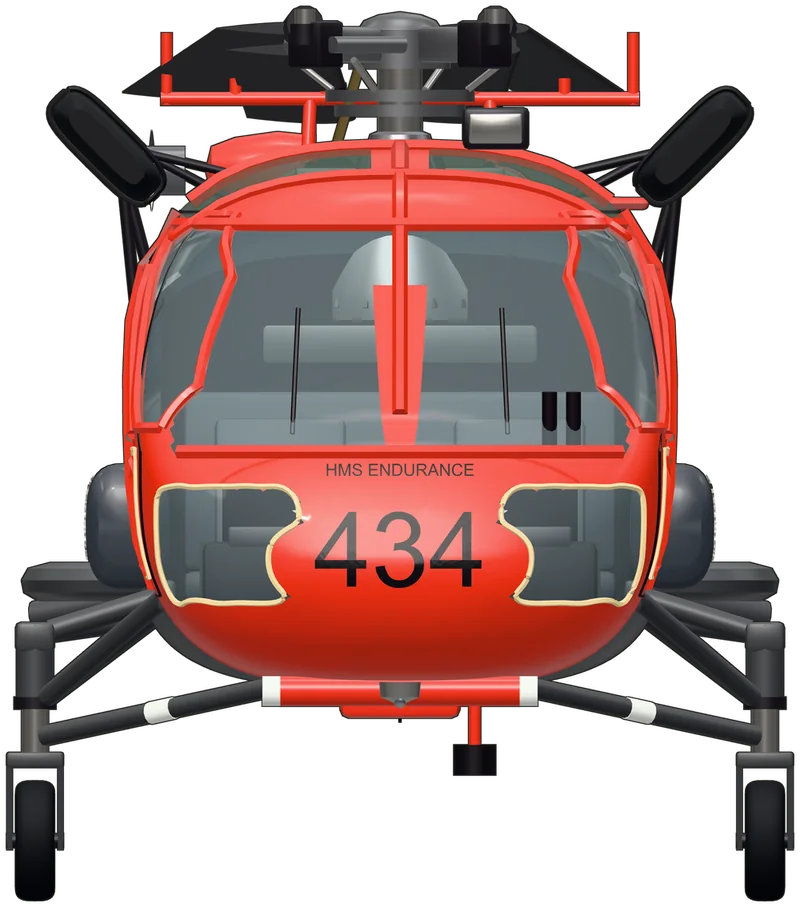
Front view of the Westland Wasp, HAS.1 XS567
Head-on

The Wasp grew out of the Saunders-Roe P.531, a small turbine helicopter developed from the Skeeter that first flew on 20 July 1958. Westland took over Saunders-Roe in 1959 and developed the design two ways: as the Scout for the Army and as the Wasp for the Royal Navy. The first pre-production Wasps flew on 28 October 1962.

On 25 April 1982 Wasps from HMS Endurance and HMS Plymouth attacked the Argentine submarine Santa Fe off South Georgia with AS.12 missiles, helping to put it out of action.

XS567 was delivered to the Royal Navy in June 1964 and flew with 829 Naval Air Squadron’s ship’s flights, first in HMS Gurkha and then in HMS Apollo, with which it took part in the first Armilla patrol in the Gulf in 1981.

First flight
28 October 1962
Role
Shipborne anti-submarine helicopter
Maker
Westland, Britain
Engine
1 × Rolls-Royce Nimbus 103 turboshaft, derated to 710 shp
Crew
2 (pilot and aircrewman)
Main rotor
9.83 m (32 ft 3 in)
Length
12.29 m (40 ft 4 in)
Height
3.56 m (11 ft 8 in)
Top speed
131 mph
Built
~280
In service
1963–1988

Westland/Aérospatiale Puma HC.1

06 · Medium support helicopter · Puma HC.1 XW222
Side view of the Westland/Aérospatiale Puma HC.1, Puma HC.1 XW222
Port side
Top view of the Westland/Aérospatiale Puma HC.1, Puma HC.1 XW222
Plan, from above
Front view of the Westland/Aérospatiale Puma HC.1, Puma HC.1 XW222
Head-on

The Puma was designed by Sud Aviation in the early 1960s to give the French Army a medium transport helicopter that could carry a section of troops in any weather. Two Turbomeca Turmo turboshafts sat side by side on the cabin roof, driving a four-bladed main rotor, with the tail rotor on the starboard side of the boom and the main wheels retracting into sponsons on the cabin sides. The prototype SA 330 first flew on 15 April 1965.

The Puma came to the RAF through the 1967 Anglo-French helicopter agreement, the same deal that produced the Gazelle and the Westland Lynx.

XW222 was one of the RAF’s 48 Westland-assembled Puma HC.1s, delivered in the early 1970s.

First flight
15 April 1965
Role
Medium support helicopter
Maker
Sud Aviation / Aérospatiale, assembled by Westland, France
Engine
2 × Turbomeca Turmo IIIC4 turboshafts, 1,328 shp each
Crew
3, plus up to 16 troops
Main rotor
15 m (49 ft 3 in)
Length
18.15 m (59 ft 7 in)
Height
5.14 m (16 ft 10 in)
Top speed
174 mph
Built
~940
In service
1971–2025

Aérospatiale Gazelle

07 · Light helicopter · Gazelle HCC.4 XW855
Side view of the Aérospatiale Gazelle, Gazelle HCC.4 XW855
Port side
Top view of the Aérospatiale Gazelle, Gazelle HCC.4 XW855
Plan, from above
Front view of the Aérospatiale Gazelle, Gazelle HCC.4 XW855
Head-on

Sud Aviation designed the Gazelle in the mid-1960s to replace its piston-engined Alouette II, using a Turbomeca Astazou turboshaft, a streamlined fuselage with a large glazed cabin and a three-bladed main rotor. The first prototype, the SA 340, flew on 7 April 1967 with a conventional tail rotor borrowed from the Alouette II. In 1968 the second prototype was given the feature that made the type famous: a fenestron, a small many-bladed fan turning inside a duct in the fin.

The Gazelle was the first helicopter to fly with a fenestron, a tail rotor of thirteen blades spinning inside a duct in the fin, which is safer for people on the ground and quieter than an open rotor.

XW855 was built by Westland as a Gazelle HT.3 and issued to the RAF on 31 July 1973, flying to Ternhill that August to train helicopter pilots with the Central Flying School.

First flight
7 April 1967
Role
Light helicopter
Maker
Aérospatiale and Westland, France
Engine
1 × Turbomeca Astazou IIIN2 turboshaft, 592 shp
Crew
1 or 2 pilots, with up to three passengers
Main rotor
10.5 m (34 ft 5 in)
Length
11.97 m (39 ft 3 in)
Height
3.15 m (10 ft 4 in)
Top speed
193 mph
Built
~3,000
In service
1973–2023

Westland Sea King

08 · Search and rescue helicopter · Sea King HAR.3 XZ585
Side view of the Westland Sea King, Sea King HAR.3 XZ585
Port side
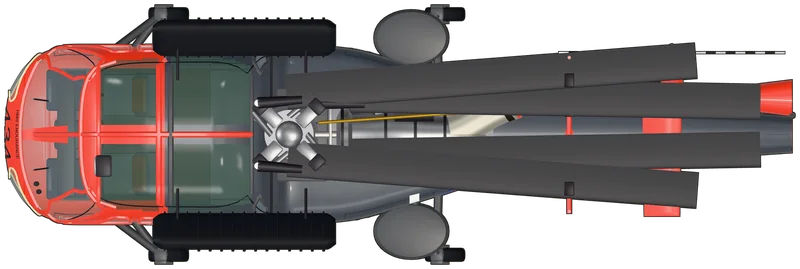
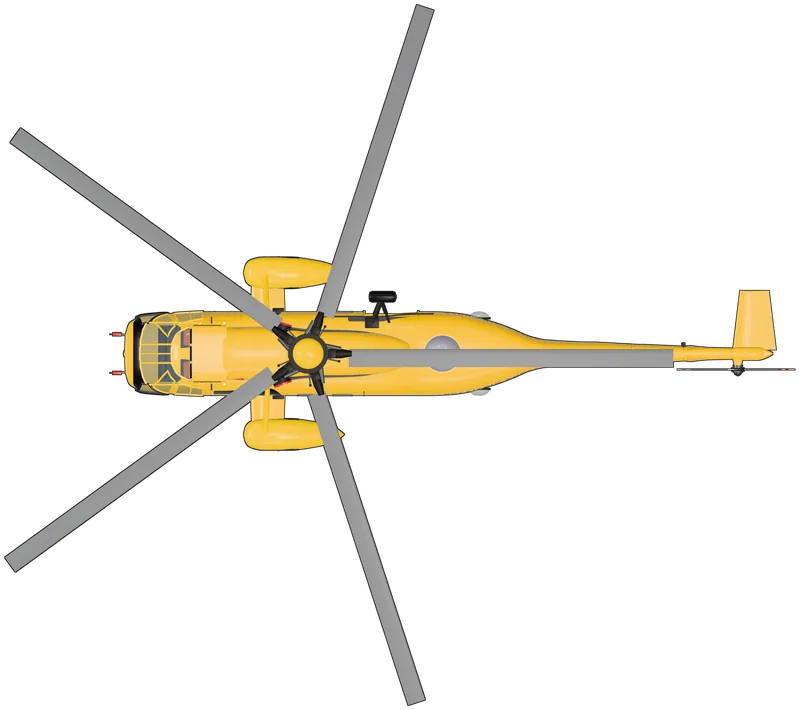
Top view of the Westland Sea King, Sea King HAR.3 XZ585
Plan, from above
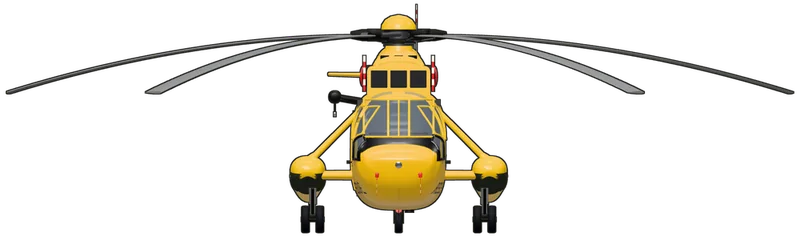
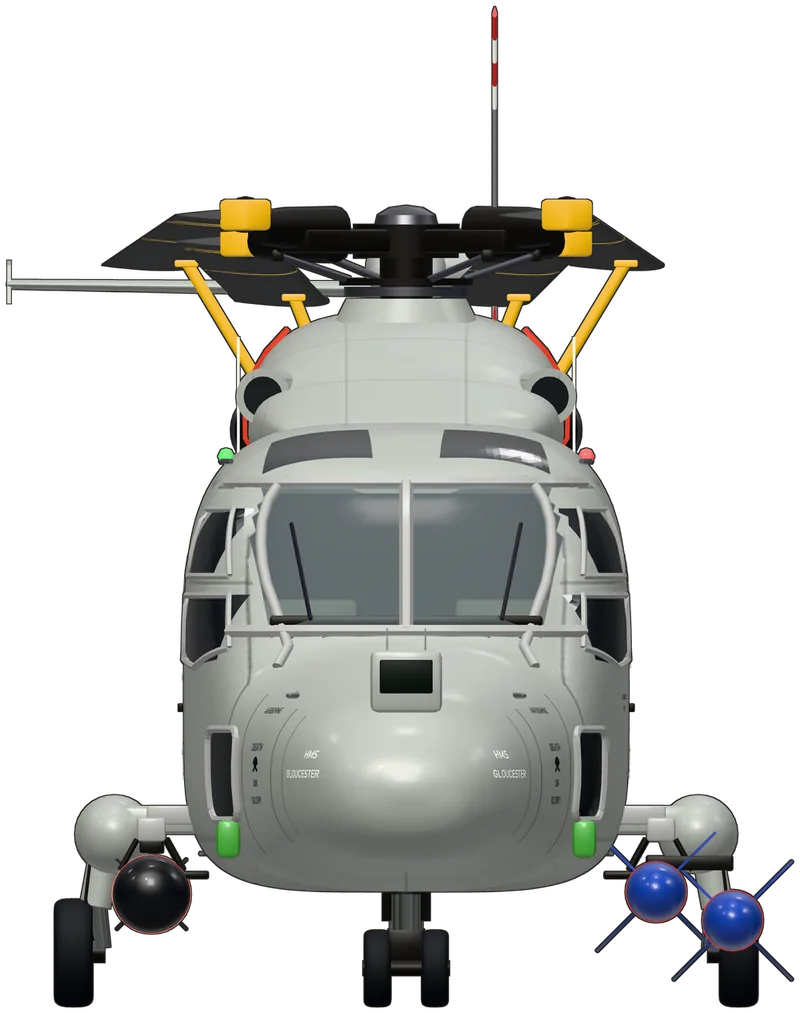
Front view of the Westland Sea King, Sea King HAR.3 XZ585
Head-on

The Sea King began as the Sikorsky S-61, a twin-turbine anti-submarine helicopter for the US Navy that first flew on 11 March 1959 as the SH-3. It had a watertight boat hull with stabilising sponsons, so that it could alight on the sea, and a five-blade rotor driven by two engines mounted side by side above the cabin. Westland took a licence and re-engined it with Rolls-Royce Gnome turboshafts, added British sonar and avionics, and flew the first Sea King HAS.1 at Yeovil on 7 May 1969.

Prince William flew Sea King HAR.3s as a search and rescue pilot with C Flight, No. 22 Squadron, at RAF Valley on Anglesey from 2010 to 2013.

XZ585 was the first Sea King built for the RAF and flew for the first time on 6 September 1977.

First flight
7 May 1969
Role
Search and rescue helicopter
Maker
Westland (Sikorsky design), Britain
Engine
2 × Rolls-Royce Gnome H.1400-1 turboshafts, 1,660 shp each
Crew
4: two pilots, a radar and winch operator and a winchman
Main rotor
18.9 m (62 ft 0 in)
Length
22.15 m (72 ft 8 in)
Height
5.13 m (16 ft 10 in)
Top speed
129 mph
Built
344 (UK)
In service
1969–2018

Westland Lynx

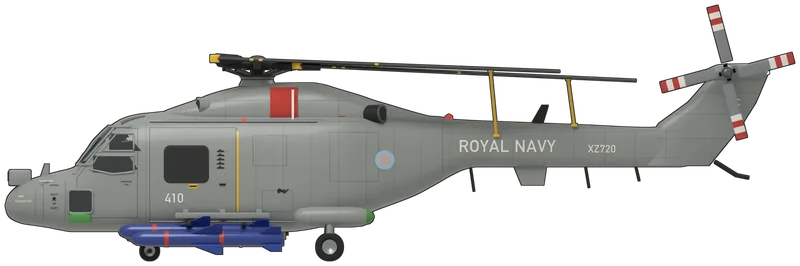
09 · Shipborne anti-submarine and anti-ship helicopter · Lynx HAS.3 (GMS) XZ720
Side view of the Westland Lynx, Lynx HAS.3 (GMS) XZ720
Port side
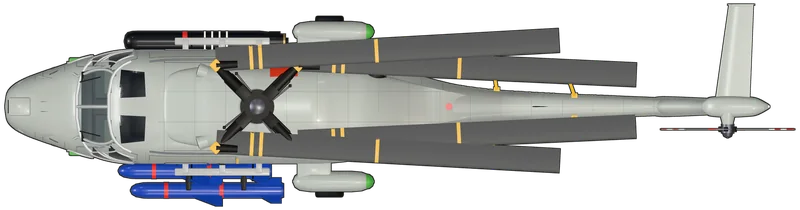
Top view of the Westland Lynx, Lynx HAS.3 (GMS) XZ720
Plan, from above
Front view of the Westland Lynx, Lynx HAS.3 (GMS) XZ720
Head-on

The Lynx was the British-designed member of the three helicopters that Britain and France agreed to develop together in 1967, alongside the Puma and the Gazelle. Westland drew it up as the WG.13, a fast twin-turbine utility helicopter with a semi-rigid main rotor hub machined from a single titanium forging, which made it unusually agile, and two Rolls-Royce Gem engines. Aérospatiale took a share of the production work.

On 11 August 1986 a modified Lynx, G-LYNX, flown by Westland test pilot Trevor Egginton, set a world speed record for helicopters of 249.1 mph (400.87 km/h) over Somerset. It still stands, and G-LYNX is now at The Helicopter Museum in Weston-super-Mare.

XZ720 was built at Yeovil as a HAS.2 and later brought up to HAS.3 standard.

First flight
21 March 1971
Role
Shipborne anti-submarine and anti-ship helicopter
Maker
Westland (with Aérospatiale), Britain
Engine
2 × Rolls-Royce Gem 41-1 turboshafts, 1,120 shp each
Crew
2 or 3: pilot, observer and sometimes an aircrewman
Main rotor
12.8 m (42 ft 0 in)
Length
15.16 m (49 ft 9 in)
Height
3.48 m (11 ft 5 in)
Top speed
249 mph
Built
~450
In service
1976–2017

Compared

Specifications at a glance

Span, length, speed and production for every aircraft on this page.

Specifications compared
AircraftFirst flewRoleSpanLengthTop speedBuiltUK museums
Bristol Sycamore1947Rescue & utility helicopter14.81 m rotor14.07 m127 mph1808
Westland Dragonfly1948Plane-guard and rescue helicopter14.94 m rotor17.54 m103 mph~1604
Saunders-Roe Skeeter1948Air observation post helicopter9.75 m rotor8.13 m109 mph~807
Westland Whirlwind1953Search-and-rescue helicopter16.15 m rotor14.27 m109 mph~4009
Westland Wasp1962Shipborne anti-submarine helicopter9.83 m rotor12.29 m131 mph~2807
Westland/Aérospatiale Puma HC.11965Medium support helicopter15 m rotor18.15 m174 mph~9405
Aérospatiale Gazelle1967Light helicopter10.5 m rotor11.97 m193 mph~3,0006
Westland Sea King1969Search and rescue helicopter18.9 m rotor22.15 m129 mph344 (UK)9
Westland Lynx1971Shipborne anti-submarine and anti-ship helicopter12.8 m rotor15.16 m249 mph~4507

Questions

Asked and answered

What was the first British-designed helicopter in service?

The Bristol Sycamore, which entered RAF service in 1953.

Which helicopter holds the world speed record?

A modified Westland Lynx, G-LYNX, set the record for a conventional helicopter at 249.1 mph (400.87 km/h) in August 1986.

Where can I see British military helicopters?

The Helicopter Museum at Weston-super-Mare has the largest collection; the Army Flying Museum, the Fleet Air Arm Museum and the RAF Museum hold many more. Each profile below lists the museums.

More dioramas

Other collections

The models and drawings are procedural interpretations built from published dimensions, three-view drawings and photographs of each airframe, and the airfield is a compressed impression of its period, not a plan of a real station. Treat the museum aircraft as the reference.