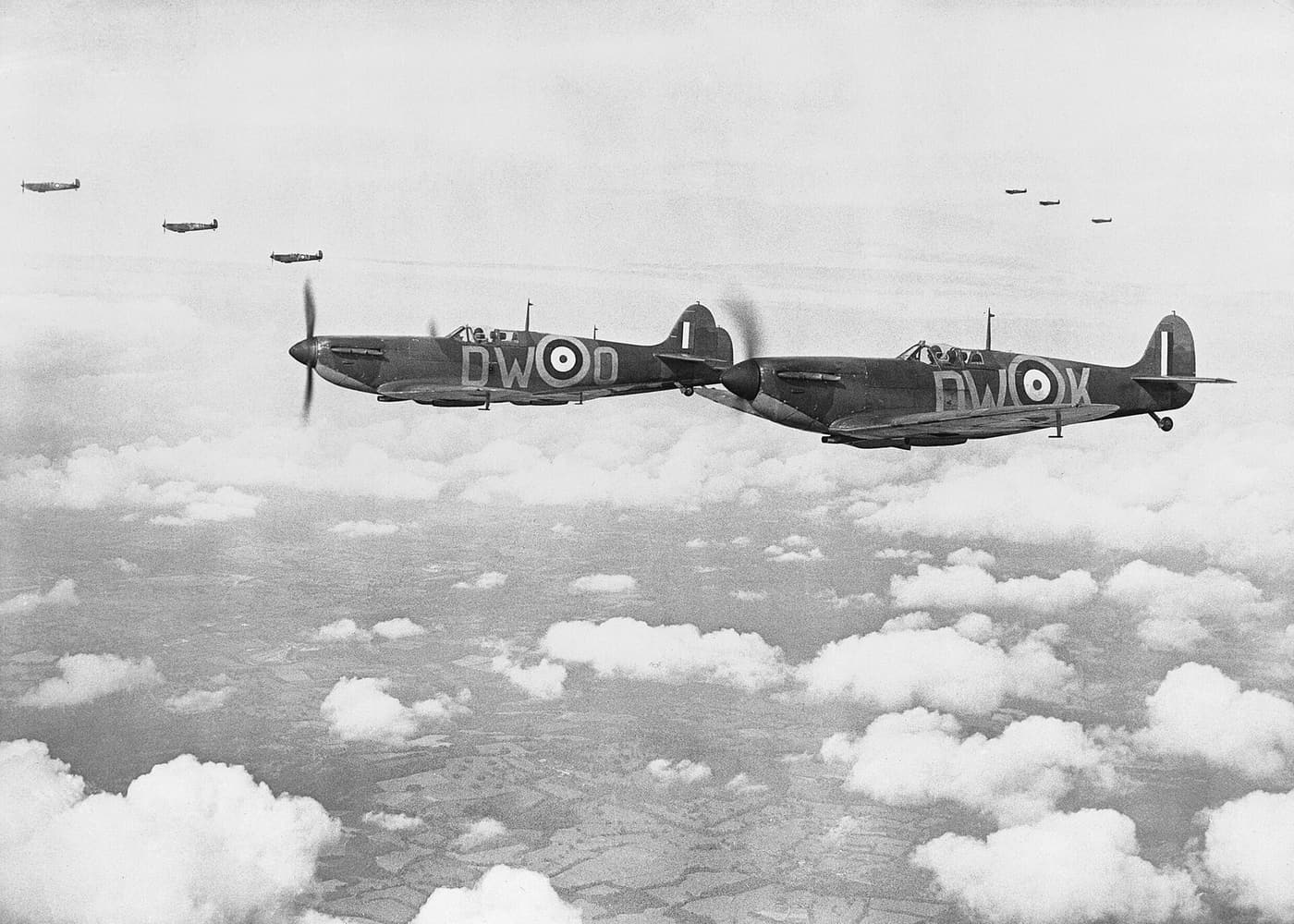
The air war of 1939–1945 was the first in which aircraft were made like motor cars. Britain built nearly 8,000 military aircraft in 1939; the United States built more than 96,000 in 1944 alone. Between those two figures lies most of the story: a contest that the Axis powers, for all their early tactical brilliance, could not win on the factory floor.
This page is the numbers companion to The Six-Year Sky, our narrative history of the war in the air. Here the story is told in production runs, sorties, tonnages and casualty rolls. Wartime statistics are messy: nations counted differently, claims ran far ahead of real losses, and post-war historians still disagree by a few per cent. Where they do, we give the most-cited figure and say so.
The factory war
Air power was built before it was flown, and the Allies built far more of it.
Military aircraft built, 1939–1945
aircraft= 10,000 aircraft
- United States324,750
- Soviet UnionOther compilations give 157,261158,218
- United Kingdom131,549
- GermanyTotals of 111,000–120,000 appear, depending on what is counted119,292
- Japan76,320
- Canada16,418
- ItalyTo the armistice of September 194311,122
One icon = 10,000 aircraft. National series count differently (accepted vs completed; with or without trainers and gliders), so treat differences of a few per cent as noise.
Source Overy, The Air War 1939–1945 (1980); Ellis, World War II: The Encyclopedia of Facts and Figures (1993); Canada: Auger, University of Ottawa (2006)
One icon is ten thousand aeroplanes. The United States out-built Germany, Japan and Italy combined by roughly 1.6 to 1, and the four main Allied producers together built about three aircraft for every one built by the Axis. Britain, often pictured as the plucky underdog, out-produced Germany in every year from 1940 to 1943; only Albert Speer’s fighter programme of 1944 briefly reversed that, and by then the Luftwaffe was short of fuel and trained pilots rather than aircraft.
Aircraft production by year
aircraft- United States
- Soviet Union
- United Kingdom
- Germany
- Japan
- Italy
| Year | United States | Soviet Union | United Kingdom | Germany | Japan | Italy |
|---|---|---|---|---|---|---|
| 1939 | 5856 | 10382 | 7940 | 8295 | 4467 | 1692 |
| 1940 | 12804 | 10565 | 15049 | 10247 | 4768 | 2142 |
| 1941 | 26277 | 15735 | 20094 | 12401 | 5088 | 3503 |
| 1942 | 47836 | 25436 | 23672 | 15409 | 8861 | 2818 |
| 1943 | 85898 | 34900 | 26263 | 24807 | 16693 | 967 |
| 1944 | 96318 | 40300 | 26461 | 40593 | 28180 | |
| 1945 | 49761 | 20900 | 12070 | 7540 | 8263 |
US 1939–40 figures include civil aircraft; 1945 figures are part-years. Soviet 1943–45 figures are rounded in the source.
Source Overy, The Air War 1939–1945; Ellis, World War II Databook; Craven & Cate, The Army Air Forces in World War II vol. VI
Big numbers: twenty-four types and how many were built
| Ilyushin Il-2 | USSR | Ground attack | 36,183 | 1939 |
| Messerschmitt Bf 109 | Germany | Fighter | 33,984 | 1935 |
| Supermarine Spitfire / Seafire | UK | Fighter | 22,685 | 1936 |
| Focke-Wulf Fw 190 | Germany | Fighter | 20,051 | 1939 |
| Consolidated B-24 Liberator | USA | Heavy bomber | 18,482 | 1939 |
| Yakovlev Yak-9 | USSR | Fighter | 16,769 | 1942 |
| Republic P-47 Thunderbolt | USA | Fighter-bomber | 15,660 | 1941 |
| North American P-51 Mustang | USA | Fighter | 15,586 | 1940 |
| Junkers Ju 88 | Germany | Bomber | 15,183 | 1936 |
| Hawker Hurricane | UK | Fighter | 14,487 | 1935 |
| Curtiss P-40 | USA | Fighter | 13,738 | 1938 |
| Boeing B-17 Flying Fortress | USA | Heavy bomber | 12,731 | 1935 |
| Vought F4U Corsair | USA | Naval fighter | 12,571 | 1940 |
| Grumman F6F Hellcat | USA | Naval fighter | 12,275 | 1942 |
| Vickers Wellington | UK | Medium bomber | 11,462 | 1936 |
| Petlyakov Pe-2 | USSR | Dive bomber | 11,427 | 1939 |
| Avro Anson | UK | Trainer / patrol | 11,020 | 1935 |
| Mitsubishi A6M Zero | Japan | Naval fighter | 10,939 | 1939 |
| Lockheed P-38 Lightning | USA | Fighter | 10,037 | 1939 |
| North American B-25 Mitchell | USA | Medium bomber | 9,984 | 1940 |
| Lavochkin La-5 | USSR | Fighter | 9,920 | 1942 |
| de Havilland Mosquito | UK | Multi-role | 7,781 | 1940 |
| Avro Lancaster | UK | Heavy bomber | 7,377 | 1941 |
| Heinkel He 111 | Germany | Bomber | 7,300 | 1935 |
| A selection of combat types and the Anson, not a strict top 24: the T-6 Texan/Harvard trainer (15,495), the C-47 and its DC-3 family (16,079 including licence builds) and the Yak-1 (8,734) also out-built several types listed. Totals include pre-war and, for some types (Spitfire, Corsair, Anson, Mosquito), post-war production. Bf 109: 33,984 built in Germany, 1936–45; about 34,850 with licence and post-war builds in Czechoslovakia and Spain. | ||||
Source National production records via Wikipedia, List of most-produced aircraft; Bf 109 after Vajda & Dancey
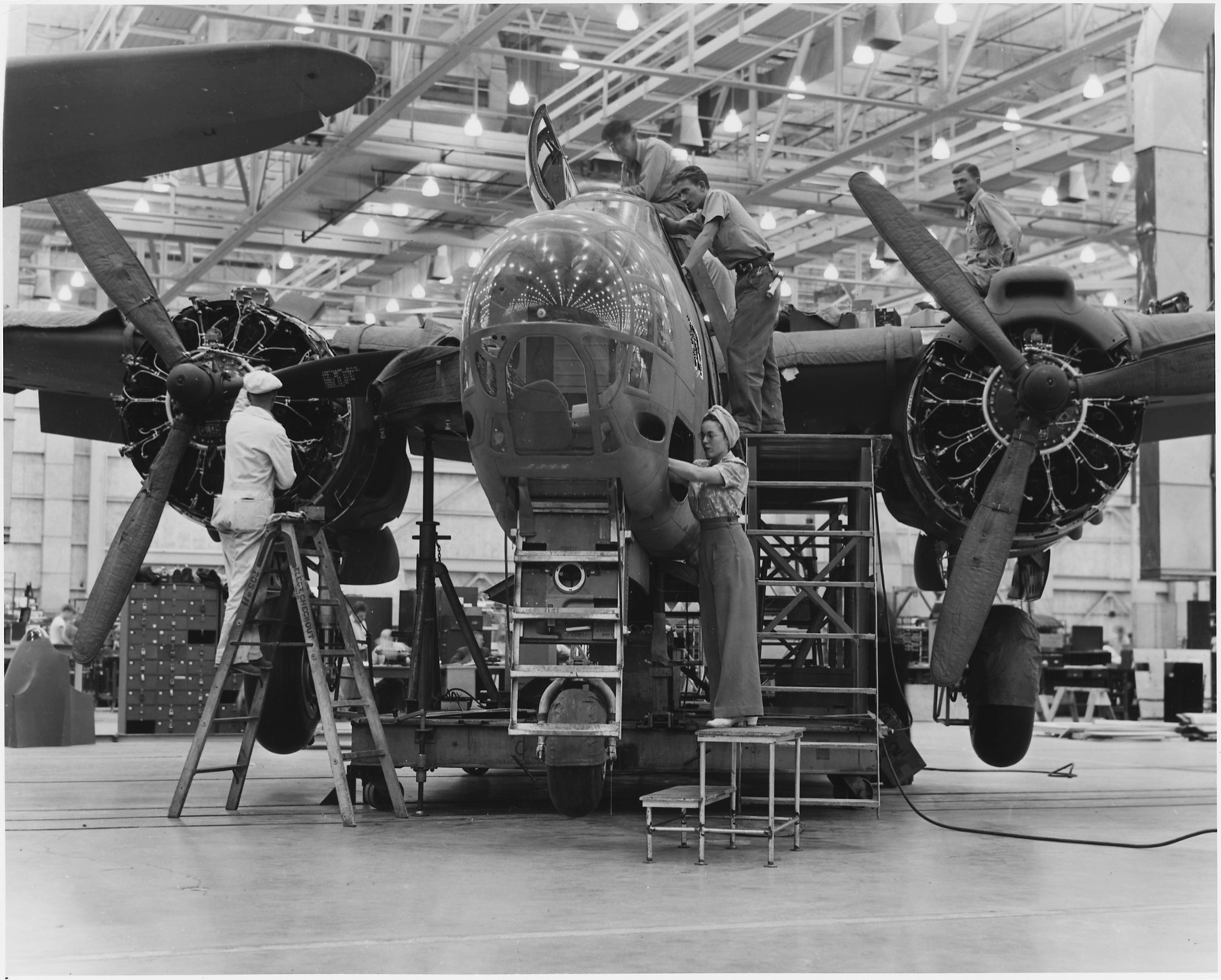
- Glazed bombardier’s nose, fitted on the line
- Wright R-2600 Twin Cyclone radial, propeller already on
- A woman fitter at the nose: by 1943 some 300,000 women worked in American aircraft plants
- Nosewheel leg: the aircraft stands on its own gear, ready to move down the line
The Battle of Britain
10 July – 31 October 1940. Sixteen weeks, two air forces, one decision.
Phases of the battle
Kanalkampf: attacks on Channel convoys and ports open the battle (official start date).
Adlertag, “Eagle Day”: the Luftwaffe turns on Fighter Command’s airfields and radar.
Luftflotte 5 attacks the North East from Norway and is mauled; the Luftwaffe’s heaviest day of losses.
“The Hardest Day”: the most aircraft lost by both sides combined on any day of the battle.
The critical fortnight begins: sustained attacks on 11 Group’s sector airfields.
The Luftwaffe switches to London. The Blitz begins; the airfields get their reprieve.
Battle of Britain Day: two massed raids on London broken up.
Hitler postpones Operation Sea Lion indefinitely.
High-altitude fighter-bomber sweeps by day; the bombers go over to night.
Official end of the battle.
Source Air Ministry dates; Bungay, The Most Dangerous Enemy (2000)
Aircraft destroyed, 10 July – 31 October 1940
aircraft= 50 aircraft
- RAF Fighter Command1,023
- RAF Bomber and Coastal CommandsBomber 376, Coastal 148: lost attacking invasion ports, airfields and shipping524
- Luftwaffe Bf 109s650
- Luftwaffe Bf 110s223
- Luftwaffe bombers, dive-bombers and othersDerived: the 1,887 total less the fighters1,014
One icon = 50 aircraft. RAF 1,547, Luftwaffe 1,887. Counts that include non-combat losses give RAF 1,744 and Luftwaffe 1,977. These are post-war, records-based figures, not the far higher claims made at the time.
Source Bungay, The Most Dangerous Enemy (2000), as summarised by Correll, Air & Space Forces Magazine (2008)
Both sides overclaimed, honestly and wildly, in the confusion of a crowded sky. On 15 September, now kept as Battle of Britain Day, the RAF claimed 185 German aircraft; German records show about 56 to 61 were lost. Fighter Command lost 28 or 29 fighters that day. The Luftwaffe’s intelligence was worse: it believed Fighter Command was being destroyed at roughly three times the real rate, and in mid-September its crews met a force they had been told no longer existed.
Fighter Command lost 544 aircrew killed in the battle. Bomber and Coastal Commands, attacking the barges massing in the Channel ports, lost 718 and 280 more: losses that the story of “the Few” tends to leave out.
Churchill’s “so few” were not all British. The Battle of Britain Monument in London names 2,937 airmen awarded the clasp, and sixteen nations were represented in Fighter Command’s squadrons. Roughly one in five came from overseas, and the Polish contingent, the largest, was also among the most effective: No. 303 Squadron claimed more victories than any other Hurricane squadron in the battle.
The duel: Spitfire Mk I vs Bf 109 E
Supermarine Spitfire Mk I
Messerschmitt Bf 109 E-3
- 362 mphTop speed348 mph
- 1,030Engine power (hp)1,085
- 2,624Loaded weight (kg)2,610
- 11Wingspan (m)9.9
- 9.1Length (m)8.6
- 637Range (km)660
- 8Machine guns2
- 020 mm cannon2
- 22,685Built, all marks33,984
Verdict Closer than legend allows. The Spitfire was a little faster at medium heights and turned tighter; the 109E was better above about 20,000 ft, climbed and dived better, carried cannon, and its fuel-injected Daimler-Benz did not cut out under negative g. Height, numbers and who saw whom first decided far more combats than the spec sheet.
Spitfire I: 583 km/h (362 mph) at 5,640 m (18,500 ft) with the Merlin II/III of 1,030 hp; range 637 km (395 miles). Bf 109 E-3: DB 601A of 1,100 PS (1,085 hp) for take-off; published top speeds run from about 545 to 575 km/h, at heights given variously from about 3,750 to 5,000 m; range 660 km on internal fuel. Weights are maximum loaded figures (Spitfire 5,784 lb).
Source Spitfire: Price, The Spitfire Story (2002); Supermarine Spitfire (early Merlin-powered variants), Wikipedia; Warbirds Resource Group. Bf 109 E-3: Museum of Flight; Messerschmitt Bf 109 variants, Wikipedia; Revell technical notes
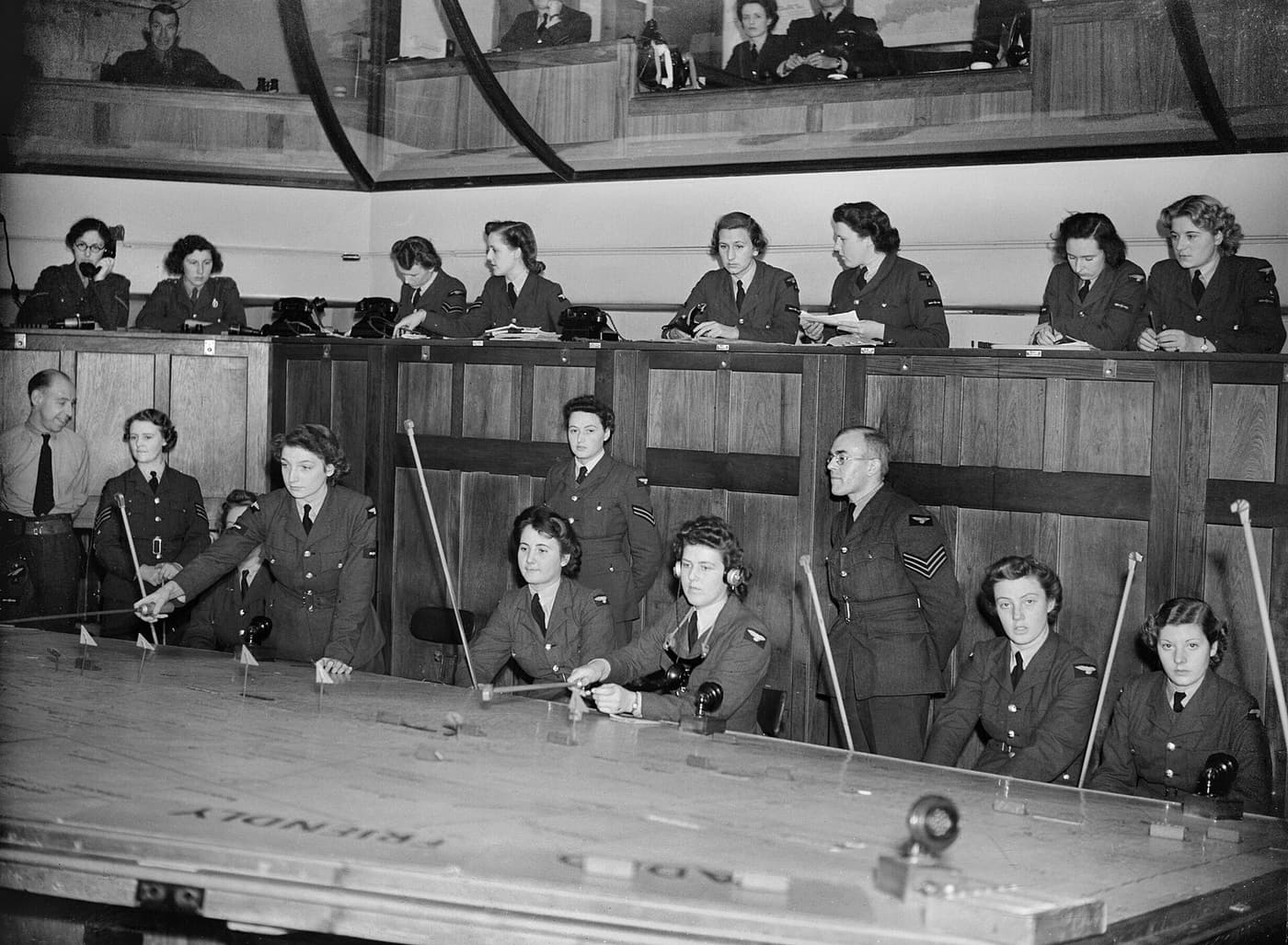
- The plotting table: a map of south-east England gridded for raid markers
- A plotter’s rake, used to push raid counters across the table
- An RAF sergeant supervising the table
- The controllers’ gallery, where squadrons were ordered up
The Few: British and overseas aircrew
aircrew- 80% United Kingdom 2,352
- 10% Commonwealth and Dominions 288
- 9% European Allies (Poland, Czechoslovakia, Belgium, France, Austria) 276
- 0.7% Other (Ireland, USA) 21
Overseas aircrew as counted by the RAF Museum; the UK figure is derived from the Monument’s 2,937 names (the RAF roll used in many histories counts 2,936). 544 were killed in the battle and about 795 more died before the war’s end.
Source RAF Museum, Battle of Britain Beacon, “Battle of the Nations”; Battle of Britain London Monument
The overseas Few, by nation
aircrewOther counts differ slightly: the RAF roll used by many histories gives 127 New Zealanders, 112 Canadians, 32 Australians, 28 Belgians and 9 Americans; some lists add one airman from Mandatory Palestine.
Source RAF Museum, Battle of Britain Beacon, “Battle of the Nations”
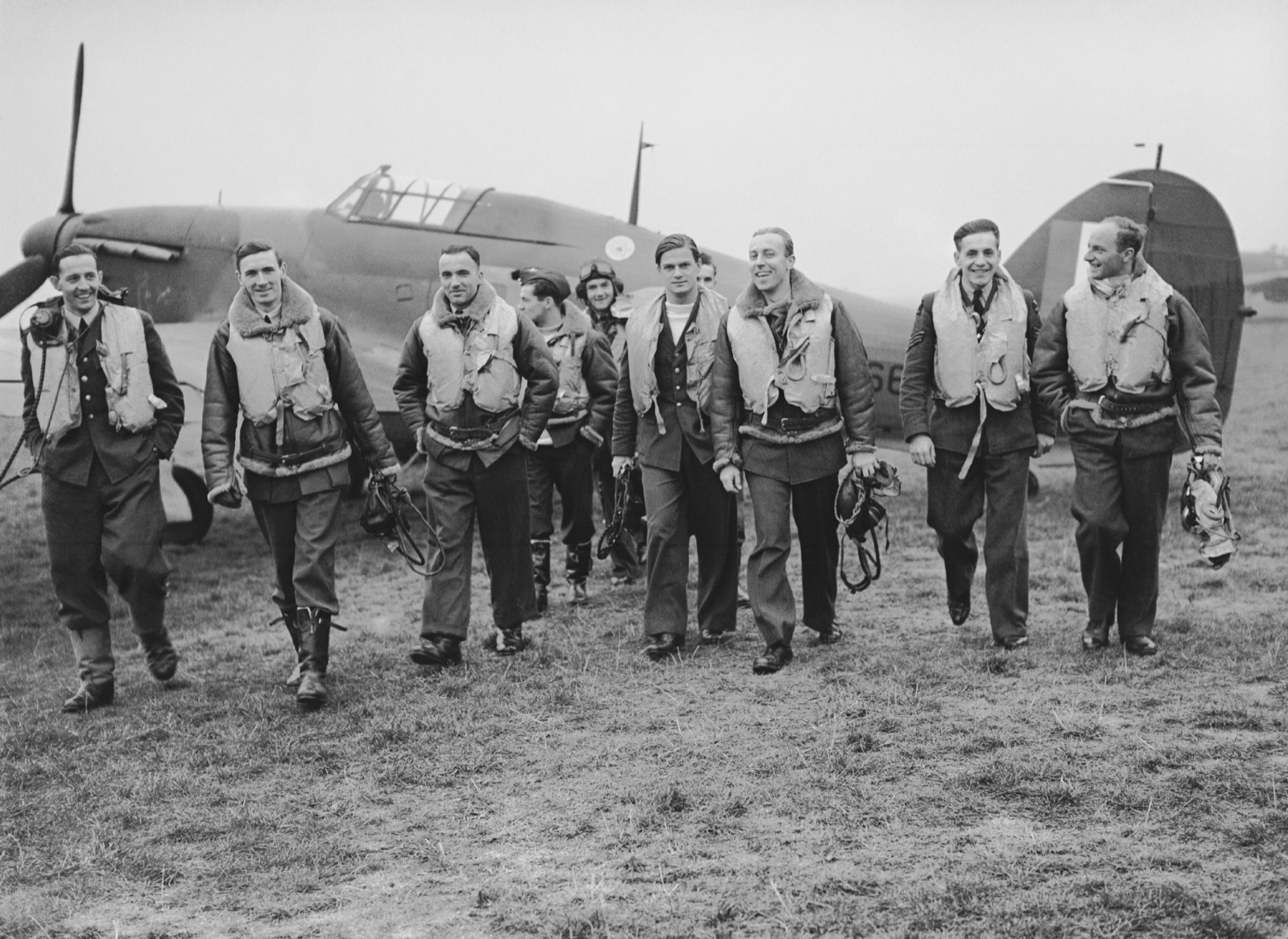
- Flt Lt John Kent, the Canadian commander of A Flight, among his Polish pilots
- Hawker Hurricane Mk I of No. 303 Squadron
- Fg Off Jan Zumbach, helmet and goggles still on
- Mae West life jacket, standard kit for flying over the Channel
Bomber Command
Six years of night. The longest campaign of the war, and the costliest for the men who flew it.
Source RAF Historical Society, Bracknell Paper No. 4 (1993); Roberts (2007); Robertson (1984) for nationality; Webster & Frankland vol. IV
Bomber Command: bomb tonnage dropped by year
tons| Year | Tons dropped |
|---|---|
| 1939 | 31 |
| 1940 | 13033 |
| 1941 | 31704 |
| 1942 | 45561 |
| 1943 | 157457 |
| 1944 | 525518 |
| 1945 | 181740 |
Nearly three-quarters of the command’s total tonnage fell in the last 16 months of the war.
Source Webster & Frankland, The Strategic Air Offensive against Germany vol. IV (1961), via the Oxford Companion to World War II as tabulated by 429 Sqn Association
Bomber Command: sorties and aircraft lost, by year
aircraft lostThe official series counts 373,514 sorties and 10,122 aircraft lost (10,123 as printed), so differs from the in-action totals above. After the disastrous unescorted daylight raids of 1939, the loss rate per sortie was worst in 1942; the worst single campaign was the Battle of Berlin, November 1943 – March 1944.
Source Webster & Frankland, The Strategic Air Offensive against Germany vol. IV, via the Oxford Companion to World War II; monthly tables summed by year (429 Sqn Association)
What became of Bomber Command’s aircrew
aircrew= 2,000 aircrew
- Killed55,573
- Prisoners of war9,838
- Wounded8,403
- Came through unhurt and free (approx.)Derived: 125,000 less the three figures above51,186
One icon = 2,000 men. About 125,000 aircrew served with the command.
Source RAF Historical Society, Reaping the Whirlwind (Bracknell Paper No. 4, 1993); IBCC. The IBCC Losses Database records 57,861 deaths including ground and training causes.
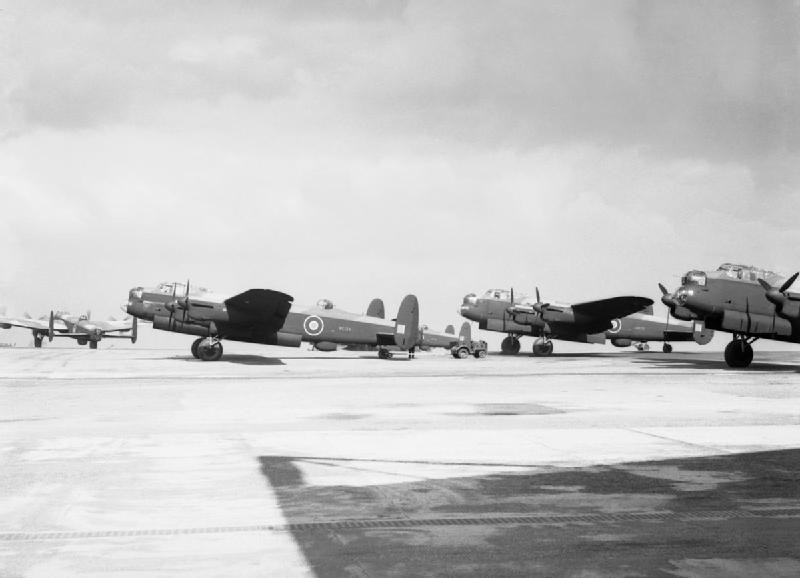
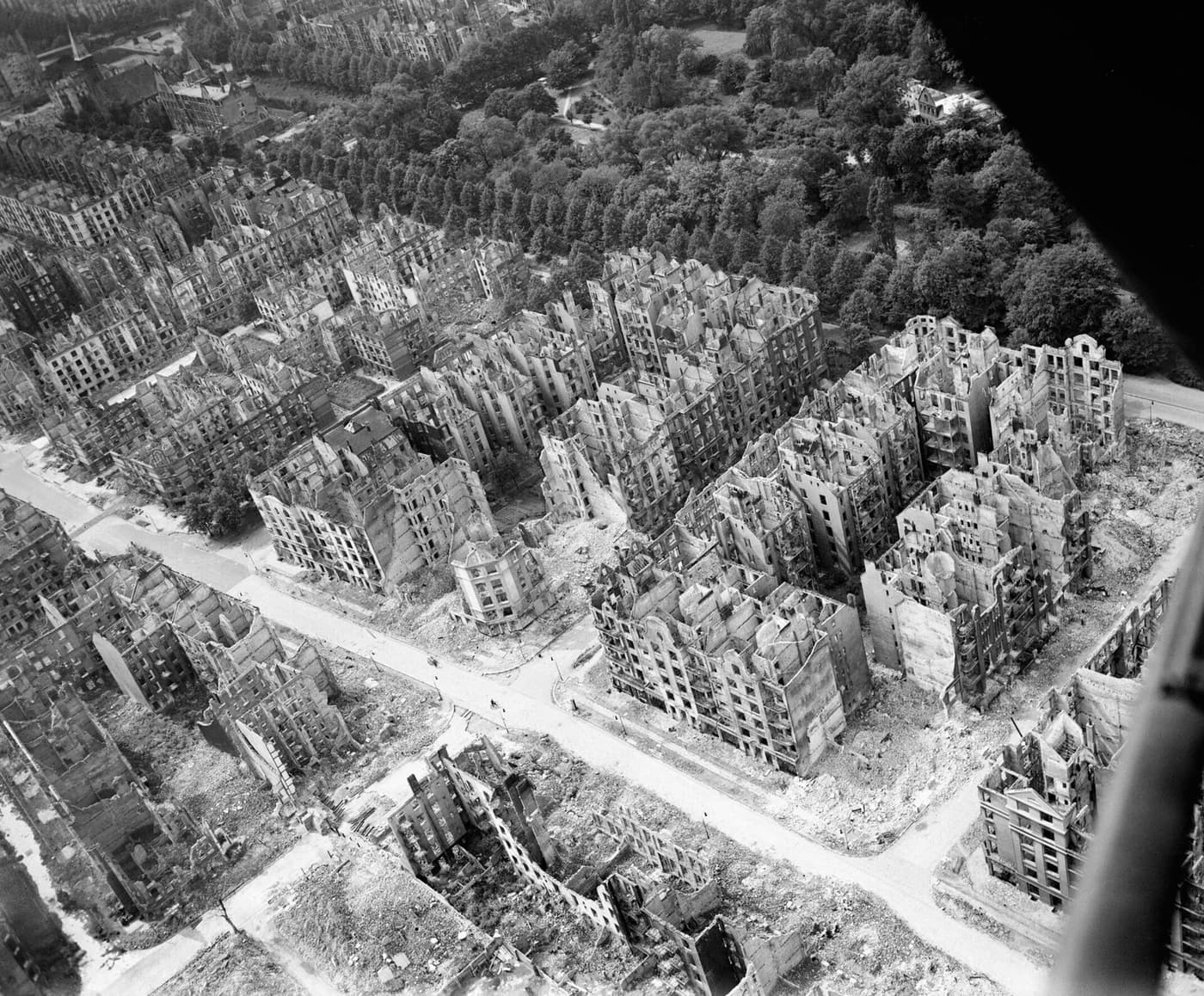
A Bomber Command tour was thirty operations. For much of 1942–1944 the odds of finishing one were worse than even. The average loss rate across the war was a little over 2 per cent of sorties, but it was far higher over Berlin in the winter of 1943–44, and a crew needed luck on every one of those thirty nights. The command’s 44 per cent death rate was the highest of any major branch of the British forces.
The Mighty Eighth
Daylight, from East Anglia. An American air force the size of a city, on British soil.
Source Freeman (1975), via the Oxford Companion; National Museum of the Mighty Eighth Air Force; Lane Callaway, Eighth Air Force historian, in Stars and Stripes
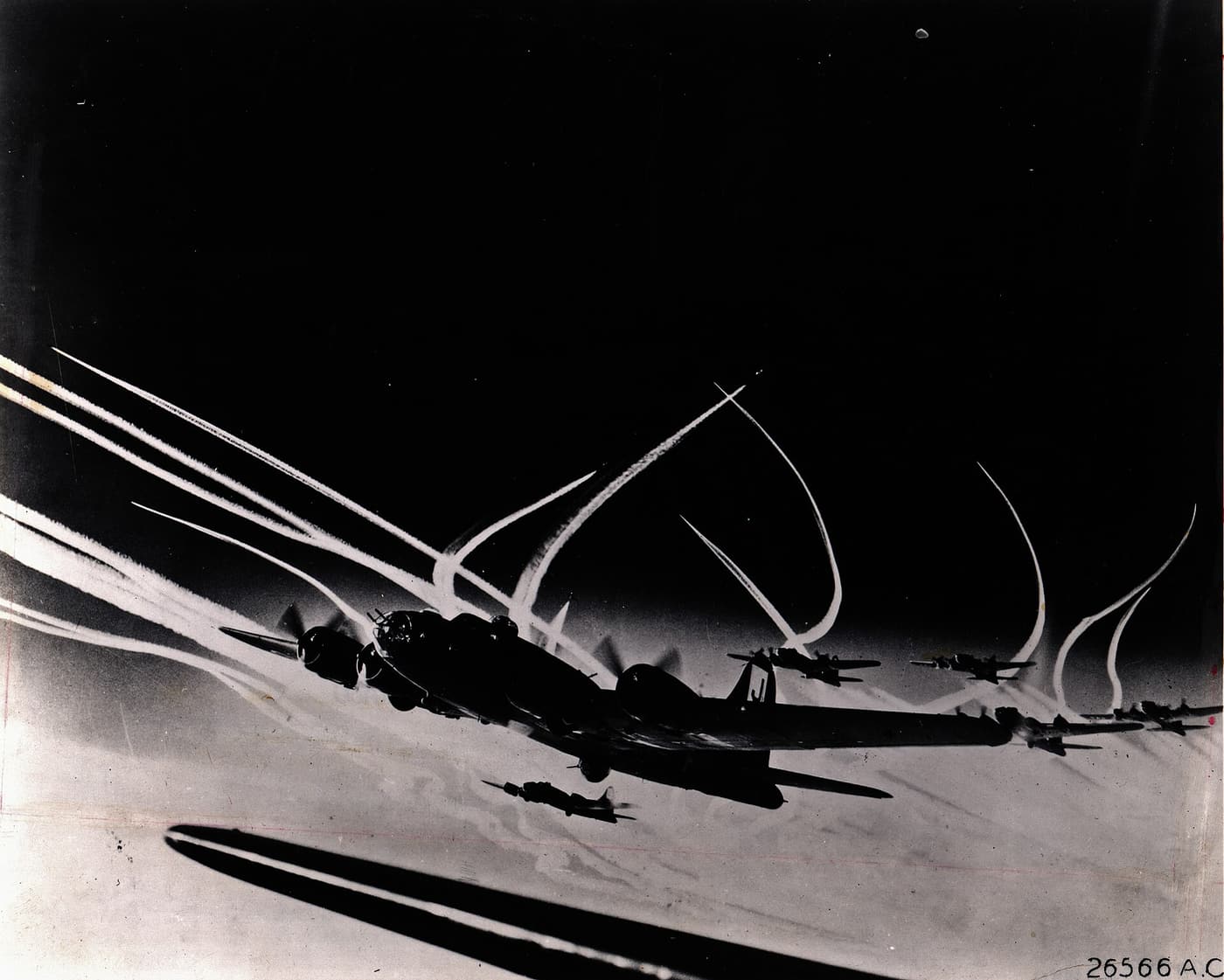
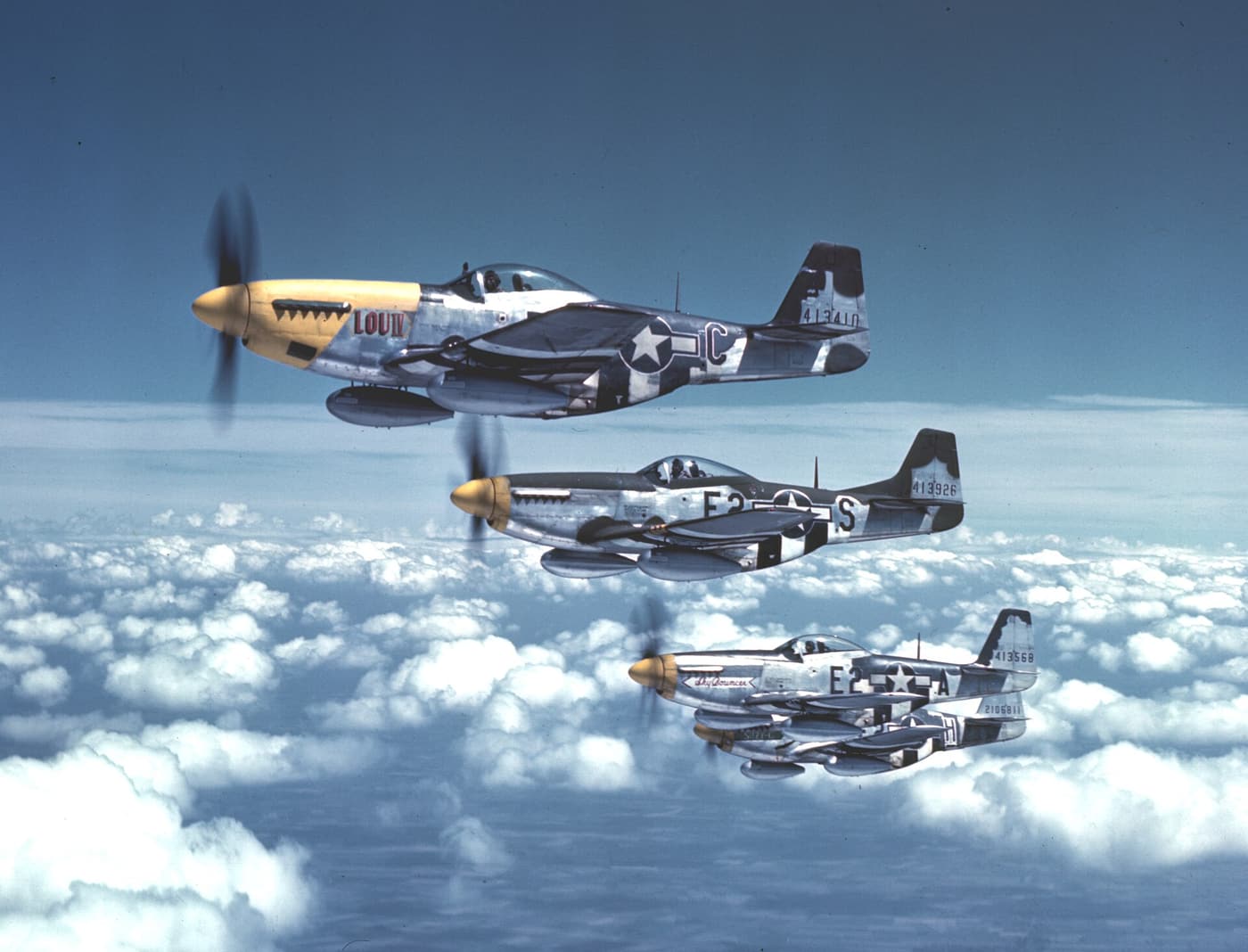
The Eighth arrived in 1942 committed to precision bombing by day, defended by the bombers’ own guns. The doctrine broke at Schweinfurt and Regensburg in August and October 1943, when 60 B-17s were lost on each of two days. It was rescued by the long-range escort: P-51s with drop tanks could reach Berlin by March 1944, and the fighters, not the bombers, destroyed the Luftwaffe’s day-fighter force. By the war’s end, as Donald Miller notes in Masters of the Air, the Eighth had suffered more fatal casualties, some 26,000, than the entire US Marine Corps.
Who dropped the bombs: Allied tonnage on Europe
% of ~2.7 million tons- 54% US Army Air Forces 54
- 46% RAF (Bomber Command and others) 46
Some 2.7 million tons of bombs in all, from more than 1.44 million bomber sorties. More than 18,000 American and 22,000 British aircraft were lost or damaged beyond repair.
Source US Strategic Bombing Survey, Summary Report (European War), 1945; USAAF share 54.2% per Air & Space Forces Magazine
The balance of the bombing
tonsBomber Command dropped more than twelve times the Blitz tonnage in 1944 alone. The Blitz killed some 40,000–43,000 British civilians; over the whole war bombs and V-weapons killed 60,595 people in the UK (Home Office). Allied bombing killed at least 305,000 German civilians (USSBS minimum), most modern estimates running from 350,000 to 500,000.
Source Blitz: Postan (1952) and Hooton (2010), via The Blitz (Wikipedia); IWM. Bomber Command: official history tables. Eighth Air Force: Freeman
The aces
Top scorers by nation, and why the numbers are so far apart.
Highest-scoring fighter pilots of fourteen nations
| Erich Hartmann | Germany | Luftwaffe | 352 | All on the Eastern Front: 345 Soviet aircraft and seven American |
| Ilmari Juutilainen | Finland | Finnish Air Force | 94 | Highest-scoring non-German; never hit by an enemy fighter |
| Hiroyoshi Nishizawa | Japan | Imperial Japanese Navy | 87 | His own claim (“86 or 87”); the navy kept no official individual scores |
| Ivan Kozhedub | USSR | Soviet Air Forces | 64 | Some sources give 62; top Allied ace |
| Marmaduke “Pat” Pattle | South Africa | RAF | 50 | Provisional, about 50 + 2 shared; at least 40 documented, records lost in Greece |
| Richard Bong | USA | USAAF | 40 | All in the Pacific, flying the P-38 |
| J. E. “Johnnie” Johnson | United Kingdom | RAF | 34 | Plus 7 shared; highest RAF score against the Luftwaffe in the West |
| Pierre Clostermann | France | RAF (Free French) | 33 | His own published total; Shores & Williams credit about 11 confirmed |
| George Beurling | Canada | RAF / RCAF | 31 | Plus 1 shared; 27 over Malta in 1942 |
| Clive Caldwell | Australia | RAAF | 29 | North Africa and the defence of Darwin |
| Colin Gray | New Zealand | RAF | 27 | Plus 2 shared |
| Teresio Martinoli | Italy | Regia Aeronautica | 22 | Plus 14 shared; the official Italian list gives 21 |
| Stanisław Skalski | Poland | Polish Air Force / RAF | 19 | 18 11⁄12 on Bajan’s list |
| Karel Kuttelwascher | Czechoslovakia | RAF | 18 | All in RAF service, 15 as a night intruder in 1942 |
| Other Axis air forces had high scorers too, among them Romania’s Constantin Cantacuzino and Hungary’s Dezső Szentgyörgyi. Victories are officially credited claims, not confirmed enemy losses; shared victories counted as fractions where the source does so. German Eastern Front scores reflect a target-rich front and years of continuous combat; Allied pilots were rotated home after a tour. | ||||
Source Shores & Williams, Aces High (1994); national lists (Bajan for Poland; Massimello & Apostolo for Italy)
Never in the field of human conflict was so much owed by so many to so few.
Winston Churchill, House of Commons, 20 August 1940
At one scale
The gazetteer’s own models of the war’s aircraft, side by side, and where to see the real ones.
The aircraft of the war, at one true scale
drawn to one scale-
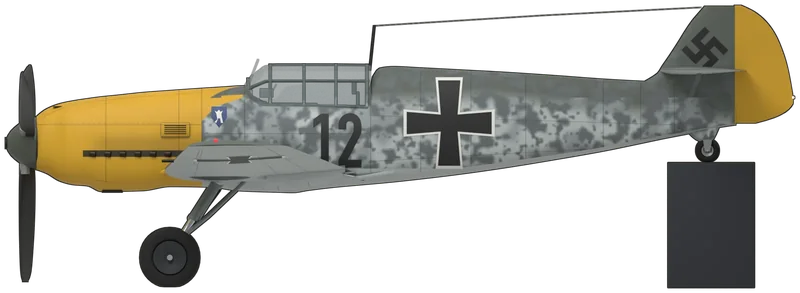 Messerschmitt Bf 109 E 8.6 m
 -
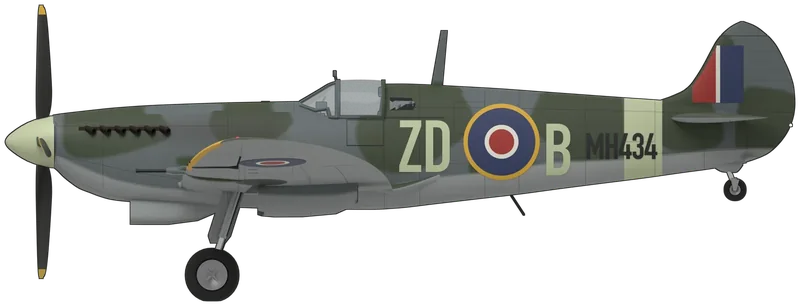 Supermarine Spitfire Mk I 9.5 m
 -
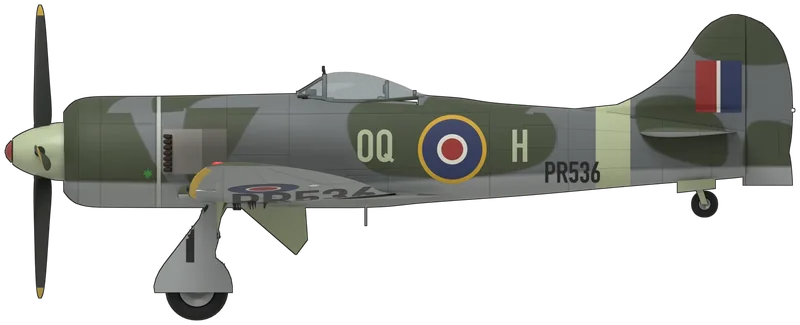 Hawker Typhoon Mk IB 10.5 m
 -
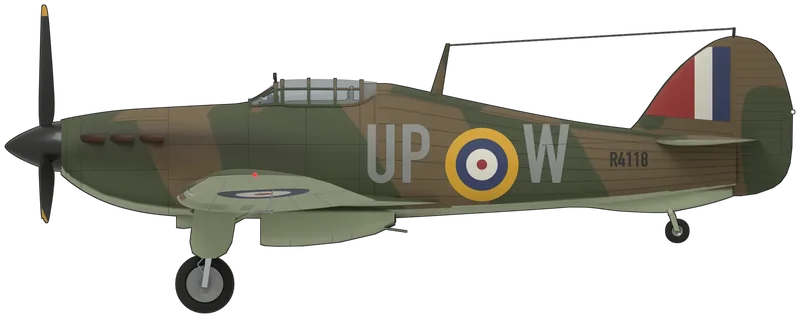 Hawker Hurricane Mk I 9.6 m
 -
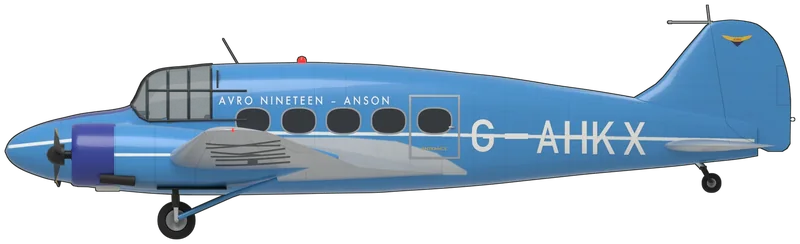 Avro Anson Mk I 12.9 m
 -
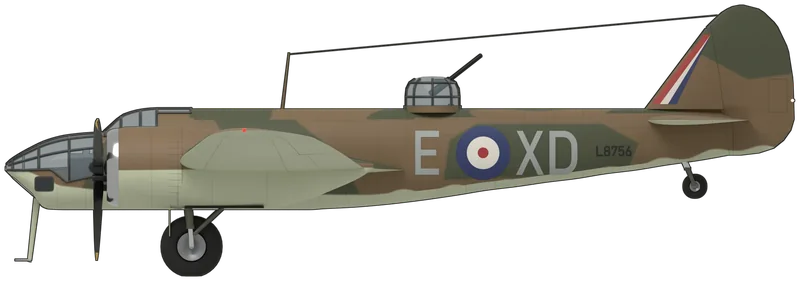 Bristol Blenheim Mk IV 13.0 m
 -
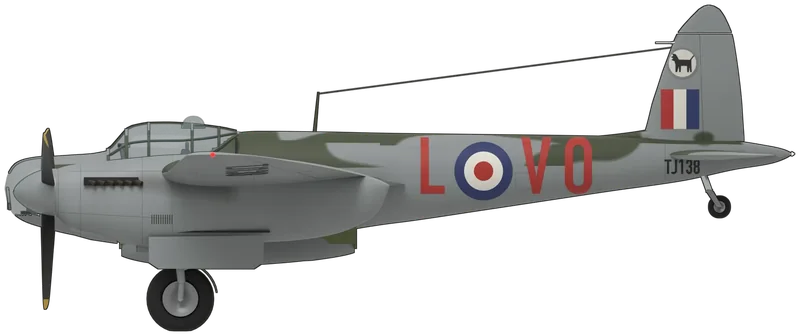 de Havilland Mosquito B.IV 12.3 m
 -
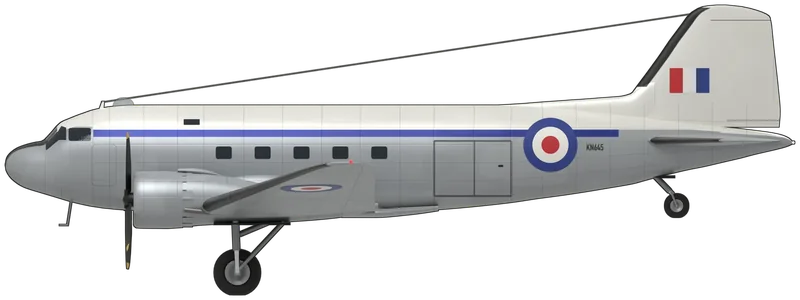 Douglas C-47 Dakota 19.7 m
 -
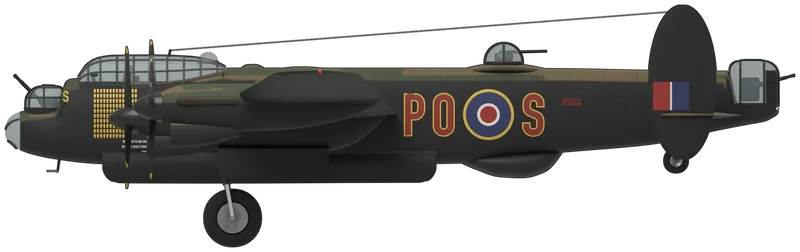 Avro Lancaster B.I 21.1 m
 -
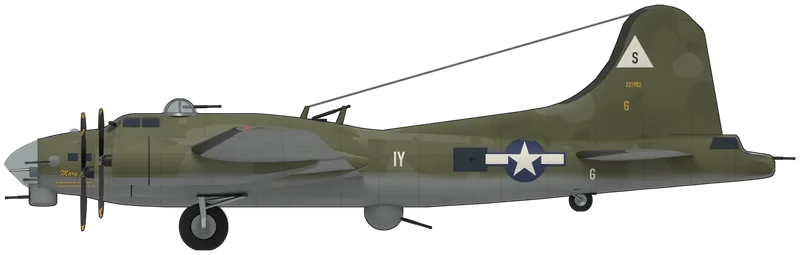 Boeing B-17G Flying Fortress 22.7 m
 -
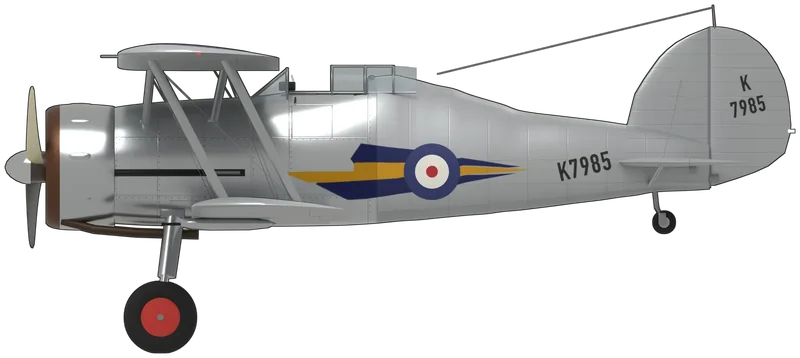 Gloster Gladiator 8.4 m
 -
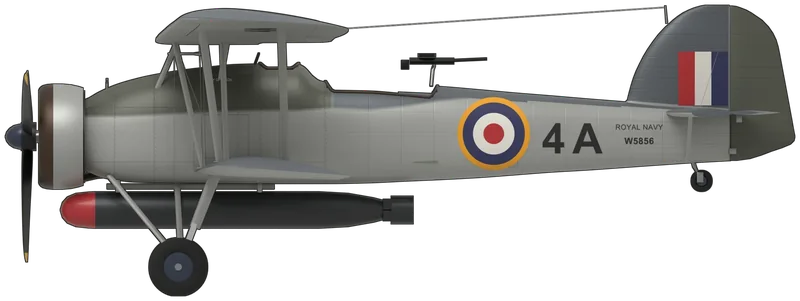 Fairey Swordfish 10.9 m
 -
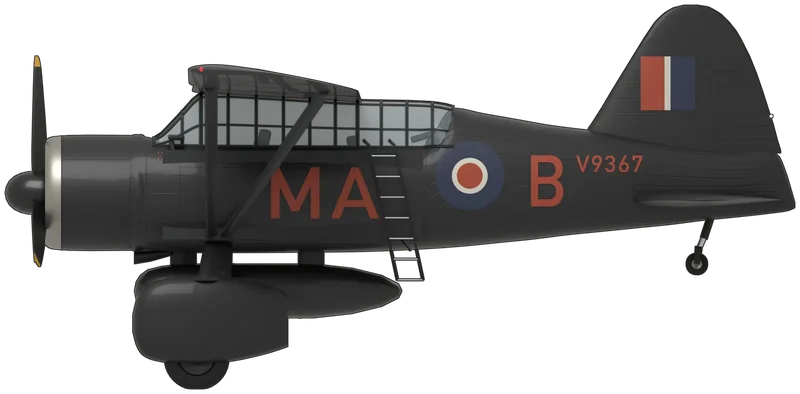 Westland Lysander 9.3 m
 -
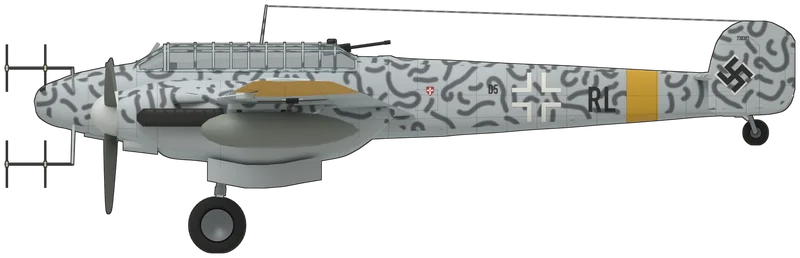 Messerschmitt Bf 110 12.1 m
 -
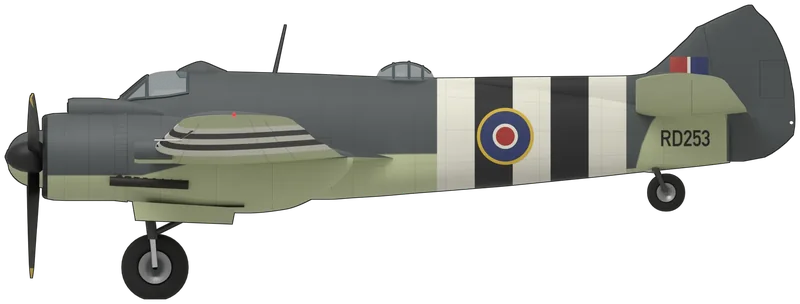 Bristol Beaufighter 12.7 m
 -
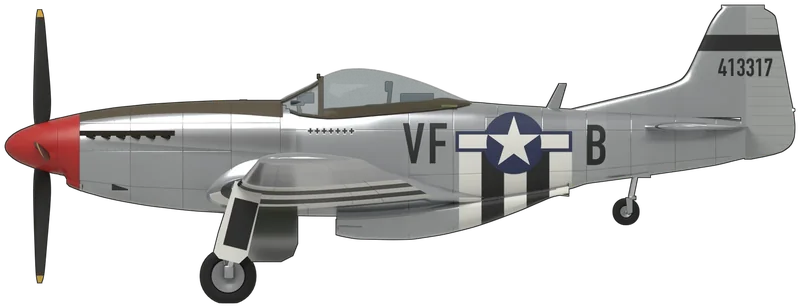 P-51 Mustang 9.8 m
 -
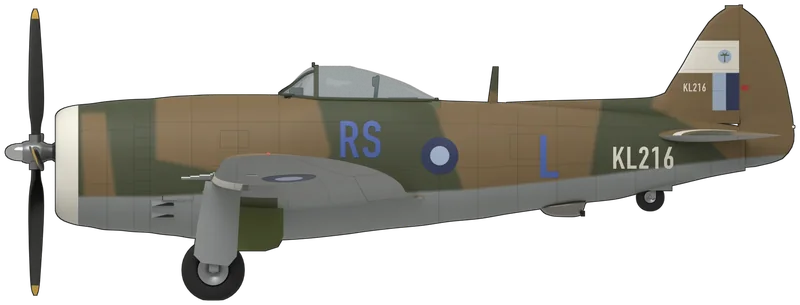 P-47 Thunderbolt 11.0 m
 -
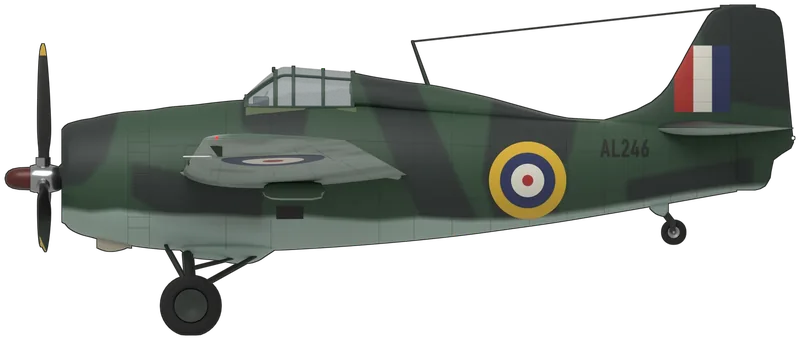 Grumman Martlet 8.8 m
 -
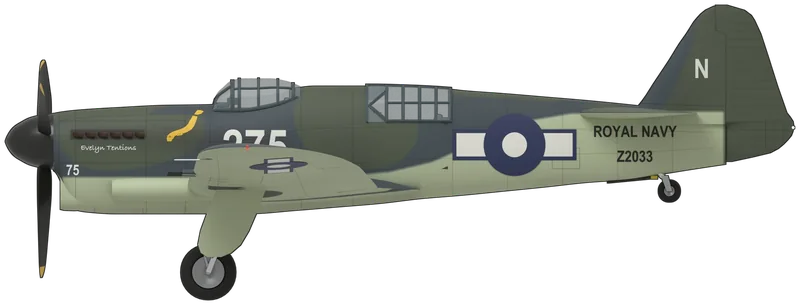 Fairey Firefly 11.5 m
 -
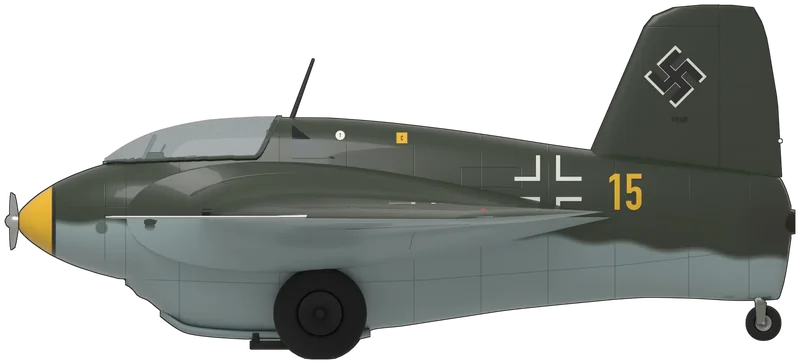 Me 163 Komet 5.7 m
 -
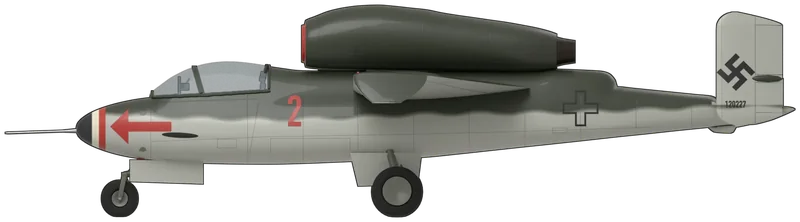 Heinkel He 162 9.1 m
 -
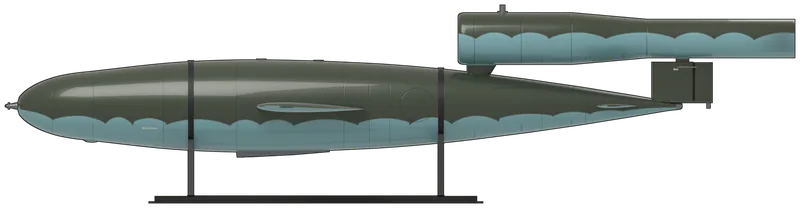 Fieseler Fi 103 (V-1) 7.7 m
 -
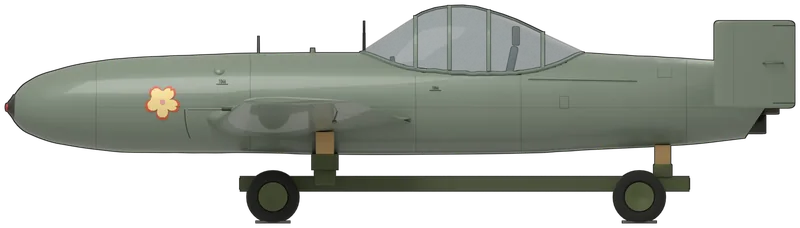 Yokosuka Ohka 6.1 m
 -
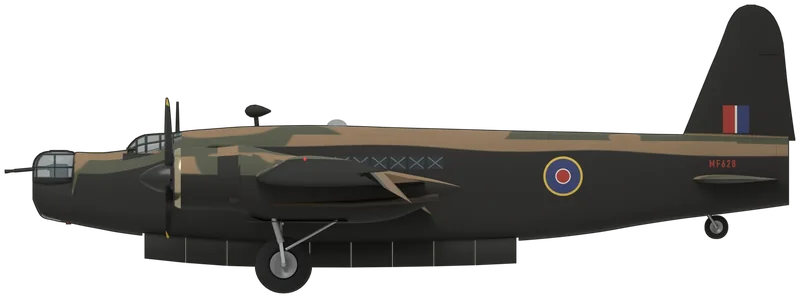 Vickers Wellington 19.7 m
 -
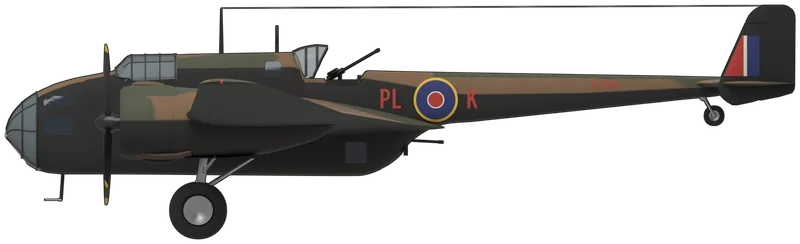 Handley Page Hampden 16.3 m
 -
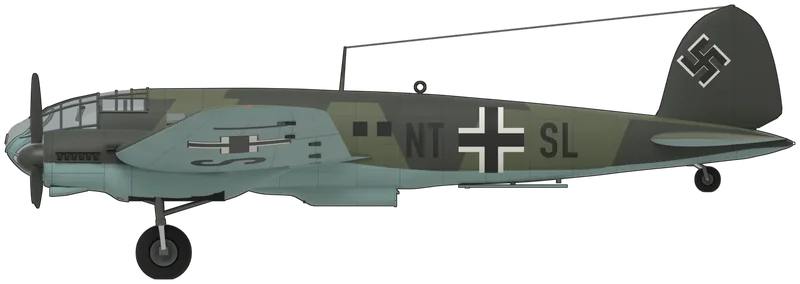 Heinkel He 111 16.4 m
 -
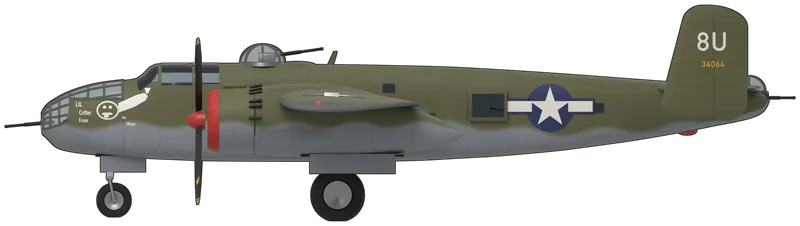 B-25 Mitchell 16.1 m
 -
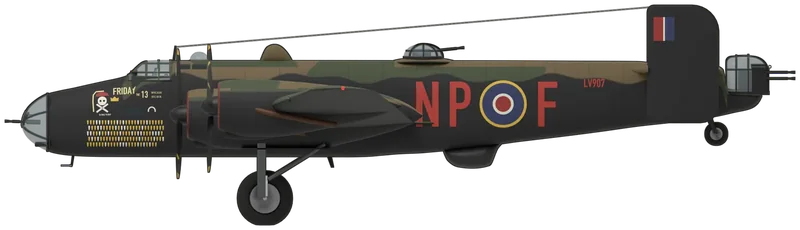 Handley Page Halifax 21.8 m
 -
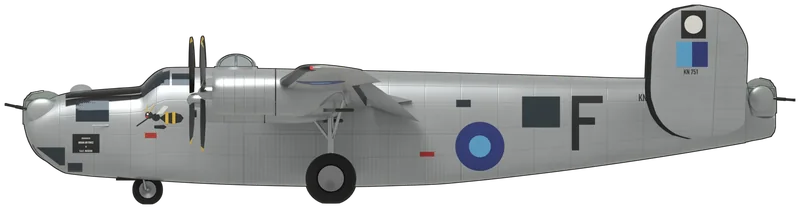 B-24 Liberator 20.6 m
 -
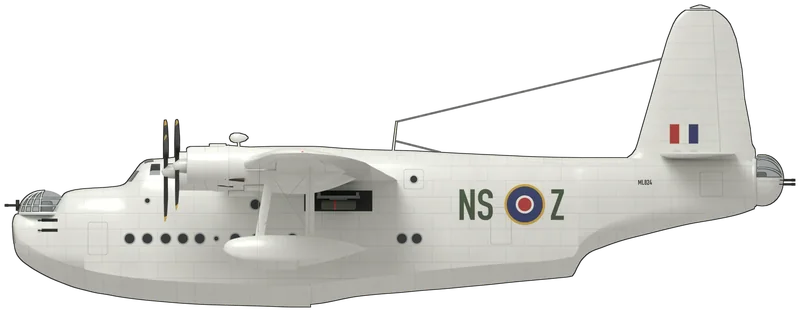 Short Sunderland 26.0 m
 -
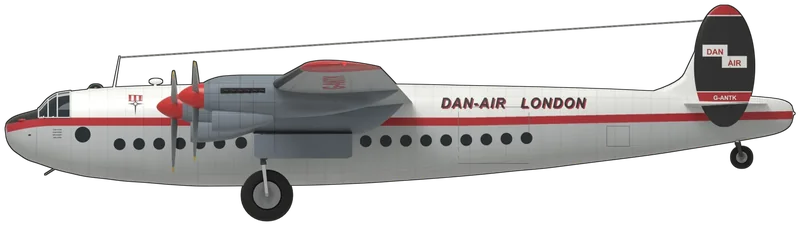 Avro York 23.9 m
 -
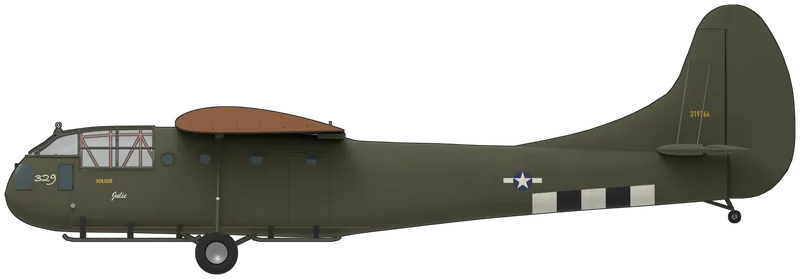 Waco Hadrian glider 14.8 m
 -
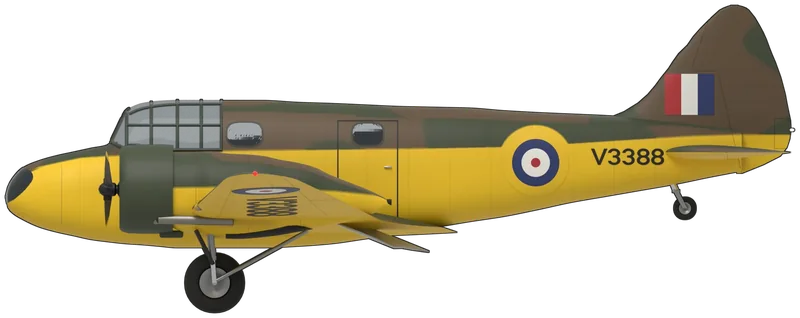 Airspeed Oxford 10.5 m
A Bf 109’s entire wingspan is shorter than one Lancaster wing.
On the apron: Allied and Axis, parked together
live 3D, true scaleDrag to walk round · pinch or buttons to zoom
- Avro Lancaster 21.1 m long, 31.1 m span
- Boeing B-17 Flying Fortress 22.7 m long, 31.6 m span
- Douglas C-47 Dakota 19.7 m long, 29.0 m span
- de Havilland Mosquito 12.3 m long, 16.5 m span
- Bristol Blenheim 13.0 m long, 17.2 m span
- Avro Anson 12.9 m long, 17.5 m span
- Hawker Typhoon 10.5 m long, 12.5 m span
- Hawker Hurricane 9.6 m long, 12.2 m span
- Supermarine Spitfire 9.5 m long, 11.2 m span
- Messerschmitt Bf 109 8.6 m long, 9.9 m span
- Bf 110 12.1 m long, 16.3 m span
- P-51 Mustang 9.8 m long, 11.3 m span
- P-47 11.0 m long, 12.4 m span
- Beaufighter 12.7 m long, 17.6 m span
- Halifax 21.8 m long, 31.8 m span
- B-24 20.6 m long, 33.5 m span
- Wellington 19.7 m long, 26.3 m span
- He 111 16.4 m long, 22.6 m span
Where to see them in Britain
in British museums- Supermarine Spitfire23 museums
Royal Air Force Museum London · Biggin Hill Heritage Hangar · IWM Duxford · The Shuttleworth Collection · Solent Sky · Tangmere Military Aviation Museum · Royal Air Force Museum Midlands · Battle Of Britain Memorial Flight Visitors Centre · Yorkshire Air Museum · Spitfire Visitor Centre, Hangar 42, Blackpool · National Museum Of Flight · Montrose Air Station Museum · Ulster Aviation Society (Maze Long Kesh) · Fleet Air Arm Museum · Battle of Britain Bunker · Norfolk and Suffolk Aviation Museum · Langham Dome · Spitfire & Hurricane Memorial Museum, Manston · Lincolnshire Aviation Heritage Centre · The Potteries Spitfire Gallery (RW388) · North East Land, Sea and Air Museums · Hooton Park Hangars · Welsh Spitfire Museum
- Hawker Hurricane18 museums
Royal Air Force Museum London · Biggin Hill Heritage Hangar · Brooklands Museum · IWM Duxford · The Shuttleworth Collection · Tangmere Military Aviation Museum · Royal Air Force Museum Midlands · Battle Of Britain Memorial Flight Visitors Centre · Yorkshire Air Museum · Spitfire Visitor Centre, Hangar 42, Blackpool · Battle of Britain Bunker · Norfolk and Suffolk Aviation Museum · Spitfire & Hurricane Memorial Museum, Manston · Wings Aviation Museum · Romney Marsh Wartime Collection · Jet Age Museum · North East Land, Sea and Air Museums · Hooton Park Hangars
- Avro Lancaster12 museums
Royal Air Force Museum London · IWM Duxford · Boscombe Down Aviation Collection · Lincolnshire Aviation Heritage Centre · Battle Of Britain Memorial Flight Visitors Centre · Avro Heritage Museum · Newark Air Museum · Hardwick Airfield Museum · Wings Aviation Museum · Metheringham Airfield Visitor Centre · Thorpe Camp Visitor Centre · Polish Bomber Squadrons Centre, RAF Ingham
- Douglas C-47 Dakota9 museums
IWM Duxford · Royal Air Force Museum Midlands · Battle Of Britain Memorial Flight Visitors Centre · Yorkshire Air Museum · Boscombe Down Aviation Collection · Wings Aviation Museum · Romney Marsh Wartime Collection · Metheringham Airfield Visitor Centre · South Yorkshire Aircraft Museum
- Avro Anson13 museums
Royal Air Force Museum London · IWM Duxford · The Shuttleworth Collection · Norfolk and Suffolk Aviation Museum · Newark Air Museum · Yorkshire Air Museum · Avro Heritage Museum · Montrose Air Station Museum · National Museum Of Flight · North East Land, Sea and Air Museums · South Yorkshire Aircraft Museum · Hooton Park Hangars · Carew Cheriton Control Tower
Sources
- Richard Overy, The Air War 1939–1945 (1980; Potomac Books edition 2005)
- John Ellis, World War II: The Encyclopedia of Facts and Figures / The World War II Databook (1993)
- W. F. Craven & J. L. Cate (eds), The Army Air Forces in World War II, vol. VI: Men and Planes (1955)
- Martin Auger, Canadian aircraft production in the Second World War (PhD thesis, University of Ottawa, 2006)
- Canadian War Museum, Democracy at War: aircraft production
- Wikipedia, List of most-produced aircraft (production totals, checked 11 October 2026)
- RAF Museum, Battle of Britain Beacon: Battle of the Nations
- Battle of Britain London Monument, The Airmen
- Stephen Bungay, The Most Dangerous Enemy: A History of the Battle of Britain (2000)
- RAF Museum, Battle of Britain Day and 15 September 1940
- Sir Charles Webster & Noble Frankland, The Strategic Air Offensive against Germany 1939–1945, vol. IV (HMSO, 1961), statistical appendices as tabulated by 429 Squadron Association
- I. C. B. Dear & M. R. D. Foot (eds), The Oxford Companion to World War II, Bomber Command and USAAF tables (from Webster & Frankland and Freeman, The US Strategic Bomber)
- RAF Historical Society, Reaping the Whirlwind (Bracknell Paper No. 4, 1993); RAF Bomber Command summary
- International Bomber Command Centre, Losses Database
- Roger A. Freeman, The US Strategic Bomber (1975)
- Donald L. Miller, Masters of the Air (2006)
- The Blitz (Wikipedia, citing Postan 1952, Hooton 2010 and Dear & Foot 2005)
- National Museum of the Mighty Eighth Air Force, Brief history of the Eighth Air Force
- Stars and Stripes, The 8th Air Force in World War II
- US Strategic Bombing Survey, Summary Report (European War), 1945
- Imperial War Museums, The Blitz around Britain
- Christopher Shores & Clive Williams, Aces High (1994)
- John T. Correll, How the Luftwaffe Lost the Battle of Britain, Air & Space Forces Magazine (August 2008)
- Alfred Price, The Spitfire Story (2002)
- Warbirds Resource Group, Supermarine Spitfire specifications
- The Museum of Flight, Messerschmitt Bf 109 E-3
Photographs
- Spitfire Is of No. 610 Squadron from Biggin Hill, 24 July 1940: a fortnight into — © IWM CH 740, photo: F/O B. J. Daventry, Public domain (expired Crown Copyright) · source
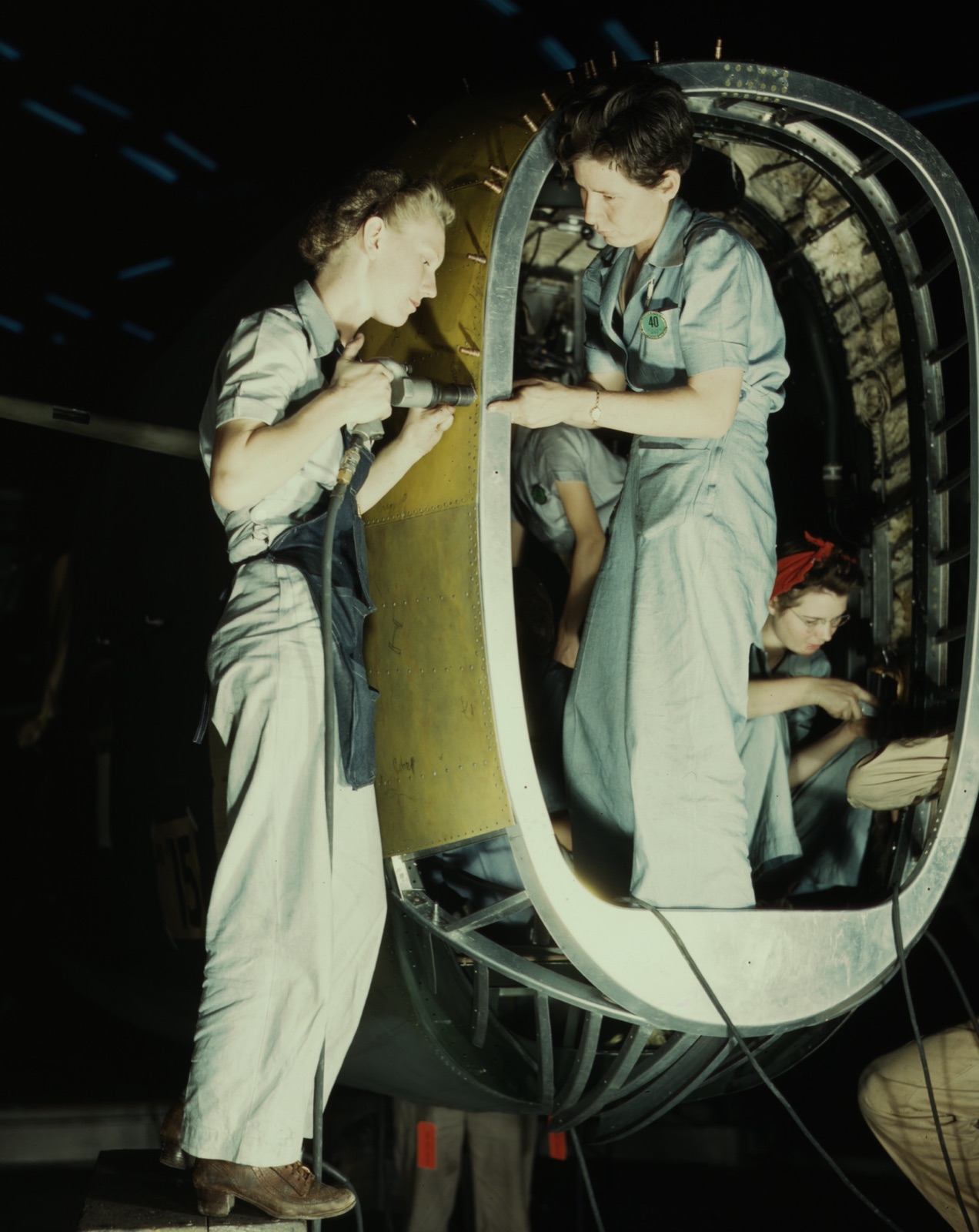
- Riveters on a Liberator fuselage section at Consolidated’s Fort Worth plant, Tex — Howard R. Hollem, Office of War Information / Library of Congress (LCCN 2017878289), Public domain (US federal work) · source
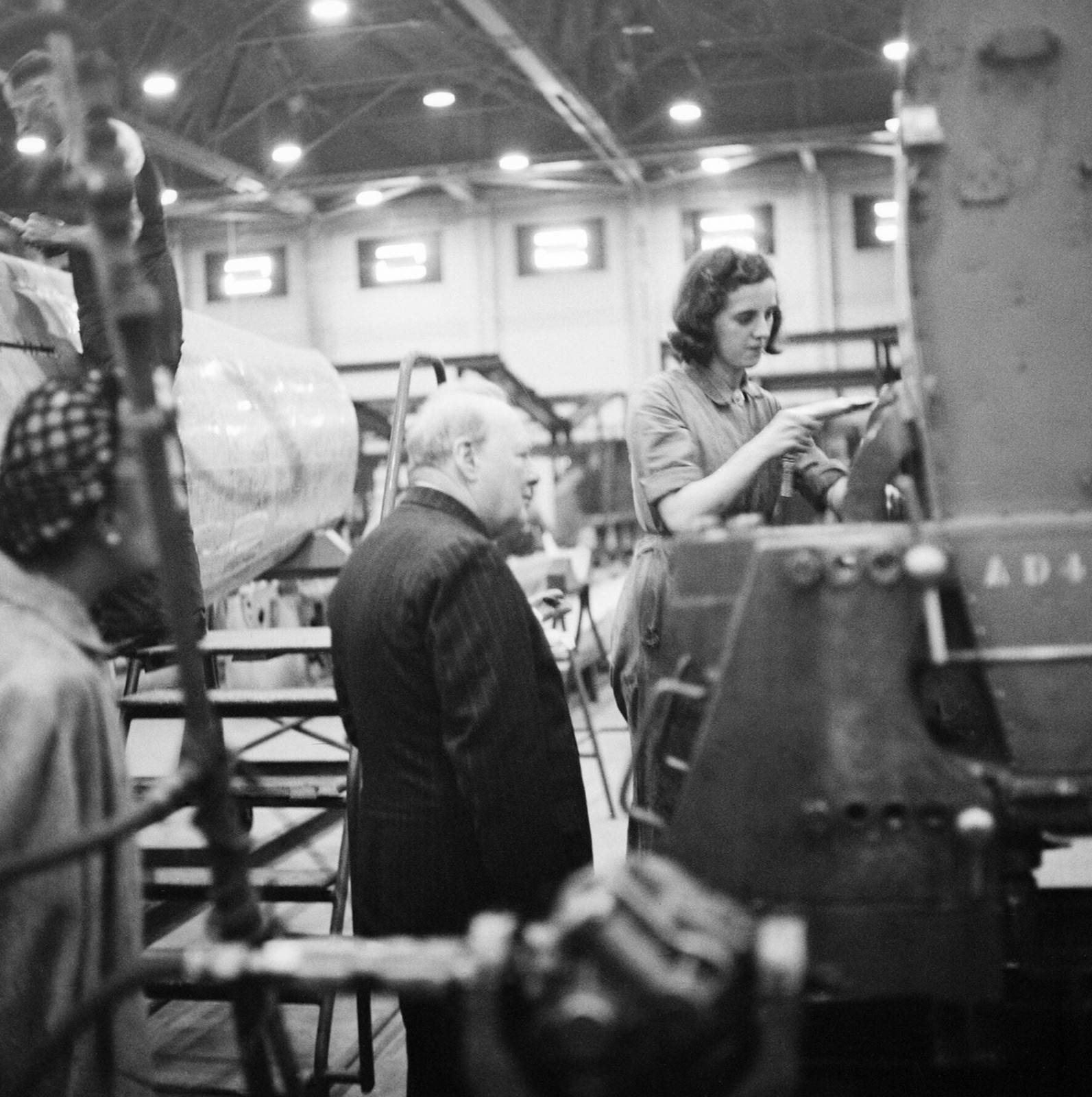
- Churchill watches a riveter at work on a Spitfire at Castle Bromwich, 28 Septemb — © IWM H 14259, photo: Capt. W. G. Horton, War Office official photographer, Public domain (expired Crown Copyright) · source
- An A-20 Havoc on the Douglas line at Long Beach, California, October 1942. Women — Alfred T. Palmer, Office of War Information / US National Archives (NARA 196397), Public domain (US federal work) · source
- WAAF plotters at the No. 11 Group operations table, Uxbridge (photographed 1942) — © IWM CH 7698, Public domain (expired Crown Copyright) · source
- Pilots of No. 303 (Polish) Squadron walk in from a Hurricane, October 1940. Seco — © IWM CH 1535, photo: S. A. Devon, Air Ministry official photographer, Public domain (expired Crown Copyright) · source
- New Lancaster B IIIs on the apron at Avro’s Woodford factory, Cheshire, early 19 — Michael Christie, Ministry of Aircraft Production official photographer, Public domain (expired Crown Copyright) · source
- Hamburg’s firestorm district, photographed from low level after the war. Some 37 — © IWM CL 3400, photo: Fg Off J. Dowd, Public domain (expired Crown Copyright) · source
- B-17Fs of the Eighth Air Force trailing contrails at altitude, 1943. — USAAF, Sgt Stanley M. Smith, Public domain (US federal work) · source
- P-51 Mustangs of the 375th Fighter Squadron, 361st Fighter Group, July 1944: the — USAAF, Public domain (US federal work) · source
Figures are drawn from the sources above; where they disagree the most widely cited figure is used and the range is given in the notes. Side profiles and 3D models are the gazetteer’s own procedural models, drawn to scale from published dimensions. Spotted an error? Tell us.