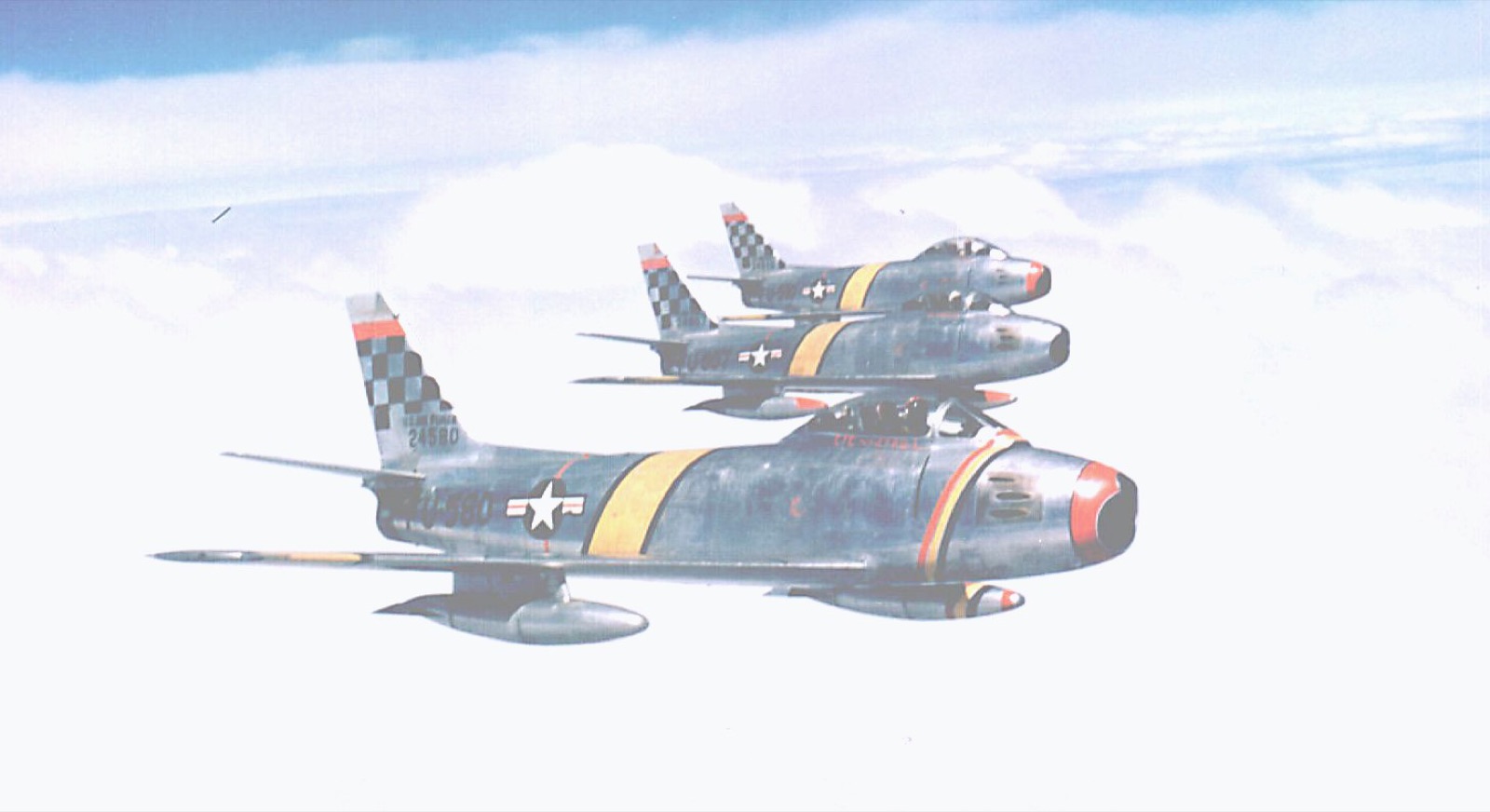
Korea began as a piston-engined war. In June 1950 the North Korean air force flew Yak-9s and Il-10s, and the Americans answered with F-51 Mustangs, F-82 Twin Mustangs and B-29s left over from 1945. By November the sky had changed: swept-wing MiG-15s, flown in secret by Soviet pilots, were climbing from bases in Manchuria that the UN would not bomb. The Sabre arrived in December, and the strip of North Korea between the Chongchon and the Yalu became MiG Alley.
The figures that came out of that war — 792 MiGs for 78 Sabres, a ten-to-one triumph — shaped how the West thought about air combat for a generation. Then the Soviet archives opened. This page sets the claims beside the records, and puts the dogfights in proportion: most UN aircraft were lost not to MiGs but to guns on the ground, and the aircraft that saved the most lives was a small helicopter with a goldfish-bowl cockpit.
MiG Alley
Ten to one, said the scoreboard. The archives say something nearer two.
Both sides over-claimed, as every air force in every war has done: a MiG trailing smoke and diving for the border looked destroyed, and gun-camera film was not always conclusive. What makes Korea unusual is that the other side’s books can now be read. The 64th Fighter Aviation Corps — the Soviet formation that did most of the MiG flying — recorded 335 aircraft lost to all causes, including accidents and anti-aircraft fire. China admits 224 MiG-15s lost; North Korean losses are less certain.
MiG-15s: claimed against admitted
aircraft= 20 aircraft
- Claimed destroyed by Sabre pilotsUSAF credits at the armistice792
- Soviet MiGs lost, all causes64th Fighter Aviation Corps records335
- Chinese MiG-15s lost, all causesChinese figure, via Zhang (2002)224
- North Korean MiG-15s lostabout 100, per defectors; not confirmed100
Admitted losses add up to about 659 MiG-15s from every cause, not just Sabres. Many were lost in accidents or to other UN aircraft.
Source USAF credits; Seidov & Britton, Red Devils over the Yalu (2014), p.554; Zhang, Red Wings over the Yalu (2002); No & Osterholm (2007)
Sabres: claimed against admitted
aircraft= 20 aircraft
- F-86s claimed by Soviet pilotsSoviet corps claims, part of 1,097 UN aircraft claimed (other versions: 651 of 1,106)647
- F-86s lost in air combat, USAF count78
- F-86s lost to unknown causes26
- F-86s lost to other causesground fire, accidents and the like61
Even if every Sabre lost to any cause were counted as a MiG kill, the Soviet claim would still be more than three times too high.
Source Soviet 64th IAK claims as published by Russian historians; USAF loss data as tabulated in Wikipedia’s list of Korean War flying aces
The duel: F-86F Sabre against MiG-15bis
North American F-86F Sabre
Mikoyan-Gurevich MiG-15bis
- 11 mLength10 m
- 11 mWingspan10 m
- 5,046 kgEmpty weight3,681 kg
- 26 kNEngine thrust27 kN
- 687 mphTop speed near sea level669 mph
- 15,100 mService ceiling15,500 m
- 6 gunsGuns3 guns
- 13 mmHeaviest gun calibre37 mm
Verdict On paper the two were very closely matched. The MiG was lighter, climbed better and hit much harder with its cannon; the Sabre turned and dived better, had a radar-ranging gunsight and a g-suit for its pilot, and was flown by pilots with far more training. Who flew mattered more than what they flew.
Source Manufacturers’ figures as given by the National Museum of the USAF and Gordon, Mikoyan-Gurevich MiG-15 (2001); figures vary by sub-type
The Soviet corps’ own claimed exchange ratio
UN aircraft claimed per MiG lost| Year | 64th Fighter Aviation Corps, claimed ratio |
|---|---|
| 1951 | 7.9 |
| 1952 | 2.2 |
| 1953 | 1.9 |
These are Soviet claims against Soviet losses, so the trend matters more than the level. The first point covers November 1950 to January 1952.
Source Soviet figures as given in the history of the 64th Fighter Aviation Corps (Krylov & Tepsurkaev; Seidov & Britton)
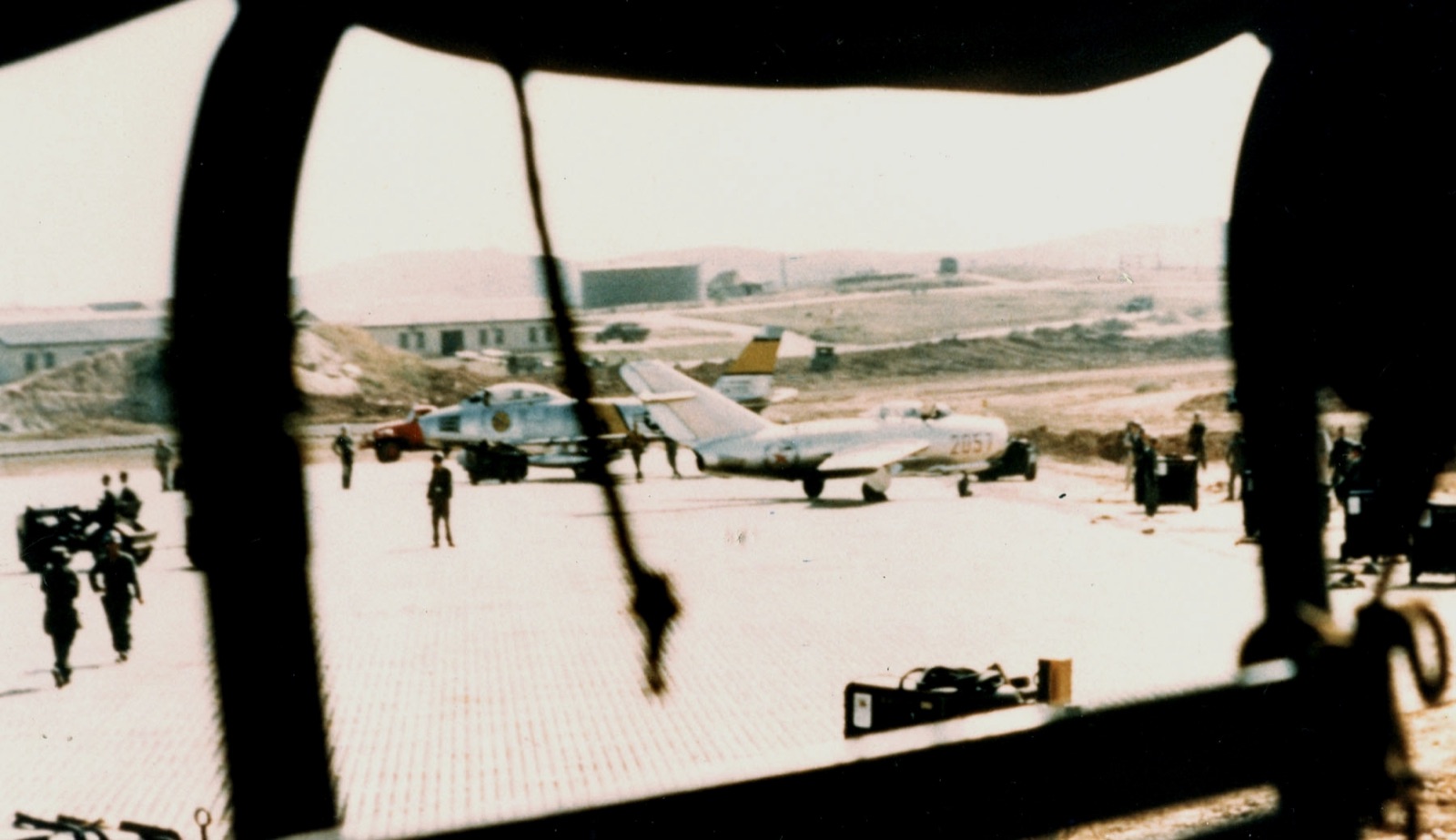
- MiG-15bis ‘2057’, flown south by Lt No Kum-sok on 21 September 1953
- A USAF Sabre with yellow tail markings, parked behind the MiG
- Pierced-steel-plank apron at Kimpo, home of the 4th Fighter-Interceptor Wing
- Taken through a window frame; the MiG was soon hidden away and later flown on test in Okinawa
The aces: credited victories, both sides
| Nikolai Sutyagin | Soviet | MiG-15 | 22 | Some sources give 21; highest-scoring pilot of the war |
| Yevgeny Pepelyaev | Soviet | MiG-15 | 19 | Commanded the 196th Fighter Aviation Regiment |
| Lev Shchukin | Soviet | MiG-15 | 17 | 15 plus 2 shared in some counts |
| Joseph McConnell | USAF | F-86 | 16 | Top US ace; killed testing an F-86H in 1954 |
| James Jabara | USAF | F-86 | 15 | First jet ace in history, 20 May 1951 |
| Manuel ‘Pete’ Fernandez | USAF | F-86 | 15 | Includes one shared |
| George A. Davis | USAF | F-86 | 14 | Killed in action 10 February 1952; Medal of Honor |
| Dmitry Oskin | Soviet | MiG-15 | 14 | |
| Royal Baker | USAF | F-86 | 13 | |
| Sergei Kramarenko | Soviet | MiG-15 | 13 | Totals of 13–16 are given |
| Alexander Smorchkov | Soviet | MiG-15 | 12 | Totals of 12–15 are given |
| Frederick ‘Boots’ Blesse | USAF | F-86 | 10 | Later wrote the fighter manual No Guts, No Glory |
| Harold Fischer | USAF | F-86 | 10 | Shot down April 1953; held in China until 1955 |
| James K. Johnson | USAF | F-86 | 10 | |
| Lonnie Moore | USAF | F-86 | 10 | |
| Ralph Parr | USAF | F-86 | 10 | Shot down an Il-12 on 27 July 1953, the war’s last day |
| Vermont Garrison | USAF | F-86 | 10 | Also an ace in the Second World War |
| Cecil Foster | USAF | F-86 | 9 | |
| Wang Hai | Chinese | MiG-15 | 9 | Chinese credits; other counts give as few as 4 |
| Li Han | Chinese | MiG-15 | 8 | |
| Guy Bordelon | US Navy | F4U-5N Corsair | 5 | Only US Navy ace of the war; night victories over ‘Bedcheck Charlie’ raiders |
| Credits as officially awarded by each air force; all are claims, and the Soviet and Chinese tallies in particular vary between sources. No British or Commonwealth pilot became an ace in Korea. | ||||
Source Wikipedia, List of Korean War flying aces (compiling USAF Historical Study 81, Seidov & Britton, Zhang)
The ledger
A million sorties, most of them nowhere near a MiG.
UN air sorties by service, 1950–1953
sortiesTotal 1,040,708 combat and combat-support sorties (Correll); the ‘other’ bar is the remainder. Some sources give the FEAF total as 710,886, and series that include airlift run higher.
Source Futrell, The United States Air Force in Korea (1983), as summarised by Air Force Magazine; total 1,040,708
How UN aircraft lost to enemy action went down
% of 1,041 aircraft- 78% Ground fire 816
- 14% Air-to-air combat 147
- 7% Unknown causes 78
UN air forces lost 1,986 aircraft in all (FEAF 1,466; Navy, Marines and allies 520); 1,041 of them to enemy action. Guns on the ground, not MiGs, did most of the killing.
Source Correll, ‘The Forgotten War’, Air & Space Forces Magazine (2000)
The Sabre’s own ledger: how F-86s were lost
aircraft- Air combat
- Anti-aircraft guns
- Unknown causes
- Other causes
- 78192661
RAND’s 2008 review of recent scholarship put the Sabre’s real air-to-air exchange ratio at about 1.8 to 1 overall, and about 1.3 to 1 against MiGs flown by Soviet pilots.
Source USAF loss data as tabulated in Wikipedia’s list of Korean War flying aces
Bombs dropped: Korea against the Pacific war
short tonsAlmost every substantial building in North Korea was destroyed. The FEAF alone delivered some 476,000 tons of ordnance.
Source Kiernan & Owen, ‘Making More Enemies than We Kill?’, The Asia-Pacific Journal (2015)
Except for air power, the war would have been over in 60 days with all Korea in Communist hands.
General Matthew B. Ridgway, UN commander in Korea, 1951–52
Three years in the air
North Korea invades on 25 June. Two days later an F-82 Twin Mustang scores the first American air victory of the war.
No. 77 Squadron RAAF flies its first Mustang sorties; HMS Triumph’s Seafires and Fireflies strike airfields in the North.
MiG-15s appear over the Yalu on 1 November. On 9 November a US Navy F9F Panther downs a MiG — a loss Soviet records confirm.
The first Sabres reach Korea; Lt Col Bruce Hinton claims the first Sabre-versus-MiG victory on 17 December.
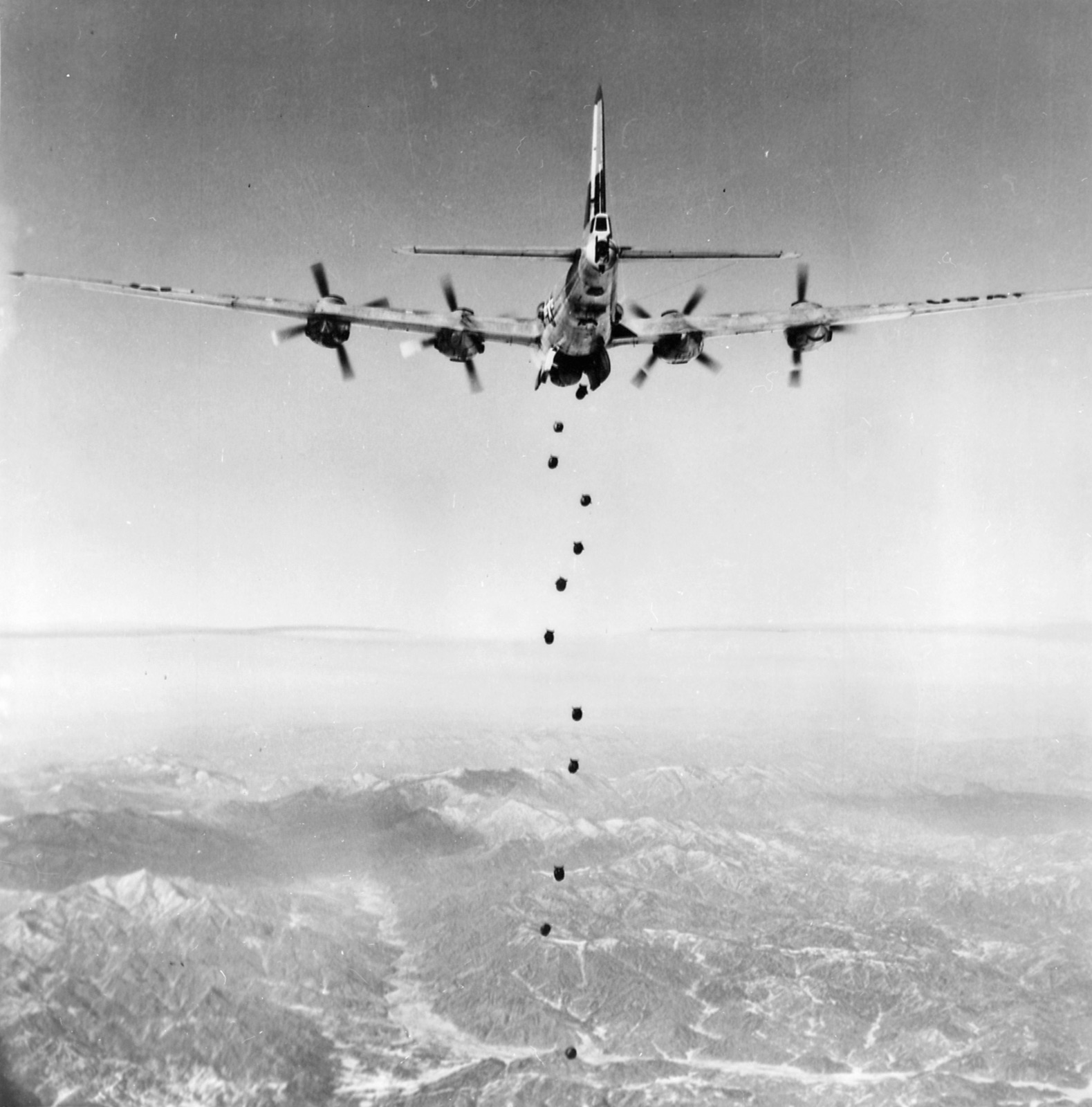
‘Black Thursday’, 12 April: MiGs shoot down three B-29s and damage seven over the Yalu bridges.
Captain James Jabara becomes the first jet-versus-jet ace on 20 May.
‘Black Tuesday’, 23 October: three B-29s lost near Namsi. Daylight heavy-bomber raids in MiG Alley end.
Battle of Sunchon, 1 December: No. 77 Squadron loses three Meteors to MiGs.
Navy and Air Force strike the Sui-ho hydro-electric complex — the largest single air attack since 1945.
Sea Furies of 802 Squadron from HMS Ocean fight MiG-15s; one MiG is credited to Lt Peter Carmichael’s flight.
Strikes on the Toksan and Chasan irrigation dams flood rice lands. McConnell scores his 16th on 18 May.
Armistice on 27 July. Ralph Parr’s Il-12, shot down that day, is the last air victory of the war.
Lt No Kum-sok defects in a MiG-15bis to Kimpo on 21 September.
Source Futrell (1983); Hallion, The Naval Air War in Korea (1986); Australian War Memorial
Britain and the Commonwealth
Light carriers, a borrowed Mustang squadron and flying boats on fifteen-hour patrols.
Britain sent no RAF fighter squadrons to Korea; its air war was fought largely from the decks of four light fleet carriers — Triumph, Theseus, Glory and Ocean — taking turns on the west coast with the Australian carrier Sydney. Their piston-engined Sea Furies and Fireflies flew strike, spotting and blockade patrols, sometimes more than a hundred sorties in a day. The RAF’s contribution was its Far East Flying Boat Wing of Sunderlands, flying from Iwakuni in Japan, a handful of pilots on exchange with American and Australian squadrons, and the Austers of No. 1903 Independent Air Observation Post Flight.
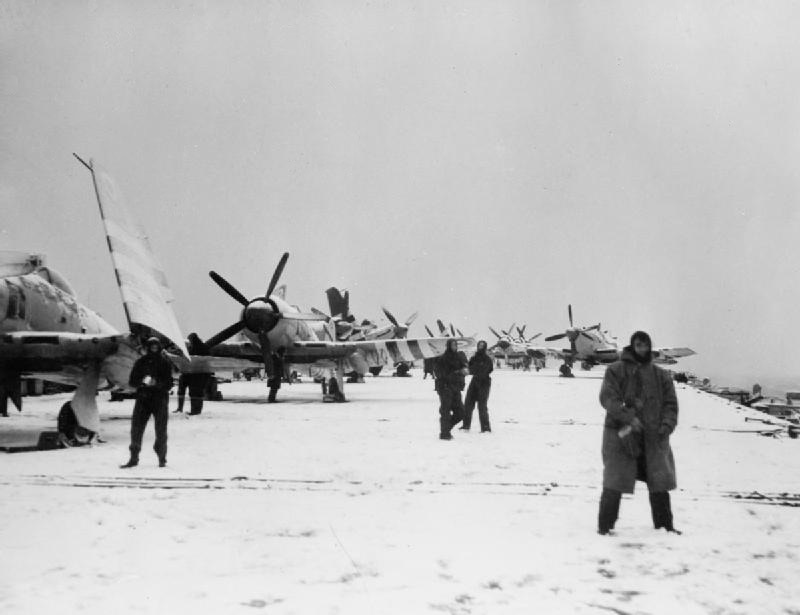
- Folded wing of a parked aircraft, raised to save deck space
- Black-and-white identification stripes, painted on all British naval aircraft for Korea
- More Sea Furies and Fireflies ranged aft along the deck
- A crewman holding a snowball
British and Commonwealth air units in Korea
| No. 77 Squadron RAAF | Australia | Mustang, then Meteor F.8 | Jul 1950–Jul 1953 | 18,872 | Almost 60 aircraft lost; 41 pilots killed (6 of them RAF exchange pilots) and 7 captured |
| No. 2 Squadron SAAF | South Africa | F-51D Mustang, then F-86F Sabre | Nov 1950–Jul 1953 | 12,067 | 10,373 sorties on Mustangs; 74 Mustangs and 4 Sabres lost; 34 killed, 8 captured |
| HMS Ocean (802, 825 Sqns) | UK | Sea Fury, Firefly | May–Nov 1952 | – | About 5,600–5,900 sorties on her first tour, by different counts |
| HMS Theseus (807, 810 Sqns) | UK | Sea Fury, Firefly | Oct 1950–Apr 1951 | 3,500 | About 3,500 sorties on 86 flying days |
| HMS Glory (804, 812 Sqns) | UK | Sea Fury, Firefly | 1951–1953, three tours | 2,800 | Over 2,800 on the first tour alone (Apr–Sep 1951) |
| HMAS Sydney (805, 808, 817 Sqns) | Australia | Sea Fury, Firefly | Oct 1951–Jan 1952 | 2,366 | 13 aircraft lost; three aircrew killed |
| HMS Triumph (800, 827 Sqns) | UK | Seafire FR.47, Firefly | Jul–Sep 1950 | 360 | Seafire sorties only; the first British carrier strikes of the war |
| Far East Flying Boat Wing (88, 205, 209 Sqns) | UK | Sunderland | 1950–1953 | 900 | Nearly 900 sorties, 13,350 hours, from Iwakuni |
| RCAF pilots with USAF Sabre wings | Canada | F-86 | 1951–1953 | 900 | 23 pilots; 9 MiGs credited, none lost |
| No. 1903 Independent AOP Flight | UK | Auster AOP.6 | 1951–1953 | – | Artillery spotting for the Commonwealth Division |
| No. 30 Transport Unit / 36 Sqn RAAF | Australia | Dakota | 1950–1953 | – | Casualty evacuation and transport between Japan and Korea |
| Sortie figures are the most-cited published totals and are not all on the same basis; Glory’s figure covers one tour of three, and Triumph’s only her Seafires. | |||||
Source Robson, Of MiGs and Men (RAAF); Royal Australian Navy Sea Power Centre; Australian War Memorial; SAAF Association; RAF Museum; Canadian Aviation Historical Society
Commonwealth sorties by unit
sortiesSource As for the table above
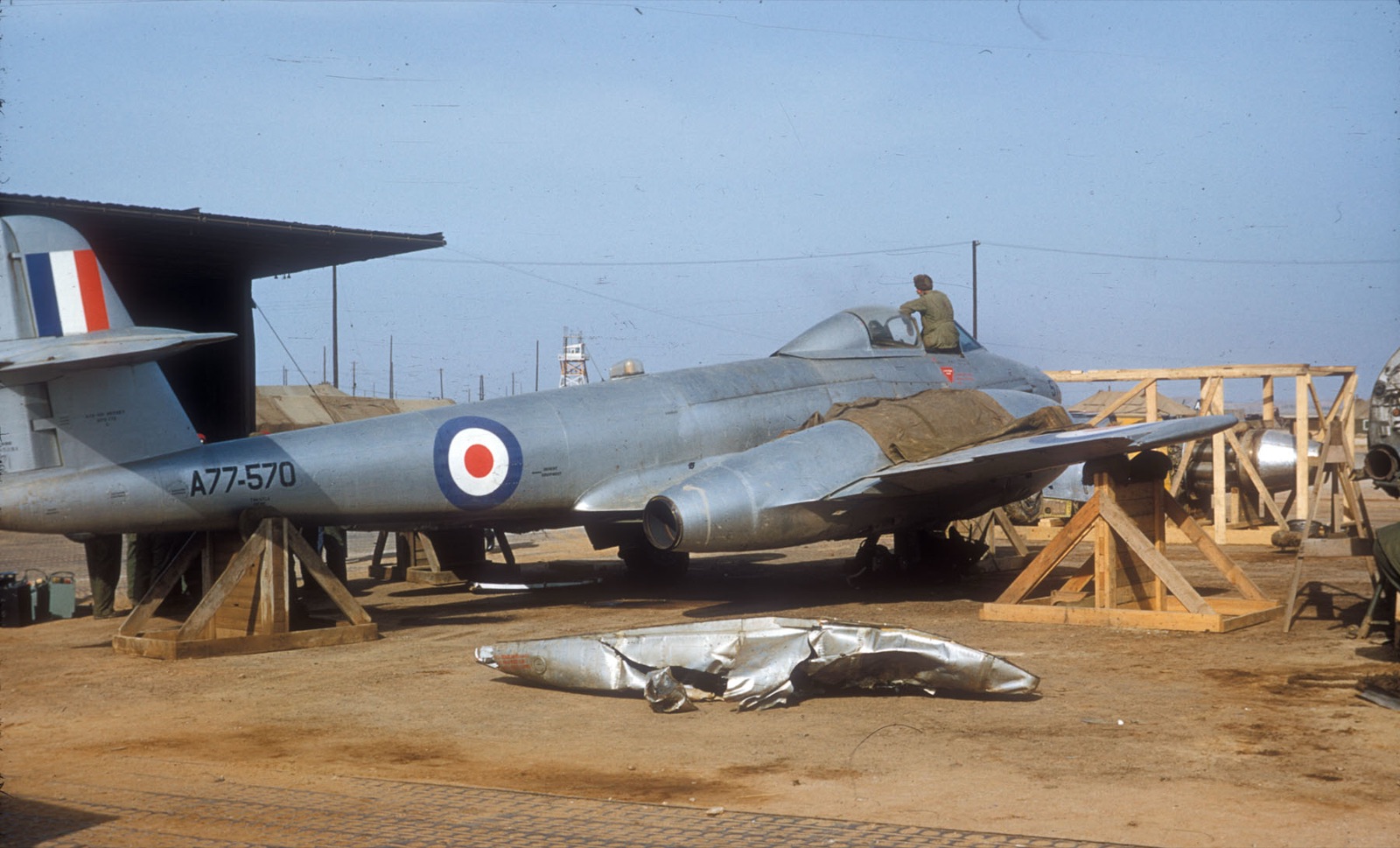
- RAAF roundel — the Australians still used RAF-style markings in 1952
- Serial A77-570
- A crumpled external fuel tank on the ground
- Wooden trestles taking the weight while the undercarriage is serviced
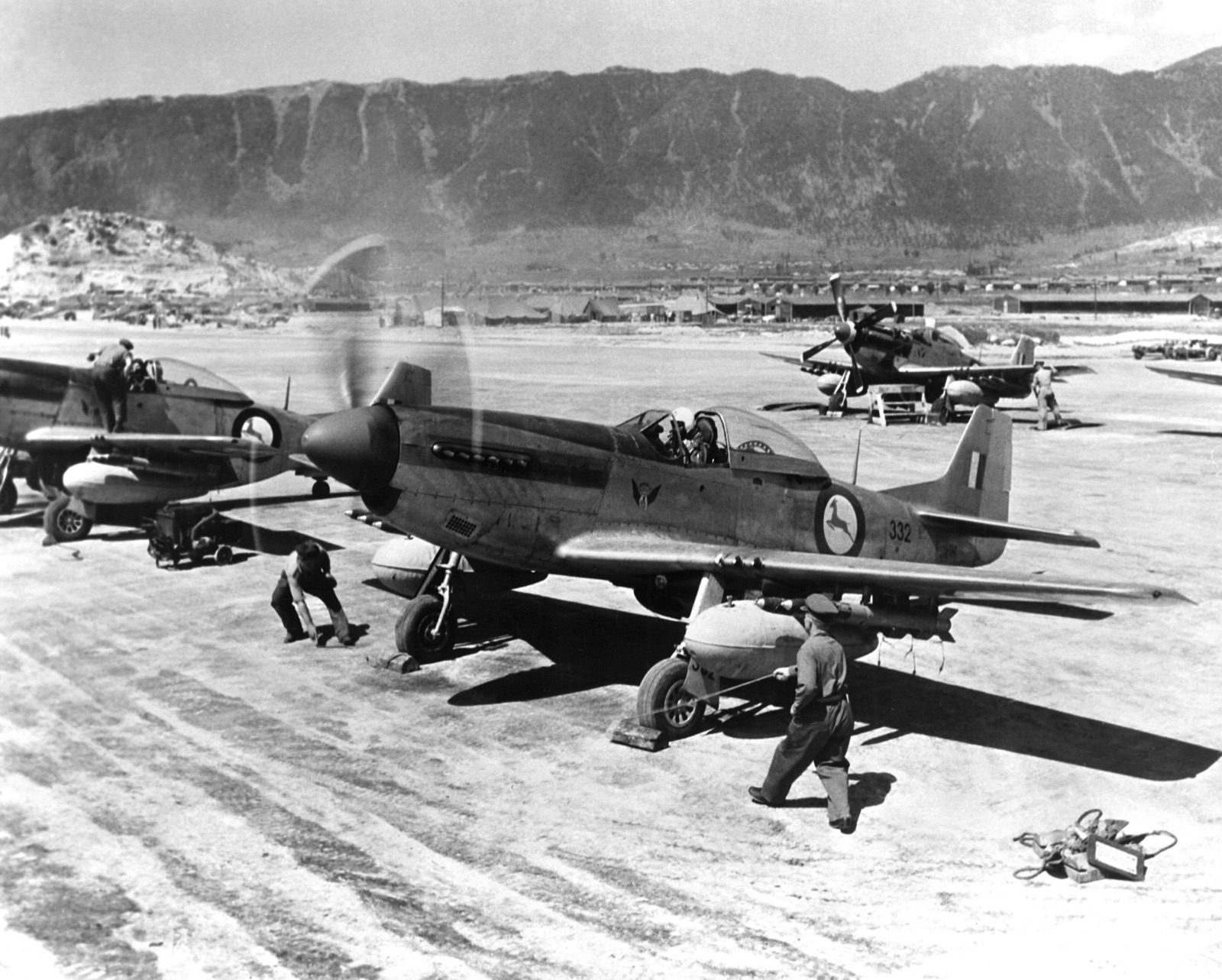
- Springbok roundel of the South African Air Force
- Aircraft number 332
- Ground crew at the wheel chocks
- Another Mustang running up beyond
Rotors
The helicopter’s first war, and the one that made it indispensable.
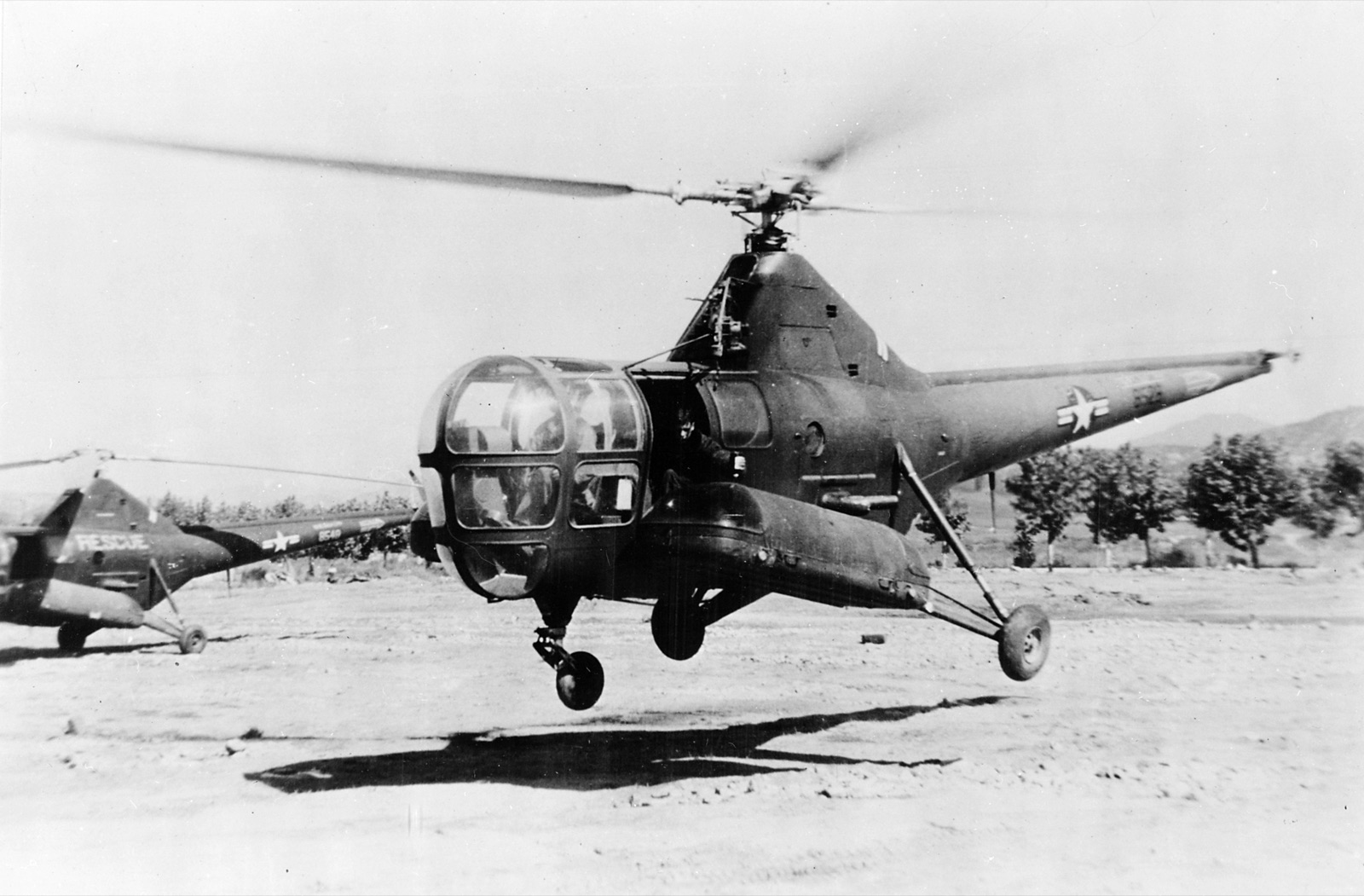
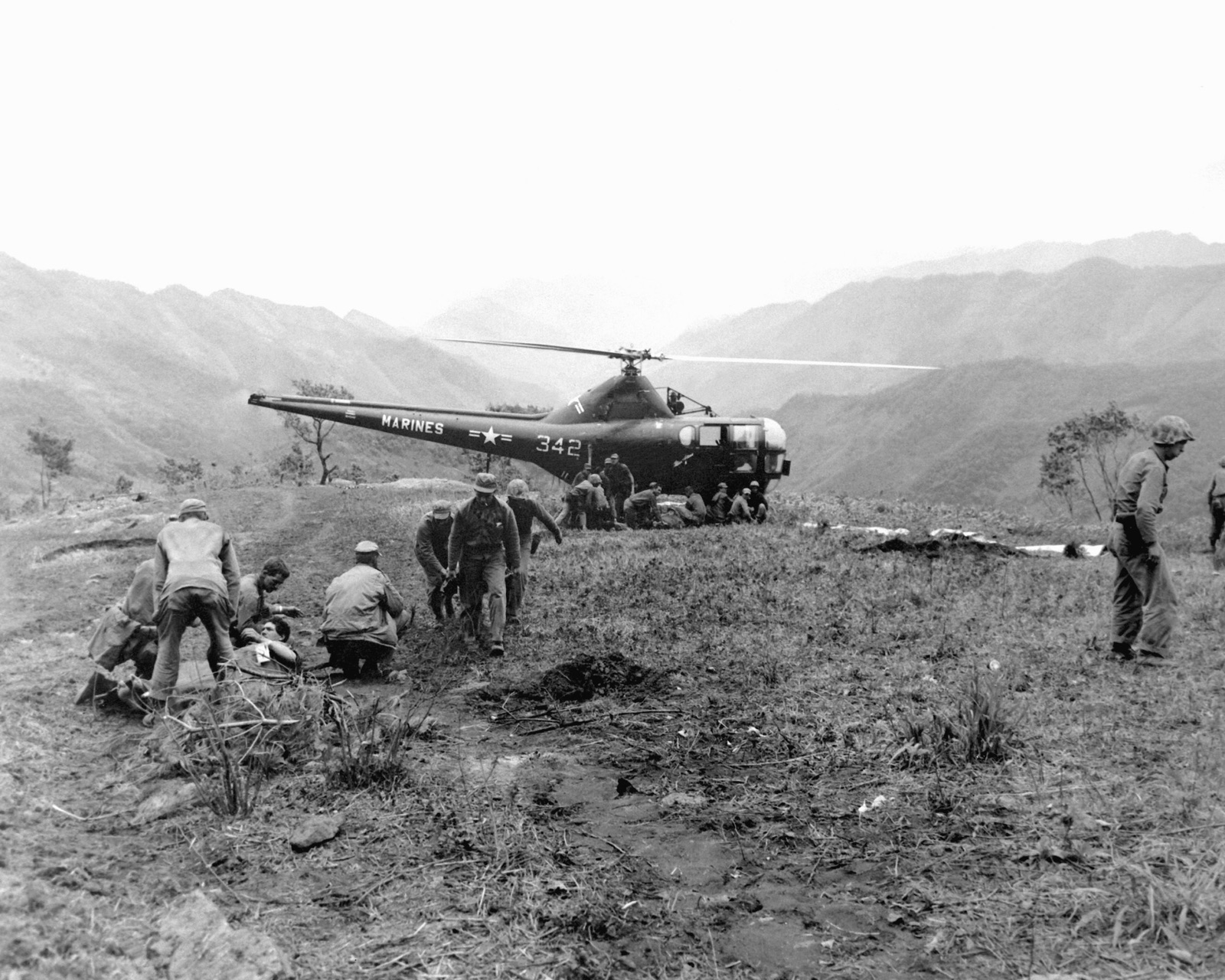
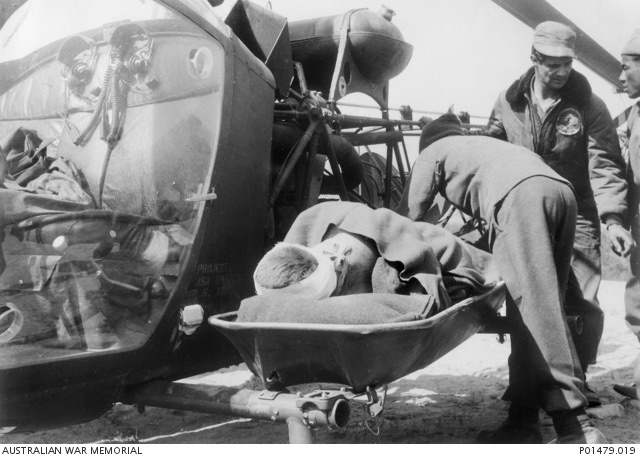
The helicopters of 1950 were frail things: a Bell H-13 could carry two stretchers in pods outside the cabin, a Sikorsky H-5 one or two inside. Yet they cut the journey from a hillside aid post to a surgical hospital from hours on mountain tracks to minutes. US Army helicopters alone carried about 18,000 of the war’s casualties to the forward hospitals; the USAF’s Air Rescue Service evacuated 8,598 more and plucked 996 men from behind enemy lines. Historians still debate how many lives this saved — the share of all casualties flown out was modest — but no army afterwards went to war without it.
Lifted out by helicopter
people= 500 people
- Casualties flown by US Army H-13sabout 18,000 of 23,000 Army helicopter evacuations18,000
- Sick and wounded evacuated by Air Rescuemostly H-5s, the Air Force S-518,598
- Rescued from behind enemy linesincluding 170 American airmen996
H-13: the Bell 47. H-5: the Air Force’s Sikorsky S-51, built in Britain under licence as the Westland Dragonfly.
Source US Army, ‘Army helicopters in Korea, 1950 to ’53’ (army.mil); National Museum of the USAF, Air Rescue fact sheet
Source Wikipedia (USAF loss data); Seidov & Britton; history of HMS Ocean
The line-up
Korean War types from the Gazetteer’s own hangar, at one scale.
Korea’s aircraft at true scale
drawn to one scale-
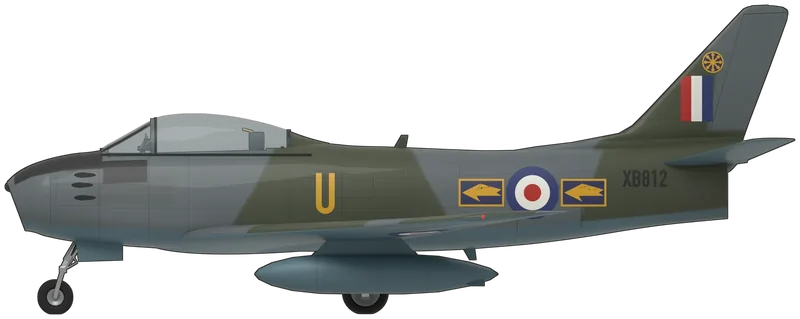 North American F-86F Sabre 11.4 m
 -
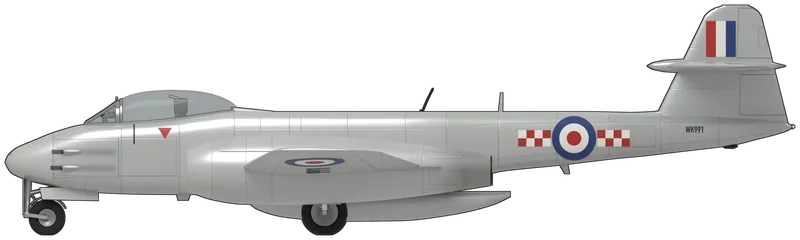 Gloster Meteor F.8 (No. 77 Sqn RAAF) 13.6 m
 -
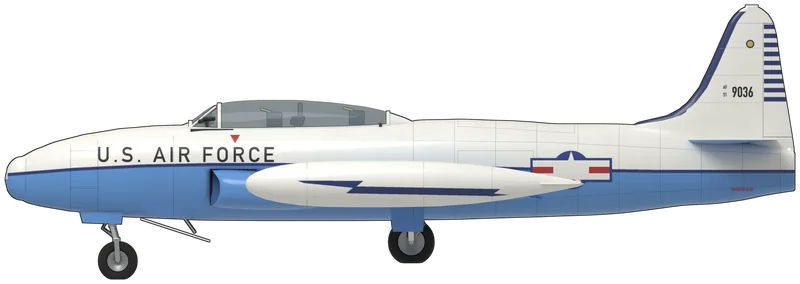 Lockheed T-33 — stand-in for the F-80 Shooting Star 11.5 m · The F-80C fighter that flew in Korea was the single-seat parent of the T-33, about a metre shorter
 -
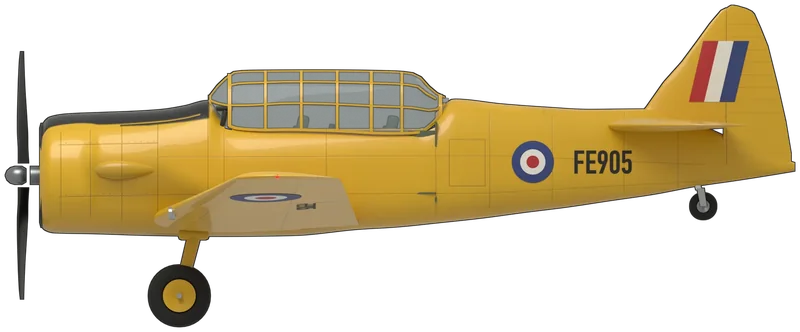 North American T-6 ‘Mosquito’ forward air controller 8.8 m
 -
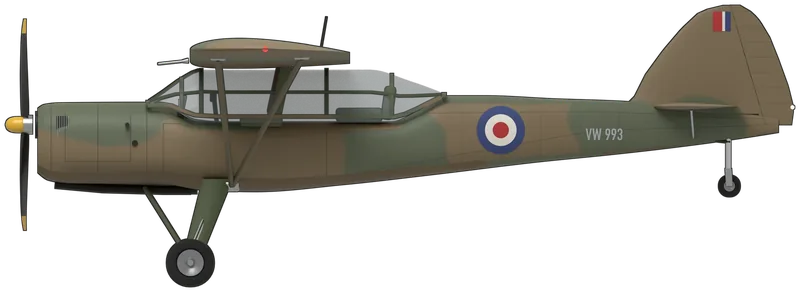 Auster AOP.6 (No. 1903 AOP Flight) 7.2 m
 -
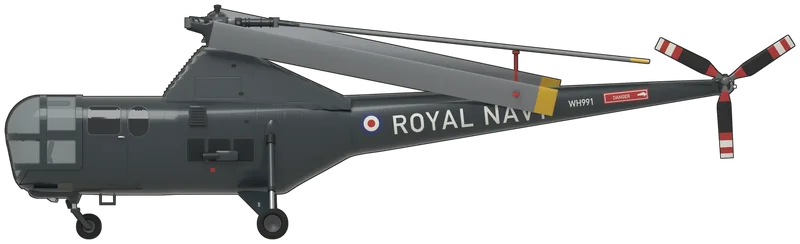 Sikorsky S-51 / H-5 family (as the Westland Dragonfly) 17.5 m · Length with rotors turning; span is the rotor diameter
 -
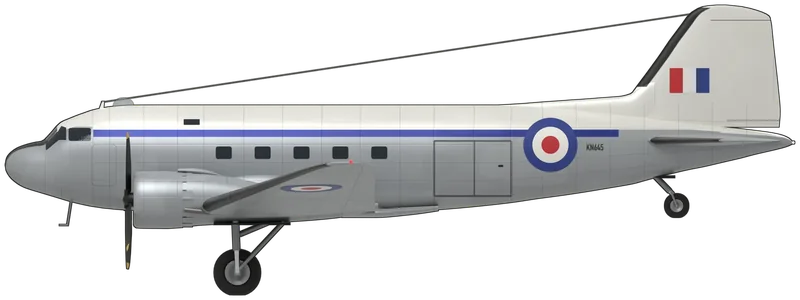 Douglas C-47 Dakota 19.7 m
 -
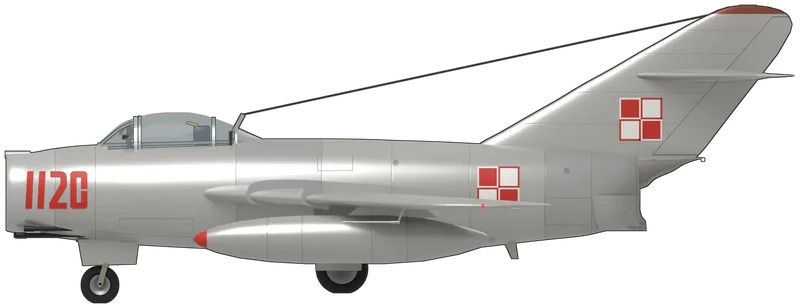 MiG-15bis 10.1 m
 -
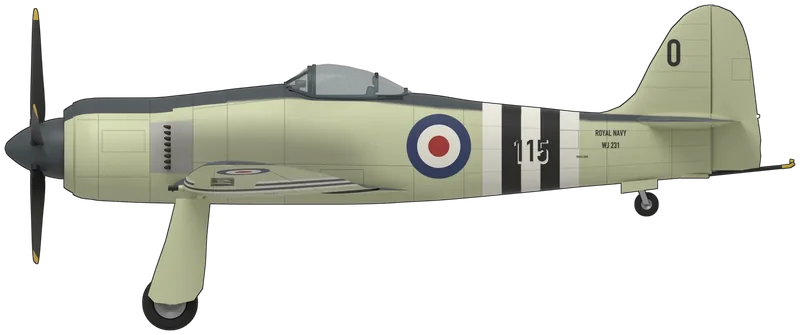 Hawker Sea Fury 10.6 m
 -
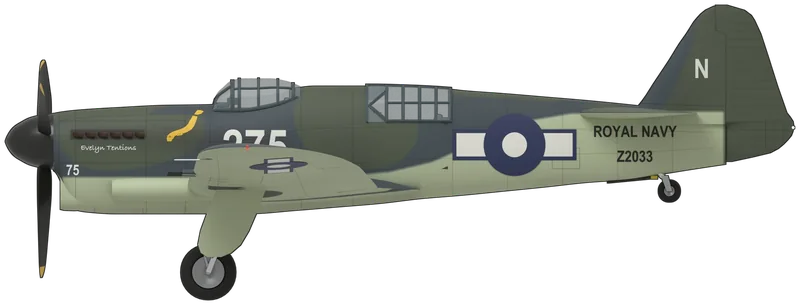 Fairey Firefly 11.5 m
 -
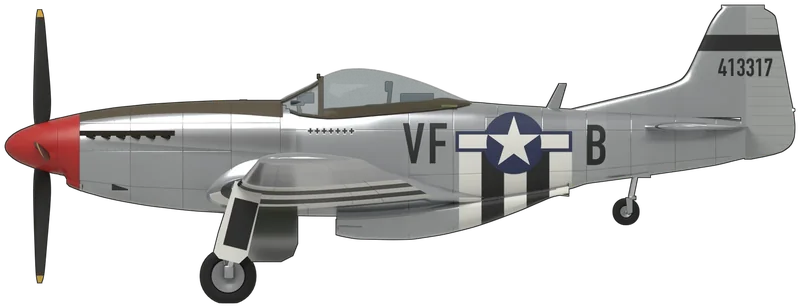 F-51 Mustang 9.8 m
 -
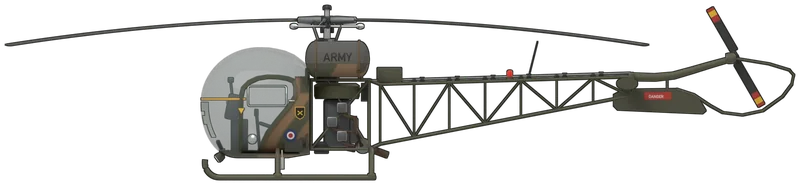 Bell H-13 (Sioux) 9.6 m
 -
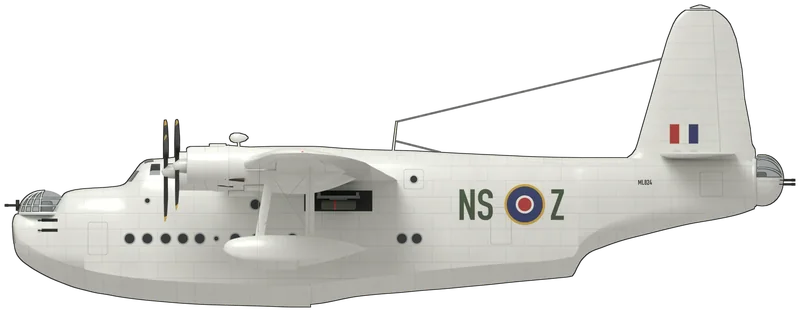 Short Sunderland 26.0 m
Korea’s aircraft, parked together
live 3D, true scaleDrag to walk round · pinch or buttons to zoom
- F-86 Sabre 11.4 m long, 11.3 m span
- Meteor F.8 13.6 m long, 11.3 m span
- T-6 Mosquito 8.8 m long, 12.8 m span
- Auster AOP.6 7.2 m long, 11.0 m span
- S-51 / H-5 17.5 m long, 14.9 m rotor
- C-47 Dakota 19.7 m long, 29.0 m span
- MiG-15bis 10.1 m long, 10.1 m span
- Hawker Sea Fury 10.6 m long, 11.7 m span
- Fairey Firefly 11.5 m long, 13.6 m span
- F-51 Mustang 9.8 m long, 11.3 m span
- Bell H-13 (Sioux) 9.6 m long, 11.3 m rotor
- Short Sunderland 26.0 m long, 34.4 m span
Where to see Korean War types in Britain
in British museums- Gloster Meteor31 museums
Royal Air Force Museum London · IWM Duxford · Norfolk and Suffolk Aviation Museum · Gatwick Aviation Museum · Tangmere Military Aviation Museum · Bournemouth Aviation Museum · Royal Air Force Museum Midlands · Midland Air Museum · Newark Air Museum · Yorkshire Air Museum · Solway Aviation Museum · South Wales Aviation Museum · Montrose Air Station Museum · Ulster Aviation Society (Maze Long Kesh) · Fleet Air Arm Museum · Boscombe Down Aviation Collection · National Museum Of Flight · Morayvia · City of Norwich Aviation Museum · Bentwaters Cold War Museum · RAF Coltishall Heritage Centre · RAF Manston History Museum · Trenchard Museum · Robertsbridge Aviation Society · Jet Age Museum · East Midlands Aeropark · Hucknall Flight Test Museum · North East Land, Sea and Air Museums · South Yorkshire Aircraft Museum · Hooton Park Hangars · Speke Aerodrome Heritage Group
- Taylorcraft Auster16 museums
Royal Air Force Museum London · Norfolk and Suffolk Aviation Museum · Midland Air Museum · Newark Air Museum · South Wales Aviation Museum · IWM Duxford · Boscombe Down Aviation Collection · Ulster Aviation Society (Maze Long Kesh) · Bottisham Airfield Museum · Army Flying Museum · RAF Manston History Museum · East Midlands Aeropark · Thorpe Camp Visitor Centre · North East Land, Sea and Air Museums · South Yorkshire Aircraft Museum · Hooton Park Hangars
- Douglas C-47 Dakota9 museums
IWM Duxford · Royal Air Force Museum Midlands · Battle Of Britain Memorial Flight Visitors Centre · Yorkshire Air Museum · Boscombe Down Aviation Collection · Wings Aviation Museum · Romney Marsh Wartime Collection · Metheringham Airfield Visitor Centre · South Yorkshire Aircraft Museum
Sources
- Robert F. Futrell, The United States Air Force in Korea, 1950–1953 (Office of Air Force History, revised 1983)
- Air & Space Forces Magazine, ‘This Day in Airpower: July 29, 1953’ (FEAF end-of-war summary)
- Igor Seidov and Stuart Britton, Red Devils over the Yalu: A Chronicle of Soviet Aerial Operations in the Korean War 1950–53 (Helion, 2014)
- Xiaoming Zhang, Red Wings over the Yalu: China, the Soviet Union, and the Air War in Korea (Texas A&M University Press, 2002)
- John Stillion and Scott Perdue, ‘Air Combat Past, Present and Future’, RAND Project Air Force briefing (2008)
- Robert F. Dorr, Jon Lake and Warren Thompson, Korean War Aces (Osprey, 2005)
- Wikipedia, List of Korean War flying aces (compiling USAF and Soviet sources)
- Wikipedia, North American F-86 Sabre — Korean War section
- Wikipedia, 64th Fighter Aviation Corps
- Ben Kiernan and Taylor Owen, ‘Making More Enemies than We Kill?’, The Asia-Pacific Journal: Japan Focus (2015)
- US Army, ‘Army helicopters in Korea, 1950 to ’53’
- National Museum of the United States Air Force, ‘Air Rescue’ fact sheet
- Australian War Memorial, ‘Mustangs, Meteors and MiGs: No. 77 Squadron RAAF in Korea’
- Royal Australian Navy Sea Power Centre, Hawker Sea Fury Mk 11 (HMAS Sydney in Korea)
- Wikipedia, 2 Squadron SAAF
- Wikipedia, HMS Ocean (R68)
- RAF Museum, Short Sunderland MR5
- Canadian Aviation Historical Society, ‘In Korean Skies’
- Richard P. Hallion, The Naval Air War in Korea (Nautical & Aviation, 1986)
Photographs
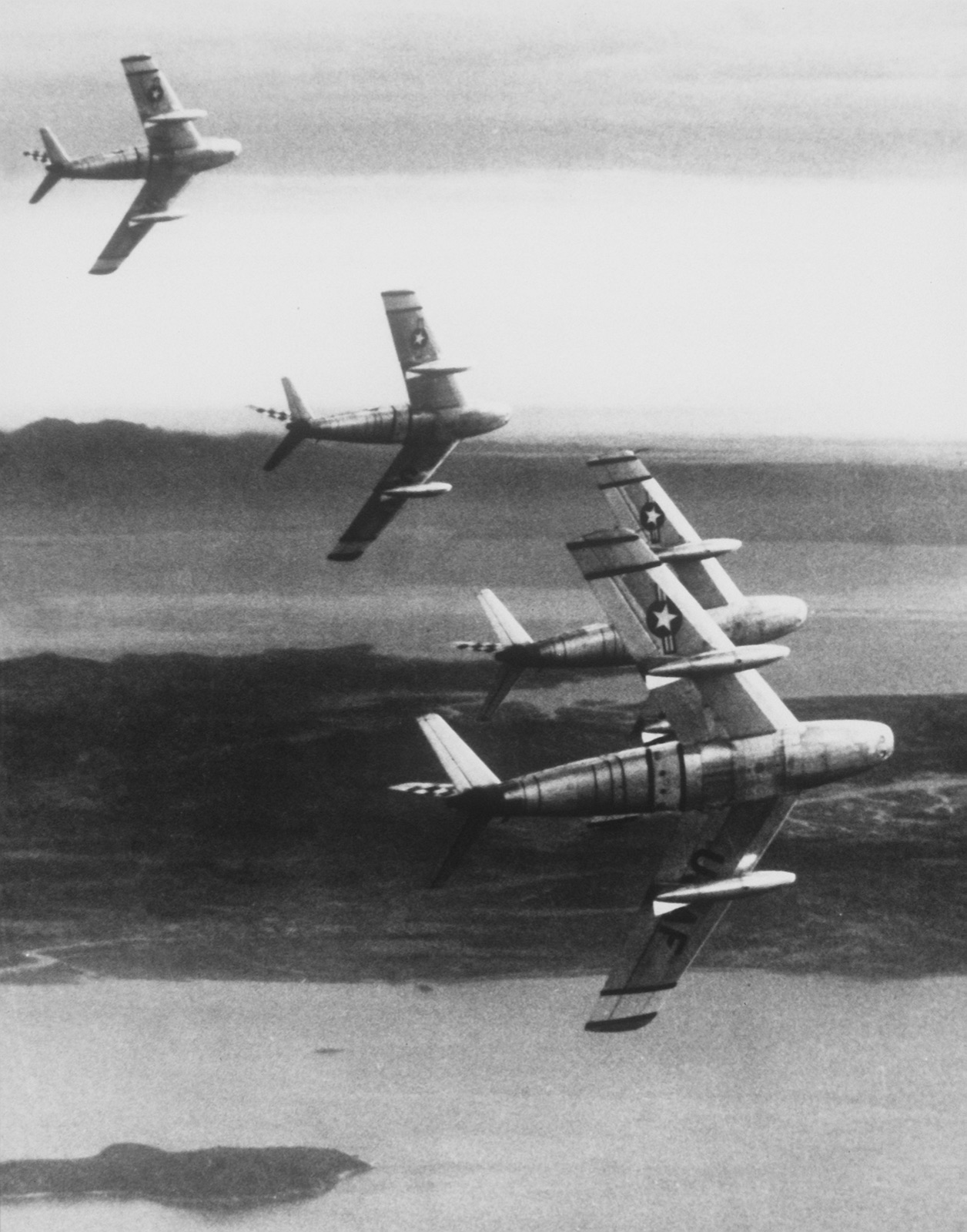
- Sabres of the 51st Fighter-Interceptor Wing over Korea. The chequered fins were — US Air Force, Public domain · source
- The MiG nobody had to shoot down. Lt No Kum-sok of the North Korean air force la — US Air Force, Public domain · source
- A B-29 of the 19th Bomb Group bombing a target in Korea, 1951. Daylight B-29 rai — US Air Force (photo 342-AF-78971AC), Public domain · source
- Winter off Korea: Sea Furies and Fireflies parked on a snow-covered flight deck — Royal Navy official photographer (IWM A 31788), Public domain (expired Crown copyright, PD-UKGov) · source
- Meteor F.8 A77-570 of No. 77 Squadron RAAF on trestles for maintenance at Kimpo — US Air Force, Public domain · source
- F-51D Mustangs of No. 2 Squadron SAAF, the ‘Flying Cheetahs’, in Korea on 1 May — US Air Force, Public domain · source
- Two Sikorsky H-5s of the USAF’s 3rd Air Rescue Squadron in Korea, 1952. Air Resc — US Air Force (342-AF-121981AC), Public domain · source
- A Marine HO3S, the naval version of the Sikorsky S-51, waits on a ridge as wound — US Navy (80-G-429571), Public domain · source
- A wounded Australian is loaded into the stretcher pod of a US Army Bell H-13, 19 — Australian War Memorial, Public domain (PD-Australia) · source
- Four 51st Wing Sabres break left over Korea, 1952. — US Air Force (photo 82042 AC), Public domain · source
Figures are drawn from the sources above; where they disagree the most widely cited figure is used and the range is given in the notes. Side profiles and 3D models are the gazetteer’s own procedural models, drawn to scale from published dimensions. Spotted an error? Tell us.