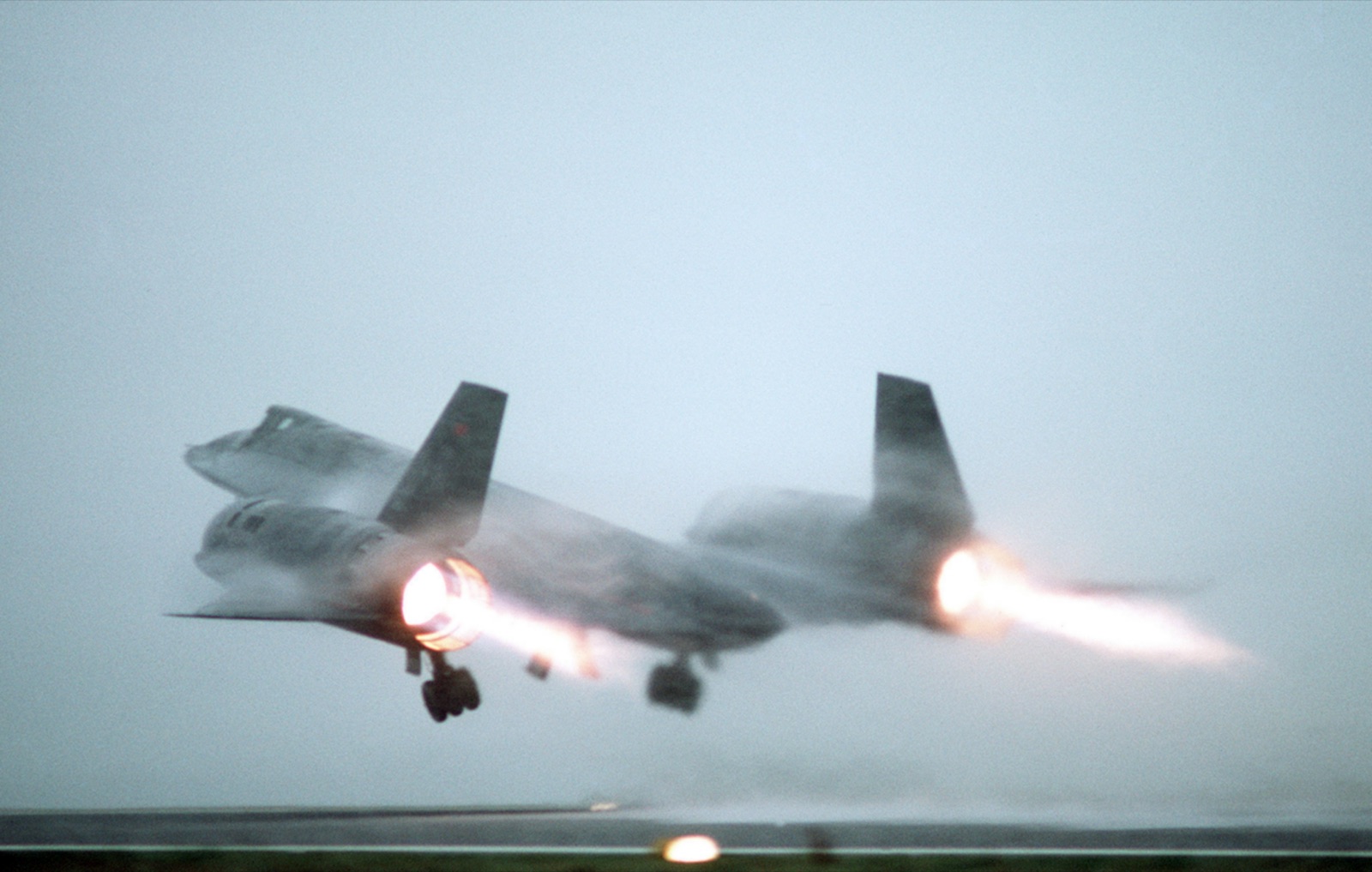
The Cold War was fought mostly by aircraft that never fired a shot at their real enemy. For forty-four years Britain kept nuclear bombers at fifteen minutes’ notice, sent fighters up several times a week to meet Soviet bombers off Scotland, and let American spy planes take off from Suffolk. The figures on this page are the ones that defined that long stand-off: how many aircraft, how many missiles, how fast, how high.
It began with an airlift rather than a battle. In 1948 the Western Allies kept two million Berliners alive by air for fifteen months. It ended in 1991 with both sides counting each other’s aircraft for a treaty, and disagreeing, by thousands, about what the numbers were. In between came the V-force, the missile race, the U-2 and the SR-71, and the most-built jet aircraft there have ever been.
The airlift
Fifteen months, 2.3 million tons, one city fed from the sky
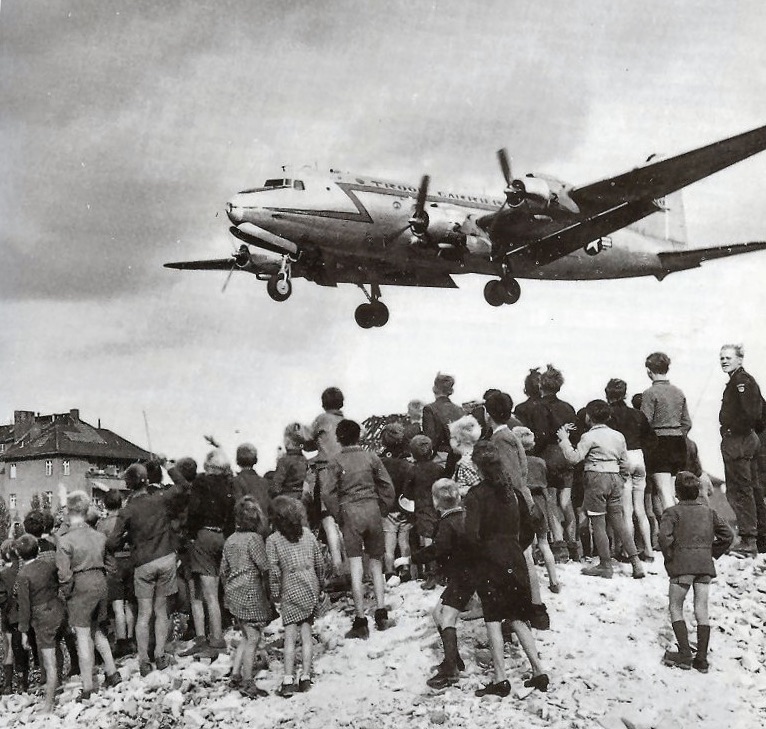
On 24 June 1948 the Soviet Union closed the road, rail and canal routes into West Berlin. Two days later the first American transports landed at Tempelhof, and the RAF’s Operation Plainfare began soon afterwards. The planners thought the city needed about 4,500 tons a day. In the first week the airlift managed about 90 tons a day.
By the spring of 1949 it was landing more than 7,000 tonnes a day, every day. The blockade was lifted on 12 May 1949, but the flights went on until 30 September to build up stocks.
Source Wikipedia, Berlin Blockade (citing Miller 1998 and Tusa 1989); RAF facts and figures sheet
Who flew it in: tonnage delivered to Berlin
tons= 50,000 tons
- US Air Force (and US Navy)Mainly C-54 Skymasters1,783,573
- Royal Air ForceDakotas, Yorks, Hastings and Sunderlands394,509
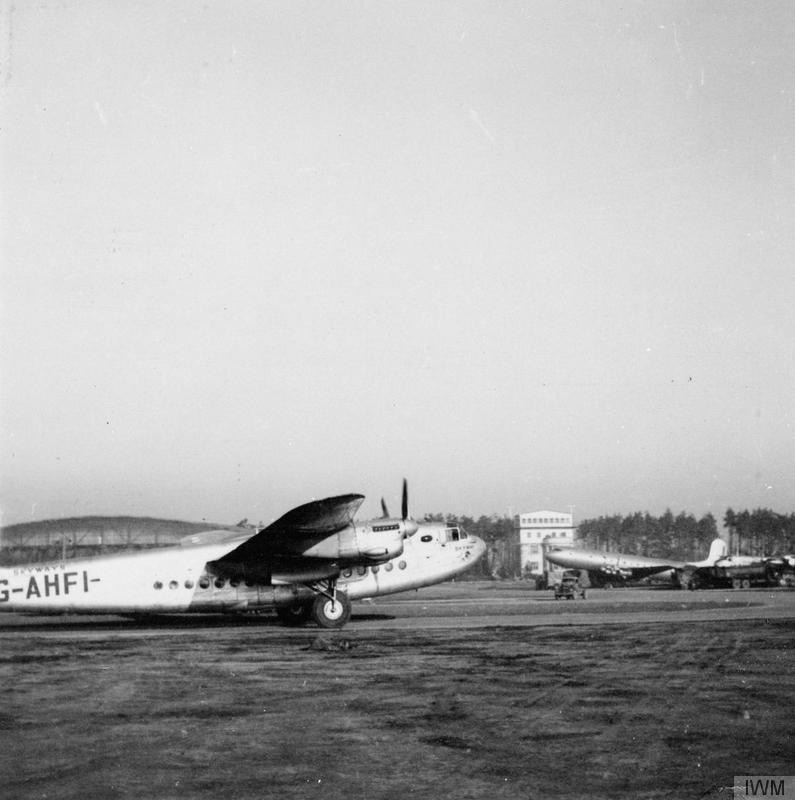
- British civil charter aircraftLancastrians, Tudors, Haltons, Yorks and others147,727
British civil aircraft carried 27% of the British total. Official totals differ slightly between sources (2,325,509 to 2,334,374 tons overall).
Source RAF / HMSO, The Berlin Airlift: facts and figures (1998)
The build-up: average tonnes landed per day, by month
tonnes a dayNo figure is published in that series for June 1949. Bars are in chronological order, not ranked.
Source Wikipedia (de), Berliner Luftbrücke, Transportleistung table, after Miller (1998) and Tusa & Tusa (1989)
What the aircraft carried
% of British and American tonnage- 69% Coal 69
- 23% Food 23
- 6% Liquid fuel 6.3
- 2% Military stores and miscellaneous (British only) 1.9
Coal 1,586,529 tons; food 538,016; liquid fuel 146,822; other 43,441. The categories sum to about 10,700 tons less than the stated grand total.
Source RAF / HMSO, The Berlin Airlift: facts and figures (1998)
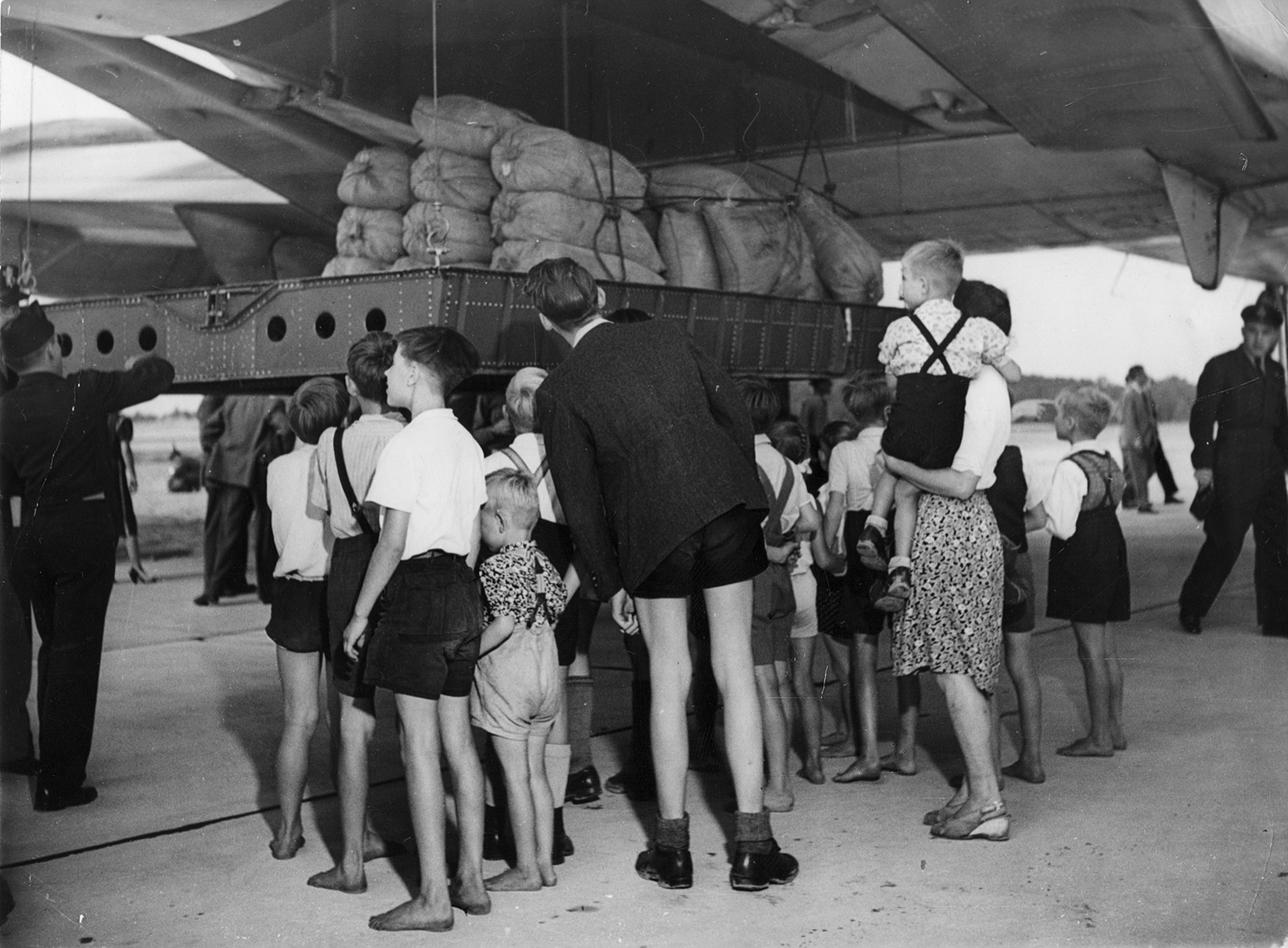
- Sacks of flour: food was almost a quarter of everything flown in
- The C-74’s built-in cargo lift, lowered from the belly of the aircraft
- Berlin children, many barefoot, came out to watch the unloading
- The wing of the C-74 Globemaster, one of the largest transports of its day
The deterrent
Three V-bombers, then a missile race measured in thousands
Britain’s answer to the Soviet bomb was three four-jet bombers from three different firms: the Vickers Valiant (in service February 1955), the Avro Vulcan (1956) and the Handley Page Victor (1958). Together they were the V-force, and until 1969 they carried Britain’s strategic nuclear deterrent. From 1962 one armed aircraft per squadron was held on Quick Reaction Alert, crewed and ready to be airborne within 15 minutes.
On 1 July 1969 the job passed to the Royal Navy’s Polaris submarines. The Vulcans went on as tactical bombers, and in 1982 flew the longest bombing raids then attempted, to Port Stanley and back from Ascension Island.
The V-force at its peak, June 1964
aircraft= 2 aircraft
- Avro Vulcan136 built, including prototypes70
- Vickers Valiant107 built; wing-spar fatigue ended its service: last sorties 9 December 1964, fleet grounded January 196550
- Handley Page Victor86 built39
Source The National Archives, Cabinet Papers glossary (‘V-Bomber force’); totals are our sum
The bomber gap that wasn’t: long-range nuclear bombers
bombers- United States
- Soviet Union
| Year | United States | Soviet Union |
|---|---|---|
| 1956 | 1470 | 40 |
| 1957 | 1605 | 53 |
| 1958 | 1620 | 85 |
| 1959 | 1545 | 105 |
| 1960 | 1515 | 121 |
| 1961 | 1395 | 133 |
| 1962 | 1306 | 138 |
| 1963 | 1055 | 150 |
| 1964 | 785 | 173 |
| 1965 | 650 | 163 |
| 1966 | 575 | 159 |
| 1967 | 558 | 159 |
| 1968 | 481 | 159 |
| 1969 | 399 | 157 |
| 1970 | 390 | 157 |
| 1971 | 377 | 157 |
| 1972 | 457 | 157 |
| 1973 | 423 | 157 |
| 1974 | 396 | 157 |
| 1975 | 396 | 157 |
| 1976 | 382 | 157 |
| 1977 | 382 | 157 |
| 1978 | 376 | 157 |
| 1979 | 376 | 157 |
| 1980 | 376 | 157 |
| 1981 | 376 | 157 |
| 1982 | 328 | 157 |
| 1983 | 297 | 167 |
| 1984 | 297 | 160 |
| 1985 | 297 | 160 |
| 1986 | 312 | 160 |
| 1987 | 361 | 155 |
| 1988 | 318 | 170 |
| 1989 | 311 | 160 |
| 1990 | 267 | 127 |
| 1991 | 209 | 102 |
In 1956 American intelligence feared a ‘bomber gap’. In fact the Soviet long-range force never exceeded about 175 aircraft.
Source NRDC, Archive of Nuclear Data: US and USSR/Russian strategic offensive force loadings (end of year)
The missile race: intercontinental ballistic missiles deployed
ICBM launchers- United States
- Soviet Union
| Year | United States | Soviet Union |
|---|---|---|
| 1956 | 0 | 0 |
| 1957 | 0 | 0 |
| 1958 | 0 | 0 |
| 1959 | 6 | 0 |
| 1960 | 12 | 2 |
| 1961 | 57 | 10 |
| 1962 | 203 | 36 |
| 1963 | 597 | 99 |
| 1964 | 907 | 191 |
| 1965 | 854 | 281 |
| 1966 | 1004 | 416 |
| 1967 | 1054 | 818 |
| 1968 | 1054 | 1017 |
| 1969 | 1054 | 1274 |
| 1970 | 1054 | 1472 |
| 1971 | 1054 | 1519 |
| 1972 | 1054 | 1504 |
| 1973 | 1054 | 1462 |
| 1974 | 1054 | 1367 |
| 1975 | 1054 | 1469 |
| 1976 | 1054 | 1483 |
| 1977 | 1054 | 1333 |
| 1978 | 1054 | 1251 |
| 1979 | 1054 | 1395 |
| 1980 | 1054 | 1338 |
| 1981 | 1054 | 1368 |
| 1982 | 1049 | 1398 |
| 1983 | 1040 | 1368 |
| 1984 | 1030 | 1353 |
| 1985 | 1020 | 1371 |
| 1986 | 1005 | 1370 |
| 1987 | 1000 | 1418 |
| 1988 | 1000 | 1393 |
| 1989 | 1000 | 1379 |
| 1990 | 1000 | 1297 |
| 1991 | 550 | 934 |
Source NRDC, Archive of Nuclear Data (end-of-year figures)
Warheads on strategic delivery vehicles
warheads- United States
- Soviet Union
| Year | United States | Soviet Union |
|---|---|---|
| 1956 | 2123 | 120 |
| 1957 | 2460 | 152 |
| 1958 | 2610 | 256 |
| 1959 | 2496 | 343 |
| 1960 | 3127 | 386 |
| 1961 | 3153 | 449 |
| 1962 | 3451 | 497 |
| 1963 | 4050 | 608 |
| 1964 | 4718 | 782 |
| 1965 | 5055 | 885 |
| 1966 | 5744 | 1037 |
| 1967 | 6226 | 1466 |
| 1968 | 6117 | 1713 |
| 1969 | 5962 | 2036 |
| 1970 | 6135 | 2327 |
| 1971 | 7140 | 2469 |
| 1972 | 8609 | 2550 |
| 1973 | 9732 | 2681 |
| 1974 | 10195 | 2843 |
| 1975 | 10666 | 3195 |
| 1976 | 11098 | 4005 |
| 1977 | 11194 | 4518 |
| 1978 | 11152 | 5517 |
| 1979 | 11088 | 6700 |
| 1980 | 10768 | 7488 |
| 1981 | 10464 | 8142 |
| 1982 | 10291 | 8716 |
| 1983 | 10610 | 9242 |
| 1984 | 11308 | 9553 |
| 1985 | 11590 | 9997 |
| 1986 | 12314 | 10212 |
| 1987 | 13685 | 10628 |
| 1988 | 13080 | 11079 |
| 1989 | 12780 | 11529 |
| 1990 | 12304 | 11159 |
| 1991 | 9300 | 9202 |
Source NRDC, Archive of Nuclear Data; CRS report RL33640
How the two arsenals were carried, end of 1990
warheads- Land-based missiles
- Submarine missiles
- Bombers
- 20%42%38%
- 61%26%13%
Totals: US 12,304; USSR 11,159. The Soviet force put its trust in silos; the American force at sea.
Source NRDC, Archive of Nuclear Data
Delta against eight engines: Vulcan B.2 and B-52
Avro Vulcan B.2
Boeing B-52 Stratofortress
- 136Number built744
- 30 mLength49 m
- 34 mWingspan56 m
- 4Engines8
- 56,000 ftService ceiling50,000 ft
- 21,000 lbConventional bomb load70,000 lb
- 28Years in front-line service71
Verdict The B-52 carried three times the load and is still flying. The Vulcan flew higher and was far more agile for its size, but the Black Buck raids on the Falklands in 1982 were the only time it dropped a bomb or fired a missile in anger.
Vulcan ceiling is the published B.1 figure; service 1956–1984. B-52 service counted from 1955 to 2026; B-52H dimensions.
Source Wikipedia, Avro Vulcan and Boeing B-52 Stratofortress specifications (after Polmar, Laming and Knaack)
Black Buck 1: what it took to drop one stick of bombs on Port Stanley
aircraft and bombs= 1 aircraft and bombs
- Victor K.2 tankers launchedIncluding two reserves; several turned back after passing their fuel on11
- Vulcan B.2 bombers launchedThe lead aircraft turned back with a faulty window seal; reserve XM607 flew the raid2
- 1,000 lb bombs droppedOne hit the runway21
Source Wikipedia, Operation Black Buck
Watching and waiting
Quick Reaction Alert, the U-2 and the Blackbird
Soviet long-range aircraft probed the edge of British airspace throughout the Cold War, usually Tu-95 ‘Bears’ heading round the North Cape for the Atlantic. Each one was met: by Meteors and Javelins, then Lightnings, Phantoms and finally Tornado F3s, launched from Quick Reaction Alert at Leuchars, Binbrook, Wattisham and elsewhere.
In June 1981 the Minister of State for the Armed Forces, Peter Blaker, told the Commons that in 1978 the RAF had carried out about four interceptions of Soviet aircraft a week, and that in 1980 the figure had risen to nearly five.
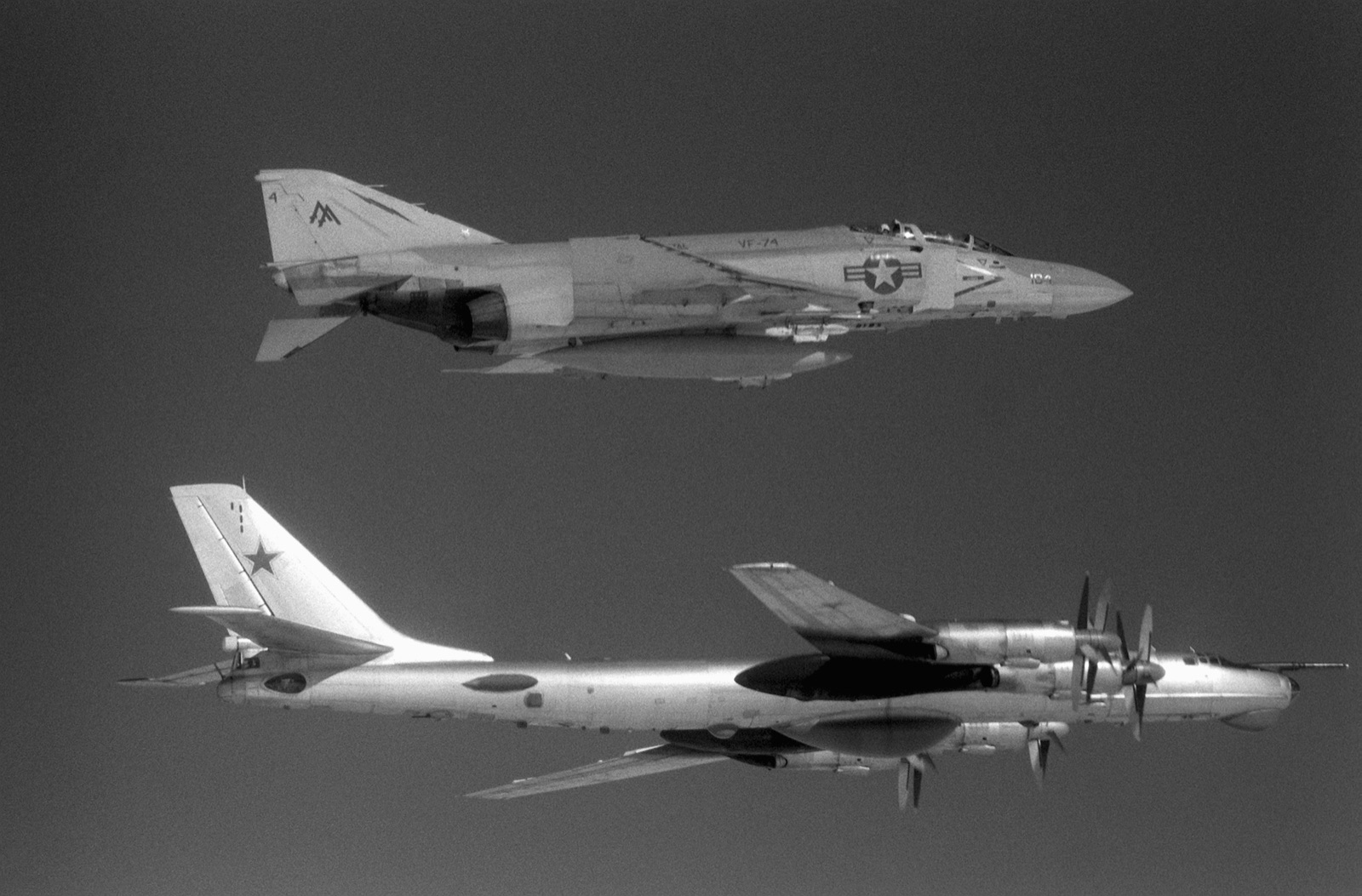
- F-4S Phantom of VF-74. The RAF also flew Phantoms on QRA, from Leuchars and Wattisham
- Contra-rotating propellers: the Bear was the fastest propeller aircraft in service
- Red star on the fin of the Tu-95 ‘Bear D’, a maritime reconnaissance version
- Tail gun turret
Source Hansard (Commons), 23 June 1981, col. on the Royal Air Force; Wikipedia, English Electric Lightning
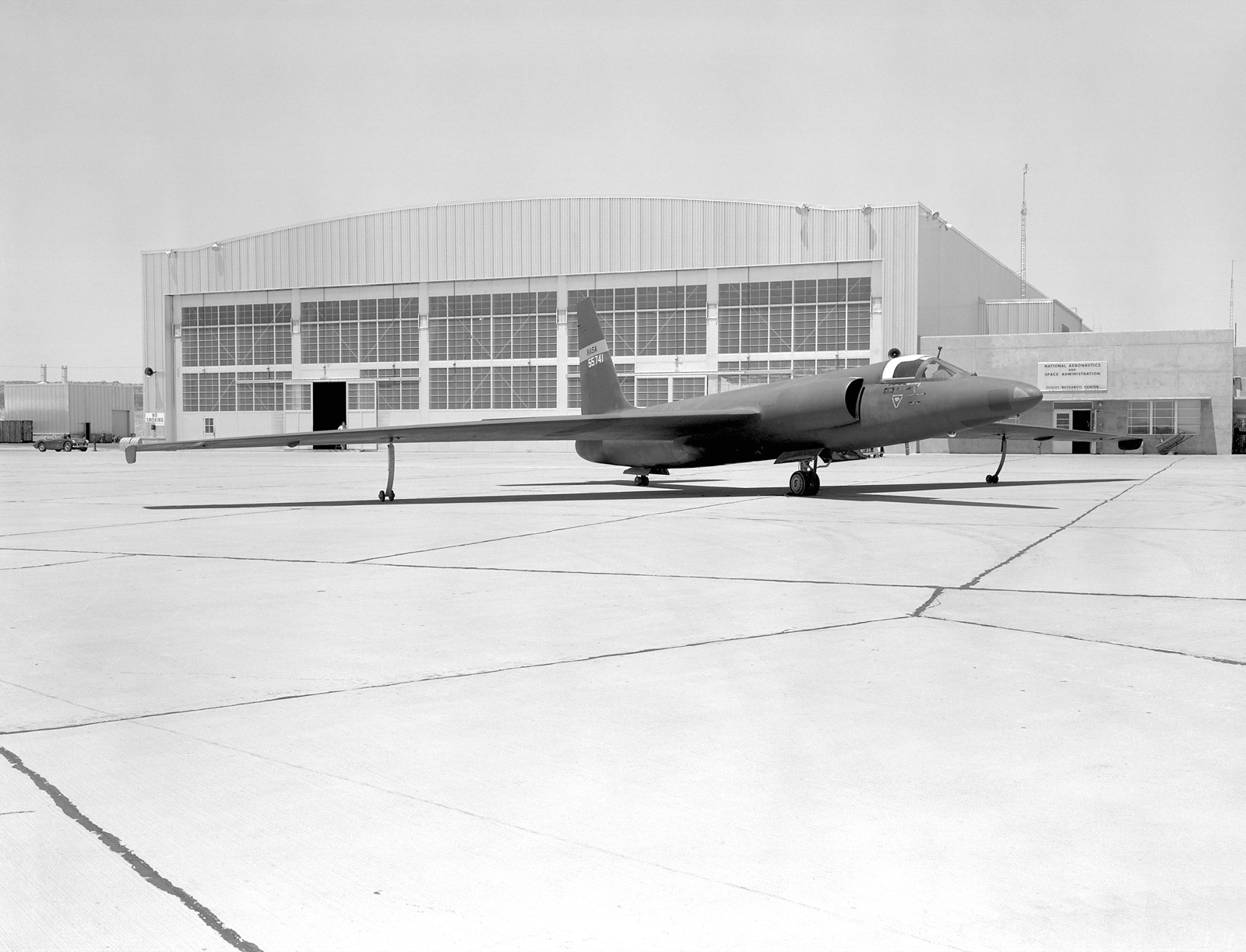
- ‘NASA’ and the serial 55741 painted on the tail for the cover story
- Pogo outrigger wheel: dropped on take-off, the U-2 lands on its wingtip skids
- Wingtip of the 80 ft glider-like wing
- NASA Flight Research Center sign, Edwards, California
The U-2 flew higher than any Soviet fighter could reach, and from July 1956 it photographed Soviet airfields, missile ranges and factories that no other aircraft could reach. It could not outclimb a missile. On 1 May 1960 an SA-2 brought down Francis Gary Powers near Sverdlovsk, and on 27 October 1962 another killed Major Rudolf Anderson over Cuba, the only American killed by enemy fire in the missile crisis.
Its successor never needed to cross a frontier. The SR-71 flew along borders at three times the speed of sound and 80,000 feet, looking sideways, and when missiles were fired it simply accelerated. None was ever shot down.
Source Wikipedia, Lockheed U-2 and Lockheed SR-71 Blackbird; FAI records
Faster, higher
The record books as a scoreboard
In 1945 a Gloster Meteor set the world air speed record at 606 mph. Thirty-one years later an SR-71 raised it to 2,193 mph, and no one has gone faster in a jet aircraft taking off under its own power since. In between it was raised 22 times, and British aircraft set five of those records: the Meteor twice, Neville Duke’s Hunter and Mike Lithgow’s Swift (which held it for less than a month between them in September and October 1953), and Peter Twiss’s Fairey Delta 2, which in March 1956 added 310 mph to the record in one go.
The altitude record told a similar story. English Electric Canberras held it three times; after 1958 it belonged to Starfighters, Phantoms and, finally, MiGs.
The absolute air speed record, 1945–1976
mph| Year | Record at year end |
|---|---|
| 1945 | 606.4 |
| 1946 | 615.8 |
| 1947 | 650.8 |
| 1948 | 670.8 |
| 1952 | 698.5 |
| 1953 | 755.1 |
| 1955 | 822.1 |
| 1956 | 1132 |
| 1957 | 1207.6 |
| 1958 | 1404 |
| 1959 | 1525.9 |
| 1961 | 1606.3 |
| 1962 | 1665.9 |
| 1965 | 2070.1 |
| 1976 | 2193.2 |
Official FAI records for jet aircraft only; rocket-powered research aircraft are excluded.
Source FAI records, via Wikipedia, Flight airspeed record
The absolute altitude record for jet aircraft, 1948–1977
feet| Year | Record at year end |
|---|---|
| 1948 | 59430 |
| 1953 | 63668 |
| 1955 | 65876 |
| 1957 | 70310 |
| 1958 | 91243 |
| 1959 | 103389 |
| 1961 | 113891 |
| 1973 | 118898 |
| 1977 | 123520 |
Zoom-climb records. The 1957 Canberra and 1961 Ye-66A used rocket boosters as well as jet engines.
Source Wikipedia, Flight altitude record
Every jet air speed record, 1945–1976
| 7 Nov 1945 | Gloster Meteor F.4 | H. J. Wilson | UK | 606 |
| 7 Sep 1946 | Gloster Meteor F.4 | E. M. Donaldson | UK | 616 |
| 19 Jun 1947 | Lockheed P-80R | Albert Boyd | US | 624 |
| 20 Aug 1947 | Douglas D-558-1 Skystreak | Turner Caldwell | US | 641 |
| 25 Aug 1947 | Douglas D-558-1 Skystreak | Marion Carl | US | 651 |
| 15 Sep 1948 | North American F-86A Sabre | Richard L. Johnson | US | 671 |
| 18 Nov 1952 | North American F-86D Sabre | J. Slade Nash | US | 699 |
| 16 Jul 1953 | North American F-86D Sabre | William Barnes | US | 716 |
| 7 Sep 1953 | Hawker Hunter F.3 | Neville Duke | UK | 728 |
| 26 Sep 1953 | Supermarine Swift F.4 | Mike Lithgow | UK | 736 |
| 3 Oct 1953 | Douglas F4D Skyray | James B. Verdin | US | 753 |
| 29 Oct 1953 | North American YF-100A | Frank K. Everest | US | 755 |
| 20 Aug 1955 | North American F-100C | Horace A. Hanes | US | 822 |
| 10 Mar 1956 | Fairey Delta 2 | Peter Twiss | UK | 1,132 |
| 12 Dec 1957 | McDonnell F-101A Voodoo | Adrian Drew | US | 1,208 |
| 16 May 1958 | Lockheed YF-104A Starfighter | Walter Irwin | US | 1,404 |
| 31 Oct 1959 | Mikoyan Ye-6/3 | Georgy Mosolov | USSR | 1,484 |
| 15 Dec 1959 | Convair F-106A Delta Dart | Joseph Rogers | US | 1,526 |
| 22 Nov 1961 | McDonnell F4H-1F Phantom II | Robert B. Robinson | US | 1,606 |
| 7 Jul 1962 | Mikoyan Ye-166 | Georgy Mosolov | USSR | 1,666 |
| 1 May 1965 | Lockheed YF-12A | Robert Stephens, Daniel Andre | US | 2,070 |
| 28 Jul 1976 | Lockheed SR-71A | Eldon Joersz, George Morgan | US | 2,193 |
| FAI absolute speed records for jet aircraft. A French Nord Griffon’s 1959 run (1,441.6 mph) was a 100 km closed-circuit record, not the absolute record, and is left out. The F-101A pilot is not named in some lists. | ||||
Source FAI, via Wikipedia, Flight airspeed record
The production lines
The Soviet bloc built fighters by the ten thousand
The three most-built jet aircraft in history are all Mikoyan-Gurevich fighters, and all three were designed in the first fifteen years of the Cold War. Licence production spread them across the Warsaw Pact, China and India, and they fought in Korea, Vietnam, the Middle East and Africa. The West built fewer of more types. Britain’s most-built swept-wing fighter, the Hunter, reached 1,972; its Mach 2 interceptor, the Lightning, 337.
The most-built jets of the Cold War
aircraft built= 500 aircraft built
- MiG-1513,130 in the USSR plus at least 4,180 under licence; often given as ‘more than 18,000’17,310
- MiG-21Plus some 2,400 Chinese J-7 copies11,496
- MiG-17Including Polish, Czechoslovak and Chinese builds10,649
- F-86 SabreIncluding Canadian and Australian builds and the naval FJ Fury9,860
- F-84 ThunderjetStraight-wing models only; 3,428 swept-wing F-84Fs as well7,524
- T-33 Shooting Star6,557
- F-4 Phantom II5,195
- MiG-235,047
- Hawker Hunter1,972
- English Electric CanberraIncluding 403 Martin B-57s and 48 or 49 built in Australia1,352
- English Electric Lightning337
Source Wikipedia aircraft infoboxes and List of most-produced aircraft
Cold War jets by numbers built
| Mikoyan-Gurevich MiG-15 | USSR | 1947 | 17,310 | 13,130 Soviet + 4,180 licence |
| Mikoyan-Gurevich MiG-21 | USSR | 1955 | 11,496 | Most-built supersonic aircraft |
| Mikoyan-Gurevich MiG-17 | USSR | 1950 | 10,649 | Incl. Polish, Czech, Chinese |
| North American F-86 Sabre | US | 1947 | 9,860 | Incl. FJ Fury, Canadair, CAC |
| Republic F-84 Thunderjet | US | 1946 | 7,524 | Straight-wing only |
| Lockheed T-33 | US | 1948 | 6,557 | Trainer; incl. Canadair |
| McDonnell Douglas F-4 Phantom II | US | 1958 | 5,195 | Incl. 127 by Mitsubishi |
| Mikoyan-Gurevich MiG-23 | USSR | 1967 | 5,047 | Most-built swing-wing aircraft |
| General Dynamics F-16 | US | 1974 | 4,604 | Total to date; production continues |
| de Havilland Vampire | UK | 1943 | 4,780 | 3,268 in Britain + 1,512 abroad |
| Gloster Meteor | UK | 1943 | 3,947 | First flew in wartime |
| Aero L-29 Delfín | Czechoslovakia | 1959 | 3,665 | Warsaw Pact standard trainer |
| Republic F-84F Thunderstreak | US | 1950 | 3,428 | Swept-wing F-84 |
| Douglas A-4 Skyhawk | US | 1954 | 2,960 | |
| Aero L-39 Albatros | Czechoslovakia | 1968 | 2,900 | To 1996 |
| Sukhoi Su-17/20/22 | USSR | 1966 | 2,867 | Swing-wing Su-7 development |
| Northrop F-5 | US | 1959 | 2,603 | 1,204 F-5A/B + 1,399 F-5E/F |
| Lockheed F-104 Starfighter | US | 1954 | 2,578 | |
| North American F-100 Super Sabre | US | 1953 | 2,294 | |
| Boeing B-47 Stratojet | US | 1947 | 2,042 | Most-built jet bomber in the West |
| Hawker Hunter | UK | 1951 | 1,972 | Incl. licence-built |
| Sukhoi Su-7 | USSR | 1955 | 1,847 | |
| Tupolev Tu-16 | USSR | 1952 | 1,509 | Plus Chinese H-6 |
| Dassault Mirage III | France | 1956 | 1,422 | |
| English Electric Canberra | UK | 1949 | 1,352 | Incl. 403 Martin B-57 |
| Mikoyan-Gurevich MiG-25 | USSR | 1964 | 1,186 | |
| Panavia Tornado | UK / Germany / Italy | 1974 | 990 | All versions |
| Boeing B-52 Stratofortress | US | 1952 | 744 | |
| SEPECAT Jaguar | UK / France | 1968 | 573 | |
| Gloster Javelin | UK | 1951 | 436 | |
| English Electric Lightning | UK | 1954 | 337 | Incl. prototypes |
| Totals include licence production where known. Soviet figures are from post-1991 sources and vary; the MiG-15 is sometimes credited with more than 18,000. | ||||
Source Wikipedia aircraft infoboxes, checked 11 October 2026
Interceptors: Lightning F.6 and MiG-21bis
English Electric Lightning F.6
Mikoyan-Gurevich MiG-21bis
- 337Number built (all marks)11,496
- 17 mLength15 m
- 11 mWingspan7.2 m
- 146 kNThrust with reheat70 kN
- 1,320 mphTop speed at altitude1,386 mph
- 18,288 mService ceiling17,500 m
- 1,367 kmRange660 km
- 2Internal cannon1
Verdict Two answers to the same problem. The Lightning bolted two Avons into one fuselage and climbed like nothing else in NATO; the MiG-21 was small, simple and cheap enough to build by the ten thousand.
Top speeds: Lightning F.6 Mach 2.0 (about 1,320 mph), MiG-21bis 2,230 km/h (Mach 2.05). The Lightning pilot’s notes give Mach 2.0; Mach 2.27 at 40,000 ft is often quoted but was never officially published. Thrust is the total of both Lightning engines.
Source Lightning F.6 Pilot’s Notes and ODM; Jane’s All the World’s Aircraft 1992–93 (MiG-21bis), via Wikipedia
The balance
Counting the other side, and your own, as the Cold War ended
By the late 1980s both alliances were preparing to negotiate cuts, and both published counts of each other’s aircraft. They could hardly have been further apart. NATO’s November 1988 comparison gave the Warsaw Pact more than twice as many combat aircraft. The Warsaw Pact’s reply in January 1989 made the two sides almost level. Neither was lying outright: they counted different things, including or leaving out trainers, naval aircraft and air-defence fighters at home.
The treaty that resolved the argument, Conventional Armed Forces in Europe, was signed on 19 November 1990 and capped each bloc at 6,800 combat aircraft from the Atlantic to the Urals.
Combat aircraft in Europe, NATO and Warsaw Pact: it depends who is counting
combat aircraft- NATO
- Warsaw Pact
- 3,9778,250
- 7,1307,876
- 8,2459,955
- 6,7509,400
- 6,8006,800
Different definitions throughout: NATO’s figures exclude naval and some home-defence aircraft; the Warsaw Pact’s include naval attack aircraft. The ratio ranges from 1:1.1 to 1:2.1 in NATO’s disfavour.
Source Assembly of Western European Union, Document 1204, Force comparisons (6 November 1989), Table 3; CFE Treaty
The shrinking RAF: regular personnel
personnel| Year | RAF strength |
|---|---|
| 1952 | 270000 |
| 1958 | 210000 |
| 1960 | 163800 |
| 1962 | 148000 |
| 1970 | 108800 |
| 1976 | 96300 |
| 1981 | 91965 |
| 1989 | 93100 |
| 1990 | 89000 |
Figures from different sources and points in the year; treat as approximate. National Service men are included up to the early 1960s.
Source Wikipedia, Personnel numbers in the Royal Air Force (after Fowler et al. 1994, Miller 1973, Wynn 1976, Armitage 1998)
Forty years of the Cold War, at one scale
drawn to one scale-
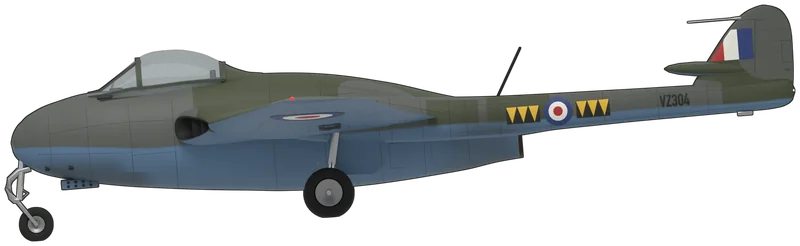 de Havilland Vampire FB.5 9.4 m · Second jet fighter in RAF service
 -
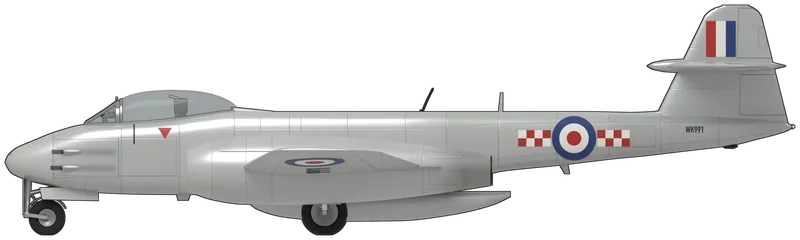 Gloster Meteor F.8 13.6 m · Fighter Command’s mainstay to 1955
 -
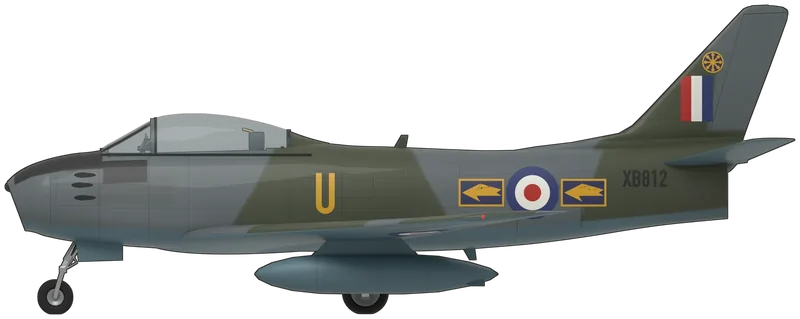 Canadair Sabre F.4 11.4 m · Stop-gap swept-wing fighter, 2nd TAF 1953–56
 -
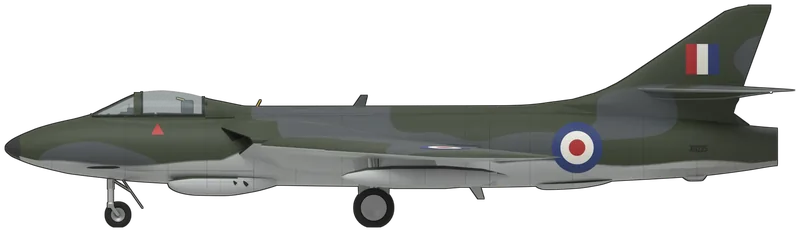 Hawker Hunter F.6 14.0 m
 -
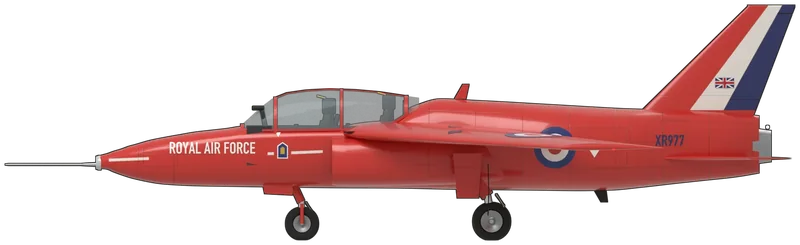 Folland Gnat T.1 9.7 m · Advanced trainer; the Red Arrows’ mount
 -
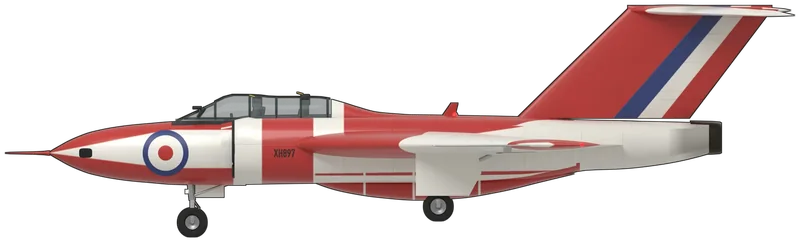 Gloster Javelin FAW.9 17.3 m · All-weather interceptor
 -
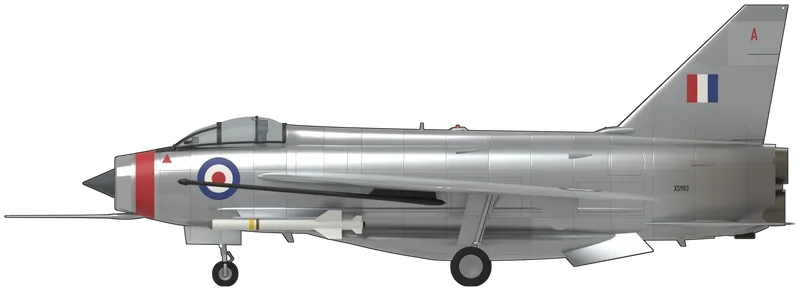 English Electric Lightning F.6 16.8 m
 -
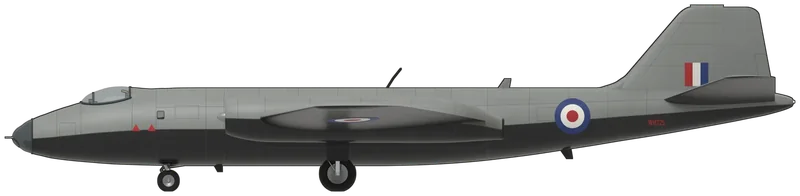 English Electric Canberra B.2 20.0 m
 -
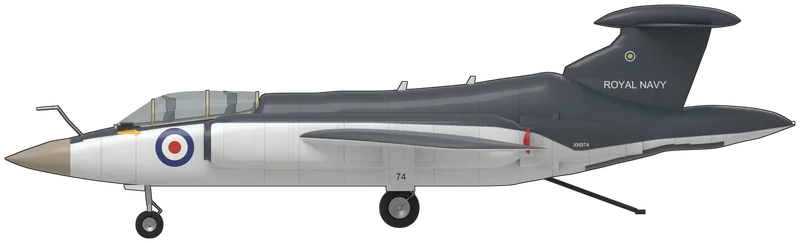 Blackburn Buccaneer S.2 19.3 m
 -
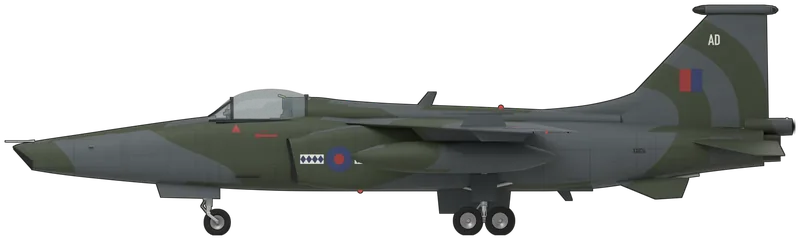 SEPECAT Jaguar GR.1A 16.8 m
 -
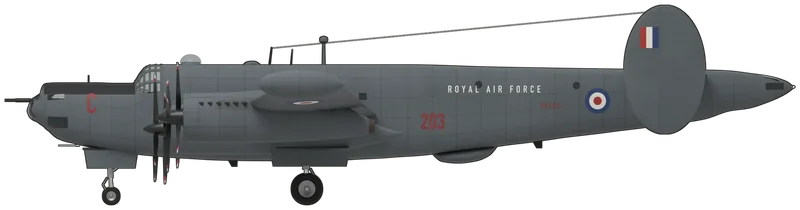 Avro Shackleton MR.3 28.2 m
 -
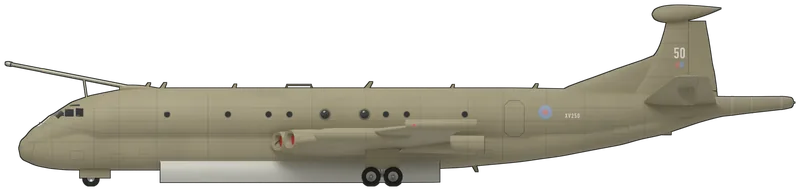 Hawker Siddeley Nimrod MR.2 39.3 m
 -
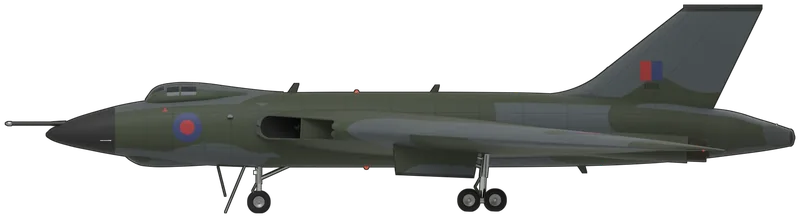 Avro Vulcan B.2 30.5 m
 -
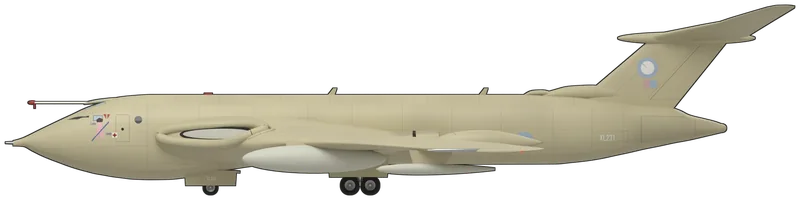 Handley Page Victor K.2 35.1 m · B.2 bomber rebuilt as a tanker; the model is the Elvington K.2
 -
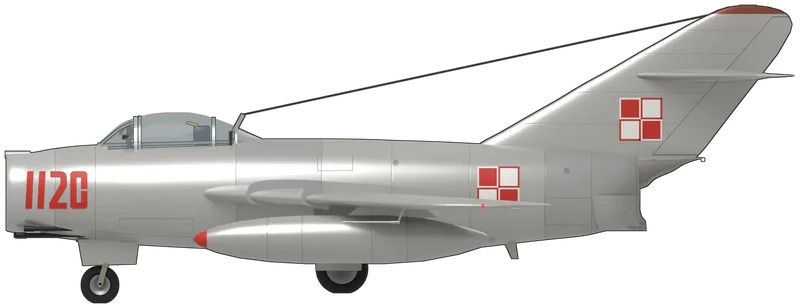 MiG-15bis 10.1 m
 -
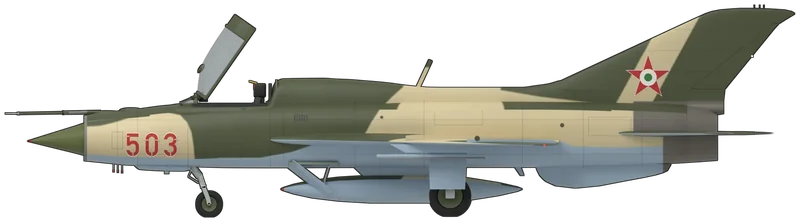 MiG-21PF 14.9 m
 -
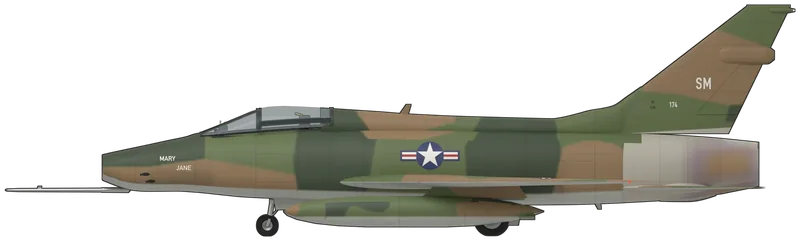 F-100 Super Sabre 16.5 m
 -
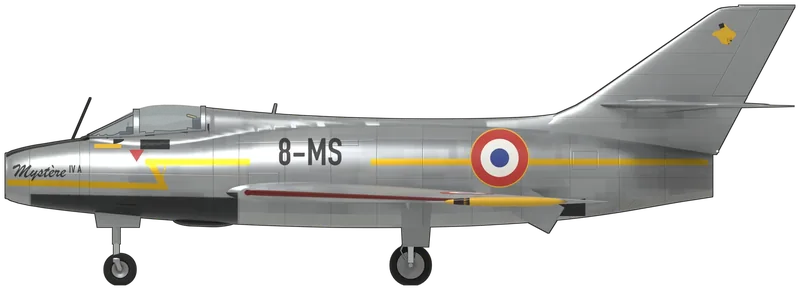 Mystère IVA 12.9 m
 -
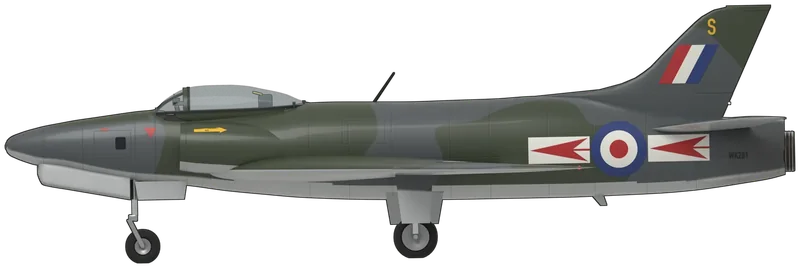 Supermarine Swift 12.9 m
 -
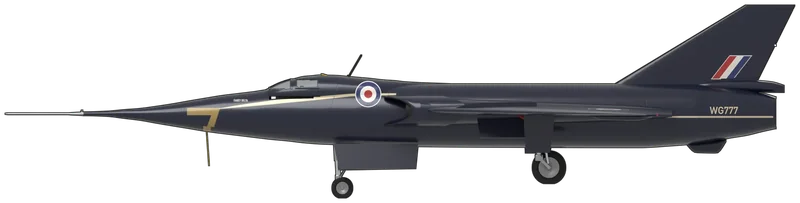 Fairey Delta 2 15.7 m
 -
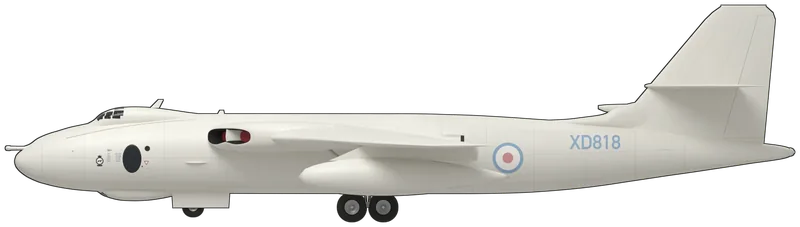 Vickers Valiant 33.0 m
 -
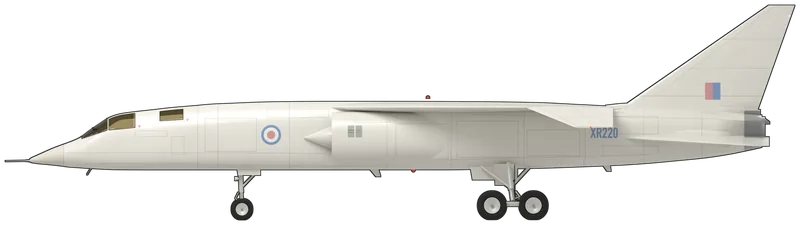 BAC TSR.2 27.1 m
 -
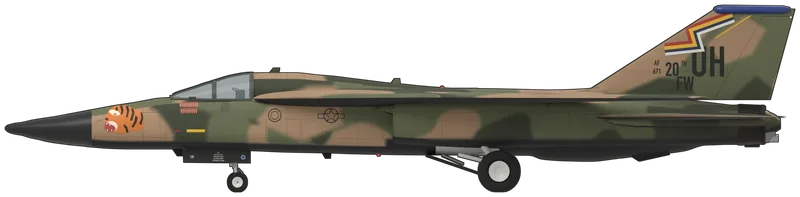 F-111E 22.4 m
 -
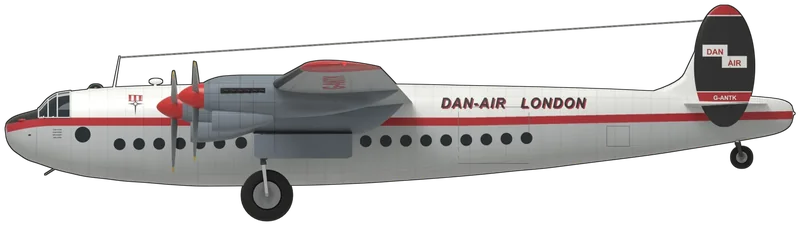 Avro York 23.9 m
 -
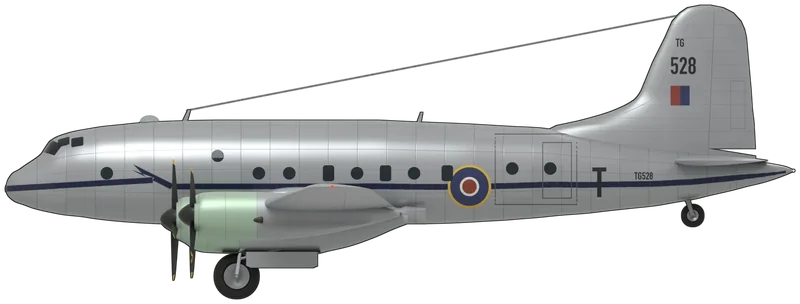 Handley Page Hastings 24.9 m
 -
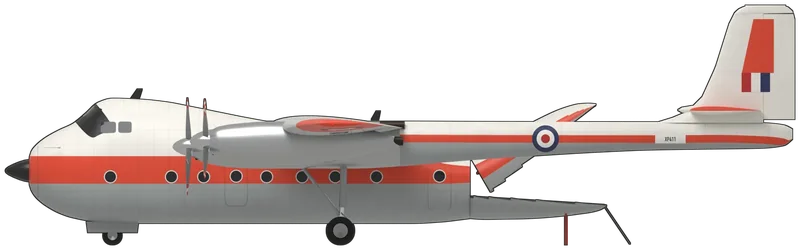 AW Argosy 27.2 m
 -
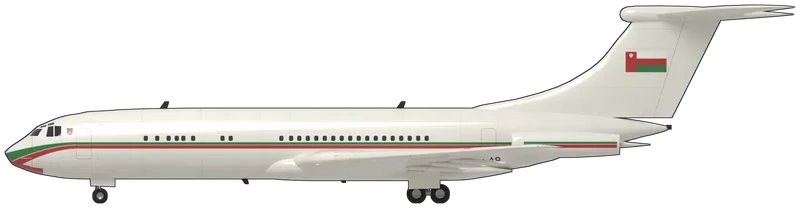 Vickers VC10 48.4 m
 -
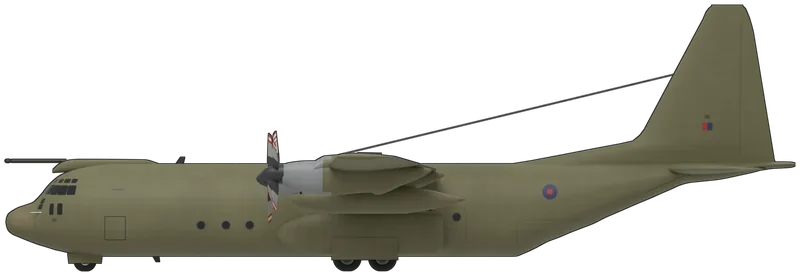 Hercules C.3 34.4 m
 -
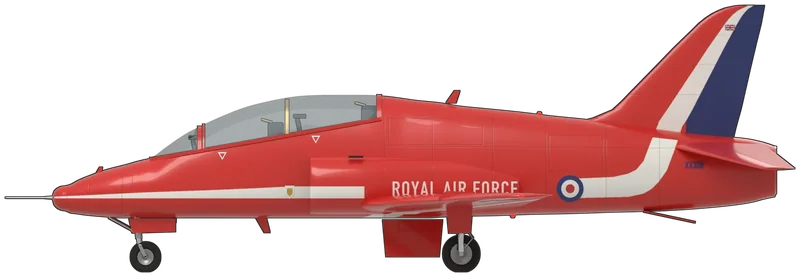 BAE Hawk 11.2 m
Lengths exclude refuelling probes where the published figure does.
Alert pan: the deterrent and its defenders, parked together
live 3D, true scale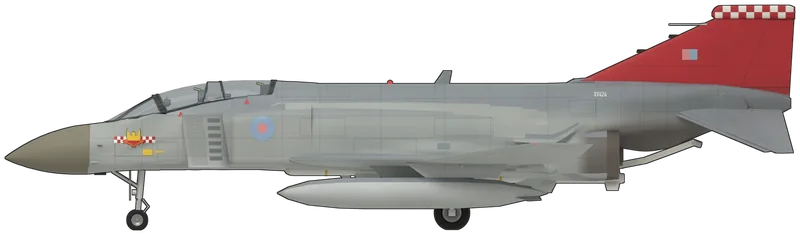
Drag to walk round · pinch or buttons to zoom
- Avro Vulcan B.2 30.5 m long, 33.8 m span
- Handley Page Victor K.2 35.1 m long, 36.6 m span
- English Electric Canberra B.2 20.0 m long, 19.5 m span
- English Electric Lightning F.6 16.8 m long, 10.6 m span
- Gloster Javelin FAW.9 17.3 m long, 15.9 m span
- McDonnell Douglas Phantom FGR.2 17.6 m long, 11.7 m span
- Hawker Hunter F.6 14.0 m long, 10.3 m span
- Panavia Tornado GR.1 16.7 m long, 13.9 m span
- Blackburn Buccaneer S.2 19.3 m long, 13.4 m span
- SEPECAT Jaguar GR.1A 16.8 m long, 8.7 m span
- Hawker Siddeley Nimrod MR.2 39.3 m long, 35.0 m span
- Avro Shackleton MR.3 28.2 m long, 36.5 m span
- Valiant 33.0 m long, 34.9 m span
- MiG-21 14.9 m long, 7.2 m span
- TSR.2 27.1 m long, 11.3 m span
- F-111 22.4 m long, 19.2 m span
The Cold War in the air
Churchill’s ‘iron curtain’ speech at Fulton, Missouri
Soviet blockade of West Berlin; the airlift begins on 26 June
North Atlantic Treaty signed, 4 April; Easter Parade lands 12,941 tons in a day
Last airlift flight, 30 September
277,569The Valiant, first of the V-bombers, enters service
Warsaw Pact founded, 14 May
First U-2 overflight of the Soviet Union
Valiant XD818 drops Britain’s first H-bomb test device off Malden Island, 15 May
Francis Gary Powers’ U-2 shot down near Sverdlovsk, 1 May
Lightning enters front-line service with No. 74 Squadron
Cuban missile crisis; V-force at 15 minutes’ readiness; Major Rudolf Anderson killed in a U-2 over Cuba, 27 October
V-force peaks at 159 aircraft
Deterrent passes to Royal Navy Polaris submarines, 1 July
SR-71 sets speed and altitude records, 28 July, unbroken in 2026
Black Buck 1: Vulcan XM607 bombs Port Stanley airfield
Last Lightnings retire from the RAF, 30 April
Berlin Wall opened, 9 November
CFE Treaty signed in Paris, 19 November
Warsaw Pact dissolved, 1 July
Soviet Union dissolved, 26 December
Source Wikipedia (V bombers, Berlin Blockade, Lockheed U-2, English Electric Lightning, Operation Black Buck)
From Stettin in the Baltic to Trieste in the Adriatic, an iron curtain has descended across the Continent.
Winston Churchill, Westminster College, Fulton, Missouri, 5 March 1946
Where to see them in Britain
in British museums- Avro Vulcan19 museums
Royal Air Force Museum London · IWM Duxford · Vulcan Restoration Trust (XL426), Southend · Bournemouth Aviation Museum · Royal Air Force Museum Midlands · Midland Air Museum · Newark Air Museum · Avro Heritage Museum · Solway Aviation Museum · National Museum Of Flight · Morayvia · City of Norwich Aviation Museum · RAF Manston History Museum · Jet Age Museum · East Midlands Aeropark · North East Land, Sea and Air Museums · South Yorkshire Aircraft Museum · The Vulcan Experience (XH558) · Stoneykirk Aviation Museum
- English Electric Canberra32 museums
Royal Air Force Museum London · Norfolk and Suffolk Aviation Museum · Gatwick Aviation Museum · Tangmere Military Aviation Museum · Bournemouth Aviation Museum · Boscombe Down Aviation Collection · Royal Air Force Museum Midlands · Midland Air Museum · Newark Air Museum · Yorkshire Air Museum · Avro Heritage Museum · Solway Aviation Museum · South Wales Aviation Museum · Ulster Aviation Society (Maze Long Kesh) · Lincolnshire Aviation Heritage Centre · National Museum Of Flight · Morayvia · City of Norwich Aviation Museum · Suffolk Aviation Heritage Museum · Farnborough Air Sciences Trust Museum · RAF Manston History Museum · Wings Aviation Museum · Romney Marsh Wartime Collection · Robertsbridge Aviation Society · East Midlands Aeropark · RAF Defford Museum · Rolls Royce Heritage Trust · North East Land, Sea and Air Museums · South Yorkshire Aircraft Museum · Hooton Park Hangars · The Vulcan Experience (XH558) · Stoneykirk Aviation Museum
- English Electric Lightning25 museums
Royal Air Force Museum London · IWM Duxford · Norfolk and Suffolk Aviation Museum · Gatwick Aviation Museum · Tangmere Military Aviation Museum · Bournemouth Aviation Museum · Boscombe Down Aviation Collection · Royal Air Force Museum Midlands · Midland Air Museum · Newark Air Museum · Yorkshire Air Museum · Solway Aviation Museum · National Museum Of Flight · Morayvia · RAF Air Defence Radar Museum · City of Norwich Aviation Museum · Bentwaters Cold War Museum · RAF Coltishall Heritage Centre · Farnborough Air Sciences Trust Museum · RAF Manston History Museum · Robertsbridge Aviation Society · East Midlands Aeropark · Thorpe Camp Visitor Centre · North East Land, Sea and Air Museums · South Yorkshire Aircraft Museum
- Hawker Hunter32 museums
IWM Duxford · Norfolk and Suffolk Aviation Museum · Gatwick Aviation Museum · Tangmere Military Aviation Museum · Bournemouth Aviation Museum · Boscombe Down Aviation Collection · Royal Air Force Museum Midlands · Midland Air Museum · Newark Air Museum · Yorkshire Air Museum · Solway Aviation Museum · South Wales Aviation Museum · Montrose Air Station Museum · Morayvia · Royal Air Force Museum London · Brooklands Museum · Fleet Air Arm Museum · Ulster Aviation Society (Maze Long Kesh) · City of Norwich Aviation Museum · Bentwaters Cold War Museum · Suffolk Aviation Heritage Museum · RAF Coltishall Heritage Centre · Farnborough Air Sciences Trust Museum · Trenchard Museum · Robertsbridge Aviation Society · Cornwall at War Museum, Davidstow · Jet Age Museum · East Midlands Aeropark · Sywell Aviation Museum · North East Land, Sea and Air Museums · South Yorkshire Aircraft Museum · Airworld Aviation Museum
- McDonnell Douglas Phantom16 museums
Royal Air Force Museum London · IWM Duxford · Norfolk and Suffolk Aviation Museum · Tangmere Military Aviation Museum · Fleet Air Arm Museum · Midland Air Museum · Solway Aviation Museum · South Wales Aviation Museum · Ulster Aviation Society (Maze Long Kesh) · Royal Air Force Museum Midlands · National Museum Of Flight · Montrose Air Station Museum · Morayvia · City of Norwich Aviation Museum · Bentwaters Cold War Museum · British Phantom Group & Bristol Britannia XM496 (Kemble)
- Blackburn Buccaneer16 museums
Royal Air Force Museum London · IWM Duxford · Gatwick Aviation Museum · Fleet Air Arm Museum · Newark Air Museum · Yorkshire Air Museum · South Wales Aviation Museum · Ulster Aviation Society (Maze Long Kesh) · Royal Air Force Museum Midlands · National Museum Of Flight · City of Norwich Aviation Museum · RAF Manston History Museum · East Midlands Aeropark · Thorpe Camp Visitor Centre · South Yorkshire Aircraft Museum · Stoneykirk Aviation Museum
- Panavia Tornado15 museums
Royal Air Force Museum London · IWM Duxford · Midland Air Museum · Yorkshire Air Museum · Solway Aviation Museum · South Wales Aviation Museum · National Museum Of Flight · Montrose Air Station Museum · Ulster Aviation Society (Maze Long Kesh) · RAF Air Defence Radar Museum · Boscombe Down Aviation Collection · Royal Air Force Museum Midlands · RAF Manston History Museum · North East Land, Sea and Air Museums · South Yorkshire Aircraft Museum
- SEPECAT Jaguar22 museums
Royal Air Force Museum London · RAF Air Defence Radar Museum · Bournemouth Aviation Museum · Boscombe Down Aviation Collection · Royal Air Force Museum Midlands · Newark Air Museum · Solway Aviation Museum · South Wales Aviation Museum · National Museum Of Flight · Montrose Air Station Museum · Morayvia · Ulster Aviation Society (Maze Long Kesh) · Norfolk and Suffolk Aviation Museum · Gatwick Aviation Museum · Yorkshire Air Museum · City of Norwich Aviation Museum · Bentwaters Cold War Museum · RAF Coltishall Heritage Centre · Farnborough Air Sciences Trust Museum · RAF Manston History Museum · East Midlands Aeropark · South Yorkshire Aircraft Museum
- de Havilland Sea Vixen14 museums
De Havilland Aircraft Museum · IWM Duxford · Norfolk and Suffolk Aviation Museum · Solent Sky · Gatwick Aviation Museum · Tangmere Military Aviation Museum · Fleet Air Arm Museum · Midland Air Museum · Newark Air Museum · Boscombe Down Aviation Collection · Robertsbridge Aviation Society · Wellesbourne Wartime Museum · North East Land, Sea and Air Museums · Stoneykirk Aviation Museum
- Hawker Siddeley Nimrod12 museums
Royal Air Force Museum Midlands · Yorkshire Air Museum · Avro Heritage Museum · Runway Visitor Park, Manchester Airport · Morayvia · Boscombe Down Aviation Collection · South Wales Aviation Museum · National Museum Of Flight · City of Norwich Aviation Museum · RAF Manston History Museum · East Midlands Aeropark · South Yorkshire Aircraft Museum
- Douglas C-47 Dakota9 museums
IWM Duxford · Royal Air Force Museum Midlands · Battle Of Britain Memorial Flight Visitors Centre · Yorkshire Air Museum · Boscombe Down Aviation Collection · Wings Aviation Museum · Romney Marsh Wartime Collection · Metheringham Airfield Visitor Centre · South Yorkshire Aircraft Museum
Sources
- RAF / HMSO, The Berlin Airlift: facts and figures (1998), via RAF100 Schools
- Wikipedia, Berlin Blockade (citing Miller, To Save a City, 1998; Tusa & Tusa, The Berlin Blockade, 1989)
- Wikipedia (de), Berliner Luftbrücke: Transportleistung
- Wikipedia, V bombers (after Wynn, RAF Nuclear Deterrent Forces, HMSO 1994)
- The National Archives, Cabinet Papers glossary: V-Bomber force
- NRDC, Archive of Nuclear Data: Table of US Strategic Offensive Force Loadings, 1945–2002
- NRDC, Archive of Nuclear Data: Table of USSR/Russian Strategic Offensive Force Loadings, 1956–2002
- Congressional Research Service, U.S. Strategic Nuclear Forces: Background, Developments, and Issues (RL33640)
- Assembly of Western European Union, Document 1204: Force comparisons (NATO and Warsaw Pact military potential), 6 November 1989
- Hansard (Commons), Royal Air Force, 23 June 1981 (Peter Blaker on interceptions)
- Wikipedia, Flight airspeed record (FAI records)
- Wikipedia, Flight altitude record
- Wikipedia, Lockheed SR-71 Blackbird
- Wikipedia, Lockheed U-2
- Wikipedia, English Electric Lightning (Pilot’s Notes and ODM for the F.6)
- Wikipedia, Mikoyan-Gurevich MiG-21 (Jane’s All the World’s Aircraft 1992–93)
- Wikipedia, List of most-produced aircraft
- Wikipedia, Operation Black Buck
- Wikipedia, Personnel numbers in the Royal Air Force
- Arms Control Association, The CFE Treaty and the Adapted CFE Treaty at a glance
Photographs
- An SR-71A of Detachment 4, 9th Strategic Reconnaissance Wing, leaves a fog-bound — TSgt. Jose Lopez, US Air Force, Public domain (US federal work) · source
- Berlin children gather under a USAF C-74 Globemaster at Gatow in 1948 as more th — US Department of Agriculture, Public domain (US federal work) · source
- Berliners on a rubble heap watch a C-54 come in to land at Tempelhof, 1948. At t — Henry Ries / US Air Force, Public domain (US federal work) · source
- Skyways’ Avro York G-AHFI taxis at Wunstorf, November 1948: one of the civil air — Unknown photographer, IWM HU 98413, Public domain (expired Crown Copyright) · source
- An F-4S Phantom of US Navy squadron VF-74 shadows a Tu-95 ‘Bear D’ about 70 km o — Lt. Ronald Callaway, US Navy, Public domain (US federal work) · source
- The cover story, 6 May 1960: a U-2 painted with invented NASA markings for the p — NASA, Public domain (US federal work) · source
Figures are drawn from the sources above; where they disagree the most widely cited figure is used and the range is given in the notes. Side profiles and 3D models are the gazetteer’s own procedural models, drawn to scale from published dimensions. Spotted an error? Tell us.